Location
Mount Vernon, WA 98274
Location
Mount Vernon, WA 98274

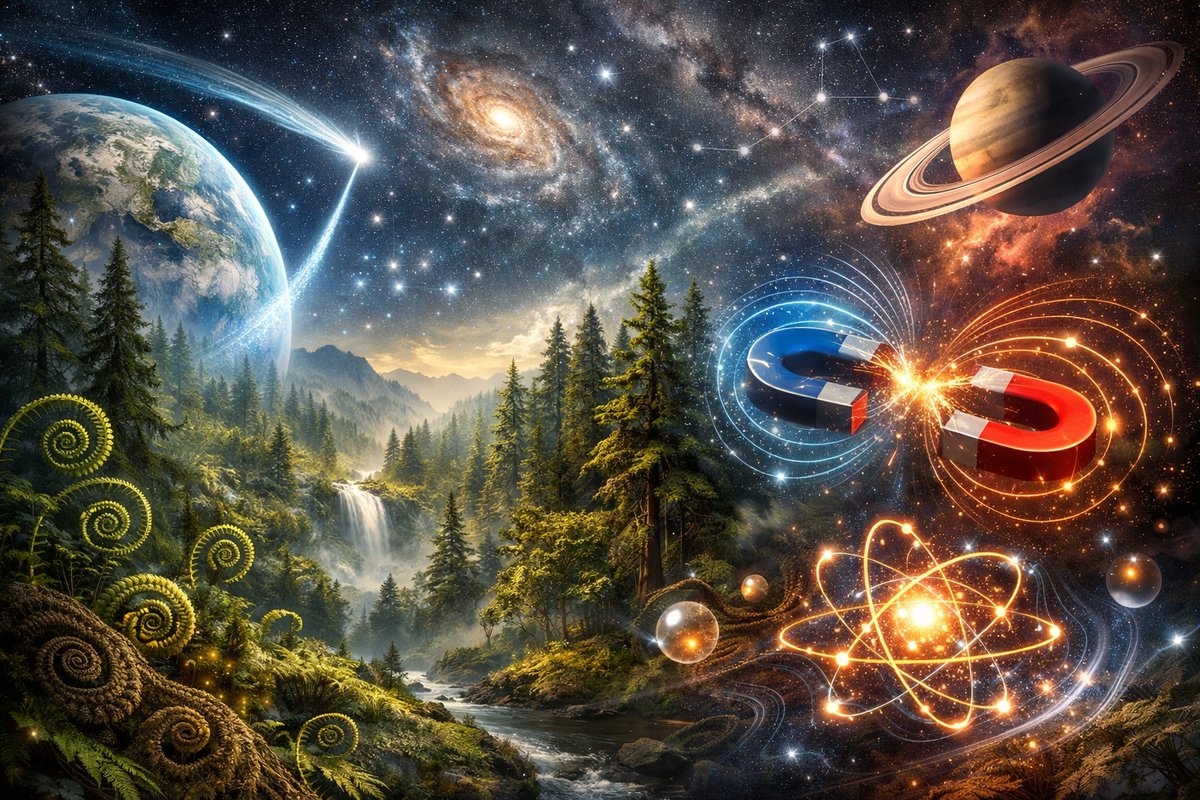
From the silent tug of gravity to the invisible pull of magnetism, nature whispers secrets in fractal forests of emergent patterns and quantum oddities. Dive into the tapestry of interacting forces, where each scale reveals new harmonies and fresh mysteries, inviting us to explore our planet and beyond with curiosity and awe.
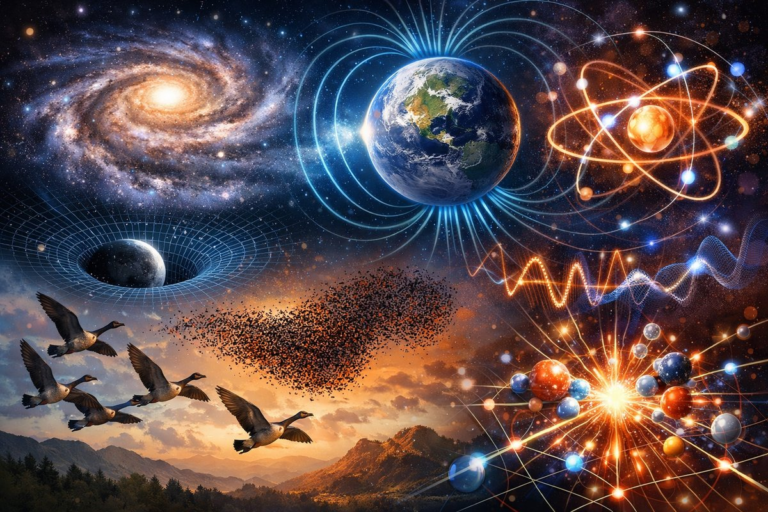
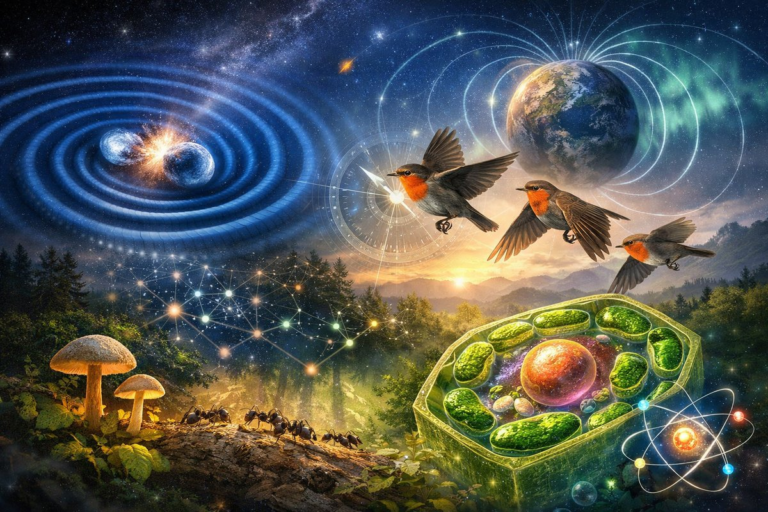
Under every footstep and inside every laboratory, nature hums along in invisible rhythms-gravity pulling us toward Earth’s core, magnetism shaping compasses and animal migrations, emergent systems orchestrating flocks of birds in flight and neural networks in our brains, quantum quirks stirring up particles that behave like waves. These hidden threads form a tapestry of surprising unity and endless wonder. By decoding the patterns woven by these forces, we glimpse fundamental principles that underpin life, technology and the cosmos itself.
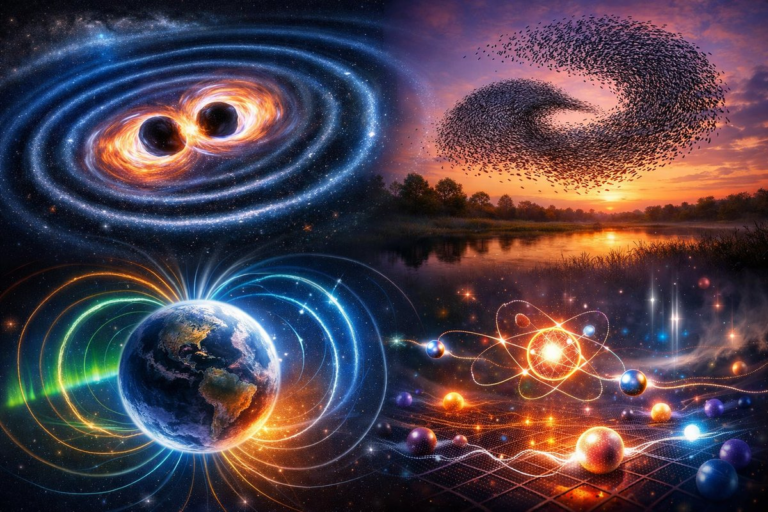
Gravity may feel familiar, anchoring us to the ground and guiding planets on graceful orbits. Yet it also ripples through spacetime in gravitational waves, perceptible only to the most sensitive detectors. When two black holes collide billions of light-years away, they unleash a brief tremor in the fabric of reality-and here on Earth, lasers aligned across continents capture that whisper. This cosmic echo reminds us how deeply connected we are to events at scales both immense and remote.
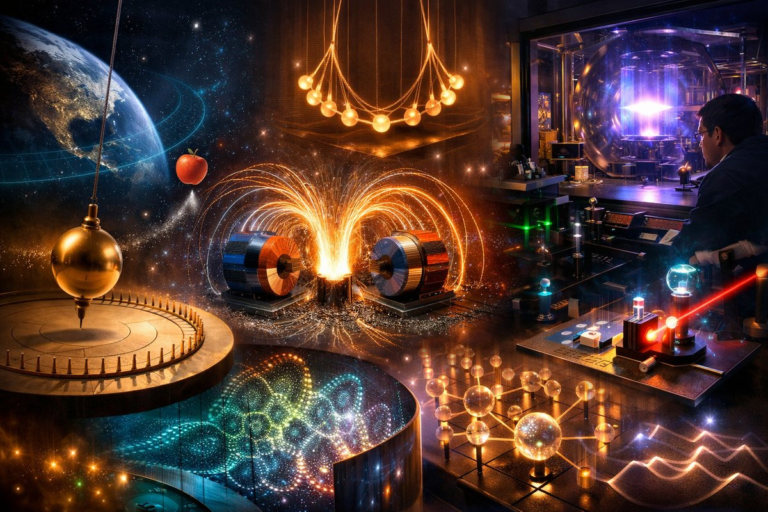
Even in your backyard, gravity weaves patterns you can see. Raindrops accelerate into miniature projectiles, rafts of leaf litter swirl in eddies along a stream. Toy pendulums trace arcs that betray Earth’s rotation in classic Foucault experiments. Each of these simple observations can spark questions that lead down winding paths toward relativity, chaos theory and advanced geophysical modeling.
Magnetism is equally mysterious yet delightfully tangible. Place a small compass needle atop a table and it aligns with Earth’s magnetic field-an invisible bubble shaped by molten iron currents deep within the planet. Across the animal kingdom, countless species use this magnetic map for epic migrations. Sea turtles hatch on sandy shores and then vanishingly rarely return, guided by magnetic inclination and intensity. Birds chart transcontinental journeys in the dead of night, following a map no human pilot could read without a specialized sensor.
On a more accessible desk experiment, iron filings dance into familiar field lines when sprinkled onto paper above a bar magnet. Yet beyond that classroom demonstration, researchers are developing advanced magnetometers that detect minute fluctuations in the field, mapping underground mineral deposits or even probing brain activity through magnetoencephalography. These tools bring magnetism’s hidden story into view, revealing patterns that influence navigation, climate and biological rhythms.
Emergent systems emerge when many simple parts interact, giving rise to behaviors and structures far richer than their individual contributions. Watch a murmuration of starlings swirl in shifting cloud formations. No single bird directs the flock; rather, local interactions-avoid collisions, align headings, stay close-cascade into organic, shape-shifting choreography. Ant colonies form living pipelines to harvest food. Slime molds find the most efficient routes through mazes, adapting like a fluid network. Coral reefs build complex architectures from microscopic polyps.
These emergent phenomena share mathematical patterns. Feedback loops can produce stable cycles or wild oscillations. Fractals-self-similar shapes at every scale-appear in branching rivers, leaf veins and lightning forks. Cellular automata models, with tiny cells flipping states by simple rules, can replicate images of natural complexity in simulated space. From stock market fluctuations to heartbeat dynamics, emergent behavior reminds us how collective intelligence arises from basic rules.
Deep within atoms, quantum mechanics throws a wrench into our intuition. Particles behave like waves, spreading out and interfering in patterns more akin to ripples on a pond. Entangled particles remain mysteriously connected across distances, so that measuring one instantly influences its partner’s state. Quantum superposition places systems in multiple states simultaneously until an observation collapses the possibilities into one outcome.
These quirks once seemed confined to chalkboards and photon labs. Today, they power experimental quantum computers that exploit superposition and entanglement to solve certain problems exponentially faster than conventional machines. Quantum sensors promise ultra-precise measurements of time, gravity and magnetic fields-tools that could refine GPS navigation, detect underground tunnels or test fundamental theories. We are at the threshold of a new era where quantum oddities become practical instruments rather than mere curiosities.
Amidst these four realms-gravity, magnetism, emergence and quantum mechanics-the same themes reappear: symmetry and broken symmetry, order arising from chaos, patterns echoing across scales. Mathematicians have traveled from Einstein’s field equations to Mandelbrot’s fractals, bridging the very large and the inconceivably small. Chaos theory teaches that tiny fluctuations in a weather system can blossom into a storm halfway around the world. Scale invariance shows up in mountain ranges and subatomic particle cascades alike.
Our growing toolkit connects these layers. Satellite gravimeters map Earth’s mass distribution, revealing melting glaciers and shifting tectonic plates. Networks of magnetometers track solar storms that threaten power grids and disrupt communications. Sensor arrays record emergent traffic patterns in cities, guiding adaptive infrastructure planning. And quantum sensors promise breakthroughs in medical imaging and mineral exploration.
Understanding these forces is not only an academic pursuit-it has practical resonance. Engineers design low-drag buildings by modeling airflow emergent patterns. Urban planners use fractal analysis to optimize green spaces. Innovations in quantum materials could revolutionize solar cells and energy storage. Even in agriculture, magnetic field treatments and soil-emergence studies inform sustainable farming practices.
As we stand at the confluence of disciplines, collaboration becomes crucial. Physicists, biologists, data scientists and artists all bring unique lenses. Immersive visualization tools let us “see” gravitational waves or hear the hum of magnetism converted to sound. Machine learning helps detect emergent anomalies in climate records. Citizen science projects invite anyone with a smartphone accelerometer app to contribute data on seismic tremors and gravitational anomalies.
The wonder of natural forces lies in their interplay. It’s a reminder that our world is far more interconnected and dynamic than everyday sight suggests. When you hold a simple magnet, you tap into planetary currents. When you gaze at a starling flock, you glimpse algorithms as elegant as any computer code. When you experiment with a tabletop pendulum, you mirror the motion of moons and satellites.
Future explorers will push boundaries further: portable quantum gravimeters that sense subterranean water reserves, self-healing materials guided by electromagnetic fields, swarm robotics inspired by ant empires. These advances will herald new ways of living in balance with Earth’s rhythms, harnessing nature’s own strategies for resilience and adaptability.
In the end, decoding patterns of gravity, magnetism, emergence and quantum quirkiness is more than a scientific journey-it’s an invitation to marvel, to ask “Why?” and “What if?” It reminds us that every phenomenon, no matter how subtle or bizarre, is a thread in a grand tapestry. And as we tug on one thread-be it a laser beam detecting a gravity wave or a magnetometer tracing Earth’s core currents-the entire fabric shivers with fresh insight and boundless possibility.
Whether you’re an amateur experimenter tinkering with ferrofluid and magnets on your kitchen table, a student modeling fractal patterns, or a researcher probing quantum connections in a cryogenic lab, the same spirit of wonder unites us. Nature’s forces await our curiosity, ready to unveil deeper layers of beauty and truth. Next time the wind bends a blade of grass, the curtains shift from a breeze or a droplet arcs under gravity’s pull, pause and consider: you’re witnessing an echo of the fundamental forces that shape the cosmos itself.
Your invitation is open: explore these mysteries with an open mind, let serendipity guide your experiments, and remember that every discovery begins with a question. The universe will answer, and in its response you’ll find both science and poetry interwoven into a single, resonant song.