Location
Mount Vernon, WA 98274
Location
Mount Vernon, WA 98274

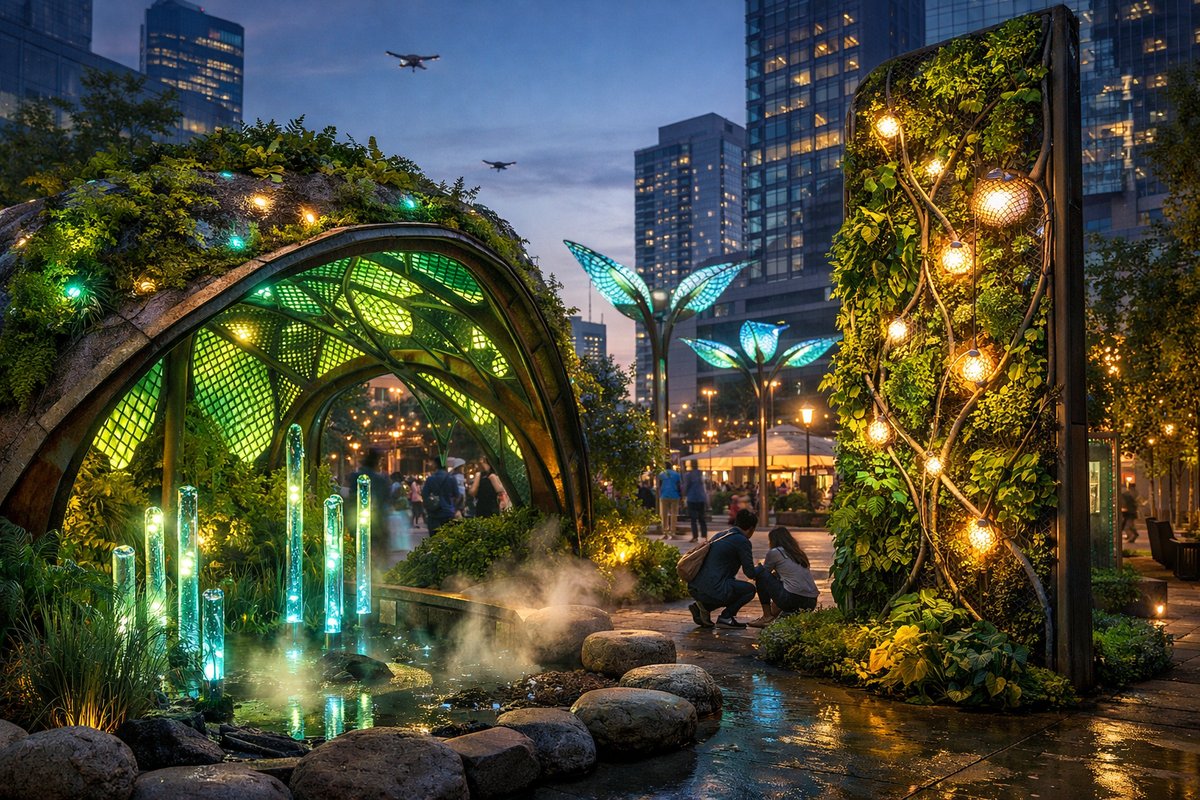
Urban landscapes are undergoing a metamorphosis as artists blend living materials with responsive technology to create installations that breathe, glow, and adapt. These bio-digital artworks invite curiosity, provoke conversation about sustainability, and redefine how we interact with public space.
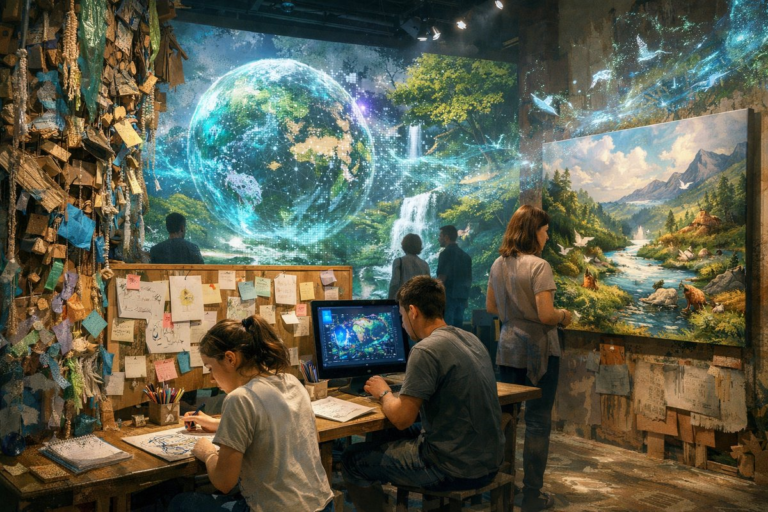
Across city plazas, park corridors, and reclaimed industrial zones, a new generation of public art is emerging-one that blurs the boundary between the organic and the electronic. Imagine a retaining wall in a downtown courtyard where moss colonies flourish, their chlorophyll-rich surfaces embedded with micro-sensors that trigger soft pulses of projection each time a passerby slows to admire the greenery. Or picture an underpass illuminated by strands of bioluminescent algae nestled in transparent tubes, their natural glow amplified by subtle LED arrays and modulated through algorithms that mimic tidal patterns. These bio-digital installations aren’t just spectacles; they’re living experiments in sustainability, designed to deepen our empathy for natural systems while showcasing the poetic possibilities of technology.
At the heart of this movement lies a simple principle: art need not be static to be meaningful. In decades past, murals and sculptures celebrated permanence-a marble statue, a painted wall, a metal relief intended to outlast generations. Today, many artists embrace impermanence and evolution as essential aspects of expression. By working with moss, algae, fungi, or even bacterial cultures, creatives invite entropy into their designs. Transformations brought about by light, humidity, or human touch become chapters in an ongoing narrative. When digital sensors and microcontrollers enter the equation, the narrative becomes interactive, shaped by environmental data streams and visitor behavior.
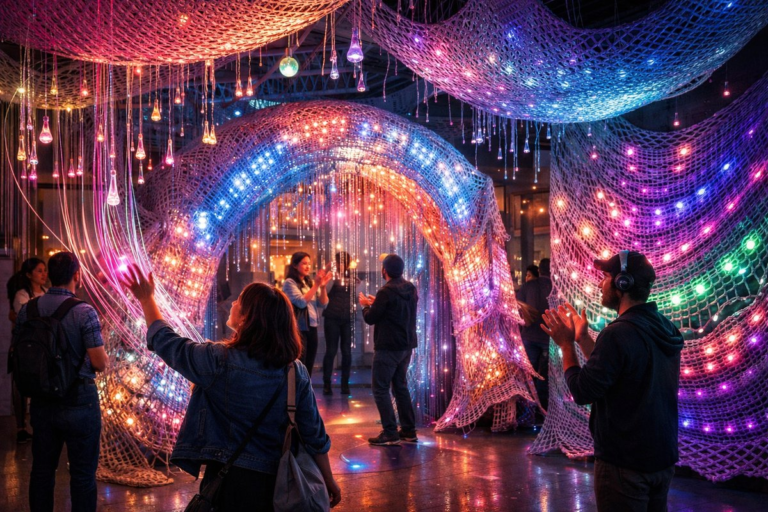
Take the example of a waterfront pavilion unveiled last year by a collective of designers and engineers. The structure incorporates living terrariums suspended from its beams, each housing miniature ecosystems of aquatic plants, crustaceans, and luminous microbes. Infrared motion detectors gauge visitor proximity, translating footsteps into gentle ripples of light and sound that traverse the pavilion’s surfaces. Visitors soon learn that by adjusting their pace or lingering beside certain tanks, they can coax brighter glows or subtler color shifts. The installation doubles as a hands-on lesson in aquatic ecology: sensors measure temperature and pH levels, feeding data to an adjacent display that visualizes ecosystem health metrics in real time. The result is a multisensory dialogue: people play with light, microbes respond, technology interprets, and nature processes the feedback.
Behind these projects are creative technologists who view local ecology and hardware prototyping as inseparable partners. Workshops in community centers now teach participants how to culture cyanobacteria and integrate simple circuit boards. Library makerspaces host drop-in sessions for building mini-terrariums outfitted with temperature probes and light sensors. Grants from environmental nonprofits and civic design labs fund pilot programs in underutilized neighborhoods, converting blank walls into vertical gardens animated by projection mapping. These grassroots experiments often feed into larger commissions: when city planners seek to revitalize a neglected plaza, they commission prototypes that can be scaled up or adapted to different climates, materials, and user flows.
The sustainability implications extend far beyond aesthetics. Living installations often require less energy than conventional electronic sculptures, since organisms like algae and moss can serve as natural filters, passive coolers, or even bio-fuel substrates. One project in a temperate coastal town uses an integrated moss wall to trap airborne pollutants, while embedded humidity sensors regulate micro-irrigation. Excess water is collected and cycled through adjoining planters. Another installation in a desert environment combines solar-powered pumps with microbial bioreactors that generate low-level light after dusk, providing safety lighting for a pedestrian walkway without tapping into the municipal grid.
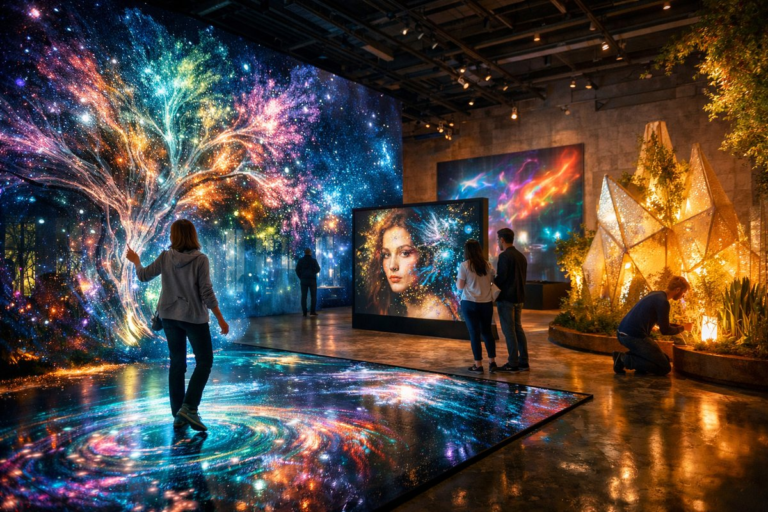
Curiosity drives participation. Many bio-digital artworks include public interfaces-buttons, touch-sensitive panels, or mobile app controls-that allow visitors to explore the relationship between input and response. Educational signage explains the science behind glowing bacteria or the role of beneficial fungi in soil health. Some installations even incorporate citizen science components: participants can scan QR codes to upload observations via smartphone, contributing to open-source environmental databases. This fusion of art, ecology, and data democratizes knowledge, turning casual observers into engaged co-creators.
Yet these living canvases pose unique design challenges. Artists must account for growth rates, seasonal shifts, and the unpredictability of living organisms. Digital components need to be weatherproofed and biologically inert to avoid harming the cultures they support. Long-term maintenance plans often involve partnerships with local botanic gardens or environmental NGOs, who assist with nutrient supplies, microbial monitoring, and software updates. Unlike a traditional mural that can simply be repainted, a bio-digital installation demands an ongoing caretaking strategy that balances artistic intent with ecological responsibility.
In response to these complexities, a handful of open-source toolkits have surfaced. They bundle sensor schematics, irrigation controllers, and software libraries for visualizing biological metrics. DIY enthusiasts can download code examples for animating algae bioluminescence or automating misting cycles in terrariums. Some toolkits even include templates for 3D-printed planters optimized for temperature regulation. By sharing knowledge, artists accelerate collective learning and reduce barriers to entry, ensuring that bio-digital art isn’t confined to high-budget studios but can thrive in community workshops and school science labs.
Looking forward, the frontier of bio-digital expression seems poised to expand into unexpected realms. Researchers are exploring conductive mycelium networks-root-like filaments of fungi that can transmit electrical signals-to create living circuits. Experiments in synthetic biology aim to engineer bacteria that fluoresce in response to air quality changes, turning city pollution into shifting color palettes. Artists are also testing the integration of plant-based dyes with responsive textiles, bringing living pigments to fashion and soft installations. As hardware becomes more affordable and biotechnologies more accessible, these experiments will likely migrate from curated plazas to everyday environments: façade plantings that pulse with neighborhood air quality readings, interactive park benches that hum in tune with soil moisture, or temporary light shows choreographed by urban wildlife activity.
This bio-digital wave of creativity offers more than novelty. It challenges deeply held assumptions about the permanence of art, the separation between humans and nature, and the role of technology in shaping our sensory world. In city after city, curious passersby pause when technology doesn’t just shine or broadcast but breaths, grows, and evolves. They discover that an artwork can feed the air, filter water, teach circuit-building, and spark conversations about our interdependence with living systems. And in doing so, each installation becomes a microcosm of a more sustainable future-one where curiosity, community, design, and ecology converge in ever more surprising and poetic ways.