Location
Mount Vernon, WA 98274
Location
Mount Vernon, WA 98274

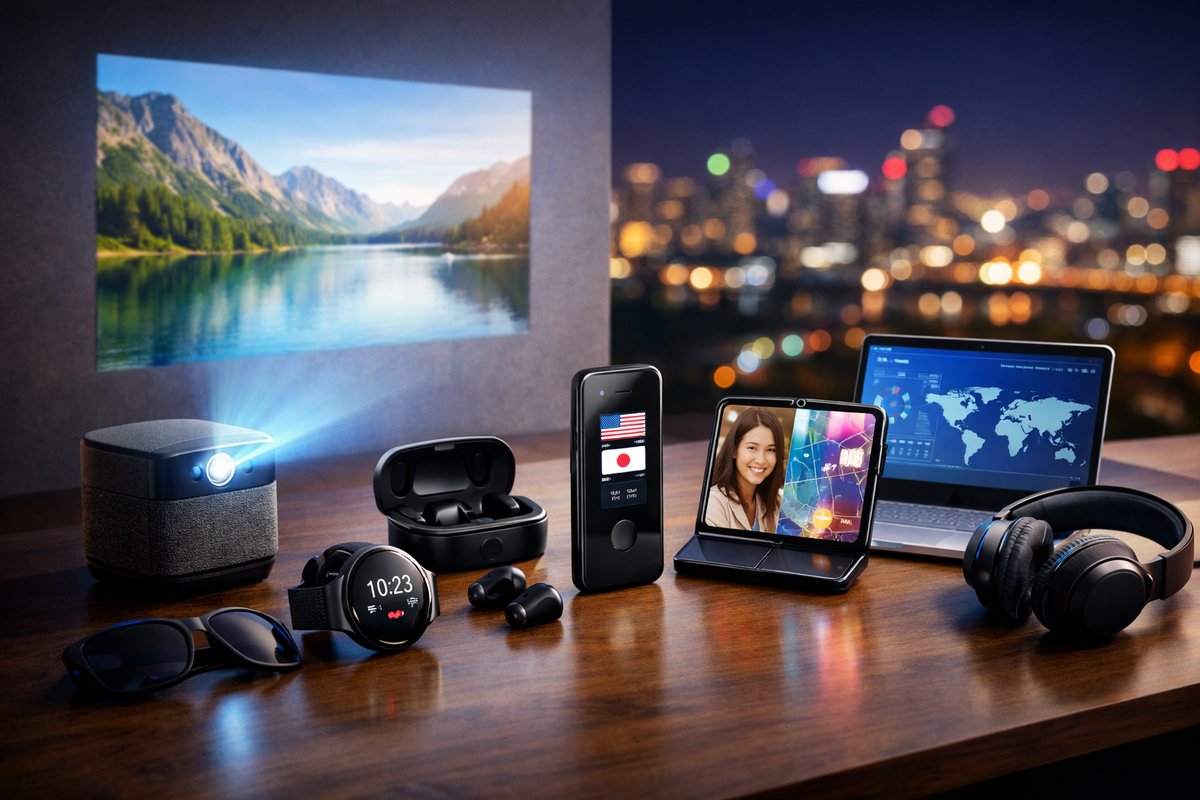
From mini projectors that turn any surface into a screen to AI-powered translators small enough to wear, the latest wave of consumer electronics is all about blending power with portability. Dive into how these innovations are setting a new standard for modern life and which tools can help you make the most of this era of hyper-connected convenience.
The world of consumer technology is entering a new chapter where sheer performance is no longer enough. Today’s most compelling gadgets are those that fit neatly into a jacket pocket, slip into a backpack without weighing it down, or even hug your wrist like a lightweight bracelet. Whether it’s projecting a big-screen movie onto your living room wall, capturing 4K video on a drone the size of your hand, or instantly decoding a foreign language in real time, these cutting-edge tools aim to deliver desktop-class capabilities in ultra-portable form factors.
Innovation isn’t just about smaller electronics; it’s about seamlessly blending hardware, software, and sustainability into one cohesive experience. A latest entry on a tech blog revealed a mini portable projector built around energy-efficient LEDs and a laser-sharp lens, capable of casting a 100-inch display from just a few feet away. Gone are the days when you needed a clunky bulb lamp or a room full of cables. Now, a device smaller than a hardcover novel can transform any blank surface into a cinematic stage.
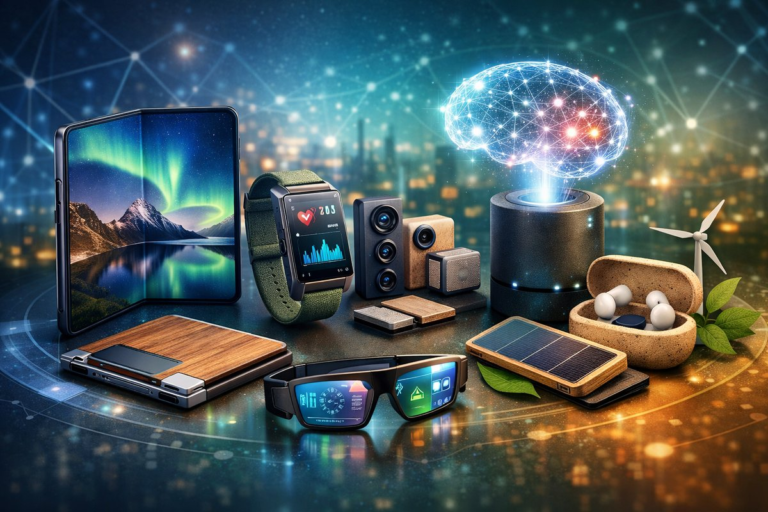
Meanwhile, the foldable display trend continues to evolve. Early versions of folding smartphones suffered from creases and flimsy hinges, but a new generation of screens has adopted improved polymers and refined hinge designs. These devices open up like a journal, offering a tablet-sized canvas for multitasking or sketching, then collapsing into a standard phone size that slips easily into tight pockets. Leaks show manufacturers experimenting with ultra-thin battery sheets that bend along with the screen, ensuring you don’t lose runtime in the name of flexibility.
One of the most remarkable developments is the rise of AI-powered translation tools you can wear in your ear. Researchers have refined speech-to-speech models to run locally on microchips no larger than a thumbnail. Slip an earpiece in place, set your target language, and hold a normal conversation with a traveler halfway around the world-without pulling a smartphone from your pocket or waiting for data to upload to a remote server. Privacy advocates have praised this shift, since sensitive conversations remain on the device instead of being shared with a cloud provider.
It’s not just personal electronics that are getting sleeker and smarter. Home and office gadgets have followed suit. Smart modular desk lamps now come with magnetic dimmable panels that clip together in any configuration you like. Each panel can tweak color temperature, beam pattern, or brightness independently. Some models even integrate wireless charging pads right into the base, letting you top up a phone or wireless earbuds without hunting for a cable.
Power management remains a central theme. Solid-state batteries, once the domain of academic journals, are creeping into portable chargers. These new power banks can deliver enough current to fast-charge a laptop while retaining a slim profile. They also use more stable electrolyte materials, reducing the risk of overheating-a common concern with high-capacity cells.
Connectivity has also made quantum leaps. Wi-Fi 7 routers promise multi-gigabit speeds on multiple simultaneous channels, ensuring that every connected gadget in your home gets plenty of bandwidth. Local mesh networks can now intelligently route traffic between devices, reducing latency when you’re gaming or video calling. Meanwhile, Bluetooth Low Energy Audio is revamping how headphones and hearing aids share sound. By moving to a broadcast model, a single transmitter can wirelessly feed audio to multiple receivers with near-lossless quality and super-low delay.
Environmental impact is no afterthought in this wave of gadgets. Manufacturers are swapping plastic housings for recycled aluminum and biodegradable composites derived from plant waste. Charging cables are being redesigned to resist fraying, extending their lifespans. Packaging is shrinking too, cutting back on bulk and waste. Some companies now offer modular upgrades rather than forcing you to replace an entire device when a single component becomes outdated.
For creative professionals and hobbyists, these portable marvels open up fresh possibilities. Imagine scouting locations for a film shoot with a drone that fits in your palm, capturing over 4K footage on gimballed stabilizers. Or sketching on a nib-sensitive stylus that wirelessly links to a folding tablet and lets you export layered artwork with embedded color-calibration data. Even the tools you use for note-taking are getting an upgrade: digital pens that track every stroke on ordinary paper, syncing instantly to the cloud and converting handwritten ideas into editable text.
Yet, all this gadgetry still has to feel friendly and approachable. A crowded tech expo showed dozens of concepts-some wildly futuristic, others more grounded-but the crowd favorite was a simple wireless earbud that combined gesture controls, noise cancellation, and live translations all in one. It wasn’t the most powerful device on the show floor, but it struck the perfect balance of intuitive design and everyday utility.
Looking ahead, the next frontier may not be raw specs but how these tools fuse into an ecosystem that adapts to your needs. Imagine walking into a meeting room and having the projector light up automatically, a smart lamp adjust its temperature to reduce eye strain, and your laptop draw power wirelessly from a charging pad beneath the table. Your earbuds switch modes as soon as you put them in-toggling from music to a voice-activated assistant or a real-time translation feed.
The gadget world is moving rapidly toward an era of context-aware electronics, where each device communicates with the others to create a seamless user experience. Open standards and interoperability will be key, ensuring that you’re not locked into one manufacturer’s ecosystem but free to mix and match best-in-class products. At the same time, security and privacy will remain top priorities, with encryption baked into every layer-from the silicon in your earbuds to the firmware in your home router.
For consumers, this means a golden opportunity: access to technology that enhances daily life in practical, tangible ways rather than simply chasing benchmarks. Whether you’re a digital nomad, a home-office entrepreneur, a creative professional, or someone who loves exploring smart home setups, the current crop of gadgets is designed to fit into your lifestyle rather than disrupt it.
From pocket-sized powerhouses to smart tools that elevate every corner of your day, the innovation frontier in consumer tech continues to expand. As these devices become more capable, more sustainable, and more interconnected, they will redefine our expectations of what’s possible outside the walls of a traditional office or studio. The key is to choose tools that align with your needs, respect your privacy, and reduce environmental impact-so that the gadgets we rely on can also give back.