Location
Mount Vernon, WA 98274
Location
Mount Vernon, WA 98274

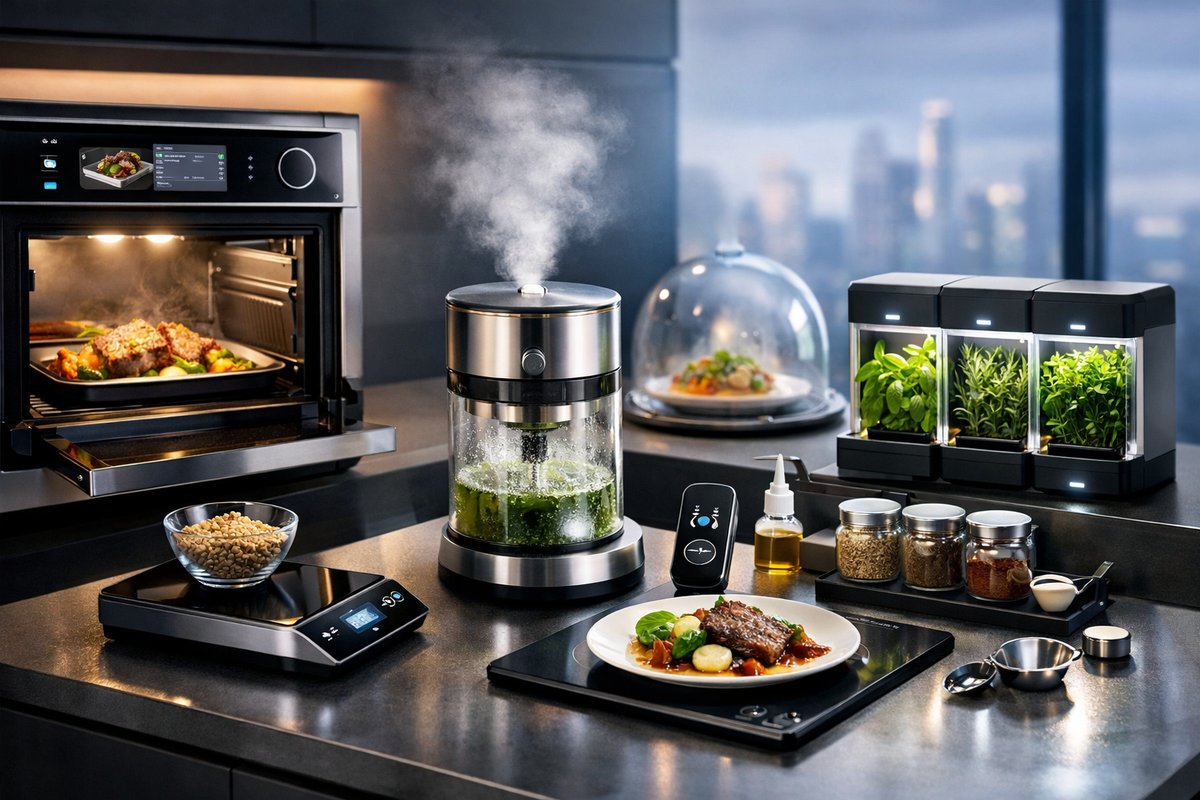
A global showcase of cutting-edge culinary gadgets is redefining how we cook, measure, and savor meals. From AI-powered ovens to ultrasonic emulsifiers and modular herb dispensers, the kitchen of the near future marries precision, sustainability, and sensory delight.
A bustling exhibition hall on the outskirts of a major European city recently became ground zero for an unfolding revolution: the rapid evolution of kitchen technology. Hundreds of innovators, start-ups, and veteran appliance makers gathered to unveil a wave of tools designed to transform not only what we eat, but how we connect with every slice, stir, and savor.
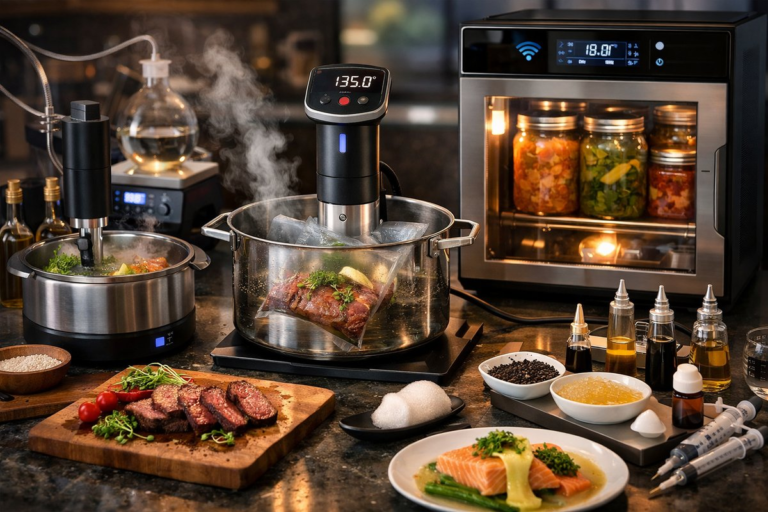
Walking through the maze of booths, one can’t help but be drawn to a sleek steel chamber that promises micro-precision fermentation. By carefully controlling airflow, humidity, and temperature in one-degree increments, home cooks can coax mushrooms to new umami heights, craft artisan sourdoughs, or age cheeses at small scale. Traditionally the domain of time, intuition, and trial-and-error, fermentation has long been a slow quest. Now this counter-top marvel accelerates the process, enabling joyful experimentation without sacrificing the depth of flavor that months of natural ripening produces.
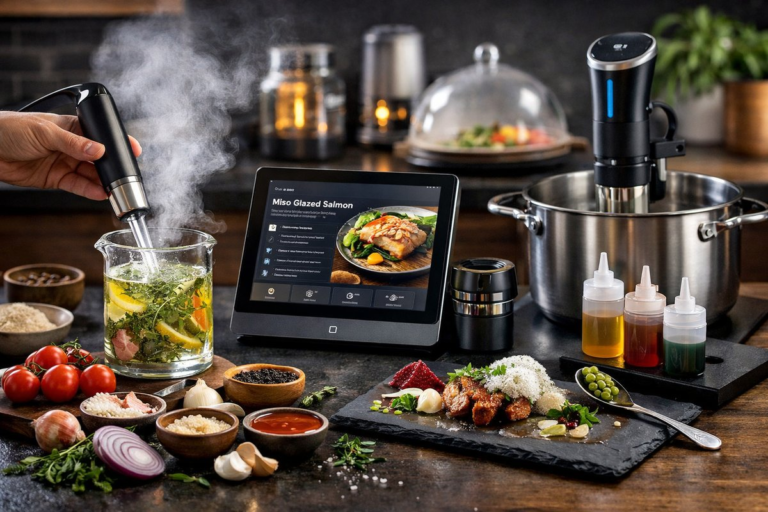
Nearby, an ultrasonic emulsifier caught eyes and ears. Unlike a handheld blender that whisks air into liquids with spinning blades, this gadget uses high-frequency vibrations to break liquids into submicroscopic droplets. Imagine a vinaigrette that never separates, a mayonnaise so light it floats like foam, or plant-based milks with silk-smooth texture-all achieved in seconds. For chefs and curious home cooks alike, this tool feels like a molecular gastronomy trick repackaged for everyday kitchens.
AI has also made a grand entrance. A prototype oven equipped with a thermal camera and machine-learning algorithms claims to read the surface and internal temperature of roasts, guiding you to perfect doneness every time. No more poking with a fork or second-guessing your instincts. Instead, an app offers step-by-step prompts: “After three minutes at this setting, shift the cut to the top rack for a crustier finish.” The technology even logs your past bakes and adjusts its recommendations, learning from each success (or crispy failure).
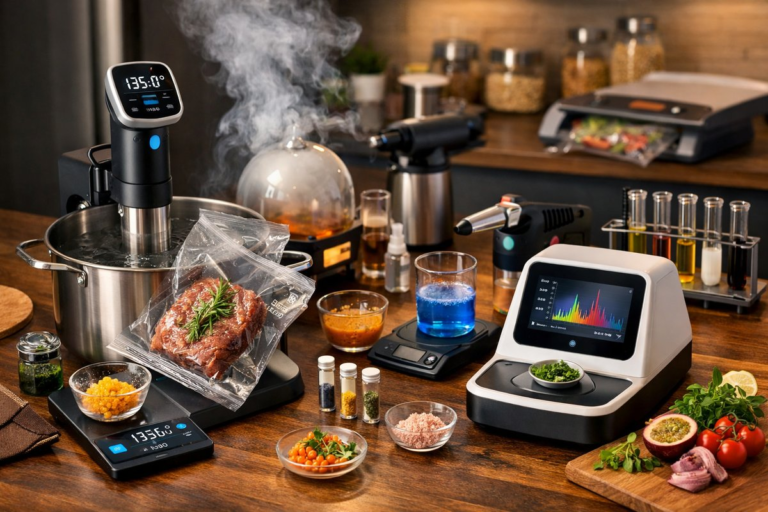
But it isn’t all high-end wizardry. A wooden cutting board embedded with sensors demonstrates the art of contactless measurement. By simply placing a bowl or ingredient on its surface, tiny scales report weight to an app, which then calculates nutrition data and suggests portion sizes. Coupled with a modular spice carousel-each compartment magnetically attaching for quick refills-meal prep begins to look more like a mindful ritual than a frantic scramble.
Amid these futuristic wonders, several designers championed sustainability. One station showcased a drip-free strain pot made of biodegradable fiber filled with activated charcoal. After straining stocks, cold brews, or infused oils, the fibers can be composted, returning nutrients to soil instead of clogging landfills. Elsewhere, an induction-powered multi-pan system heated three separate dishes from a single power rail, minimizing wasted energy by only activating zones where cookware sits. This precision heating, once reserved for professional kitchens, is now trickling into everyday home cooking.
Despite all the talk of robotics and AI, many exhibitors emphasized the importance of preserving culinary rituals. A minimalist rolling pin, carved from sustainably sourced ash, features carved depth-gauges that guide novice bakers toward uniform pastry thickness. A handcrafted wooden mortar and pestle with metal-reinforced base nods to centuries of spice grinding, reminding us why certain tactile acts remain irreplaceable.
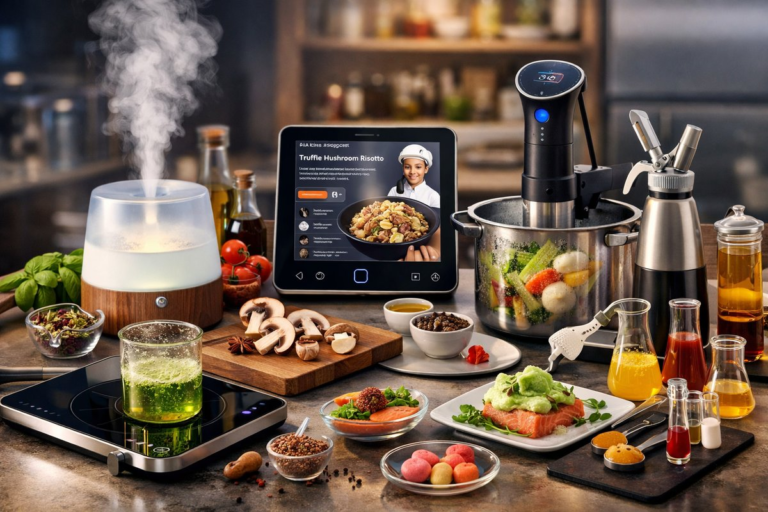
At the intersection of culture and code, a digital recipe platform is experimenting with emotional tagging. Users can rate not only flavor, texture, and ease, but also note the mood that a dish conjured. Did the spicy curry feel uplifting? Was the chocolate ganache soothing after a long day? These qualitative insights feed back into AI suggestions, offering next-generation cooks not just functional recipes, but ones tailored to their emotional landscape.
So what does this mean for everyday kitchens? For starters, accessibility is improving. Compact cooling drawers once reserved for professional chefs are now slim enough to retro-fit under a countertop. Voice-activated faucets dispense measured water quantities without touching handles. Wireless meat probes sync to your phone so that you can tend cocktails at the party while your roast moves through the perfect internal temperature arc.
Yet technology alone doesn’t guarantee better meals or deeper connection. Many visitors spoke of balance: letting new gadgets handle precision tasks while preserving time-honored practices like hand-tossing salads or stirring risotto by hand. The most compelling demonstrations blended automation with human intuition, inviting cooks to reclaim kitchen time from menial tasks and instead focus on creativity or shared conversation at the table.
Among the startups, one scene-stealer was a solar-charged food dehydrator pitched as a zero-electricity solution for preserving summer’s harvest in off-grid settings. And in a quieter corner, a small team unveiled a transparent fermentation pot that lets home brewers watch centuries-old microbial dances in action-an open invitation to marvel at nature’s own kitchen chemistry.
As the showcase drew to a close, attendees departed with bulging tote bags stuffed with sample pods of cultured butter, recipe cards embedded with NFC chips, and dust-covered business cards for futuristic spice blends. Yet the true takeaway was a renewed sense of possibility: that every whisk, blade, and sensor can be a collaborator on the journey from raw ingredients to multi-sensory meal.
For the curious cook, this is an invitation to play and iterate. Which piece of tech complements the rituals you cherish, and which might spark a new tradition? As kitchen counters evolve into digital-analog stages, each of us has the chance to build a personalized blend of tools, techniques, and moments that transform ordinary dinners into memorable experiences.