Location
Mount Vernon, WA 98274
Location
Mount Vernon, WA 98274

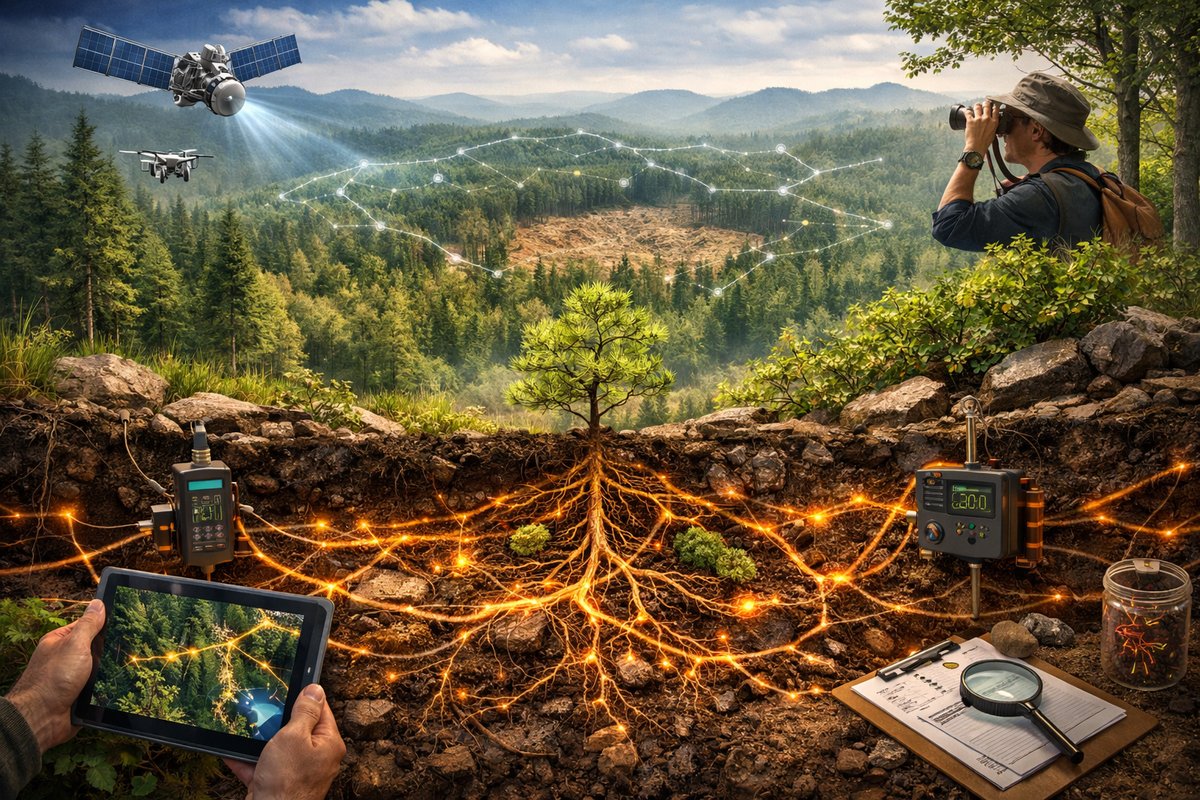
In a groundbreaking study, ecologists have revealed how underground fungal networks act as the vital circulatory system of forests, knitting together individual trees and accelerating recovery after disturbances. By combining satellite imagery, soil sensors, and citizen science data, researchers are mapping these hidden connections and uncovering new strategies for climate-smart restoration.
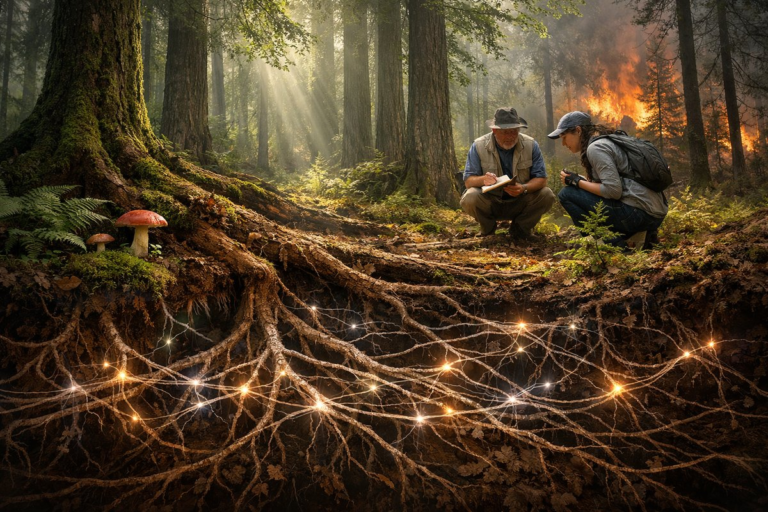
From the canopy overhead to the humus-rich soil beneath our feet, forests teem with life. Yet much of their vitality remains hidden in the dark corridors of the earth, where threadlike fungal filaments forge partnerships with trees, shrubs, and grasses. Recent research is now illuminating these subterranean networks-often called the “wood wide web”-and revealing how they sustain forest health, bolster resilience after wildfires, and store vast quantities of carbon.
A team of ecologists and remote sensing specialists set out to quantify this phenomenon across multiple forest biomes, from temperate rainforests to Mediterranean woodlands. They combined high-resolution satellite imagery with ground-based soil moisture sensors and DNA analyses of root samples. Field technicians drilled small cores in plots that had experienced varying levels of disturbance-whether logging, insect outbreaks, or wildfire-and then monitored how fungal communities reassembled over months and years.
Their results, recently published in a leading environmental science journal, show that forests with richer mycorrhizal networks recover canopy cover up to 30 percent faster than areas where these fungal partnerships are disrupted. In some cases, young saplings in proximity to an intact fungal web exhibited growth rates nearly double those planted in sterilized soils. Those subterranean connectors not only ferry water and nutrients between trees but also transmit distress signals-chemical messengers that warn neighbors of drought or pest invasion.
“We’re only beginning to grasp the complexity of these underground highways,” says one lead researcher. “They are critical for carbon sequestration and for the overall stability of forest ecosystems under stress.” Their team also tracked how different fungal species prioritize carbon exchange. Some fungi form tight one-to-one bonds with a single tree species, while others shuttle resources among a diverse mix of hosts, acting as ecological brokers that maintain biodiversity.
Beyond basic science, the study highlights practical applications for land managers and restoration practitioners. By mapping fungal hotspots, forestry agencies can identify priority areas that will rebound naturally after disturbance and focus planting efforts on degraded sites where mycorrhizal networks are thin or absent. In pilot projects, crews have inoculated seedlings with native fungal cultures to jump-start symbiosis, and early results suggest these bio-augmented trees fare better through summer droughts and pest pressures.
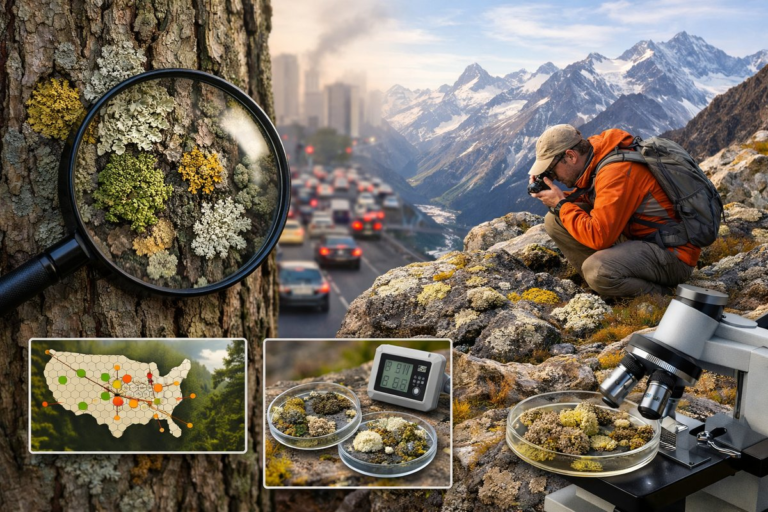
Technological innovation played a pivotal role in these discoveries. Lightweight soil moisture sensors, equipped with remote telemetry, relayed real-time data on water distribution across root zones. Meanwhile, drones outfitted with multispectral cameras scanned forest plots, detecting subtle differences in leaf greenness that correlate with nutrient status. Some citizen science groups even contributed smartphone images of mushroom fruiting bodies, geotagged and uploaded to an open-access database. These crowd-sourced observations helped researchers refine species distribution models and track seasonal patterns of fungal activity.
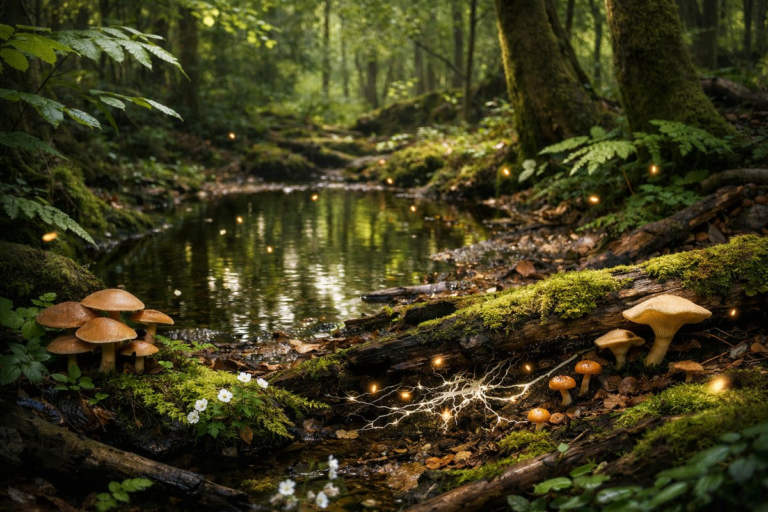
In one striking example, volunteer naturalists in a coastal woodland reported an unusual fruiting of a truffle-like fungus following an unusually wet winter. Laboratory tests confirmed it belonged to a lineage known for forming broad, fanlike mats around tree roots. The discovery prompted a focused survey of surrounding areas using portable DNA sequencers, and researchers soon identified a vast underground mat spanning several hectares-an invisible reservoir of ecological connectivity.
Climate scientists note that healthy fungal networks play a major role in long-term carbon storage. Organic material bound within these networks can persist in soil for decades or centuries, effectively locking away carbon that might otherwise return to the atmosphere. When forests burn or are cleared, the network can collapse, releasing carbon-rich compounds and diminishing recovery potential. Protecting and restoring these fungal systems, therefore, emerges as a crucial strategy in climate mitigation efforts.
Policy makers are taking notice. Several regional forestry commissions recently endorsed guidelines for minimizing soil disturbance during logging operations, encouraging selective harvest methods that spare key fungal hubs. In urban areas where green spaces often suffer from compaction and pollution, planners are experimenting with soil aeration and mycorrhizal inoculants to reinforce street trees and park plantings.
For those who wander woodlands or tend home gardens, the message is clear: fungal allies matter. Simple practices-like leaving fallen logs in place, avoiding excessive soil tilling, and composting plant wastes-can nurture the web beneath. Citizen scientists can also contribute by using smartphone apps to document mushroom sightings or by collecting soil samples for local ecology labs. Each observation helps build a richer picture of fungal diversity and distribution, guiding conservation actions at a landscape scale.
As our understanding deepens, a sense of quiet awe accompanies these discoveries. The forest is not merely a collection of trees; it is a dynamic community, bound by a network of fungal threads that impart strength, memory, and communication. In a time of mounting environmental challenges, paying attention to this hidden world may prove decisive for the future of our forests and the climate they help regulate.
Whether you’re a land manager, a student, or a curious hiker, the next time you step on a soft bed of pine needles or brush aside a mossy log, remember that beneath lies a living web-ancient, resilient, and vital. By acknowledging its presence and supporting its health, we honor a partnership millions of years in the making and reaffirm our place within the broader tapestry of nature.