Location
Mount Vernon, WA 98274
Location
Mount Vernon, WA 98274

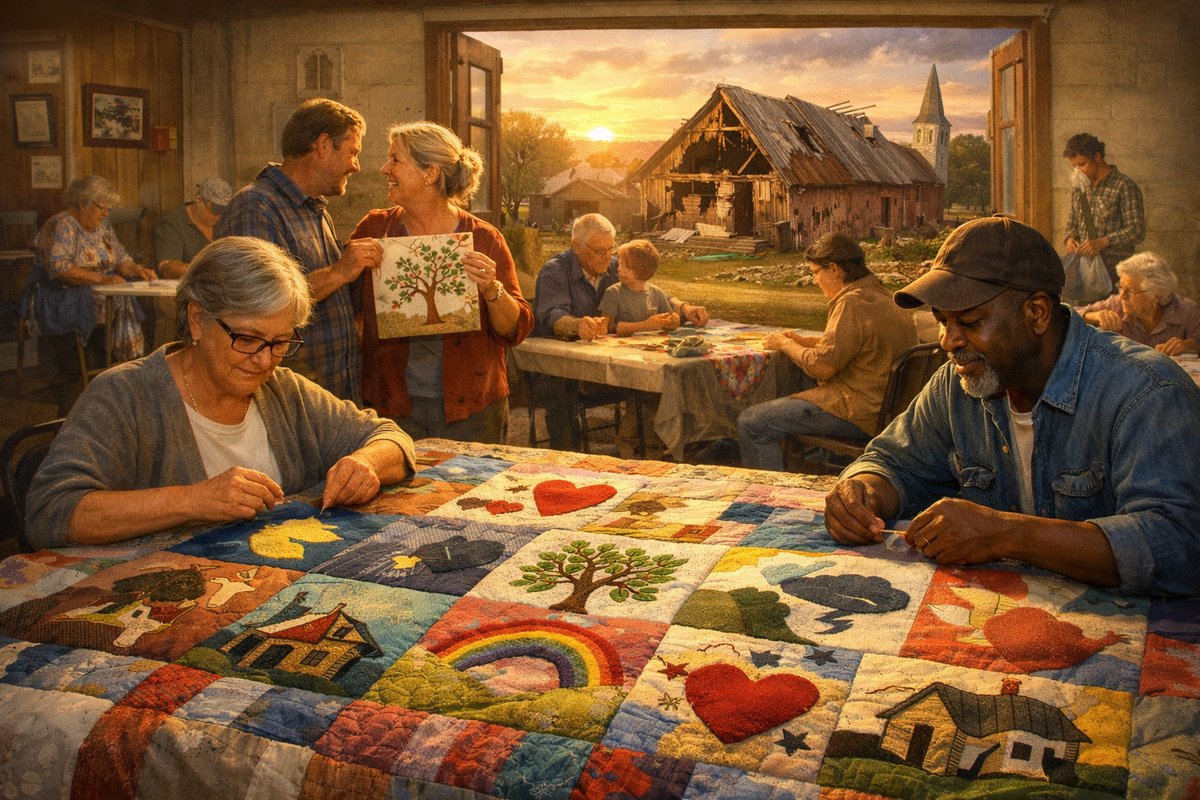
In a small Midwestern town battered by last year's storms, neighbors have united to weave together more than just fabric-they're stitching resilience, community and quiet courage into every panel. Through a communal quilt initiative, individuals share stories of loss and renewal, embodying the human impulse to rise again and hold hope in the face of adversity.
When the tornado roared through Maplewood last spring, it left behind shattered homes, uprooted lives and a deep ache in the town’s collective heart. What began as cleanup crews and relief supplies soon evolved into something more personal: a community quilt project designed not just to repair the physical homes, but to heal the emotional wounds left by that violent night.
Each patch in the Maplewood Community Quilt carries a story. There’s the square pieced together by a retired teacher who lost her classroom resources, woven with scraps from students’ handmade gifts. Another panel bears the fingerprints of a young father who spent weeks in the emergency shelter, stitching by flashlight to keep despair at bay. Volunteers gather every Saturday afternoon at the local community center, where laughter mingles with the hum of sewing machines and the soft snip of fabric scissors.
Behind every needle and thread lies a narrative of perseverance. Olivia, a waitress whose parents’ home was flattened, recalls the moment a stranger handed her a quilting kit bag full of donated cloth and tools. “I couldn’t believe someone would think of me,” she says, voice thick with emotion. She remembered her mother teaching her basic stitches as a child, a bond that ended too soon. As she worked on one square-embroidering a small watercolor landscape-she felt her grief lighten, replaced by a sense of purpose and connection.
The project leaders, a trio of volunteers who met during relief efforts, emphasize that the true power of the initiative is its emphasis on sharing. They invite residents to bring items of personal significance-a worn scarf, a faded photograph, a piece of denim from work overalls-and incorporate those artifacts into the quilt. With each addition, the quilt becomes a living archive of the community’s collective journey through fear, heartbreak and healing.
On a crisp autumn day, the community center’s front hall is lined with tables overflowing with colorful scraps: floral prints, sturdy ticking stripes, and even pieces of firetruck-red canvas donated by the volunteer firefighters who helped when the tornado struck. Sunlight streams in through tall windows, casting warm patterns across the assembled makers. Elders teach newcomers how to lock fabric corners, match seams and choose color palettes that echo sunrise and hope.
The project extends beyond sewing stations. A small corner is dedicated to journaling, where participants reflect on their experiences and write letters to themselves five years in the future. Nearby, a low table holds mindfulness coloring books and a display of watercolor sets-tools for those who find solace in sketching clouds, rooftops and budding flowers. Instructors lead brief breathing exercises before each session, reminding everyone that healing begins within.
For Maplewood’s youth, the quilt is more than craft therapy-it’s a lesson in resilience and empathy. Teenagers who once felt powerless in the shadow of destruction now contribute artfully stitched names and initials, their own form of self-expression. They share stories of narrowly escaping debris and the relief of finding neighbors alive. Their panels brim with bold, modern patterns-abstract arcs evoking rainbows after a tempest.
Beyond the weekly gatherings, the quilt project has sparked other community initiatives. A local café is offering a “quilting special” menu of warm soups and hearty sandwiches to support operating costs. A gardening collective is cataloguing donated seeds for a memorial wildflower garden to be planted in the spring, symbolizing rebirth. Even the fire department has pledged to host a safety workshop for children, framing preparedness as an act of collective care.
The grand unveiling of the Maplewood Community Quilt is scheduled for midwinter, when the quilt will hang in the town library-a public space where each panel can be touched, admired and explored. Organizers imagine visitors pausing before individual squares, reading embroidered notes and feeling the weight of shared experience. They hope it will foster a legacy of solidarity: a reminder that in every crisis, the human impulse to come together remains woven into our DNA.
Project founder Marcus, a carpenter whose own workshop was wiped out, sees the quilt as more than fabric art-it’s a testament to the human capacity for unconditional love. “Every stitch stands for someone saying, ‘I see your pain, and I’m here,'” he explains. “That’s the real restoration.”
Stories like Maplewood’s remind us that purpose often arises from adversity. The act of creating-whether through stitching, painting or journaling-becomes a vessel for hope. When people transform personal tragedy into collective meaning, they model the quiet courage that sustains communities.
As winter’s chill sets in and nights grow longer, the Maplewood community finds warmth in shared narratives and tangible symbols of resilience. The quilt will soon wrap around shoulders like an embrace, offering comfort on cold evenings. But its true gift is something less tangible: the knowledge that even when life unravels, we have the power to repurpose our memories, mend our bonds, and rise again together.
Through communal art, reflective practice and simple acts of kindness, Maplewood shows how lives in motion can converge into a story worth holding. In every carefully stitched panel, there is the promise of healing, of unconditional solidarity, and of the enduring human spirit that refuses to be undone.