Location
Mount Vernon, WA 98274
Location
Mount Vernon, WA 98274

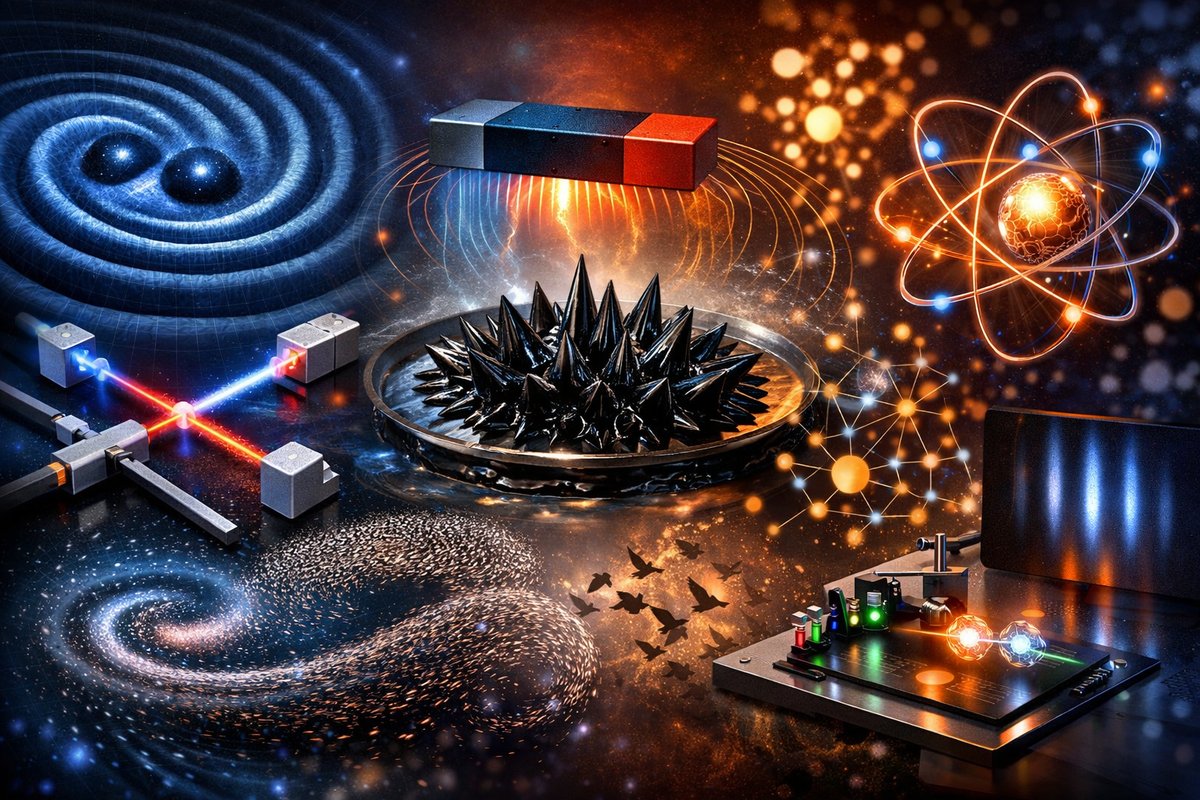
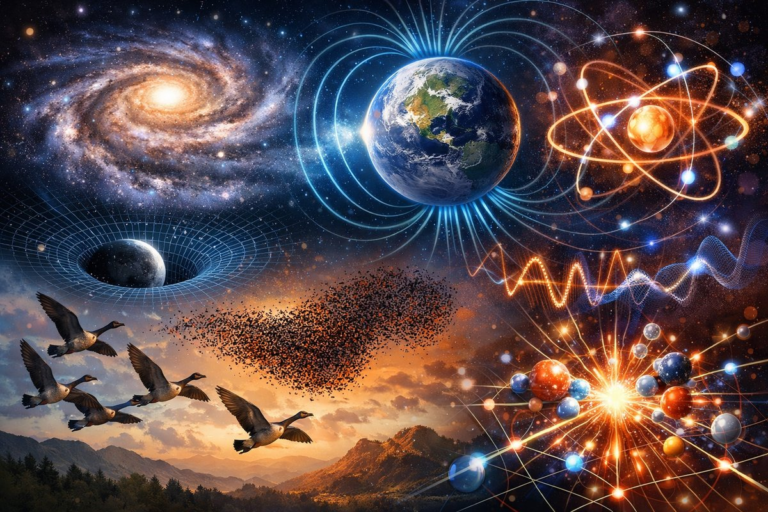
From the faint ripples of spacetime detected by laser interferometers to the shimmering patterns of ferrofluid under a magnetic field, nature's forces weave a tapestry of wonder. Recent advances in emergent system modeling and tabletop quantum demos are inviting enthusiasts to witness the unseen. This article delves into gravity's pull, the subtle dance of magnetism, collective behaviors in complex systems, and the quirks of the quantum realm.
The quest to decode the hidden rhythms of the universe has leapt from ivory-tower labs into public fascination. Last decade’s breakthrough in detecting spacetime ripples ushered in a new era where gravity, once thought immutable and silent, now vibrates audibly through high-precision detectors. Meanwhile, magnetic fields once relegated to compass needles are mapped seamlessly with portable sensors, revealing their invisible influence on planets and particles alike.
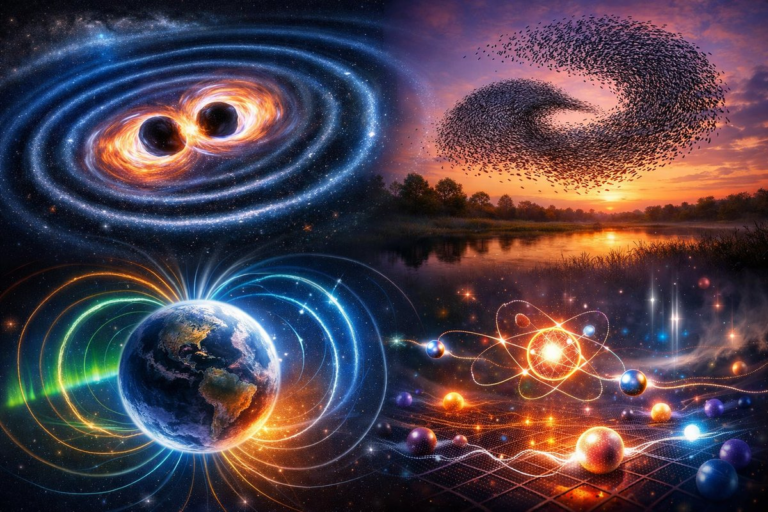
In mid-latitude skies, waves of starlings carve fluid patterns without a single leader. Researchers call this a classic example of emergent behavior-simple rules at the level of each bird yielding complex, large-scale choreography. Similar principles guide ant colonies building bridges of living flesh and synchronized firefly displays in tropical forests. Behind these natural displays lie mathematical frameworks now powering traffic flow simulations and swarm robotics.
Quantum mechanics, too, is shedding its reputation as an abstract abstraction. Desktop cloud chambers reveal the zigzag tracks of cosmic particles. Compact quantum random number generators promise unhackable encryption. Entangled photons traverse kilometers of fiber, hinting at a future quantum internet that could transform secure communications.
Gravity’s modern story began in earnest when a network of laser interferometers recorded cosmic collisions of black holes. Those events, unfolding billions of light-years away, stretched space by less than a thousandth of a proton’s diameter. Yet by isolating these almost imperceptible tremors, physicists confirmed a century-old prediction and opened a window into the darkest corners of the cosmos.
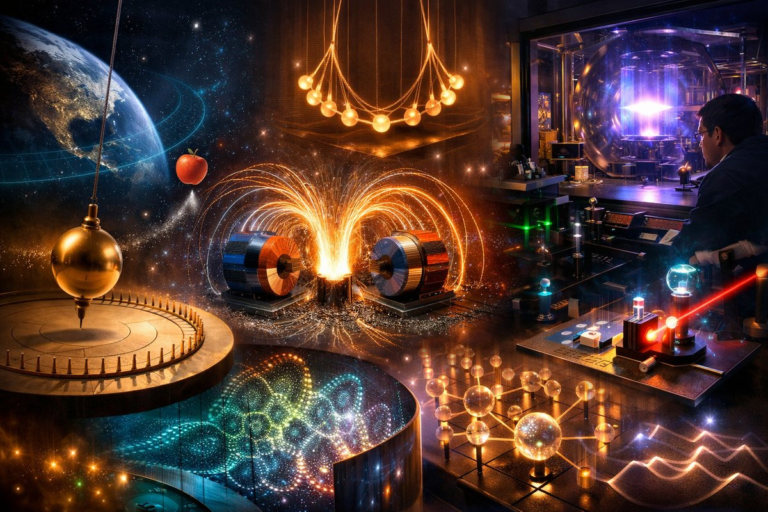
Closer to home, tabletop experiments make gravity tangible. A precision pendulum swung in a vacuum shows tiny shifts in period as masses pass beneath. High-speed cameras coupled with open-source analysis software let students measure minute gravitational pulls. These demonstrations reinforce that gravity, though feeble compared to electromagnetic forces, sculpts planetary orbits and coils spacetime itself.
Magnetism has its own surprises. Long used in navigation, modern magnetometers built into smartphones allow anyone to map anomalies in local rock formations or detect buried metallic structures. In remote fieldwork along the Ring of Fire, geophysicists use drone-mounted sensors to capture volcanic magnetic signatures, forecasting eruptions before ash clouds form.
Back in the lab, ferrofluid droplets dance atop magnetic coils, elongating and splitting into spikes in response to field strength. These mesmerizing displays aren’t just art-engineers are exploring ferrofluid lubricants for friction-less seals and heat-transfer devices for electronics cooling. The same principles underlie magnetic resonance imaging, a medical mainstay.
Emergence shows up in unexpected places, too. In recent urban studies, pedestrian flows through busy plazas self-organize into lanes of uniform walking direction. Simple signage and floor markings guided by mathematical models encourage smoother foot traffic in train stations, reducing crowding and heat stress. Biologists and architects are now collaborating to design public spaces that flow like rivers.
On the quantum front, amateur physicists are no longer bound to large facilities. DIY cloud chambers built with dry ice and isopropyl alcohol reveal electron and alpha-particle tracks in smoky curtains. Online communities share tips for achieving higher sensitivity or colorizing different types of radiation. These citizen science platforms sometimes lead to unexpected discoveries in background radiation patterns.
Meanwhile, compact quantum random number generators-devices that exploit photon detection to produce truly random bits-are emerging as consumer tools. They plug into laptops via USB and feed cryptographic software with entropy that cannot be predicted or replicated by classical algorithms. This kind of unpredictability is crucial for high-security financial and military communications.
A striking recent demonstration used entangled photons sent through a metropolitan fiber network spanning multiple city blocks. The project proved that entanglement can survive real-world conditions of temperature variation and fiber vibrations, paving the way for a future quantum internet. As network infrastructure upgrades proceed, quantum-secure channels may become a standard option for sensitive data streams.
What unites these threads is the interplay between curiosity-driven research and accessible tools. High-precision pendulums, ferrofluid kits, magnetometers, cloud chambers, and quantum devices-once confined to specialized labs-are now in the hands of educators, hobbyists, and small research teams. Their experiments demystify natural forces, transforming distant phenomena into tactile experiences.
The ripple effect extends to software. Interactive gravity simulators and agent-based modeling platforms run on ordinary desktop computers, allowing exploration of planetary dynamics, flock formation, and traffic flows through purely graphical interfaces. Educators embed these simulations in classroom lessons, inviting students to tweak parameters and witness emergent patterns firsthand.
But bringing these experiments home requires mindful sourcing. Handling radioactive materials for cloud chambers demands safety considerations and legal compliance. Building electromagnetic coils for ferrofluid demonstrations calls for insulated wiring and stable power supplies. Ensuring that quantum random number generators are certified for genuine randomness helps maintain trust in encryption systems.
Yet with proper guidance and responsibly sourced kits, citizen scientists are making real contributions. A recent collaborative map of seismic noise levels, collected via smartphone accelerometers, helped refine models of urban vibration blanketing. Data from amateur magnetometer studies in remote regions filled gaps in government surveys of the planet’s magnetic field, improving everything from GPS calibration to mineral prospecting.
The dance between large-scale infrastructure and grassroots discovery illustrates a democratization of science. As enthusiasts decode gravity, magnetism, emergent systems, and quantum quirks in living rooms and local parks, they expand our collective understanding. Each small experiment builds confidence, training the next generation of physicists, engineers, and curious minds.
Looking ahead, the lines between disciplines will blur further. Insights from emergent flocking models inform algorithms for swarming drones. Quantum sensors may detect subtle gravitational anomalies for underground archaeology. Magnetic field scans from high-altitude balloons could reveal previously unknown asteroid impacts on Earth’s surface. The frontier lies at the intersections.
For the individual drawn to this frontier, a handful of essential tools can transform wonder into exploration. Magnetic field sensors open a hidden dimension to everyday metal objects. Pendulum sets make spacetime curvature tangible. Cloud chambers capture ephemeral cosmic visitors in smoky trails. Ferrofluid kits reveal fluid dynamics governed by invisible forces. And quantum random number devices bring fundamental unpredictability into the palm of your hand.
Together, these instruments form a modular toolkit for decoding nature’s patterns. They invite you to become both observer and participant in the grand experiment of the universe. With each measurement and visual demonstration, we inch closer to a holistic narrative where gravity, magnetism, emergence, and quantum phenomena are threads in a single cosmic tapestry.
The real magic lies not only in high-tech observatories or massive accelerators, but in the spark of wonder that lights up when you see a cloud of alcohol vapor etched by a passing particle, or when ferrofluid spikes dance to a magnetic beat. That spark can ignite a lifelong journey of discovery, blurring the boundary between spectator and scientist.
Whether you’re a classroom teacher aiming to spark curiosity, a hobbyist seeking tactile science experiences, or simply a lifelong learner craving a closer encounter with nature’s forces, the stage is set. The tools exist. The questions are many. The patterns of nature await your exploration.