Location
Mount Vernon, WA 98274

Location
Mount Vernon, WA 98274
Prose Create rolls out Muse Canvas, a collaborative writing environment that weaves real-time sharing, visual mapping, and reflective prompts into one seamless space. Writers and educators engaged in a hybrid residency helped shape the platform's early features, turning private journals into communal story landscapes that invite curiosity and emotional resonance.
Prose Create today introduced Muse Canvas, a groundbreaking addition to its suite of reflective writing tools. Designed for authors, instructors, and journaling enthusiasts, Muse Canvas blends live collaboration with private drafting, offering an interactive digital easel where prose, sketches, and media converge. The launch marks a strategic push toward communal creativity-moving beyond solitary writing to spaces where memory, narrative fragments, and emotional threads can be shared and woven into collective compositions.
The heart of Muse Canvas lies in its modular workspace panels, which allow participants to arrange text blocks, image snippets, and voice-memo tags across an infinite scrollable canvas. Reflection prompts can be pinned to specific zones, inviting group members to respond in comments or by layering color-coded annotations. A built-in timeline feature lets users rewind to previous drafts or trace the evolution of a shared narrative, while an interactive mood-board widget collects evocative visuals and quotations into a dedicated sidebar.
To shape Muse Canvas’s early design, Prose Create hosted a monthlong residency in a converted warehouse loft, where a cohort of ten writers, educators, and visual artists experimented with features alongside the development team. Sunlit writing tables were lined with hardcover notebooks and fountain-tip pens, sticky notes fluttered against exposed brick walls, and a scent of fresh paper mingled with the hum of laptops. Participants sketched story arcs on communal whiteboards, then exported their handwritten marks directly into Muse Canvas using integrated handwriting recognition.
Those private scribbles, once bound in leather journals, came alive on the digital pane. One writer who chronicled childhood family trips discovered that crowd-sourced prompts from fellow residents unearthed hidden connections between an old photograph and a lost letter. Another poet layered voice recordings of evening rain beneath a cluster of vivid prose stanzas-an effect only possible when text, sound, and image collaborate on a boundless page.
Muse Canvas supports both in-person workshops and fully remote cohorts. Virtual participants join live sessions with their own floating panels, tossing ideas onto a shared mural in real time. Group chat threads sit alongside the canvas, so notes on tone, pacing, or emotional resonance never get lost in email chains. Organizers can set granular permissions, allowing some contributors to drop quick reflections while others guide overarching narrative structure.
Integration with local and cloud-based libraries means writers can pull passages from public-domain texts or personal archives without leaving the canvas. An embedded search tool indexes uploaded PDFs, word documents, and image galleries, making it easy to drag source material into play. A linked metadata view tracks every excerpt’s provenance and revision history, giving educators transparency when assigning peer-review workshops.
Under the hood, Muse Canvas leverages encrypted synchronization across devices, ensuring that work in progress remains accessible offline. When writers lose network connectivity-on a train ride or in a remote cabin-the system caches changes locally and reconciles edits upon reconnection. For privacy-minded creators, drafts can reside entirely on user-hosted servers, with end-to-end encryption preventing third-party access.
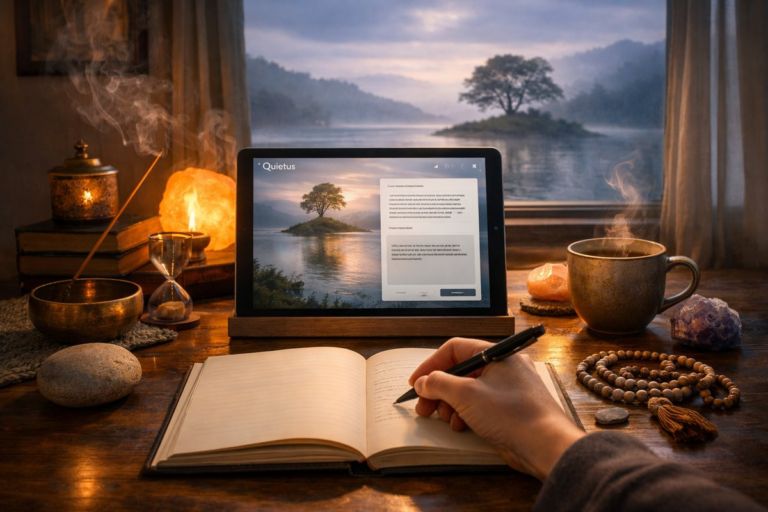
During beta testing, many participants paired Muse Canvas with digital writing tablets that accept stylus input. Handwritten marginalia, quick sketches, and free-form diagrams felt natural alongside typed text. Others preferred to switch between their favorite dot grid notebook and a vintage gel-ink pen, photographing handwritten pages and uploading them for seamless playback on the canvas. A simple snapping tool automatically crops edges, corrects perspective, and transcribes minimal headings into searchable tags.
Ambient features play a crucial role in the Muse Canvas experience. Integrated soundscapes-forest rain, distant thunder, or a quiet café buzz-help writers sink into reflective zones when drafting personal essays or narrative memoirs. Customizable reading lamps equipped with adjustable color temperature controls ensure that virtual workshops feel as warm and inviting as an in-studio gathering. Participants often leave devices on “soft glow” mode for evening sessions that echo the intimacy of candlelit readings.
Educators and workshop leaders who piloted Muse Canvas praised its potential to democratize creative feedback. One university writing instructor noted how remote students in different time zones engaged equally, dropping thoughtful audio comments into peers’ prose blocks before morning coffee. A community arts program used the canvas to archive oral histories from local elders, weaving recorded recollections with scanned photographs to create dynamic digital exhibits.
Writers’ groups have already begun forming public-facing “canvas journals,” where anyone can browse evolving narratives on topics ranging from urban legends to climate reflections. These journals feature an evolving header image and visitor-driven annotations that keep stories alive beyond their initial drafts. Prose Create plans to launch a dedicated gallery of featured canvases, spotlighting projects that push the boundaries of collaborative memoir and hybrid fiction.
Looking ahead, Prose Create teams are exploring extensions that integrate generative suggestion modules, offering vocabulary alternatives or structural prompts that respect each writer’s style. A planned mobile companion app will let creators drop in quick voice memos or snapshot inspirations, automatically syncing to desktop canvases. Future updates may support augmented reality overlays, allowing participants to walk through narrative worlds mapped onto physical spaces.
The release of Muse Canvas signals a shift in how reflective writers connect, blurring lines between individual introspection and collective storytelling. For those who once chained themselves to solitary desks, the canvas offers a new ecosystem: a living, breathing narrative garden grown from many hands. It’s a step toward writing spaces that embody both the quiet resonance of private journals and the vibrant dialogue of shared experience.
As hybrid residencies and community cohorts continue to adopt Muse Canvas, Prose Create envisions an ecosystem where every draft becomes a node in a larger tapestry of memory and imagination. The platform’s launch invites writers of all levels to gather around a luminous digital plane-where words become vessels of meaning, memory, and emotional truth.