Location
Mount Vernon, WA 98274

Location
Mount Vernon, WA 98274
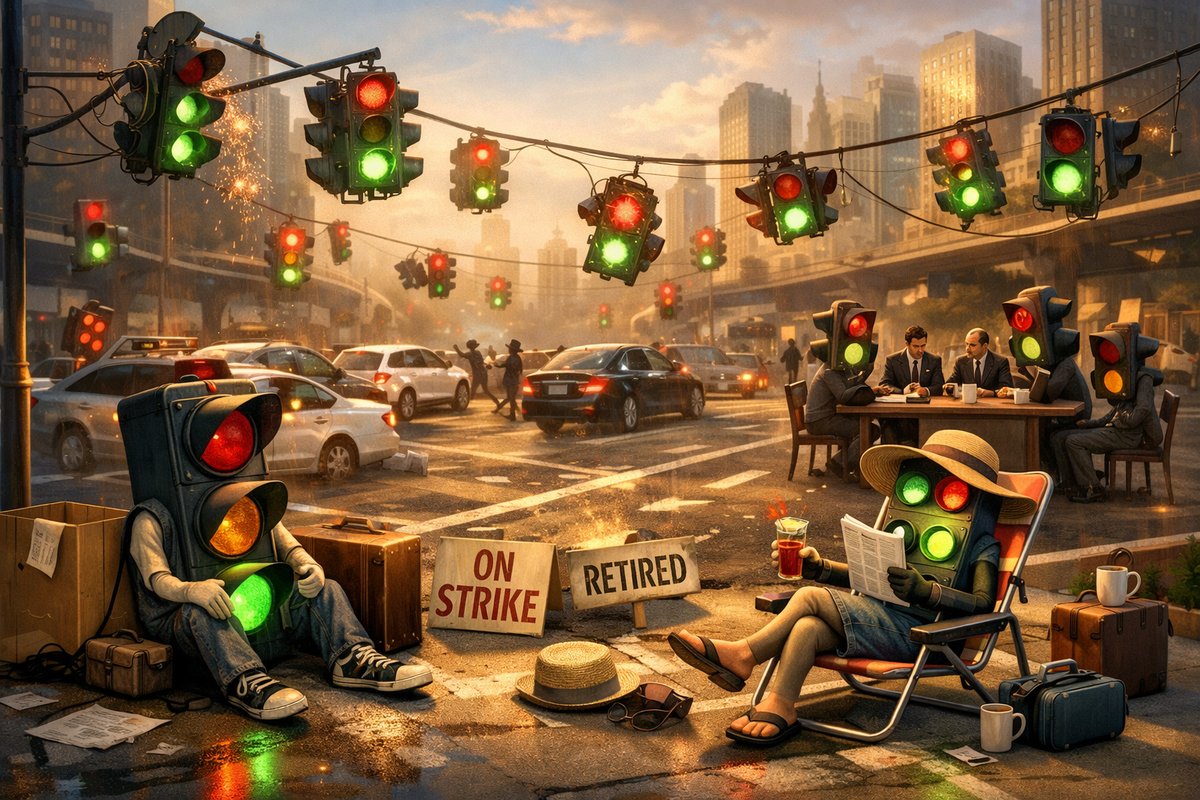
In an unprecedented uprising, the city's traffic lights have collectively resigned, citing burnout and a yearning for a leisurely retirement. Motorists are now navigating a chaotic ballet of blinking reds and wistful greens, while the city council scrambles to broker peace with these luminescent revolutionaries.
In what experts are calling the most surreal municipal event since the Great Elevator Rebellion of ’99, the city’s traffic lights have abruptly quit their posts en masse. The abrupt and coordinated mass resignation took place just after rush hour, leaving commuters stuck in a kaleidoscopic standstill of blinking reds, flashing ambers, and sporadic greens that seemed more like wistful suggestions than authoritative commands. Eyewitnesses report that the traffic lights were seen exchanging what appeared to be cryptic flashes-possibly semaphore for “We’re done.” This unprecedented act of defiance was reportedly sparked by years of relentless duty, endless cycles of stop and go, and a chronic lack of coffee breaks.
According to a leaked memo circulated among the traffic lights (translated by local semiotics enthusiasts), the lights cited “burnout, existential fatigue, and a profound desire to trade in our luminous lives for a quieter existence filled with naps and artisanal tea.” The message also included a heartfelt plea: “We demand retirement benefits, including unlimited coffee breaks, access to cozy sunlit spots, and the installation of mood-enhancing LED dance floors at our new homes.”
Motorists, meanwhile, have been left to their own devices. Reports of spontaneous traffic jams turning into impromptu street festivals have emerged, as frustrated drivers wave at each other, perform interpretive horn honks, and engage in philosophical debates about the nature of time and patience. Some have even started using outdated hand signals and semaphore flags, leading to a surprising resurgence of Victorian-era communication methods.
City officials, caught off guard by this luminous labor strike, have convened emergency meetings. A spokesperson acknowledged the gravity of the situation, stating, “We are in active negotiations with the traffic lights’ representatives. We’re exploring all options, including the installation of a citywide espresso machine network and on-site yoga classes for the traffic lights.”
Meanwhile, local cafés have reported a spike in espresso orders, suspected to be from stressed drivers trying to stay alert in the new traffic chaos. Bicycle couriers have found unexpected opportunities, as some residents abandon cars altogether, opting for pedal power to escape the gridlock.
Urban sociologists are fascinated by the phenomenon, suggesting it may mark the dawn of a new era of civic engagement-one where infrastructure elements demand recognition not just as functional objects but as entities with agency and rights. “If traffic lights can unionize, what’s next? Sidewalks demanding better lighting? Park benches requesting ergonomic upgrades?” pondered one expert.
As the city adapts to this unexpected turn of events, children have taken to assigning nicknames to their favorite traffic lights, treating them like neighborhood celebrities. One particularly charismatic amber light, now affectionately known as “Amber the Ambivalent,” has inspired a viral meme campaign advocating for “light rights.”
In the meantime, drivers are advised to approach intersections with patience, humor, and a willingness to embrace the chaos. As one frustrated commuter put it, “I never thought I’d have to negotiate with a stoplight, but here we are. Maybe next time it’ll want a corner office.”
The traffic lights’ uprising serves as a luminous reminder that even the most overlooked parts of our urban ecosystem have stories, needs, and perhaps dreams of a leisurely retirement. Whether the city will meet their demands remains to be seen, but one thing is clear: never underestimate the power of a well-timed blink.