Location
Mount Vernon, WA 98274

Location
Mount Vernon, WA 98274
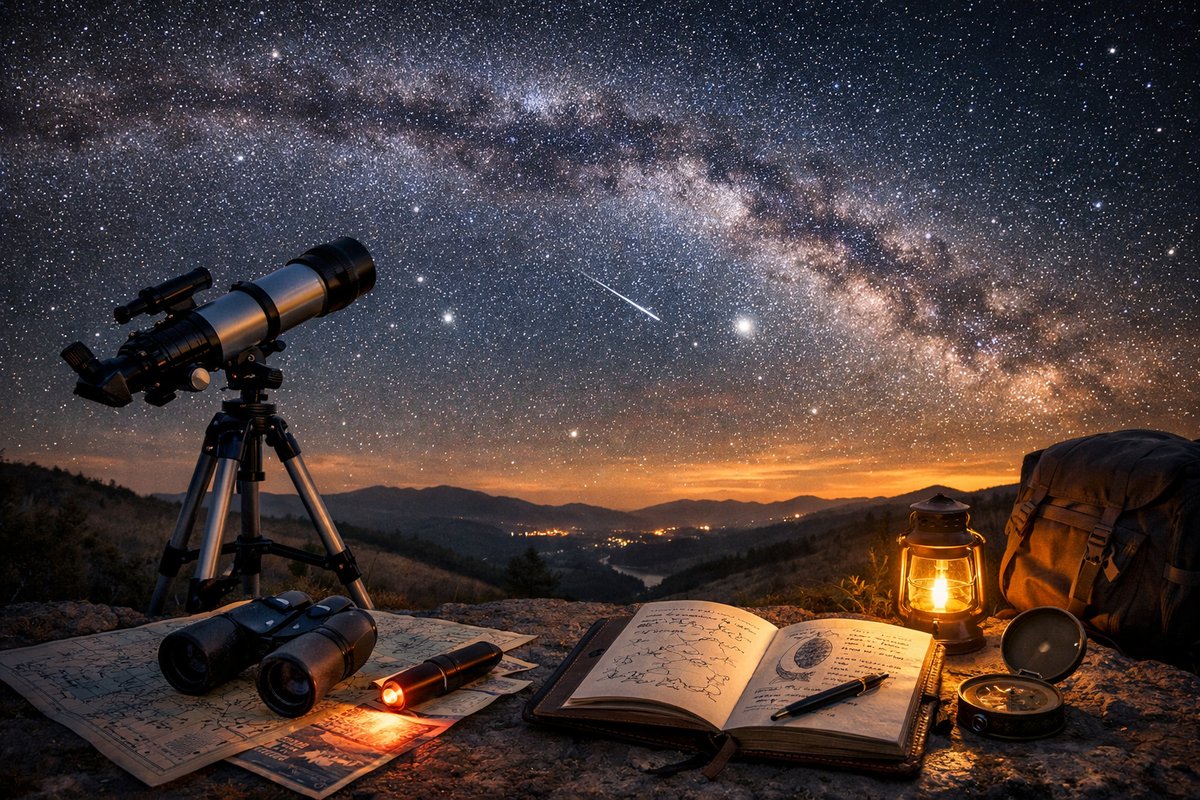
An invitation to wander beyond our terrestrial cradle, this dispatch explores how stargazers harness simple tools and boundless imagination to forge intimate connections with the cosmos. From portable telescopes to midnight journals, discover the tangible companions that transform wonder into discovery.
The sky unfolds its inky canvas long before the first star appears, a subtle invitation to those who feel the pull of the unknown. Even in city light pollution, a cluster of faint pinpricks can ignite a restless spark. That spark grows when the observer unpacks a compact telescope on a rooftop balcony or unfurls a foldable star chart beneath a canopy of streetlamps. Tools and technique combine to turn abstract longing into focused exploration, each twist of a lens or flip of a page a ritual of connection.
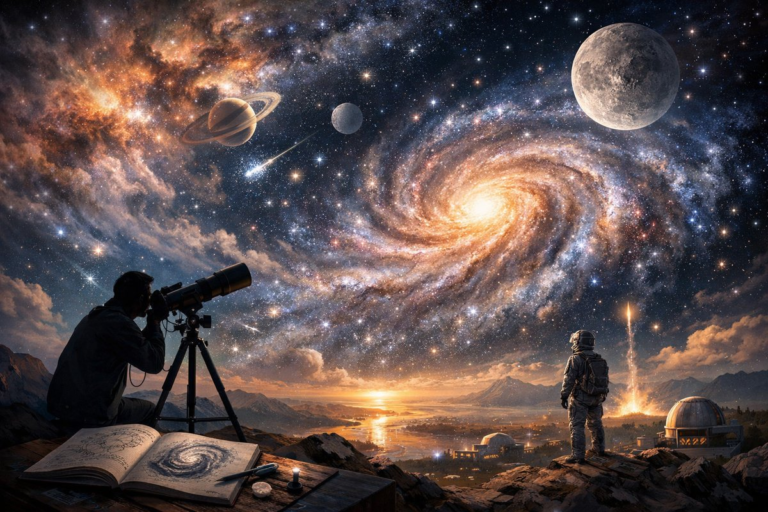
At the heart of cosmic curiosity lies the dance between eye and instrument. A pair of high-magnification binoculars brings lunar craters into sharp relief, while a small Dobsonian telescope reveals Jupiter’s swirling bands and the delicate rings of Saturn. Observers often kit themselves out with a sturdy tripod, careful to balance portability with stability. Under a moonlit sky, even an inexpensive refractor can conjure a sense of awe, as if the universe itself bends to whisper glimpses of secret truths.
But the night demands more than optical gear. Red light headlamps preserve dark-adapted vision as notebooks fill with sketches of nebulae and hand-scrawled coordinates of distant galaxies. Many beginners rely on well-illustrated field guides that match constellations to familiar shapes-an archer, a swan, a hunter poised across stellar fields. These charts transform the void into a navigable map, empowering novices to trace the Milky Way’s faint band and locate elusive objects like the Andromeda Galaxy or the Pleiades cluster.
Technology merges ancient practice with modern convenience through mobile star-chart apps. On a backcountry camping trip, a tablet becomes a window into hidden universes. Augmented-reality overlays guide the eye to objects above, while push notifications alert users to meteor showers, planetary conjunctions, or the whispered passage of the International Space Station. Yet even digital devotees keep a paper journal at the ready: there’s something profound about pausing a screen to record a sudden burst of inspiration in ink.
The emotional ledger of cosmic observation balances humility and exhilaration. A lone sky-watcher may feel small beneath the arc of the heavens, but each successful sighting ignites a personal triumph. It’s not just science; it’s poetry rendered real. Clouds may roll in, or light pollution might blur details, but rediscovering Orion’s belt or hunting for the faint glow of distant star clusters supplies an antidote to the frenetic pace of everyday life.
For some, curiosity extends beyond naked-eye marvels. Amateur astrophotographers attach DSLR cameras with telephoto adapters to capture long-exposure portraits of the cosmos. Tracking mounts counter Earth’s rotation, stitching star trails or pinpointing globular clusters in jewel-like detail. The choice of lens and sensor sensitivity becomes an artistic decision: a wide-angle shot can encompass the sweeping arc of the Milky Way, while a zoom lens zeroes in on Jupiter’s Great Red Spot.
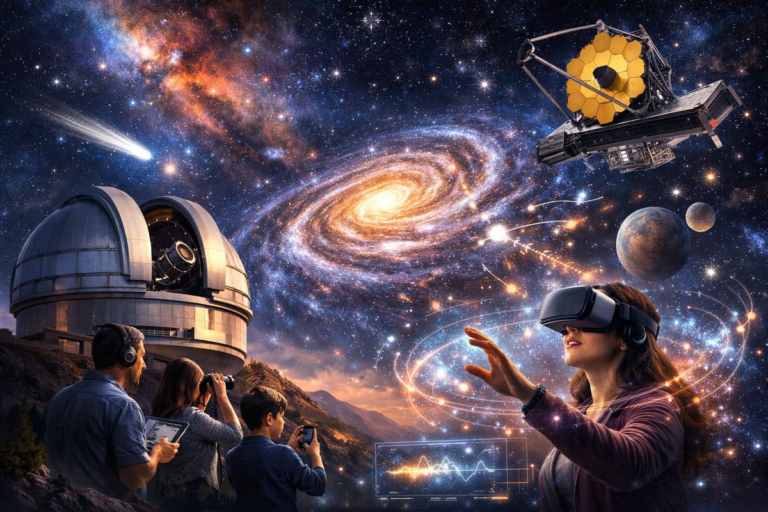
Virtual reality adds another dimension to cosmic wonder. Specialized headsets and space-simulation software permit explorers to drift through stylized renderings of nebulae, toland on the lunar surface, or to witness the stoneskimming rings of Saturn from a simulated vantage point. These immersive experiences inspire scientifically minded dreamers to pursue real-world observations, blending entertainment with education in a seamless orbit.
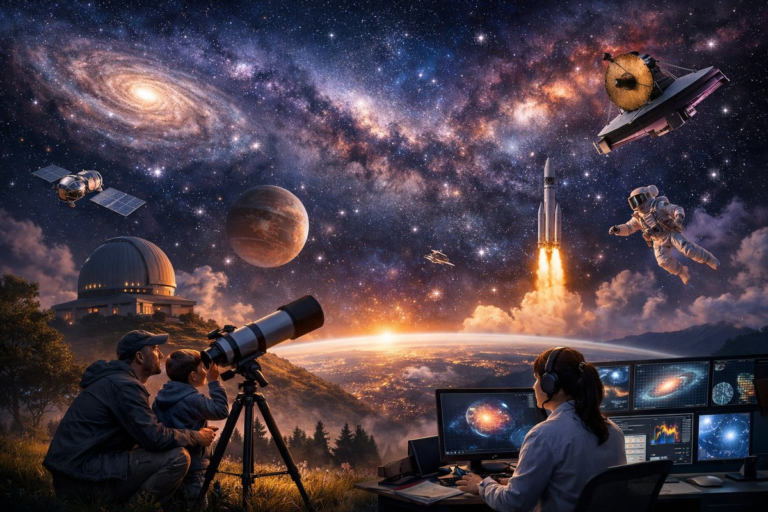
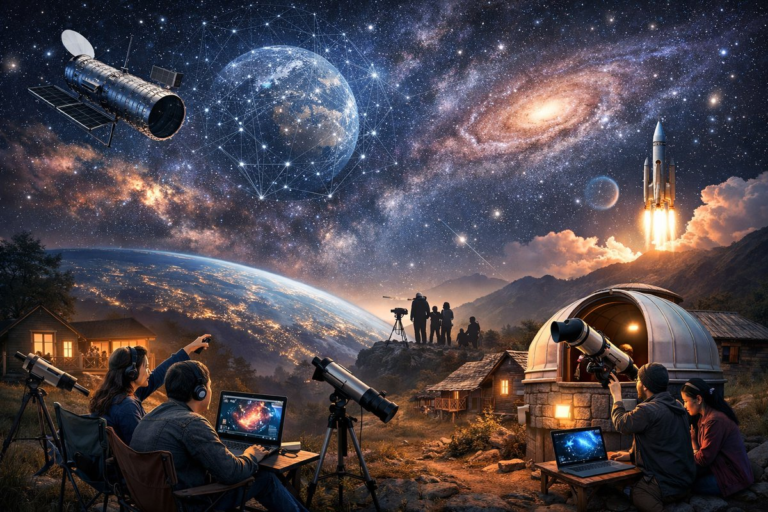
Yet the true frontier remains our own backyard night sky. Community star-parties gather beginners and seasoned observers alike to share telescopes, swap stories, and compare notes on planetary oppositions. Children peer through eyepieces, eyes wide with discovery, as mentors point out Pluto’s faint smear or a surprising supernova remnant hidden in the foam of Cassiopeia. Intergenerational curiosity weaves the cosmic thread through families and friendships.
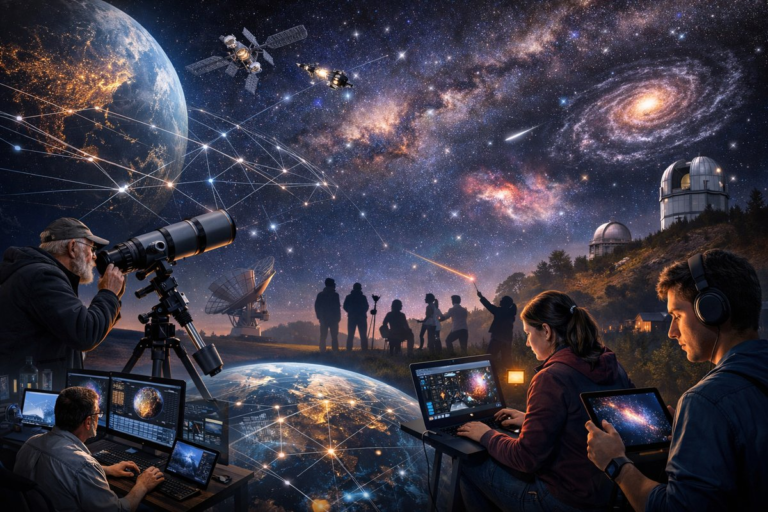
Professional collaborations sometimes spring from these grassroots gatherings. Citizen scientists use standardized webcam mounts to monitor transits and occultations, contributing data that refine planetary models or reveal transient events. Amateur radio enthusiasts tune receivers to catch mysterious solar bursts or cosmic microwave echoes, trading recordings across continents to piece together a fuller picture of stellar phenomena.
Mindful practice plays a role in deeper engagement. Observers cultivate patience, learning to anticipate the way atmospheric distortion shifts stars in and out of focus. A nightly routine might include calibrating equipment, checking weather logs, and enjoying a warm beverage-often in a thermal flask-to stave off the chill. This blend of ritual and improvisation fosters a calm, attentive state well suited to contemplating the infinite.
On nights when the sky is uncooperative, practitioners turn inward. They read fragments of astrophysics or watch slow-paced documentaries that explore the cosmic microwave background or the collapse of distant stars. They draft speculative fiction inspired by cosmic ambiguity, weaving scenarios that explore the human impulse to look upward and wonder: What if time behaves differently near a black hole? How do quasar jets sculpt the galaxy at large?
Cosmic curiosity also prompts practical sustainability. Field observers learn Leave-No-Trace ethics, selecting rechargeable batteries for equipment and minimizing light pollution with shielded headlamps. Solar-powered chargers keep gadgets alive through multi-night excursions under the Milky Way, a small yet meaningful nod to the terrestrial stewardship that underpins every night-sky adventure.
At dawn, instruments are packed away, charts slip back into backpacks, and logs brimming with fresh observations meet the soft glow of a morning lamp. The transition from dark sky to civil twilight mirrors an internal shift: the trivial anxieties of the day lose gravity when set against the backdrop of millions of years of cosmic evolution. Each session of stargazing is both an end and a beginning, a punctuation that invites new questions and fuels the next ascent into darkness.
Whether practiced on a city rooftop or in a remote desert basin, curiosity under the stars is an enduring reminder that we are part of a vast narrative. Every glimmer of light represents an ember in the grand cosmic forge, and every tool-from a basic star chart to an advanced telescope mount-serves as a bridge between our small lives and the boundless unknown. In that shimmering expanse, wonder is both compass and destination, guiding us onward through the velvet abyss.