Location
Mount Vernon, WA 98274

Location
Mount Vernon, WA 98274

Across backyard telescopes and high-powered observatories, a resurgence of cosmic curiosity is inspiring both amateur stargazers and seasoned researchers. From infrared mosaics that unveil hidden star nurseries to crowd-driven platforms that sift through vast datasets, the universe has never felt more accessible. This article explores how technology, art, and environmental stewardship are converging to rewrite our relationship with the cosmos.
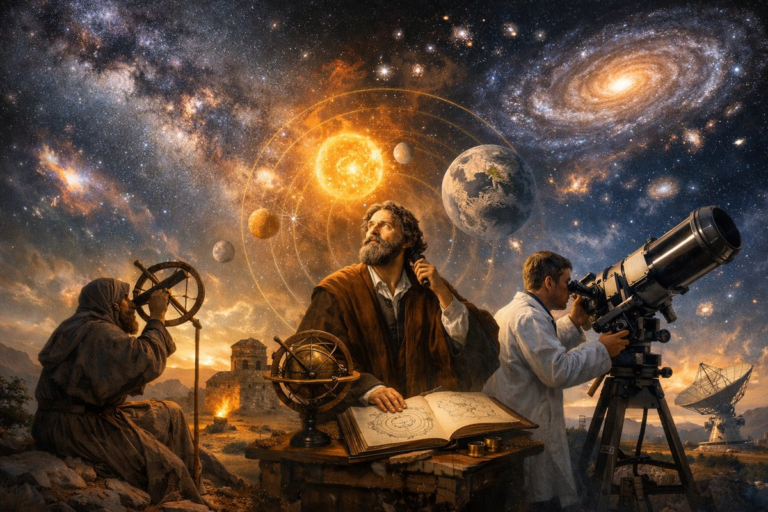
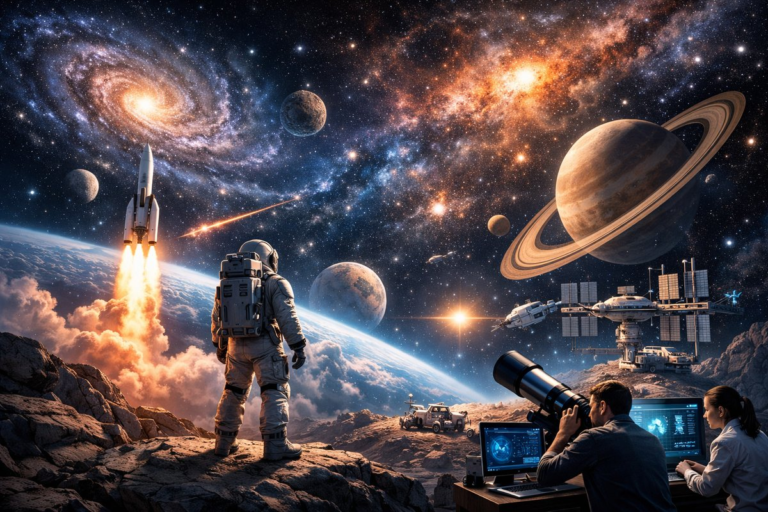
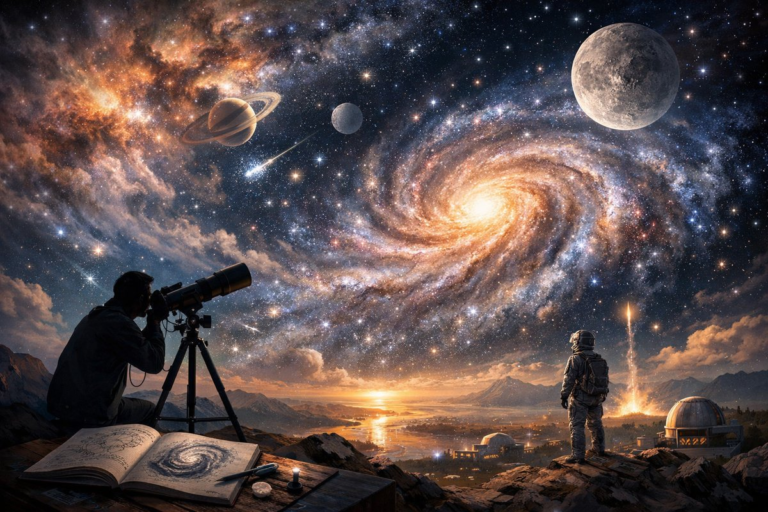
At the edge of a remote field just beyond city lights, a small crowd gathers, faces tilted toward a sky smeared with pinpricks of distant suns. Among them, amateur stargazers clutch well-worn star charts and adjust the mirrors of backyard telescopes, waiting for the faint glow of Saturn’s rings to emerge from the haze. This scene has become emblematic of a renewed wave of cosmic curiosity that is sweeping across communities worldwide. Far from being a niche hobby, the blend of cutting-edge discoveries, accessible technology, and crowd-driven science has created an era in which anyone with an internet connection and a clear night sky can play a role in unveiling the secrets of the universe.
In recent months, new infrared mosaics unveiled by the latest space telescope have captured the public imagination. Swirling clouds of interstellar dust and gas, previously hidden from view, now glow like cosmic tapestries rendered in jewel tones. These images are more than eye candy: they are windows into the birthplaces of stars, the chemical cauldrons where planetary systems emerge, and the laboratories where the molecules of life may form. Press briefings and social media alike have buzzed with commentary about these revelations, but the most enduring impact has been the spark of curiosity they have ignited in people who once assumed that understanding the cosmos was beyond their reach.
Astute observers have noticed that this momentum is not confined to professional astronomers. Citizen science platforms, which pair volunteers with data from ground- and space-based observatories, have seen unprecedented participation. Tens of thousands of volunteers have contributed to projects that classify galaxies by shape, search for transiting exoplanets in light curves, or even hunt for the faint signals of gravitational waves in open-access archives. The collective efforts of these crowds have led to genuine scientific papers and the naming of new celestial objects after contributors, demonstrating that cosmic inquiry can be democratized without sacrificing rigor.
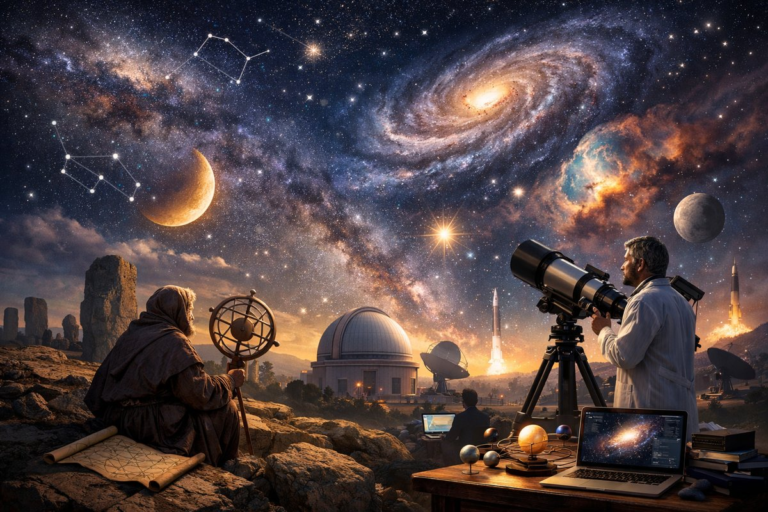
Technology has played a starring role in this democratization. Smartphone apps now point out constellations with an augmented-reality overlay that accounts for your latitude, longitude and local light conditions. Virtual-reality experiences transport users to the surface of Mars or the canyon walls of Enceladus. Affordable handheld spectrometers allow backyard astronomers to record emission lines from distant nebulae, revealing their elemental makeup. Meanwhile, online forums are full of tutorials on calibrating consumer-grade cameras for deep-sky photography and combining multiple exposures to tease out faint galaxies that were once considered the exclusive domain of large observatories.
Astrophotography has emerged as one of the most vibrant offshoots of the cosmic curiosity movement. Hobbyists are investing in motorized mounts that track the rotation of Earth, stacking hundreds of images to create snapshots of the Andromeda galaxy or the delicate filaments of a supernova remnant. Social media feeds are alight with glossy panoramas of the Milky Way arcing over desert landscapes, aurora borealis streaming across frozen lakes, and time-lapse videos that compress long nights of celestial motion into seconds of mesmerizing beauty. This visual feast not only inspires awe but also fuels an appetite for learning more about the physics behind what we see.
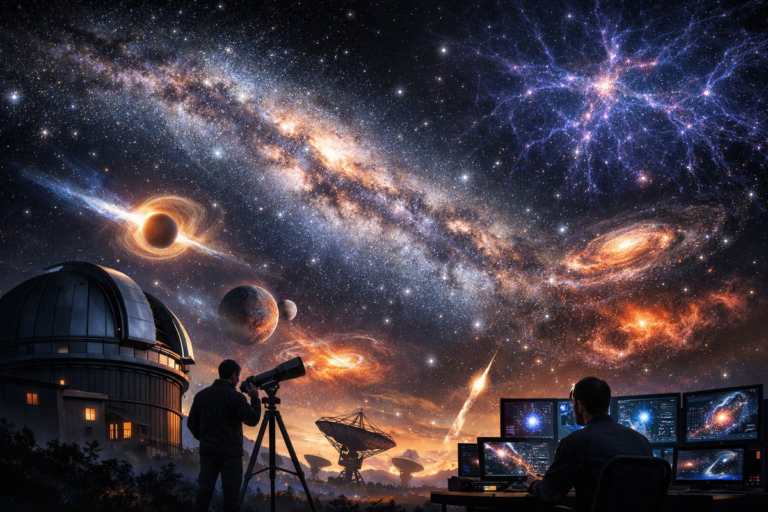
On the professional front, a new generation of ground-based observatories is nearing completion. Survey telescopes equipped with ultra-wide-angle cameras will capture the entire visible sky every few nights, generating petabytes of data that will be sifted by machine learning algorithms and human analysts alike. Slender radio antennas are being arranged in long baselines across continents, sharpening our view of distant quasars and the magnetic threads of the cosmos. As these giants come online, they will feed the vibrant ecosystem of citizen science, inviting curious minds to explore terabytes of open data and perhaps stumble upon phenomena that challenge our current models.
Beyond raw data, the aesthetic dimension of cosmic curiosity has found expression in art and storytelling. Immersive planetariums and multimedia installations blend science and poetry, inviting visitors to float through rings of ice, dive into the heart of a star, or drift among exoplanets bathed in alien sunlight. Writers and filmmakers draw on the latest findings to craft narratives that probe ideas of time, consciousness, and our place in a boundless universe. These creative ventures remind us that cosmic exploration is not just about telescopes and telescience; it touches the deepest questions of meaning and wonder.
For many, gazing at the stars has become a practice of mindfulness-a way to step out of the frenetic pace of modern life and reconnect with scales of space and time that dwarf our daily concerns. Guided night-sky meditations encourage participants to attune to the faint hum of cosmic background radiation or to align their breath with the pulse of a distant pulsar. These exercises underscore that science and emotion need not be at odds: understanding the universe can heighten our sensitivity to beauty and nurture a sense of humility and gratitude.
This renewed fascination also carries a call to environmental stewardship. Studies of cosmic dust grains have revealed striking similarities with microplastics found in deep-sea sediments, highlighting how tiny particles can influence planetary climates and ecosystems. In workshops that pair terrestrial cleanup efforts with talks on meteorite impacts, educators draw parallels between caring for Earth’s biosphere and preserving clear skies for astronomical observation. The message is clear: curiosity about the cosmos goes hand in hand with caring for the planet we call home.
Cinema and online streaming platforms have not lagged behind in feeding this curiosity. Recent episodes of flagship science series have traced the journey from radio astronomy’s first pulse detection to the mapping of dark matter through gravitational lensing. Viewers flock to rewatch classic series that bring poetic reflections to new audiences or to discover fresh explanations in high-definition reissues. Such documentaries complement hands-on stargazing by contextualizing what observers see through a telescope and by amplifying the thrill of discovery.
Educational institutions are seizing on this momentum by embedding cosmic themes into curricula from primary schools to universities. Classroom kits include simple spectroscopes, star wheel charts, and lesson plans on the history of astronomical thought. Science centers partner with local astronomy clubs to host star parties, offering participants the chance to look through a range of instruments and chat with mentors who have logged hundreds of night-sky hours. These programs remind learners that science organizes itself around questions, experiments, and shared dialogue-an inclusive process rather than a closed vault of specialized knowledge.
Yet challenges persist. Light pollution continues to rob millions of the starlight that once seemed a guarantee in every sky. Urban development, energy-inefficient lighting and fading support for dark-sky preserves threaten the quality of observations. Citizen advocates are pressing for ordinances that dim street lamps, retrofit outdoor fixtures with shielded designs, and educate communities on the cosmic and cultural value of the night sky. These local battles reflect a broader recognition that preserving our view of the universe is both a scientific imperative and a heritage to be protected.
Looking ahead, the next frontier of cosmic mapping envisions interstellar probes powered by laser sails, networked telescopes scattered across the solar system, and 3D star charts rendered in mixed reality. Whether through spacecraft or smartphone apps, the tools of exploration are shrinking to pocket-size inevitability. As gravitational wave observatories extend their reach, we may soon witness mergers of black holes and neutron stars in real time. Each new dataset, each fresh image, invites the public to weigh in, to tinker, to imagine.
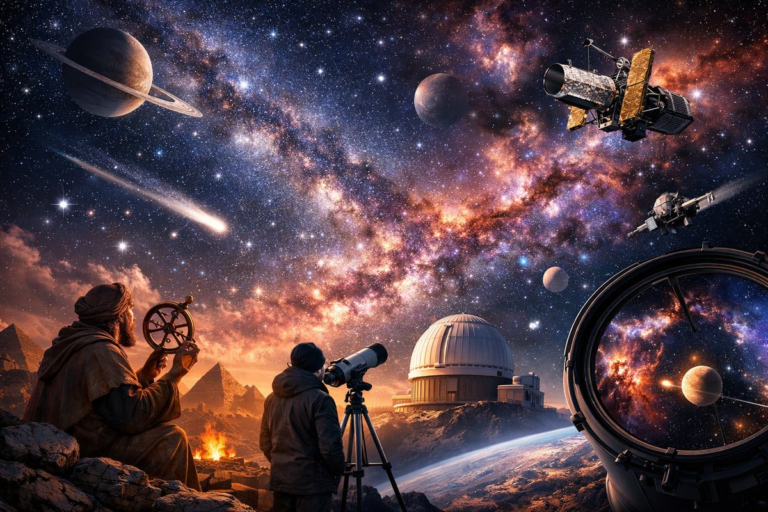
Across telescopes and computer screens, in planetarium domes and backyard fields, cosmic curiosity has become a shared force. It transcends boundaries of age, geography and discipline. It reminds us that every human being is, at the most fundamental level, a stargazer and a storyteller. And as discoveries abound, the invitation extends ever wider: come look, come learn, come wonder. The universe awaits our questions, and in asking them, we learn not only about cosmic origins but about the richness of our own curiosity.
In the end, cosmic curiosity is as much about forging connections-with one another, with the Earth below, and with the cosmic tapestry beyond-as it is about collecting data. Privacy-minded individuals can share their observations anonymously, while open-source software ensures that tools remain accessible and adaptable. Sustainability emerges when communities lobby for dark-sky friendly lighting that also reduces energy waste. And emotional intelligence grows when we acknowledge that the wonder of a star field can be a bridge between cultures, generations and disciplines. In an era of fragmentation, turning our gaze skyward may be the simplest act of unity we can undertake.