Location
Mount Vernon, WA 98274

Location
Mount Vernon, WA 98274
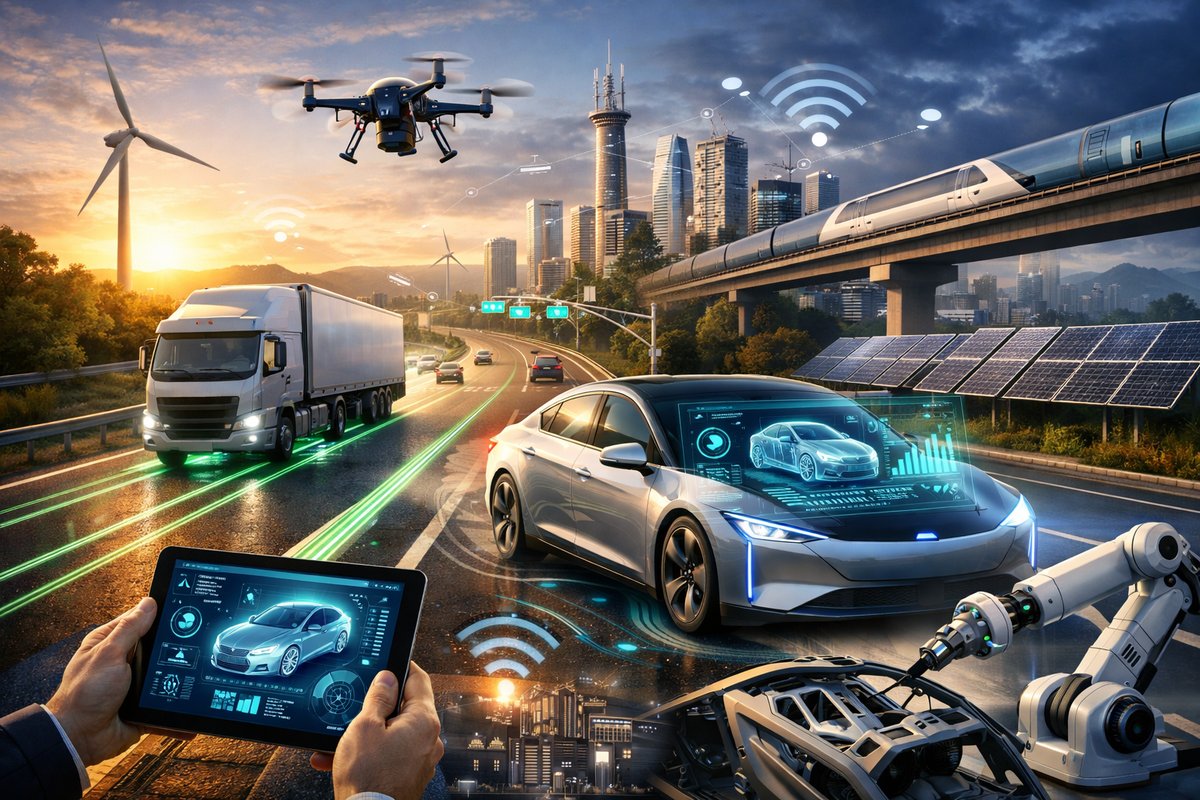
From electrified highways to AI-driven diagnostics, transportation is undergoing a fundamental transformation. This article traces the latest pilot projects, emerging sensor networks, and sustainable materials reshaping how vehicles move, connect, and adapt to our world.
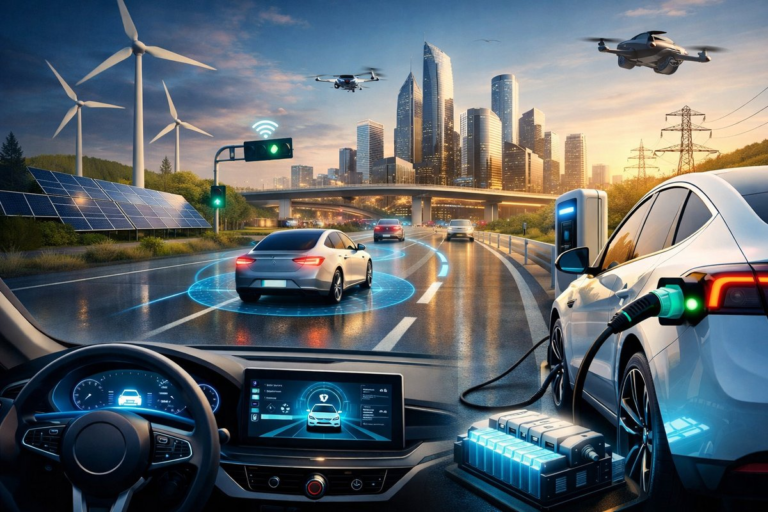
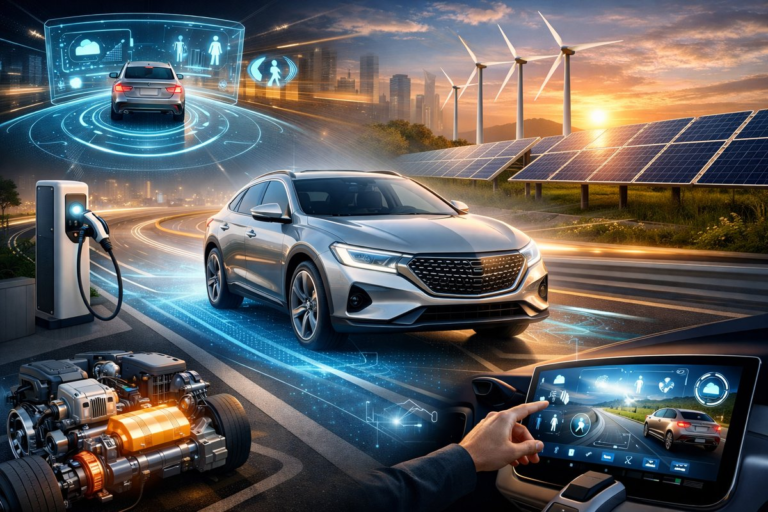
Every so often, the line between science fiction and the open road blurs. Today, a handful of cutting-edge experiments are knitting energy, data, and asphalt into dynamic networks that charge moving vehicles, anticipate mechanical failures, and guide fleets with near-surgical precision. The latest wave of innovation goes beyond the electric powertrain or isolated autonomous prototypes: it reimagines the entire corridor as a living, intelligent system.
On a test strip outside Mannheim, Germany, researchers have embedded coils beneath the pavement to deliver power to passing electric cars in motion. The wireless charging lanes, originally pioneered by a European research consortium and now refined by a leading applied-science institute, operate at frequencies near 85 kilohertz. Vehicles outfitted with compatible receivers can draw a trickle of current at speeds up to 50 miles per hour. Imagine a commuter never needing to stop at a charger-and fleets of shuttle vans refueling while they make their rounds. Initial trials report efficiencies exceeding 80 percent in optimal alignment, and engineers are working to widen the transfer window so that slight lane variations won’t disrupt the flow of electrons.
Half a continent away, the concept of “eHighway” is taking shape across Swedish and U.S. testbeds. Instead of wireless coils, these pilot corridors use overhead catenary lines-similar to those on electric trains-to service heavy trucks. A retractable pantograph on the trailer roof reaches upward, drawing clean power directly from the grid. Once past the electrified segment, the truck switches to a battery or hydrogen fuel cell system for off-route miles. Logistics companies see this as a bridge technology that slashes diesel consumption and reduces roadside charging bottlenecks for long-haul freight.
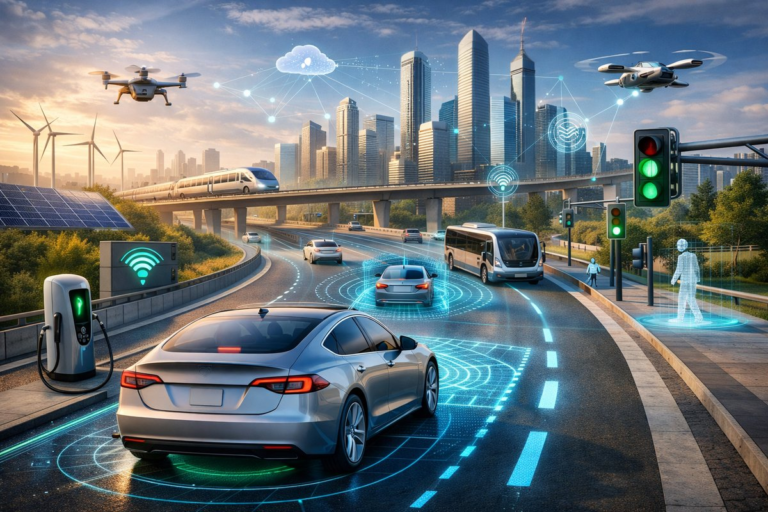
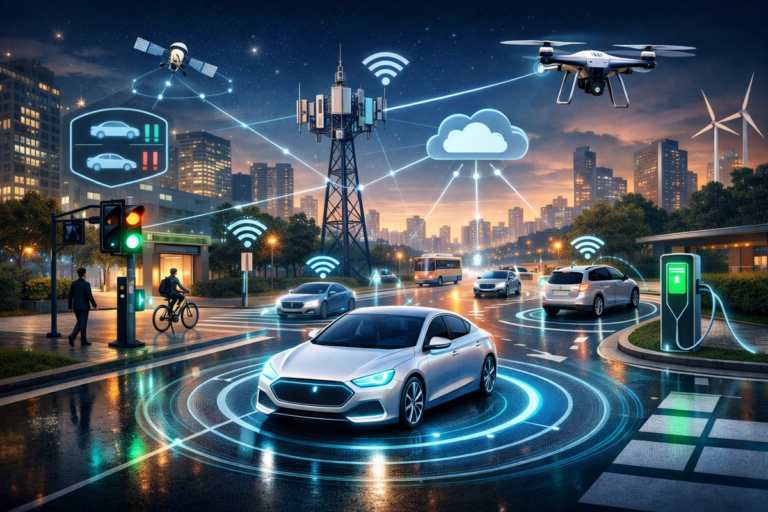
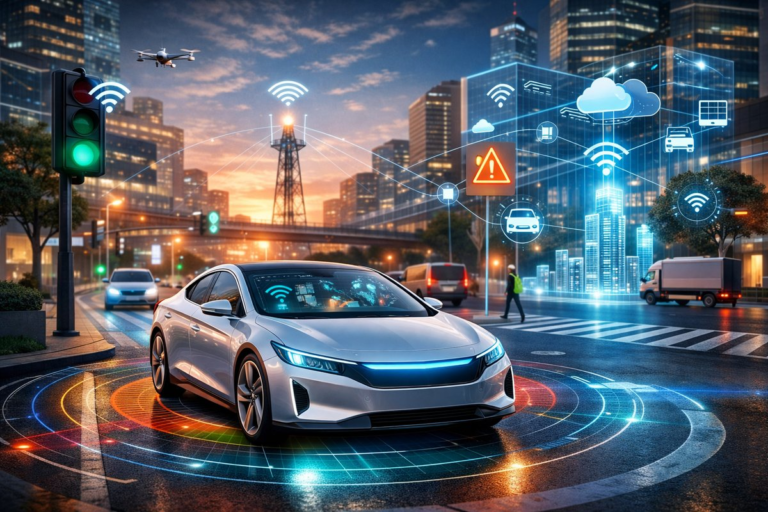
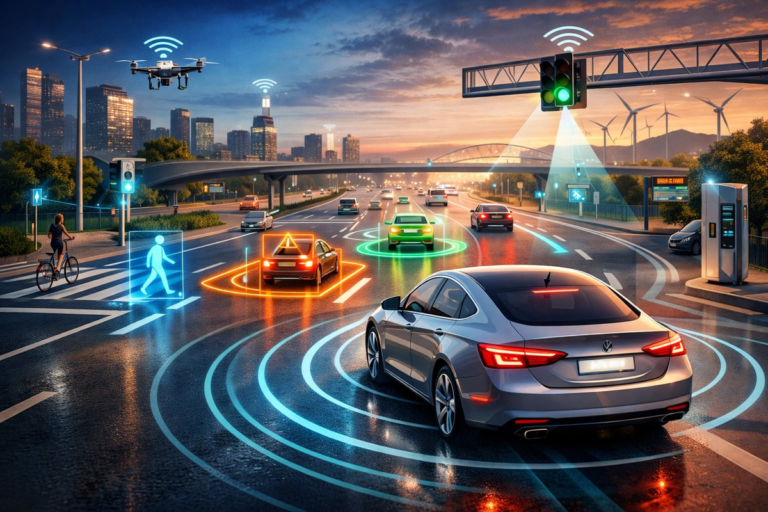
Meanwhile, urban areas are exploring vehicle-to-everything (V2X) communication to untangle rush-hour congestion. In a growing number of North American cities, traffic lights broadcast their timing and phase information over a dedicated short-range wireless channel. Vehicles equipped with a V2X radio can anticipate a green wave, adjusting speed proactively to minimize idling. Beyond intersections, this network extends to roadside sensors that detect debris, fog, or sudden braking. The data flows into a cloud backbone, where machine-learning algorithms sift through millions of events per day. Early deployments report a 15 percent reduction in travel time variability and a 20 percent drop in rear-end collisions at instrumented intersections.
One of the most compelling demonstrations of networked mobility is platooning. In these convoys, a lead truck operates under human supervision while several following vehicles slip into formation using radar, lidar, and camera arrays. The aerodynamic advantage of traveling in tight formation can boost fuel efficiency by up to 10 percent for every trailing unit. On a recent trial stretch in Michigan, two semis and a support van traveled 200 miles at a fixed ten-meter gap, coordinating acceleration and braking in under 50 milliseconds. What appears as a high-tech parade could soon become a daily highway vista.
Behind these visible pilots lies an invisible layer: the digital twin. Transportation agencies are creating hyper-detailed 3D models of roads, bridges, and tunnels-integrating laser scans, drone imagery, and historical maintenance logs. In this virtual environment, software can simulate traffic flows, test new signage layouts, or predict pavement degradation under various climate scenarios. When a pothole begins to form, an alert can trigger dispatchers to schedule crews before lanes deteriorate. This predictive maintenance approach is already saving several municipalities millions of dollars annually and cutting repair-related traffic delays by nearly 30 percent.
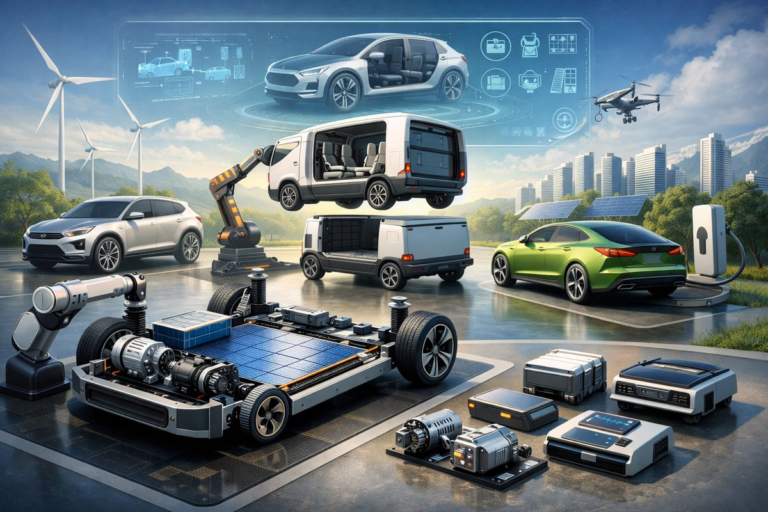
As batteries rebound from their first decade on the market, second-life applications are emerging along these smart corridors. Retired automotive cells-no longer fit for daily service in a highway-traversing EV-find a new purpose in stationary storage systems. Paired with on-site solar arrays and wind turbines, they help smooth out peaks in demand, make dynamic tolling more responsive, and even sell ancillary services back to the grid. The synergy between roadside renewables and repurposed battery packs exemplifies a circular approach to materials, reducing waste while bolstering the resilience of the transportation ecosystem.
Materials innovation also extends to the vehicles themselves. Lightweight composites infused with natural fibers-such as flax or hemp-are replacing steel in select body panels. Meanwhile, high-pressure die casting of aluminum frames, once reserved for aerospace, is now entering mainstream production. These methods yield structures that are up to 30 percent lighter without compromising crash performance. Lower mass means smaller batteries, less energy per mile, and a lower carbon footprint across the vehicle’s lifecycle.
Equally important is the emergence of multi-sensor fusion for condition monitoring. Modern fleets are bristling with temperature probes, vibration sensors, and ultrasound detectors. When paired with edge-computing gateways, these devices can analyze waveforms and frequencies in real time, flagging anomalies long before a breakdown. In one pilot program with a regional bus operator, predictive alerts cut unscheduled service interruptions by 40 percent in the first six months. Fleet managers can view live dashboards showing compressor health, brake pad wear, and suspension damping-all updated every few seconds.
Inside the cabin, drivers are encountering a new generation of digital cockpits. Head-up displays project navigation cues, lane markers, and speed advisories onto the windshield. Voice assistants-increasingly respectful of privacy-guide drivers through diagnostics, software updates, and even parking-lot searches. If a vehicle needs a software patch, it can download the update over a 5G-enabled router without docking at a service bay. This over-the-air model mirrors how smartphones receive security patches, keeping vehicles current without lengthy dealership visits.
With such deep connectivity, cybersecurity has become a front-line concern. Encryption modules now secure every V2X message, and hardware root-of-trust chips verify that software images come from an authentic source. Regulators in both Europe and North America are drafting interoperability standards to ensure that different makes and network equipment can communicate seamlessly-and securely. Meanwhile, penetration-testing teams carry out mock attacks on smart infrastructure to harden defenses before anything goes live.
Beyond the technology, there’s a social dimension to these smart corridors. Rural communities along pilot routes gain access to high-speed chargers, bridging an EV-access gap that once threatened to split the market between urban early adopters and country drivers. Local businesses advertise roadside amenities directly to approaching vehicles, while public-service bulletins-like amber alerts or wild-fire warnings-are beamed instantly to dashboards. The promise is greater equity and resilience, not just for daily commuters but for entire regions.
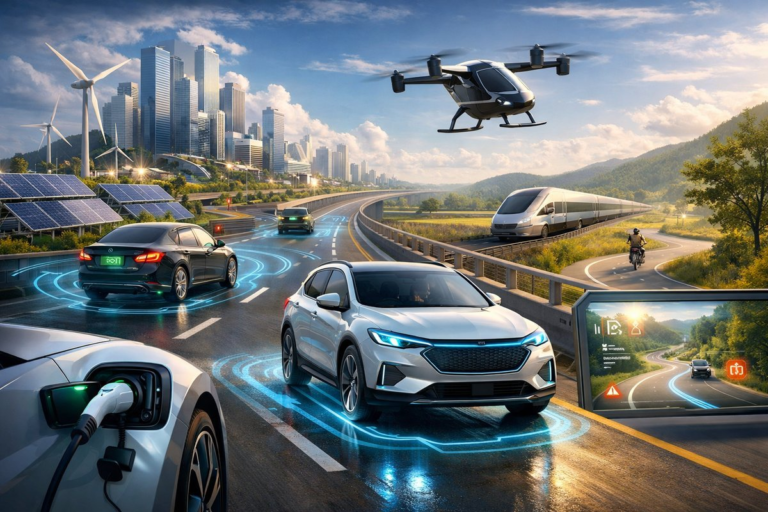
Looking ahead, the concept of the corridor itself may expand vertically. Urban air mobility firms envision sky lanes for electric vertical-takeoff crafts that share data with ground networks. Deep-tunnel hyperloop pods-cruising at airline speeds-could link megacities in under an hour. While those dreams remain in early funding rounds, the connective tissue being laid today-power rails, sensor grids, and digital twins-will form the backbone of future transport ecosystems.
Of course, challenges loom large. Standardizing wireless charging frequencies across jurisdictions, setting shared spectrum for V2X, and aligning software APIs among dozens of vehicle makers all require unprecedented collaboration. Public-private partnerships must bridge the gap between R&D budgets and real-world deployment costs. Fortunately, pilot successes are turning skeptics into believers, and each new corridor adds to a growing body of best practices.
What emerges is neither a story of incremental upgrades nor a vertical leap into sci-fi absurdity. It is a measured reweaving of our roads with energy, data, and sustainable materials-an evolution that honors the legacy of pavement while anticipating tomorrow’s demands. Drivers may never notice the seamless interaction of inductive coils, sensor beacons, and edge-compute nodes beneath their wheels. But as they roll through city centers, across rural byways, and into electrified freight corridors, they carry in their dashboards and wheel hubs the promise of mobility that’s smarter, cleaner, and ever more responsive to the world it traverses.
In this unfolding narrative, curiosity and collaboration will remain our greatest assets. Whether you’re a gearhead tinkering with battery modules, a transport planner sketching out your next smart corridor, or an everyday motorist enjoying a ride free from range anxiety, the road ahead is charged with possibility.