Location
Mount Vernon, WA 98274

Location
Mount Vernon, WA 98274
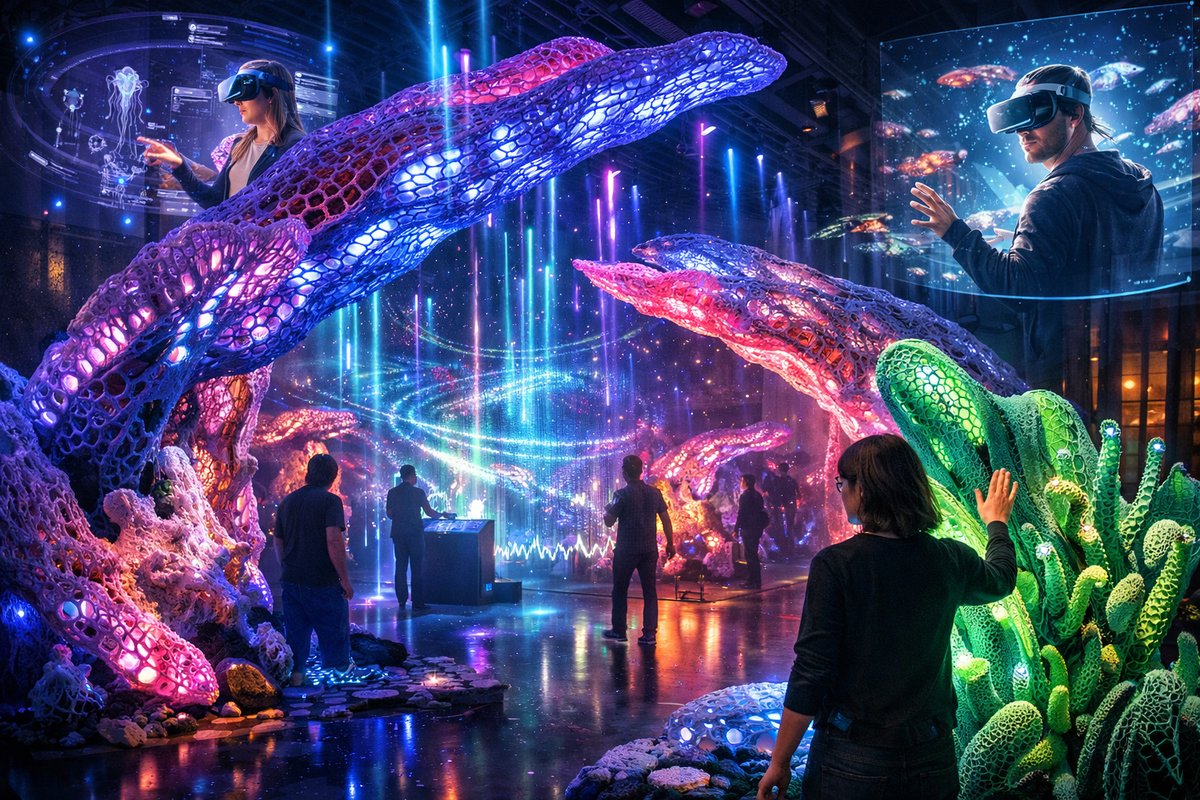
An experimental art collective in Rotterdam has unveiled "Symbiotic Echo," an immersive installation that fuses 3D-printed ocean plastics, responsive light arrays and real-time soundscapes. Visitors activate sculptures through motion and biometric sensors, while an accompanying AR and VR platform extends the experience online.
A new immersive art installation in Rotterdam invites visitors to become co-creators in a living environment built from reclaimed materials and interactive technology. Titled “Symbiotic Echo,” the exhibit debuts at a converted shipping warehouse on the city’s waterfront and features a constellation of geometric sculptures printed with recycled ocean-collected plastics. Each form appears inert at first glance, but as guests move through the space their gestures and biometric data-captured via discreet motion sensors and heart-rate monitors-trigger an evolving choreography of light, color and sound.
The collective behind the piece, an anonymous artist-engineer duo working under the name Fluid Resonance, partnered with a marine cleanup nonprofit to source plastics harvested from nearby canals. By feeding shredded pellets into large-format 3D printers, they produced thirty modular structures ranging from five-foot polyhedra to delicate lattice screens. The choice of material was deliberate: visitors are encouraged to inspect surface striations and faint flecks of pigment, a tactile reminder of the ocean debris’s former life. According to the curatorial statement, more than 80 percent of the installation’s mass derives from reclaimed polymers, underscoring a commitment to sustainability at every stage of creation.
Motion-tracking cameras mounted overhead and along the sculpture bases detect shifts in visitor position and orientation. When someone approaches a particular node, an embedded microcontroller sends signals to ultra-thin LED light strips woven into the sculpture seams. The lights ripple outward in waves of neon cyan, magenta or amber, following each person’s movements as though the forms themselves are breathing and responding. At the same time, concealed speakers beneath the warehouse floor emit low-frequency pulses calibrated to each visitor’s heartbeat. The result is a subtle but powerful sense of corporeal connection: people inadvertently become the catalyst for audiovisual ripples that travel across the entire installation.
Beyond pure interactivity, the artists built in an adaptive sound engine powered by algorithmic composition software. As visitors spend more time engaging with the forms, the system layers new musical motifs-soft choral pads, percussive clicks, drone textures-that evolve based on cumulative traffic patterns. Early mornings yield sparse, meditative soundscapes, while weekends swell into richer, layered harmonies. Over the exhibit’s six-week run, staff will archive these generative scores and present them as standalone audio tracks in a companion digital album.
To bridge the gap between physical and virtual realms, Fluid Resonance also developed a smartphone app using augmented reality markers embedded in each sculpture’s base. Pointing a device at a polyhedron unlocks an AR overlay visible through the phone’s camera viewfinder: animated planes flutter across flat surfaces, and abstract pulses emanate from hidden corners. For remote audiences, the collective launched a parallel WebXR environment, allowing users anywhere to navigate a 3D-scanned version of the warehouse, trigger light and sound simulations and collaborate in real time with other online participants.
Visitors have described the experience as otherworldly. One attendee noted a surreal sensation of becoming both spectator and performer, while another praised the artwork’s seamless blending of ecological messaging with poetic technology. Accessibility features include adjustable sensor sensitivity, optional subtitles for audio cues and scheduled low-intensity hours designed for neurodiverse guests. The design team consulted with community groups to refine these accommodations, emphasizing empathy and inclusivity as guiding principles.
On a broader scale, “Symbiotic Echo” joins a growing wave of exhibitions exploring symbiosis between humans, machines and the natural world. Previous installations focused on living mycelium sculptures or LED-driven sound chambers, but Rotterdam’s experiment stands out for its holistic approach to upcycling and real-time co-creation. Curators point to it as evidence that future art spaces will prioritize modular systems-where each component, from recycled material to generative code, can be dismantled, repurposed or upgraded without waste.
In parallel with the physical show, several workshops run by Fluid Resonance offer hands-on introductions to 3D printing with biodegradable polymers, basic motion-tracking setup and algorithmic sound design. Participants can rent small-scale printers loaded with PLA filaments or experiment with open-source microcontroller boards to prototype their own interactive sculptures. These sessions aim to demystify the machinery behind “Symbiotic Echo,” encouraging novice creators to explore the intersection of art, design and environmental stewardship on a DIY budget.
The exhibition also dovetails with a citywide “Circular Futures” initiative, spotlighting projects that employ renewable energy, closed-loop manufacturing and community-driven design practices. Local design studios have staged pop-up installations in nearby public squares, repurposing exhibit fragments-LED strips, sensor units, upcycled panels-as part of smaller outdoor micro-sculptures. By redeploying these elements across multiple venues, Rotterdam’s cultural sector underscores the importance of sharing resources rather than creating disposable art assets.
Those unable to travel to the Dutch port city can join the virtual exhibit through the WebXR platform, which supports desktop browsers and VR headsets. The online space replicates the warehouse’s scale and lighting, while giving remote visitors control over camera angles, sensor thresholds and ambient sound levels. Scheduled “listening parties” pair global participants with local DJs who remix the installation’s generative soundtracks live, broadcasting the output via embedded livestream widgets.
Looking ahead, Fluid Resonance plans to tour a scaled-down version of the work to venues in London, Tokyo and São Paulo. Each new location will adapt the recycled materials to local environmental challenges-plastic collected from the Thames, Tokyo Bay or Guanabara Bay-ensuring that the artwork remains rooted in specific ecological contexts. The collective envisions a rolling exhibition that becomes a living archive of global plastic waste streams, while fostering cross-cultural dialogue about material cycles and human impact.
By weaving together reclaimed polymers, generative code and participatory design, “Symbiotic Echo” marks a significant step toward art practices that are as ethically engaged as they are technologically adventurous. Its reliance on modular hardware and open-source software platforms suggests a future where creative communities worldwide can replicate, remix and personalize immersive environments without the constraints of corporate sponsorship or single-use materials. In championing transparency, inclusivity and sustainability, Rotterdam’s new exhibit offers a hopeful blueprint for how art and design can respond to environmental crises with curiosity and compassion.