Location
Mount Vernon, WA 98274

Location
Mount Vernon, WA 98274
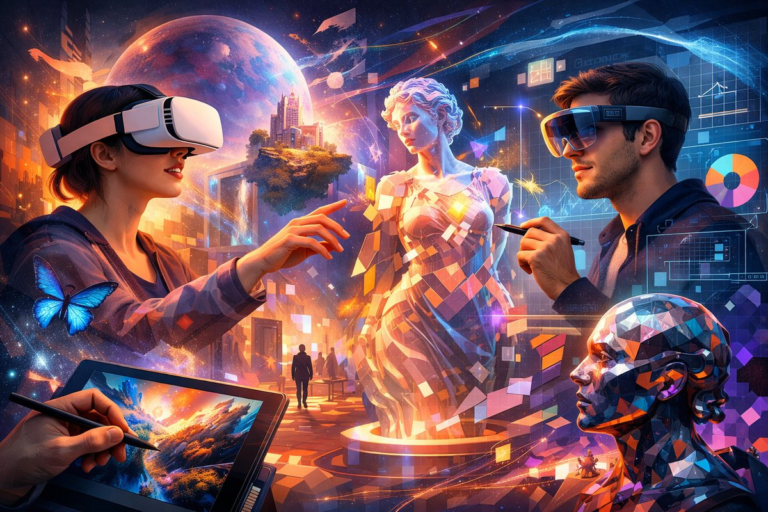
A groundbreaking exhibition invites visitors to step into a multisensory universe where light, sound, and sustainable materials converge. From AR-enhanced murals to solar-powered fiber optics, the showcase challenges assumptions about public art and the role of community in shaping tomorrow's creative landscapes.
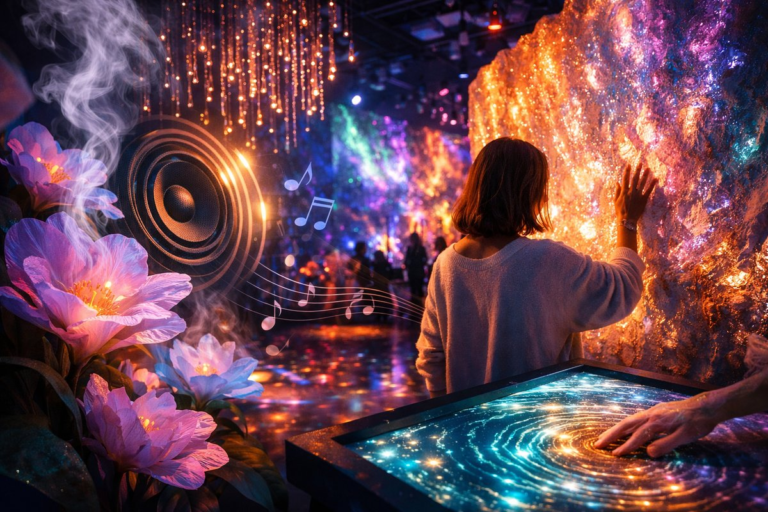
A hush falls over the entry plaza as visitors pass through a pair of towering gates wired with motion sensors. Inside, a luminous corridor beckons: walls lined with programmable LED strips pulsate in perfect sync with the ambient soundtrack, transforming footsteps and ambient chatter into living color. This inaugural gallery installation marks the launch of an audacious art and design series that weaves together interactive technology, environmental stewardship, and hands-on experimentation. It’s an invitation to play, to wonder, and to forge unexpected connections between personal expression and collective experience.
Stepping into the sound-light tunnel, guests trigger waves of cerulean and amber that ripple across the floor in response to each step. Underfoot, pressure-sensitive mats connect to open-source microcontrollers that drive the light arrays; overhead, speakers diffuse an evolving soundscape of deep bass pulses and crystalline tones. The effect is more than eye candy. It’s a choreographed dialogue: every footfall becomes a brushstroke, every breath a note. Visitors emerge breathless, as if they’ve danced within the prism of their own perceptions.
A few paces beyond, the air grows humid, and the glow shifts to an organic green. Here stands an enclosure of glass panels housing living bioluminescent algae. Arranged like stained glass, the micro-organisms are suspended in nutrient-rich gel, their faint glow responding to subtle changes in humidity and ambient noise. Designers collaborated with researchers to calibrate the system so that crowd density triggers gentle pulses-moments of collective presence become ripples of light. It’s a poetic blend of biology and design, reminding us that even the smallest organisms can play starring roles in immersive experiences.
Moving outdoors, visitors encounter city walls once blank now transformed into canvas for augmented reality murals. On the surface, geometric patterns of charcoal and pastel appear static. But when viewed through a smartphone app, the lines animate, twisting into living forms of vines, feathers, and abstract creatures. Thanks to marker-based AR, each mural evolves with the viewer’s gaze, revealing hidden layers of narrative, color, and sound. It’s street art reinvented-democratized, biodegradable, and responsive to every passerby’s curiosity.
Nearby, modular seating sculptures crafted from recycled cardboard modules offer a pause for reflection. Folded in elaborate origami-inspired patterns, the clusters invite visitors to arrange, rearrange, and even take pieces home. Designed using 3D-folding software and CNC-cut templates, the biodegradable modules underscore an ethos of impermanence and participatory design. As sunlight filters through the pavilion’s canopy, shadows dance across the seating-an ever-shifting performance authored by nature and community alike.
Back inside, a sculpting station hums with chatter. Clay bricks are stacked beneath an overhead camera linked to a projection unit. When a visitor shapes a lump of clay, the camera captures the form and feeds it into a custom software engine that applies dynamic textures, colors, and virtual patterns in real time. The processed image is then projected back onto the clay, merging physical craft with digital layers. Watch a simple coil become a living terrain of swirling pigments, and you witness the fusion of age-old material and cutting-edge computation.
In the courtyard stands the Solar Weave Lab, a lattice of slender poles topped with micro solar panels. At dusk, stored energy powers hundreds of fiber optic strands that weave through nearby trees. The result is a constellation of gentle glows, as if starlight has been captured in the branches. The installation fades in and out in sync with real-time weather data, dimming on cloudy nights and surging after sunlit afternoons. It’s a celebration of renewable power and an open-air ode to the cycles of nature.
A highlight of the program is the communal workshop series held each weekend. Participants learn to build portable projection rigs from repurposed materials, experiment with open-source apps for generative visuals, and test eco-friendly clay composites created from food waste. One table features a slot for visitors to drop in discarded plastic, which is then shredded and prepared for a desktop extrusion station running biodegradable filament. Designers hope these hands-on sessions spark new collaborations that outlast the exhibition’s run.
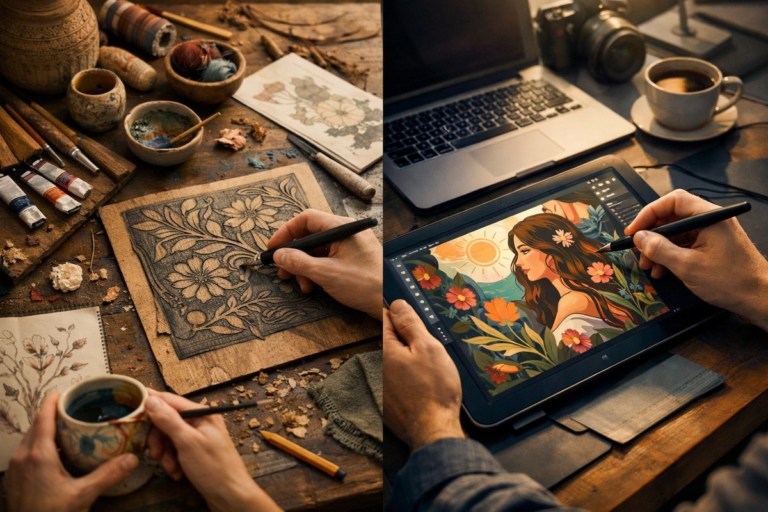
What makes this design experiment especially compelling is its refusal to settle into passive display. Instead, it thrives on the unpredictable, the mutable, and the co-authored. Every sensor, every line of code, and every scrap of material functions as both medium and message. By blending analog craft, digital augmentation, and ecological responsibility, the showcase poses urgent questions: How can design respond to a world in flux? What roles might everyday citizens play in shaping the visual culture of tomorrow? And how might sustainability be more than a value statement-an active design principle at every scale?
The exhibition’s curators approached each installation with an eye for adaptability. Artists were encouraged to prototype in public view, engaging visitors as fellow inventors rather than distant observers. One designer recalls rolling out early versions of the AR mural markers on the museum’s back alley wall, inviting passersby to test and critique. Early feedback led to simpler interfaces, bolder color palettes, and new sound triggers that make the experience more intuitive and welcoming.
Behind the scenes, data flows in real time to a central dashboard used by the technical team to monitor system health and visitor interactions. Sensors track foot traffic to adjust light intensity for energy efficiency. Sound levels are analyzed to maintain a comfortable acoustic environment. These invisible systems uphold the exhibition’s promise of sustainability without sacrificing artistic freedom or audience delight.
Emotionally, the showcase resonates on multiple levels. Some visitors are swept away by the sheer beauty of bioluminescent algae panels; others find quiet contemplation in the foldable cardboard chairs, marveling at how simple materials can yield surprising forms. In the sculpting lab, novices discover tactile joy in clay even as algorithms reimagine their creations in living color. Together, these moments layer into an overarching narrative of human ingenuity balanced by ecological awareness.
As evening falls on the final weekend, the sound-light tunnel extends its hours. A small crowd lingers, reluctant to leave the immersive play space. The solar-powered fiber optics glow bright against the encroaching darkness, and animated murals shimmer on the walls. It feels less like an art exhibition and more like a communal campfire-an ephemeral gathering place where art, design, and sustainability spark fresh ideas.
When the gates finally close, the real experiment begins: What will visitors carry home? A newfound fascination with biodesign? A pinch of collaborative spirit? The memory of stepping through light and sound in unison? These echoes may inspire personal studios, neighborhood pop-ups, or virtual communities that keep the dialogue alive.
In an era defined by screens and streams, this exhibit stands out by seamlessly integrating digital wonders with hands-on materials and environmental ethics. It reminds us that the most compelling visual languages are those that engage all our senses, honor our planet, and invite each of us to become co-creators. Here, art and design refuse to be fixed frames on a wall; they are living, breathing experiments in possibility.
For anyone drawn to the interplay of technology, sustainability, and creative exploration, this immersive showcase offers both spectacle and substance. It’s a call to step beyond passive viewing, to sense the hidden currents beneath every surface, and to imagine new pathways toward an inclusive, regenerative design future.