Location
Mount Vernon, WA 98274

Location
Mount Vernon, WA 98274
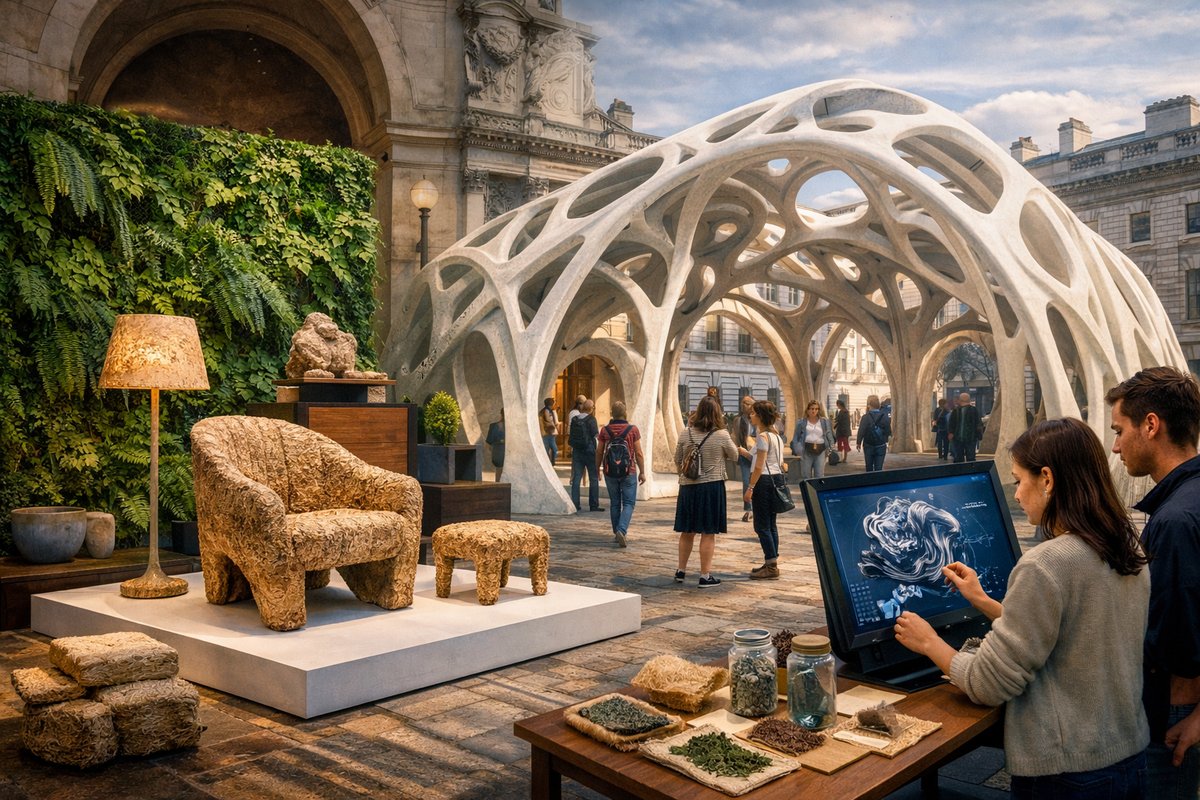
London's premier annual design festival has opened citywide with an unprecedented focus on sustainable materials and artificial intelligence-driven creativity. From biodegradable furniture prototypes at the V&A to a generative design pavilion in Somerset House Courtyard, the event brings immersive installations and community workshops that challenge the boundaries of craft, technology, and environmental responsibility.
London’s annual citywide design festival has returned with an invigorated emphasis on sustainable practice and technological collaboration, transforming the urban landscape into a sprawling laboratory for material innovation and digital artistry. For two weeks, venues from the Victoria & Albert Museum to Somerset House and the Turbine Hall at Tate Modern host exhibitions that blend biodegradable composites, generative algorithms, and interactive public art, inviting visitors to reflect on the future of design in an era defined by environmental urgency and computational possibility.
At the heart of the festival is the Material Futures showcase inside the V&A’s Maker’s House, where designers present emerging biomaterials set to redefine manufacturing. Exhibits include a seating prototype molded from mycelium leather cultivated in controlled conditions, a dining surface cast from algae-based resin panels, and a series of household objects printed with polylactic acid composites derived from agricultural waste. Each piece is accompanied by lifecycle assessments displayed on touchscreens, illustrating carbon footprints and end-of-life scenarios for circular economies.
Visitors are drawn to a plinth featuring a coffee-grounds composite armchair, created by a London-based collective that repurposes spent brews from local cafes. The porous texture and earthy aroma evoke conviviality and waste reduction in equal measure. Designers backstage explain how layered printing techniques combined with natural binders allowed them to fine-tune strength and flexibility. The result is a functional product that might one day replace conventional plastics in everyday furniture.
Across the Thames at Somerset House, an ambitious pavilion dedicated to generative design experiments with artificial intelligence. Inside, a series of pendant lights emerges from code rather than hand sketches. Visitors watch near real time as genetic algorithms recombine geometric modules to optimize structural stability and aesthetic complexity. A web interface allows users to tweak parameters like curvature and material weight, then queue new designs for fabrication on a rapid prototyping station.
An adjacent courtyard houses a kinetic sculpture that shifts in response to weather data and social media streams. Curators describe it as a living barometer of urban life: metal arms pivot to echo wind speed while LED nodes pulse to the rhythm of trending hashtags. Onlookers can tap a ceramic console to see how each movement is driven by data flows, raising questions about the relationship between digital patterns and physical form in public spaces.
Shoreditch has become a canvas for a collaboration between street artists and projection mapping specialists. Passersby use their phones to load a microsite and draw simple gestures on screen. Those gestures then animate across the side of a repurposed warehouse, transforming blank brick walls into dynamic murals that dissolve and reform every few minutes. The installation highlights the power of collective authorship and the fluid boundary between artist and audience.
Meanwhile, in a tucked-away gallery near King’s Cross, a virtual reality design experience lets visitors step into their own digital workshops. Fitted with VR headsets and spatial audio headsets, participants sculpt 3D forms using intuitive hand controls. Haptic feedback devices simulate the resistance of virtual clay, while AI assistants suggest refinements based on ergonomic and material constraints. Designers hope this fusion of sensory immersion and machine intelligence will unlock fresh creative pathways.
Panel discussions at the Design Museum’s Sackler Center bring together architects, material scientists, and cultural theorists to debate circular design strategies. Topics ranging from local sourcing of renewable fibers to open-source CAD platforms draw packed audiences. A highlight session on “Regenerative Cities” explored how landscape architects and product designers can embed ecological restoration into everyday infrastructure projects, from green roofs to urban furniture.
An experimental accelerator program debuted this year, pairing emerging design startups with established manufacturers. High-potential teams working on biodegradable composite lighting, modular furniture, and smart wearable textiles received mentorship and prototyping grants. The goal is to shorten the timeline from experimental concept to scalable product, addressing industry challenges like supply chain fragmentation and resource scarcity.
Community engagement remains central to the festival’s ethos. In Brixton, pop-up workshops offer hands-on sessions in recycled textile crafting and digital embroidery using laser-cut stencils. Local residents learn to upcycle old garments into new accessories, while also exploring simple coding techniques that trigger embedded LED threads. The initiative seeks to democratize design tools and foster local creative economies.
Educational outreach extends to secondary schools, where select classrooms were transformed into mini design labs. Students assemble low-cost electronics into interactive sculptures that respond to proximity and sound. Teachers report that combining programming exercises with hands-on material trials ignites curiosity about engineering and art alike, potentially inspiring the next generation of interdisciplinary makers.
Although many exhibits showcase remarkable innovation, festival organizers caution that scaling biodegradable materials from studio to mass production remains a formidable hurdle. Supply of consistent agricultural feedstock, regulatory approvals, and cost competitiveness are cited as key bottlenecks. Still, the event’s emphasis on transparency-displaying ingredient sourcing, processing energy, and planned end-of-life pathways-sets a new standard for accountable design communication.
Emotional resonance echoes through the festival’s quieter moments. In a reflective alcove, visitors write hopes for sustainable futures on recycled paper using botanical inks. These notes are scanned and projected onto the gallery ceiling in clusters, creating a starfield of collective aspirations. The simple act of contributing to the installation underscores how design events can foster community dialogue about shared challenges and dreams.
As the festival draws to a close, industry insiders and casual visitors alike leave with a renewed sense of possibility. Sustainable material pioneers gain exposure to potential collaborators, tech innovators share insights with craft practitioners, and the public experiences fresh visions of what designed objects and spaces might become. The fusion of ecological responsibility with computational exploration points toward a creative future that is both mindful and expansive.
Looking ahead, plans are already underway for satellite events exploring regional material traditions, digital fabrication residencies, and cross-border hackathons. The festival’s commitment to modular programming means that individual exhibitions can travel to other cities, seeding similar conversations about sustainable innovation and AI-assisted design globally. In an era where creativity must align with planetary limits, London’s festival demonstrates that art and design can lead both dialogue and action toward more resilient futures.