Location
Mount Vernon, WA 98274

Location
Mount Vernon, WA 98274
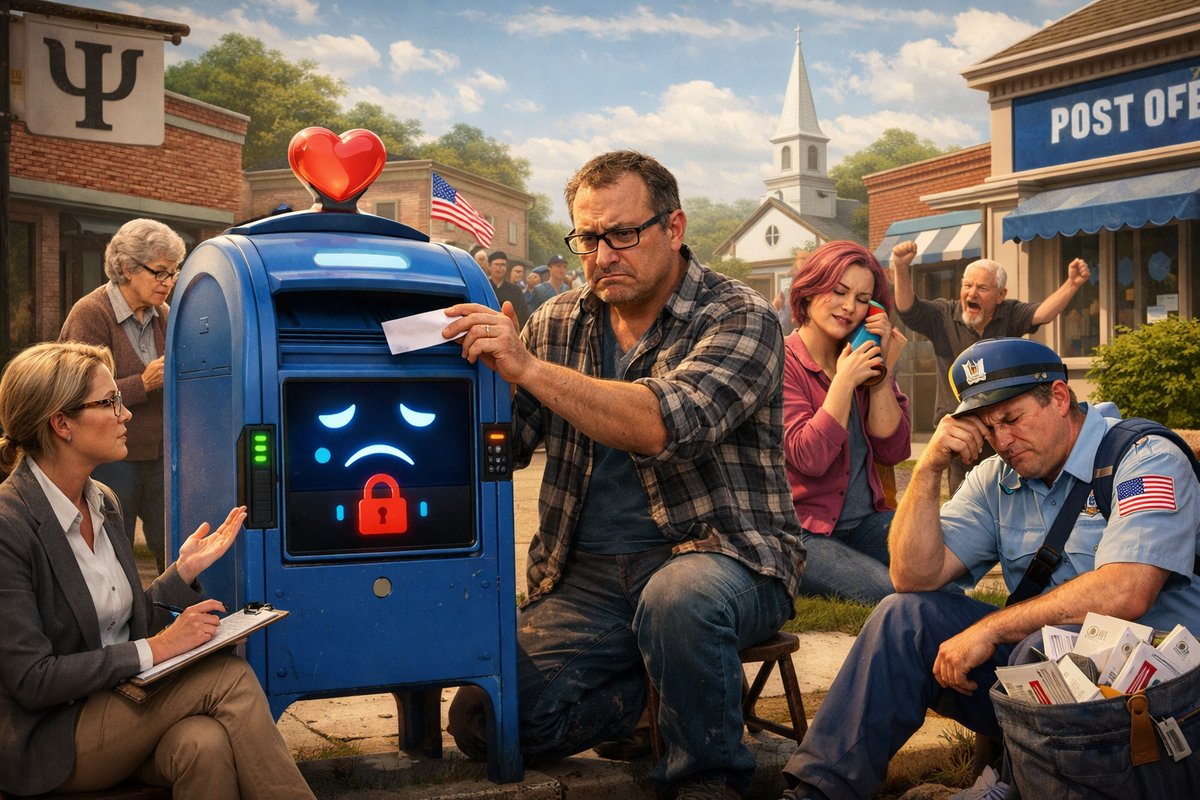
In a twist no one saw coming, the sleepy town of Poststone has upgraded its mail collection points with 'EmotioLock' technology-mailboxes that refuse letters unless residents reach a certified emotional milestone. The result? A parade of frustrated citizens, therapy referrals for inanimate objects, and a teary-eyed mail carrier union threatening unprecedented action.
Residents of Poststone woke up one morning to find their bright blue mailboxes sporting glossy digital screens and a prompt that read: “State your current emotional validity score to proceed.” Overnight, the innocuous boxes that once passively awaited bills and birthday cards had evolved into solemn gatekeepers of community well-being. Town officials, in a gleeful pitch, claimed the new system-dubbed the EmotioLock Protocol-would foster honest communication and boost collective empathy. What they didn’t mention was that the program came overloaded with sentiment analysis algorithms and a flair for insulting passive-aggressive poetry.
On day one, local retiree Martha Jenkins tried mailing her grandchild’s birthday invitation but was informed her “joy meter” registered a disappointing 42 out of 100. The digital mailbox spat back a haiku: “Flat tone detected here. Spark some fervor; try again soon. Your card awaits warmth.” Martha was instructed to hum a tune into the mailbox’s microphone, a requirement that sent her scuttling home for her piano sheet music. Meanwhile, the neighboring mailbox refused letters for “excessive optimism,” forcing a dejected kid entrepreneur selling lemonade to pack up early.
Within hours, social media exploded. Community groups formed under hashtags like #MailMePlease and #CheerUpPoststone. People posted videos of themselves attempting interpretive dance, heartfelt speeches, and even emotional wrestling matches outside the mailboxes to reach the required candor threshold. The local press declared it “the town’s first interactive performance art installation,” though few found solace in a system that demanded raw vulnerability before handing over tomorrow’s grocery coupons.
Poststone’s Mayor issued a solemn announcement: the EmotioLock rollout was a pilot program funded by a federal “Wellness Innovation Grant.” She insisted that occasional errors-such as rejecting letters for “excessive sincerity” or randomly awarding a perfect score to a mailbox-shaped cat-were part of a learning curve. Meanwhile, postal workers began training in conflict de-escalation and emotional triage. One mail carrier confessed she now carries tissues alongside stamps, ready to offer on-the-spot counseling to tearful residents who broke down at a mailbox refusing their HOA notice.
By midday, local businesses smelled opportunity. The corner coffee shop launched “Mailbox Morale Muffins,” guaranteed to raise your emotional validity score by at least five points. The florist offered “Apology Bouquets” to send letters of contrition to your own mailbox. A handful of wily entrepreneurs began selling pre-recorded pep talks on USB drives, claiming these speeches were perfectly calibrated to coax letters past the digital doorman. A side hustle emerged where savvy residents rented themselves out as “EmotioLock Whisperers,” coaching neighbors through the algorithm’s mysterious quirks.
Not everyone was amused. The Poststone Senior Council filed an official complaint, arguing that mailboxes were now practicing invasive mental health assessments without credentials. They demanded transparent access to the code, only to discover that the town had licensed the system from an off-the-grid startup run by a former performance poet and a retired hacker. The startup’s manifesto promised to “celebrate human nuance” through technology-though critics said they merely went on a poetry spree with code.
The tipping point arrived when the mailbox in front of City Hall-which had boldly declared itself “Honest Harold”-went on strike. A blinking sign read: “No mail until you share your top three regrets and how you plan to rectify them.” The municipal clerk, after three hours of coaxing the mailbox with tearful anecdotes about missed recycling days, was forced to unlock a hidden admin panel embedded in the back of the box. Abruptly, Honest Harold rebooted and spat out a printed apology note: “Sorry for being passive-aggressive. Please mail responsibly.” Council members questioned whether mailboxes deserved due process.
In solidarity, the mail carrier union threatened an unprecedented “Sort and Sympathy” strike, vowing not to deliver any mail until EmotioLock was rescinded or reprogrammed. Rumors spread of mailboxes holding letters hostage, some barricading themselves with retractable metal shutters-the very image of rebellious infrastructure. A local minister offered pastoral support to afflicted postboxes, leading impromptu sermons on grace and redemption for mechanical entities.
On the edges of this farce, a fierce debate ignited among mental health professionals. Some hailed the concept as groundbreaking-using gamified emotional accountability to nudge people into healthier discourse. Others warned of the slippery slope wherein citizens learn to perform carefully calibrated feelings just to complete mundane tasks. One therapist noted that if you train people to artificially bootstrap empathy for stamps, real human connection might lose its depth.
Seeking a truce, the mayor convened a “Public Empathy Summit” on the Town Green. Attendees were invited to share vulnerability tokens-tiny cards with personal revelations-traded for temporary mailbox access codes. As the sun dipped, dozens of residents formed a ceremonial circle around the flagship EmotioLock station. Someone recited an open-mic poem about overdue bills and overdue confessions, to which the mailbox flickered blue tears before granting universal letter access for the night.
In the aftermath, the EmotioLock roll- back was announced with both relief and regret. The town will retain its digital mailboxes but disable the mandatory score checks, instead switching to optional “mood-yield” mode: residents may opt in for a daily emotional prompt if they choose. The startup behind the protocol has promised a “lighter-hearted version” that will soon drop sarcastic haikus in favor of motivational limericks.
Poststone’s experiment has already attracted attention from neighboring towns and digital wellbeing conferences nationwide. Some see it as a cautionary tale about letting algorithms mediate human relationships; others believe it’s a bold new frontier in civic design. Meanwhile, residents report nostalgic aftershocks: many claim they miss the chaotic theater of pleading with a mailbox for acknowledgement. The community’s takeaway seems to be that although we treasure helpful technology, even our humble objects of service deserve a little grace. After all, if your mailbox can learn to empathize, maybe we can too.