Location
Mount Vernon, WA 98274

Location
Mount Vernon, WA 98274
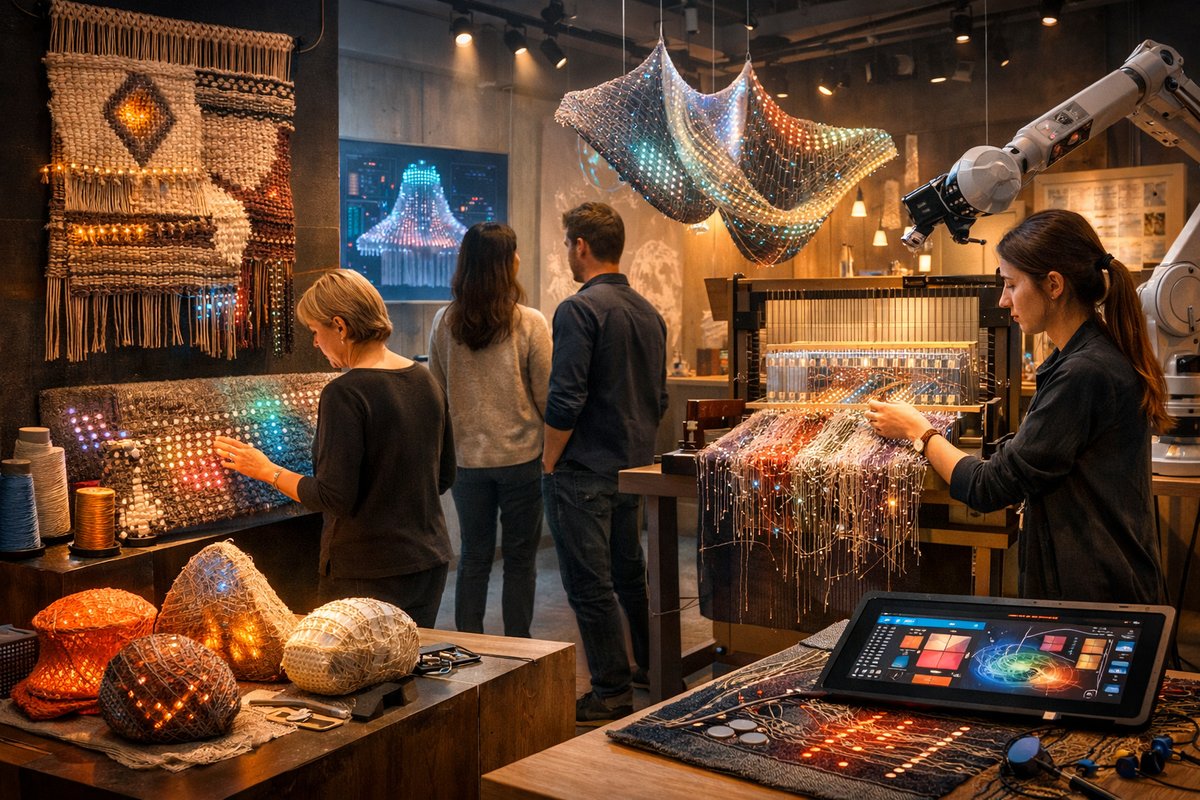
An experimental exhibition has brought together fiber crafters, digital designers, and engineers to explore the tactile potential of textiles. By blending centuries-old weaving techniques with smart materials and interactive technology, the showcase reveals fresh philosophies about touch, sustainability, and human-machine collaboration in contemporary visual expression.
When visitors step into the vaulted hall of a repurposed warehouse turned gallery, they’re greeted by towering columns of braided fiber, screens displaying generative patterns, and softly humming looms. Yet this isn’t a manufacturing floor or a tech demo-it’s the latest art and design exhibition called “Fiber Futures,” where tactile textiles and interactive technology collide. Curators invited makers from around the globe to reimagine cloth as a dynamic medium that can respond, adapt, and even spark emotional resonance.
In one corner, a loop of transparent yarn seems to glow with embedded micro-LEDs. Walk by and the color shifts from cool teal to warm amber; step closer and the sequence accelerates. Behind this piece is an artist who programmed each tiny light strand to react to the proximity of human hands, drawing on the centuries-old tradition of textile patterning while introducing a digital choreography. Nearby, a low wooden table supports a desktop loom that a designer has programmed to weave as visitors draw strokes on a connected tablet-every line translated into interlaced threads in real time.
What binds all these installations is a philosophical thread: a reminder that textiles, long dismissed as craft or commodity, are uniquely suited to explore multisensory experiences and sustainability. Today’s fiber artists are reviving indigenous techniques such as hand-dyeing and natural mordanting alongside cutting-edge processes like conductive embroidery and 3D knitting. They’re forging a path that resists mass production’s detachment, inviting observers to reconnect with the visceral world of texture, color gradients, and the gentle tension of warp and weft.
One participant highlights how cultivating plant-based dyes on site became part of the narrative. A cluster of wall hangings tinted with walnut husk, indigo vats, and marigold extract carries subtle chemical signatures-no two are identical, and fading is embraced rather than seen as decay. Through this lens, the show becomes a meditation on impermanence and human footprint. Attendees watch as technicians refill dye baths made from food waste, blending pigment science with waste-upcycling practices.
Interactivity emerges as another key theme. A collaborative piece by a collective of engineers and textile makers features strands of conductive thread woven into linen panels. Integrated sensors detect touch and motion, triggering soft melodies and wind-chime samples played through hidden speakers. Visitors can experiment with plucking threads or tracing patterns, creating an improvised dialogue between textile and spectator. While it may look like a simple tapestry at first glance, the tactile landscape has been coded with a sensory feedback loop, fostering curiosity and emotional engagement.
This melding of handcraft and digital technology also addresses new modes of storytelling. One installation projects video onto layered ribbons of fabric suspended in midair. The shifting ribbons occasionally align to form glimpses of archival footage-archive clips of traditional looms, craftsmen’s hands at work, and natural landscapes where plant-fibers are harvested. As the ribbons sway in a gentle draft, the historical images warp and disappear, hinting at fragility and cultural memory.
The spatial design of the exhibition accentuates materiality. Rather than bright spotlights or clinical white walls, the curators opted for warm ambient lighting that mimics daylight through translucent scrims. Underfoot, reclaimed wooden planks creak softly, reinforcing an ethos of reuse and conscious sourcing. Even the signage is printed on uncoated hemp paper using eco-inks.
Beyond the gallery, an adjacent workshop offers hands-on tutorials in micro-weaving, dye extraction, and simple e-textile soldering. Attendees can book half-day sessions to try wind-powered loom construction, or experiment with open-source patterning software that translates code into weaving instructions. Organizers report waiting lists for the workshops, as makers and designers see the value of combining digital fluency with the slow, tactile practice of fiber art.
In press materials, the curators assert that the true power of textiles lies in their poetics. Fabrics carry stories of place, labor, craft lineages, and material ecologies. When artists embed sensors, LEDs, or artificial intelligence models into fiber matrices, they’re not simply adding technological novelty; they’re amplifying the communicative potential of cloth itself. Viewers learn that a woven panel can pulse like a heartbeat, react like a living organism, and even share data across a mesh network of interactive sculptures.
The implications for sustainable design are significant. As mass-market clothing and fast-fashion industries face scrutiny for waste and environmental harm, hyperlocal, on-demand textile production is gaining traction. Many featured artists emphasize zero-waste pattern making, biodegradable fibers, and farm-to-loom supply chains. Some pieces are woven entirely from scrap yarn reclaimed from shoemaking plants, or spun from nettle fibers harvested in nearby wild meadows. Audiences leave with an expanded understanding: textiles can function as living archives of ecological impact, serving as both tactile art objects and educational tools.
Critics have praised the exhibition’s seamless integration of craft and code, noting that it sidesteps didacticism by leaning into poetic ambiguity. One reviewer described it as a “sensory odyssey,” while another applauded its refusal to separate design from ethics. A cultural journalist observed that the show’s success lies not in grand statements, but in the simple wonder of touching a fiber-optic curtain and watching it shimmer in response.
Looking ahead, the curatorial team plans to take “Fiber Futures” on a multi-city tour, adapting the content to local textile traditions in each region. They envision collaborations with indigenous weaving collectives, bringing machine-learning-driven jacquard looms to remote craft communities. The goal is to create a reciprocal exchange where global innovation meets centuries-old wisdom.
As audiences file out, they carry brochures printed on fabric tags, reminders that art and design can be woven into everyday life. The show poses a question: What if we treated everyday cloth not as a disposable commodity, but as a living interface-one that can sense, speak, and hold stories? The answer, as demonstrated by these installations, is already unfolding in braided circuits and softly glowing weaves. It suggests a future where our tactile encounters with fabric become portals to deeper connections-between people, materials, and the rhythms of the planet itself.