Location
Mount Vernon, WA 98274

Location
Mount Vernon, WA 98274
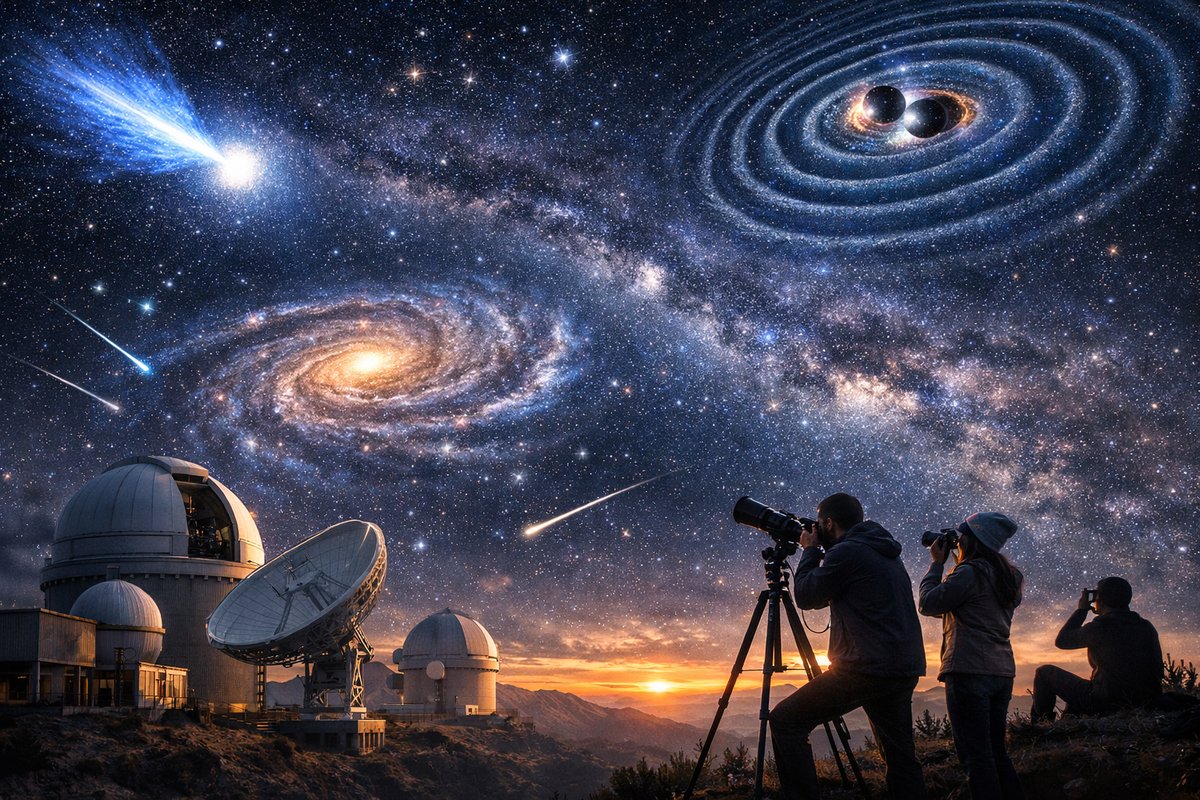
Driven by groundbreaking detections-from mysterious fast radio bursts to whispers of gravitational waves-both professional observatories and backyard stargazers are experiencing a renaissance of cosmic wonder. This surge in curiosity is reshaping how we explore the universe, blending cutting-edge research with hands-on discovery.
The night sky has always been an invitation-a shimmering canvas that beckons us to ponder our place in the vast expanse. In recent months, that invitation has never felt more urgent. A flurry of new observations, paired with rapidly accessible data and creative amateur collaborations, is sparking what might be the most democratic era of cosmic exploration in generations.
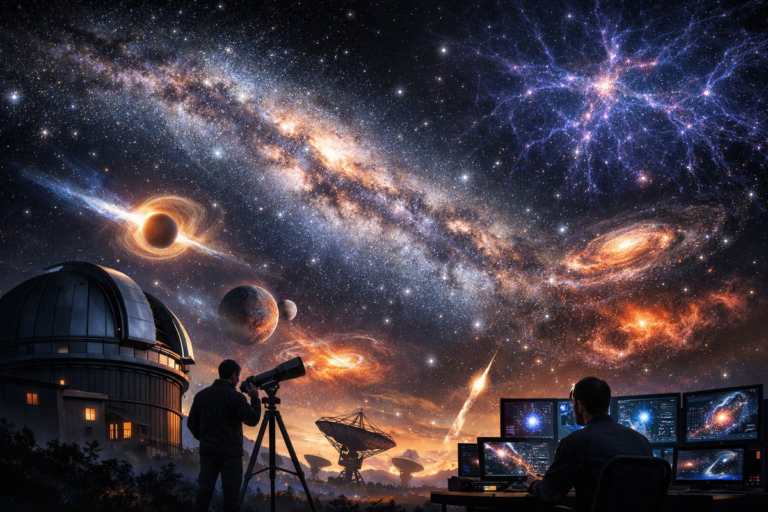
Emerging from the cutting edge of astrophysical research are detections that blur the lines between the known and the unexpected. Fast radio bursts-millisecond flashes of electromagnetic energy originating from distant galaxies-continue to arrive with baffling regularity. While initial detections were few and far between, modern radio arrays now capture dozens each month. Detailed analysis has revealed subtle patterns in their dispersion measures, hinting at the turbulent intergalactic medium through which they travel.
Simultaneously, gravitational wave observatories are refining their sensitivity. Every collision of neutron stars or black holes sends ripples through spacetime itself, and each new chirp broadens our grasp of fundamental physics. Observers recently announced an event consistent with a neutron star merging with a lightweight black hole-an elusive pairing that had, until now, existed only in theoretical models. The detection has prompted theorists to revisit equations governing nuclear matter under extreme pressures and densities.
Meanwhile, neutrino telescopes buried deep in Antarctic ice have detected high-energy neutrinos with energies greater than any previously recorded cosmic source. These ghostly particles, born in cosmic accelerators like active galactic nuclei or hypernovae, offer a unique window into processes that would otherwise remain invisible behind thick clouds of dust and gas. Tracking their arrival directions has led to tentative associations with energetic blazars-galaxies with their jets pointed directly at Earth-revealing potential cosmic particle accelerators in action.
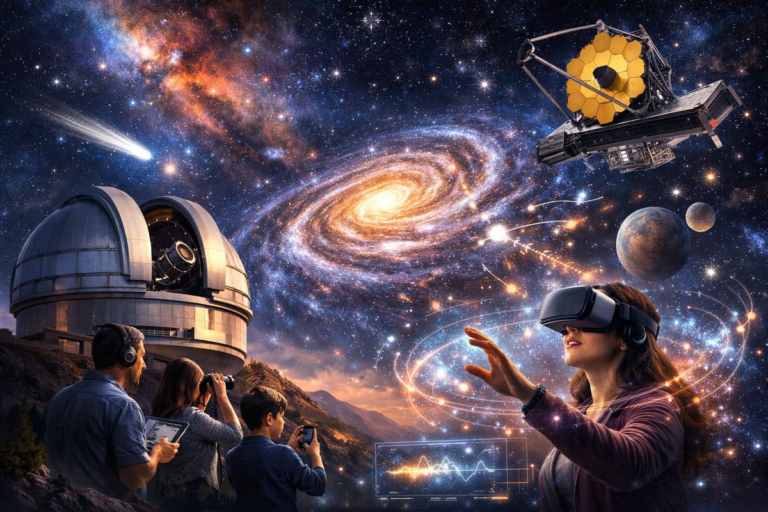
This cascade of professional breakthroughs is now flowing into the hands and hearts of citizen scientists. Open-access catalogs from radio, gravitational-wave, and neutrino observatories allow curious minds around the world to comb through raw data for anomalies. Online platforms have sprung up, guiding volunteers through interactive tutorials on signal classification and encouraging them to submit candidates for follow-up by professional facilities. It’s a model of distributed discovery, where the line between amateur and expert grows ever fainter.
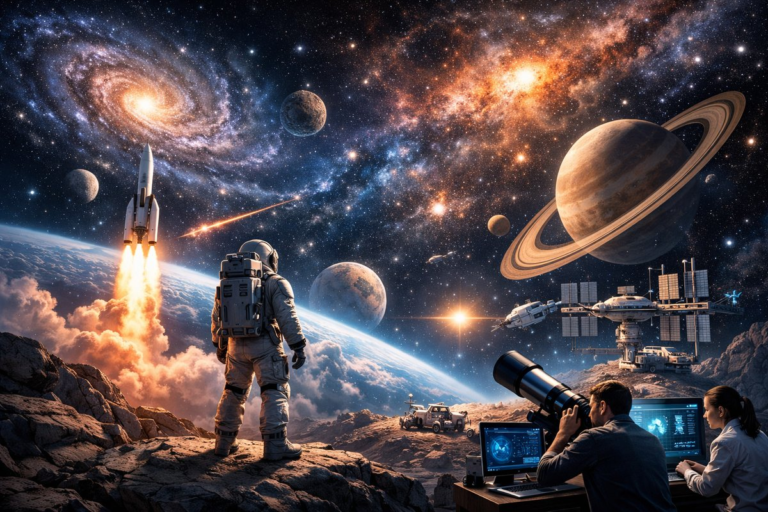
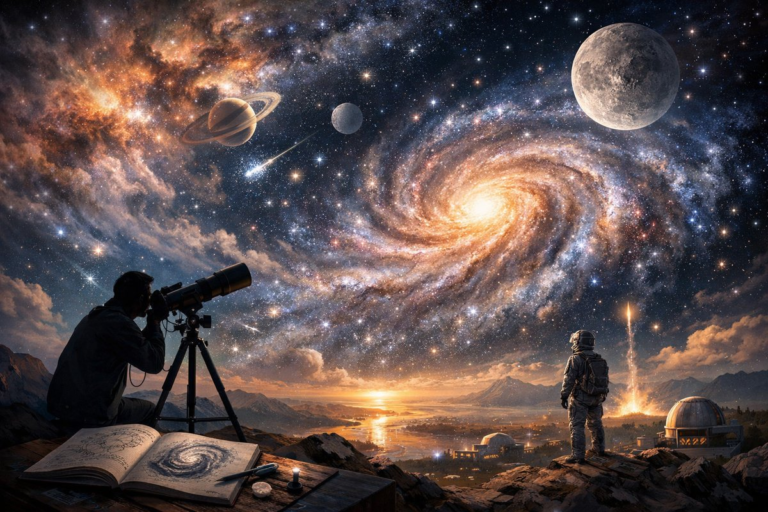
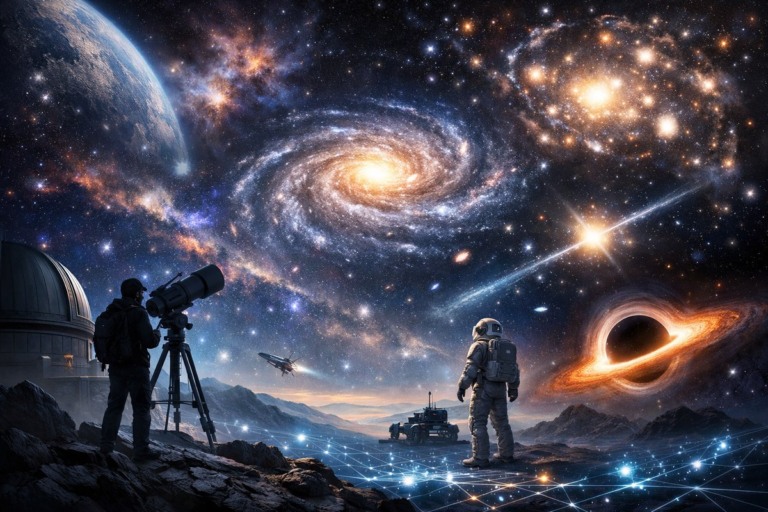
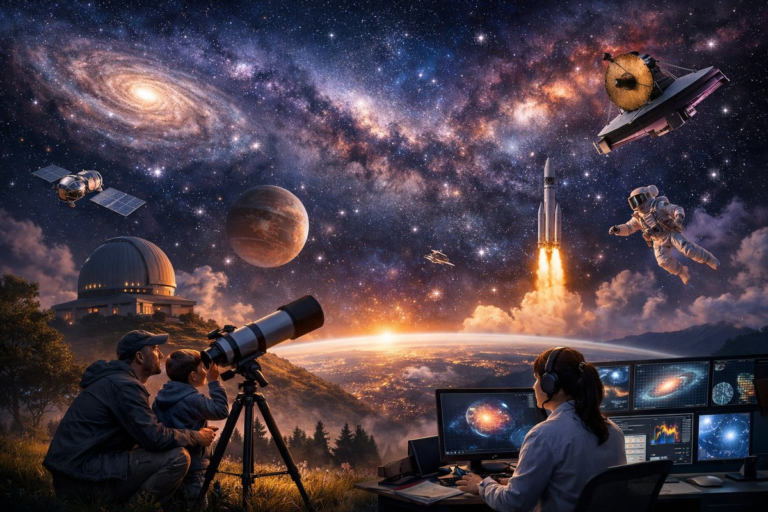
Backyard stargazers are also reaping the benefits of better technology at lower cost. Mirrorless cameras and sensitive CMOS detectors once reserved for large observatories are now adapted to telescopes costing a few hundred dollars. Space-grade filters block city lights, while smartphone adapters transform pocket devices into potent astrophotography tools. Enthusiasts capture spiral arms of distant galaxies, map planetary transits, and even record meteor trails with an immediacy that would have once required a grant and institutional backing.
The emotional impact of this era cannot be understated. Social-media feeds overflow with frames of Saturn’s rings, portraits of lunar mountains at sunrise, and time-lapse videos of the Milky Way arching overhead. These images do more than decorate our screens-they remind us of a shared human gaze directed upward, a reminder of our collective place in the universe.
Education and outreach programs are weaving these discoveries into curricula and public events. Pop-up observatories in urban parks provide families with their first glimpse of Jupiter’s cloud bands. Science festivals offer workshops on building pinhole solar projectors or programming amateur radio receivers to eavesdrop on solar flares. Such activities serve as portals, inviting participants to explore concepts of light, gravity, and quantum particles through hands-on experience.
Curiosity also extends to theoretical frontiers. Researchers are refining models of how cosmic magnetic fields shape galaxy formation, while philosophers and science communicators explore the existential implications of a universe teeming with unseen phenomena. How do we reconcile the fragility of human life with the almost unfathomable scales of cosmic time? What emotional landscape forms when we contemplate that each photon reaching our eyes embarked on its journey millions or even billions of years ago?
The pace of discovery shows no signs of abating. Next-generation radio arrays will localize fast radio burst sources with arc-second precision, potentially pinpointing the exact galaxies that harbor these mysterious phenomena. Space-based gravitational-wave detectors, scheduled to launch in the coming decade, will tune into lower-frequency events generated by supermassive black-hole mergers. Meanwhile, planned neutrino facilities in the Mediterranean Sea will provide complementary coverage to Antarctic arrays, promising a global network for multi-messenger astronomy.
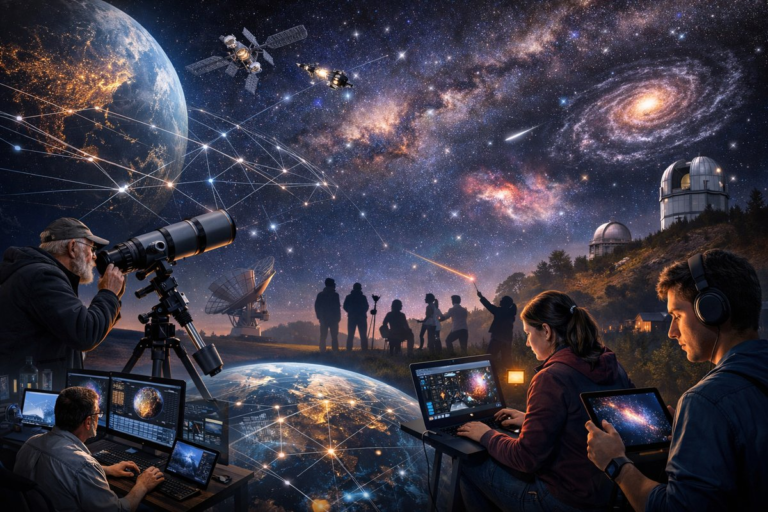
Yet the true story of this renaissance lies not only in the instruments or data but in the human impulse to explore. Across every time zone, a tapestry of curiosity unfolds. Late-night livestreams feature professors decoding recent detections; online forums buzz with speculation about the origin of a particularly bright neutrino burst; amateur clubs organize pooled observations to chase transient phenomena.
This movement also carries a reminder of sustainability and stewardship. Light-pollution campaigns encourage cities to adopt shielded streetlights and dimming schedules, ensuring future generations can witness the splendor of a star-filled sky. Educational initiatives stress that scientific knowledge is a shared resource, one that flourishes when data and discoveries are accessible to all, free from gatekeepers and paywalls.
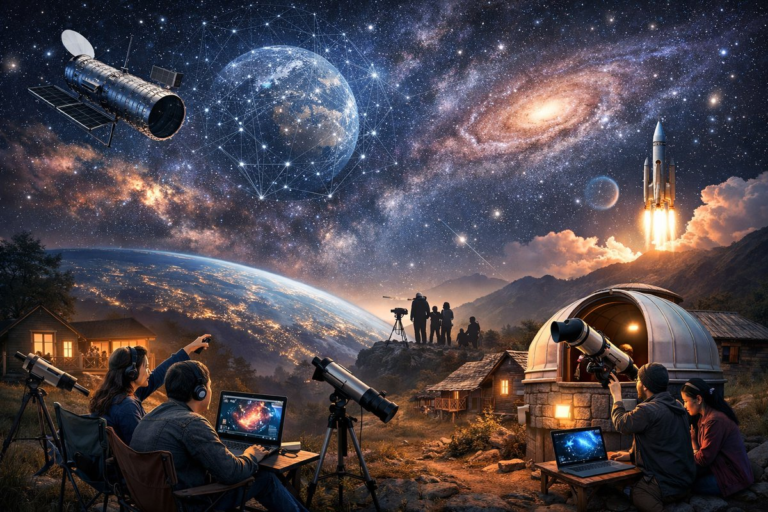
Why does cosmic curiosity endure? Perhaps because it connects us to something greater-an ongoing narrative of exploration that stretches back through human history, from ancient skywatchers charting constellations to modern scientists probing quantum foam. Each discovery, whether made in a glass-walled observatory on a mountainside or in a suburban backyard with a homemade mount, adds a new brushstroke to the cosmic canvas.
In the coming years, that canvas will become ever more detailed. As instruments grow more sensitive and collaborations more inclusive, we will map the unseen scaffolding of dark matter, identify the engines powering the universe’s most violent explosions, and maybe, just maybe, uncover signs of life beyond our planet. The boundaries of knowledge are not fixed lines but living frontiers shaped by curiosity, creativity, and collaboration.
For the endlessly inquisitive, this is more than news. It is an invitation-to observe, to question, to join the grand exploration unfolding above us. When we look up tonight, perhaps we’ll see not just distant lights but a mirror reflecting our own boundless capacity to wonder.