Location
Mount Vernon, WA 98274

Location
Mount Vernon, WA 98274
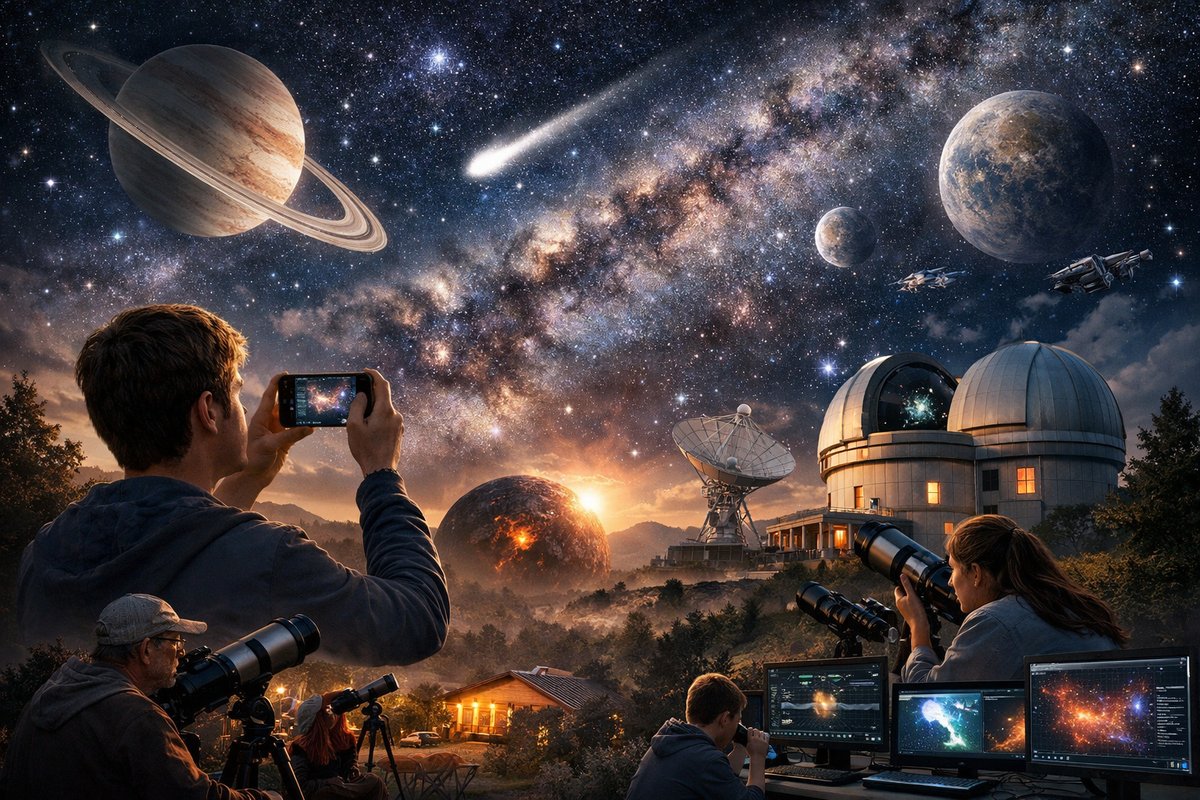
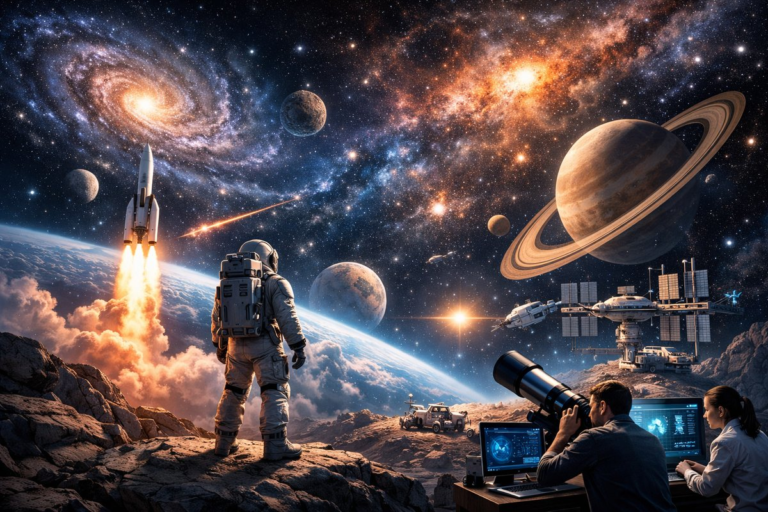
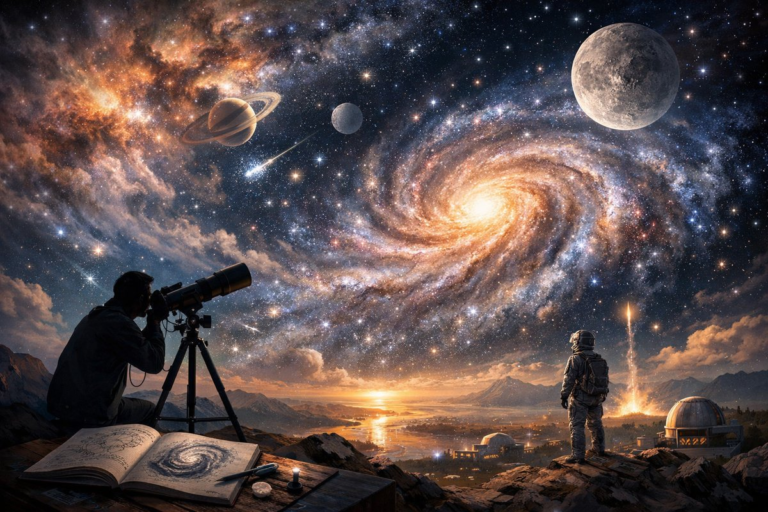
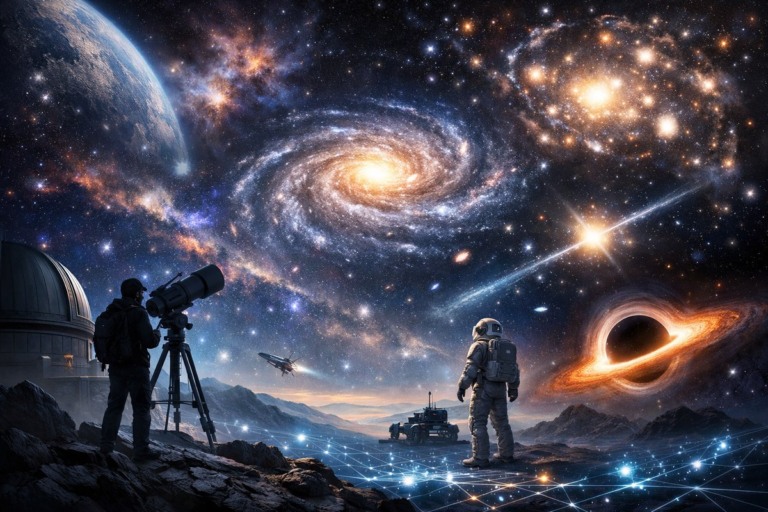
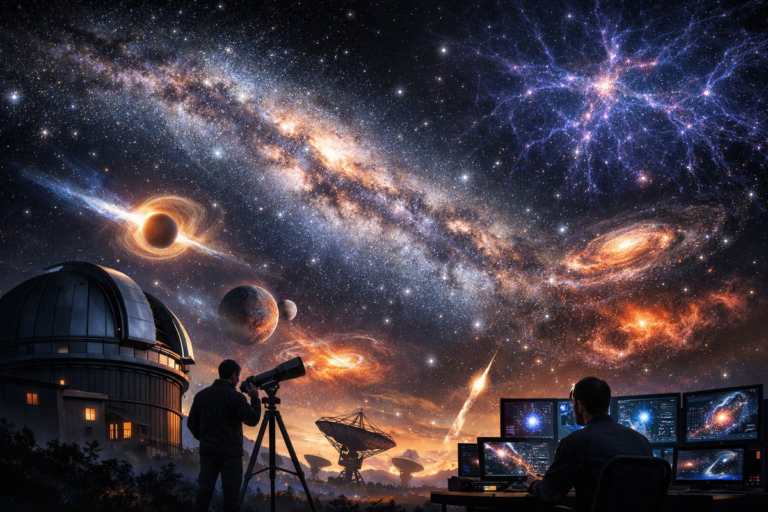
A fresh wave of discovery is sweeping across both research labs and backyards as cosmic curiosity ignites new citizen science projects, home stargazing rituals, and surprising insights into exoplanets and interstellar phenomena. From deep-space telescopic surveys to smartphone astrophotography, our hunger for the unknown is reshaping how we perceive the cosmos-and ourselves.
Across the globe, amateur stargazers and professional researchers alike are staring up at the night sky with renewed wonder. It isn’t just the record-breaking images from orbiting space telescopes that are fueling this renaissance of cosmic curiosity; a surge of grassroots initiatives, new technologies, and interdisciplinary collaborations is turning everyday enthusiasts into contributors for scientific discovery.
In a remote desert region thousands of miles from any major city lights, a group of volunteers has logged hundreds of hours watching for faint flashes known as fast radio bursts. These millisecond-long signals, first detected in archived data several years ago, have gone from a baffling anomaly to a live puzzle that volunteers can help solve. By combining affordable software-defined radio receivers with open-source signal-processing tools, citizen scientists are uploading candidate events to shared databases and even flagging potential patterns that eluded automated pipelines.
Meanwhile, in suburban backyards, families are setting up modest reflecting telescopes on fold-out tables, enjoying the serene ritual of cooling optics and adjusting eyepieces. A recent online survey of astronomy clubs found that more than half of new members cited “capturing my own images of planets and nebulae” as a primary motivation. Even without glass-plate negatives or specialized CCD cameras, smartphone astrophotography adapters now make it possible to snap Jupiter’s swirling bands or the delicate glow of Orion’s Nebula with just a handheld device and a sturdy mount.
The catalyst behind these homegrown efforts isn’t only a desire for pretty pictures. Data from backyard observers have already played a part in confirming new variable stars and monitoring transient events like meteor showers or minor planet occultations. In one case, a high-school student’s video of a brief asteroid flare was used to refine the predicted orbit of a near-Earth object, helping professional astronomers update impact-risk assessments.
On the professional side, the latest infrared observatory scanning the skies has revealed atmospheric signatures around distant exoplanets-some hinting at water vapor, others showing unexpected chemical ratios that challenge existing models. Collaborative networks of ground-based telescopes now coordinate rapid follow-up observations, ensuring that when a new planetary candidate appears on one instrument’s radar, dozens of others swing into action within minutes. This synchronized ballet of optics is a testament to what happens when cosmic curiosity transcends institutional boundaries.
But it’s not all hardware and hard data. Leading physicists argue that the most profound breakthroughs often arise from unlikely conceptual mash-ups. One workshop explored parallels between patterns in cosmic microwave background radiation and network theory in social sciences, suggesting that techniques used to map human connections could reveal hidden structures in the infant universe. Elsewhere, artists and philosophers have convened to reframe our emotional relationship with space, proposing that understanding the cosmos may hold keys to inner resilience and collective empathy.
Yet exploring the universe isn’t without its logistical challenges. Light pollution continues to blind observers across sprawling metropolitan areas, driving innovative campaigns to retrofit streetlights with better shielding and celebrate “dark-sky festivals.” Battery-powered spectrometers are shrinking in size, so volunteers can gather chemical fingerprints of skyglow at different altitudes and contribute to global maps guiding future conservation efforts.
Virtual reality experiences have also matured from novelty demos into serious educational tools. In one pilot program, participants don VR headsets that use real-time telescope feeds to transport them to lunar craters or the rings of Saturn. By blending live imagery with layered scientific annotations, users can trace the path of solar wind particles or zoom into star-forming clouds with millimeter-level precision. Feedback from these sessions is feeding back into curriculum design, making complex astrophysical concepts accessible to teenagers who might never step foot in a university lecture hall.
The emotional pull of cosmic curiosity can be surprisingly intimate. A growing number of people report that stargazing helps them process stress, find perspective on daily problems, and tap into a sense of belonging within the larger tapestry of space-time. Guided meditations under the Milky Way canopy are popping up at wellness retreats, and therapists are even experimenting with “cosmic narrative” techniques-inviting clients to imagine themselves as travelers on a photon journey through deep space, encountering black-hole gravity wells and bathing in the glow of distant quasars.
Of course, there remains a dark side to exploring the cosmos. Space-debris tracking is becoming mission-critical as defunct satellites and spent rocket stages clutter Earth orbit. But here again, cosmic curiosity offers solutions: student teams in robotics competitions are designing net-equipped drones to corral tiny fragments, and machine-learning researchers are training algorithms to predict collision risks years in advance, potentially guiding active defragmentation missions that could restore safer lanes for future spacecraft.
Looking ahead, the boundary between professional observatory data and citizen-driven discovery is set to blur even further. Upcoming radio arrays and next-generation optical telescopes will stream live feeds to the public, while AI-assisted signal detectors will flag anomalies in real-time. Enthusiasts might be the first to spot signatures of technosignatures-hypothetical signals from advanced civilizations-or map the faint afterglow of the universe’s first stars.
What all these efforts share is a rekindled sense of wonder. Whether you’re calibrating a spectrometer in a high-school lab, attending a pop-up stargazing event in a city park, or immersing yourself in a virtual nebula tour, cosmic curiosity reminds us that discovery can come from any mind, at any age, anywhere on Earth. It’s a reminder that when we look up and ask questions, the universe answers in ways that reshape how we see ourselves-and where we might be headed.