Location
Mount Vernon, WA 98274

Location
Mount Vernon, WA 98274
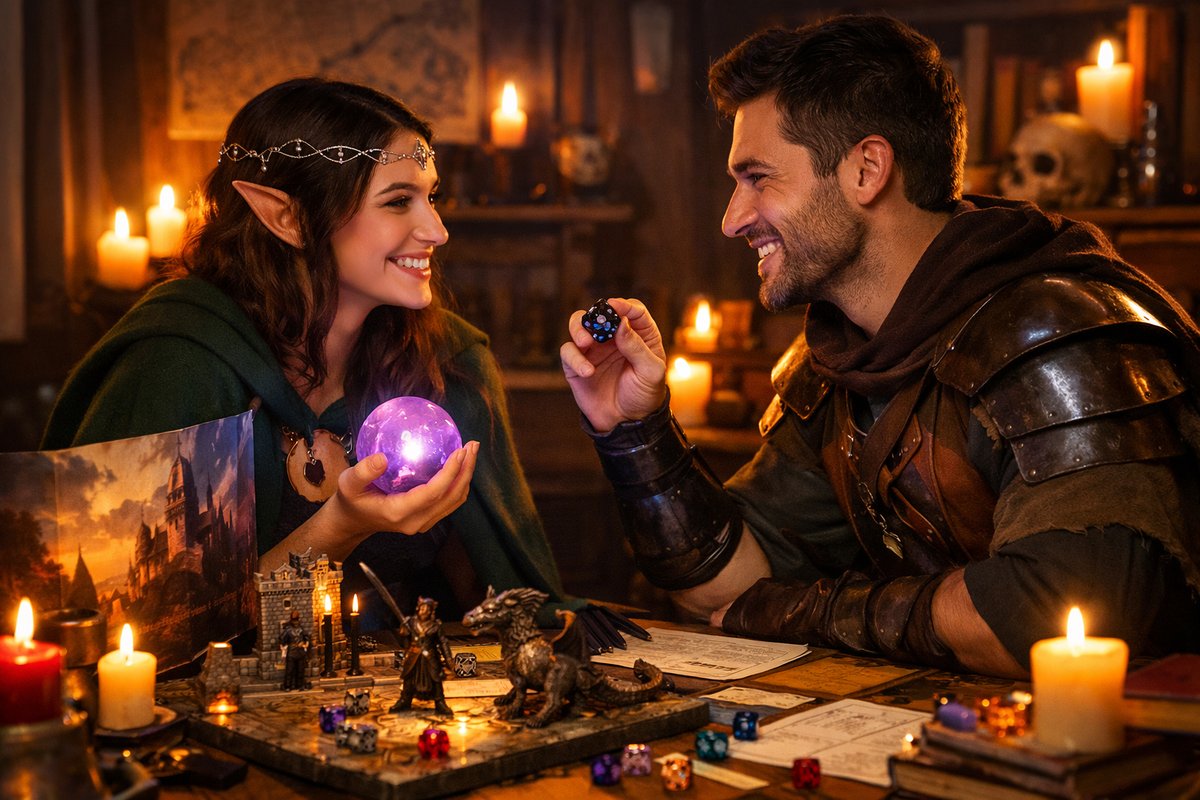
A growing number of partners are setting aside traditional date routines in favor of immersive role-playing experiences designed to unlock new dimensions of emotional intimacy. By blending game mechanics with narrative therapy techniques, these tabletop quests inspire deeper conversations, creative expression, and shared laughter.
For years, the default date night formula has been dinner, a movie, or maybe a concert ticket. But a recent wave of couples is sidestepping that script with an unexpected twist: they’re propelling their relationships into fantastical realms, armed with character sheets, dice, and open imaginations. From living rooms to backyard tables, partners are embracing role-playing scenarios as a playful portal to deeper understanding. The novelty isn’t just in the setting-it’s in how collaborative storytelling can unearth hidden hopes, fears, and desires.
This trend began gathering momentum when a handful of therapists and game designers teamed up to launch a series of relationship-focused RPG kits. Packaged under names like “Empathy Quests” and “Heartwood Chronicles,” these at-home adventures include scenario cards, narrative prompts, value-mapping worksheets, and simple rule systems that encourage couples to take on fictional personas. Unlike conventional table games that pit players against monsters, these quests cast both partners as co-heroes in a mission to rescue a threatened village, restore a lost artifact, or navigate a moral crossroad. Each choice becomes a mirror to real-life relationship dynamics, prompting questions such as “Which strengths do you admire most in your partner?” or “How do we handle conflicting goals under pressure?”
The core of these game-based rituals draws heavily from narrative therapy, a psychological approach that treats people as experts in their own stories. By externalizing problems and role-playing solutions, couples can explore sensitive topics in a low-stakes environment. Educational psychologists point to studies showing that collaborative storytelling can enhance empathy, reduce defensive communication, and foster a sense of team identity. A randomized trial published last year even found that partners who engaged in weekly shared creative tasks-like writing a joint short story-reported significant boosts in relationship satisfaction over a two-month period.
Consider the experience of one couple who tried their first adventure kit on a rainy Saturday afternoon. They selected a “Bridge of Whispers” scenario, in which two guardians must decide whether to protect a magical crossing or reveal its location to a neighboring kingdom in crisis. Each partner filled out a brief character profile-revealing family background, personal virtues, and a secret longing-before diving into role. Throughout the session, they navigated alliances, debated ethical dilemmas, and traded fictional spells, all while an informal scoring track rewarded creative collaboration rather than competition. When play ended, they switched to the included debrief guide, reflecting on parallels between protecting the bridge and safeguarding their own mutual trust.
“I was surprised at how easily we slipped into character,” one partner recalled. “By the time our guardians faced a betrayal, it felt emotional and real-so we paused the game and talked about moments when we each felt let down. It opened up a conversation I’d been avoiding for months.” The partners say the ritual of returning to the scenario each month has become a beloved tradition, one that couples friends have since joined in on.
Licensed relationship counselors have also begun adopting role-playing techniques in office sessions. Rather than prescribing a standard exercise like “share three appreciations,” some therapists now break out simplified game boards, urging partners to navigate interpersonal challenges by inhabiting new roles-an elder council member, a youth seeking guidance, or a mystical guide. The dramatic framework can lower anxiety around “tough talks,” making it easier for each side to listen without immediately jumping to defensiveness. A therapist who piloted this approach reported that over 70 percent of her clients cited role-play as the most impactful part of their work together.
Access has only widened thanks to a proliferation of digital print-and-play resources. Enthusiasts have created free PDF scenario packs, which any couple can download, print, and cut into cards at home. Online communities now share custom adventure modules tuned to specific goals-communication improvement, conflict resolution, or even reigniting physical affection. Some hobbyists have even hosted live virtual game nights, where multiple couples gather over video chat to tackle cross-household scenarios that encourage empathy toward unfamiliar perspectives.
But there are critics who caution against turning every date into a project. “Games are wonderful facilitators,” notes a veteran couple’s therapist, “but if partners treat them as another obligation or performance task, the magic can fade.” She advises balancing structured RPG sessions with spontaneous moments-an unscripted walk in the park, a kitchen dance party-so that playfulness remains genuine rather than duty-driven. Still, most proponents agree that having at least one intentional, game-based conversation each month can refresh routines and deepen emotional attunement.
Cultural observers see parallels between this rise in role-play dating and other experiential trends-like couples’ micro-retreats, sound baths, or shared art workshops. In each case, partners are seeking something beyond passive consumption. They crave co-creative rituals that scaffold dialogue, spark novelty, and produce tangible souvenirs: a handcrafted map, a stack of annotated cards, or a journal filled with story fragments. These artifacts then become touchstones, reminders of shared growth and curiosity.
For DIY enthusiasts, building your own relationship quest is entirely possible. Start with a blank notebook, draw a simple map, and write three branching choices at each waypoint-“Help the merchant,” “Ignore the plea,” “Steal his goods.” Assign each choice an open-ended question: “What do we value more, generosity or security?” Roll a standard six-sided die to determine which partner answers, and jot down insights in a shared journal. Even without a commercial kit, the essence of the exercise remains: playful collaboration, narrative distance, and guided reflection.
Whether partners pick up a professionally designed box or craft their own campaign, the common denominator is curiosity. When couples lean into shared stories, they fast-forward past surface-level small talk and step directly into each other’s inner lives. It no longer matters whose character lands the final blow or who scores the last point-what resonates is the experience of co-creating, exploring, and discovering together.
As the tabletop-for-two movement spreads, couples everywhere are finding that the most epic adventures happen not in distant fantasy worlds, but in the simple act of asking, listening, and imagining-with a handful of dice in hand.