Location
Mount Vernon, WA 98274

Location
Mount Vernon, WA 98274
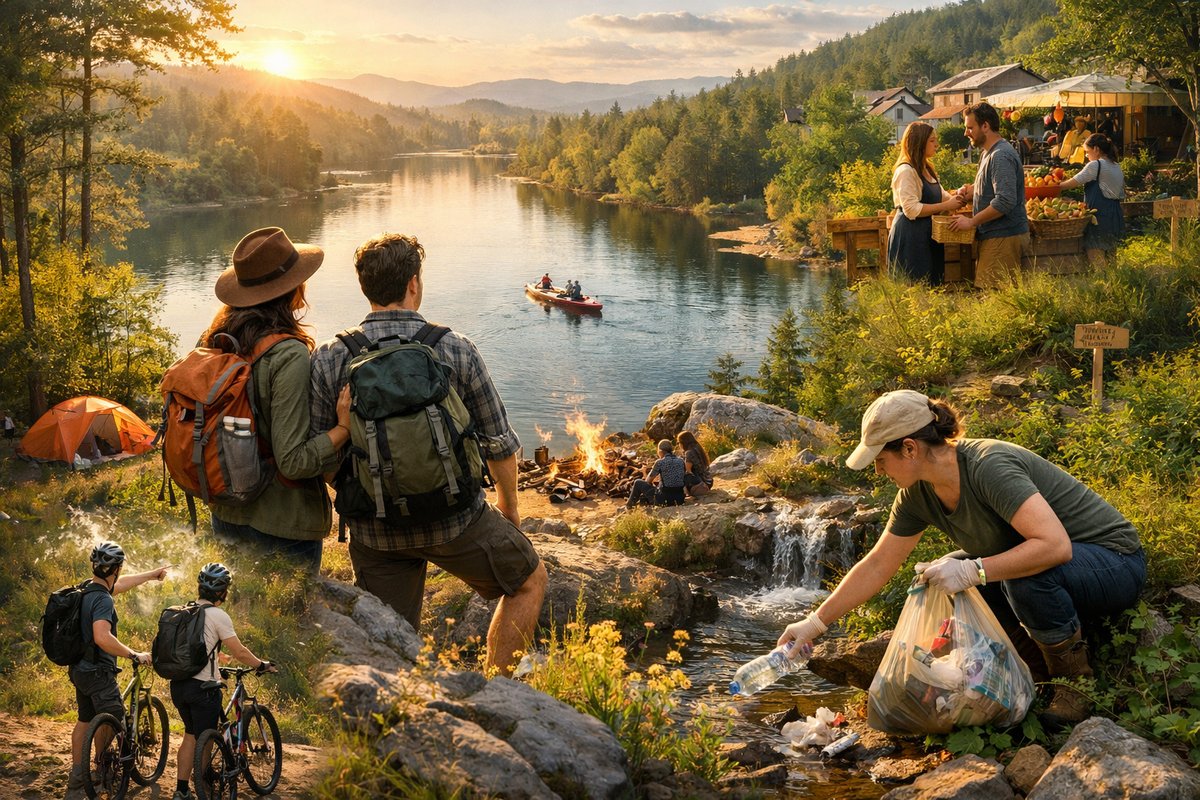
As travelers increasingly seek purpose and minimize their footprints, micro-adventures-brief, low-impact journeys close to home-are surging. This news report explores how weekend explorers are reshaping tourism through local immersion, eco-friendly practices, and community engagement.
Cities and countryside alike are witnessing a subtle revolution: travelers are swapping distant bucket-list destinations for micro-adventures just beyond their doorstep. Fueled by environmental concerns and a desire for meaningful experiences, weekend explorers are discovering that purpose-driven travel doesn’t require international flights or luxury resorts-just curiosity, local connections, and the right gear.
Urban residents, constrained by busy schedules and budget limits, are increasingly turning to nature reserves on the city fringe, hidden lanes in historic districts, and community gardens tucked between apartment blocks. A recent survey of 5,000 adults by a leading outdoor recreation institute found that nearly 60 percent planned at least one local excursion in the next six months, citing lower costs and a smaller carbon footprint as key motivators.
The concept of the micro-adventure was popularized in nonfiction travel writing, but its real-world surge owes much to social media and grassroots networks. Online communities share mapped routes, volunteer opportunities, and tips for packing light. Local guides host small-group outings that blend hiking with neighborhood history lessons, garden tours, or hands-on workshops in sustainable farming. One guide in a metropolitan region repurposes vacant lots into urban farms and invites visitors to join in planting, harvesting, and seed saving. Participants return home with fresh produce and a deeper sense of community stewardship.
What makes micro-adventures so compelling is their accessibility. A handcrafted wooden canoe on a calm urban lake, a self-guided walking tour through street art districts, or a twilight kayak trip on a nearby river can all qualify. These brief excursions often last just a few hours or a single overnight and require minimal planning. Travelers can focus on what matters most-exploring, reflecting, and connecting.
Sustainability sits at the heart of this movement. Without longhaul flights or large tour groups, micro-adventurers drastically reduce greenhouse gas emissions. Many favor public transportation, bicycle-share programs, or electric scooters to reach trailheads. At campsites, low-impact tents and bio-degradable toiletries are standard. Local businesses-coffee roasters, craft breweries, independent hostels-benefit from the influx of curious visitors seeking authentic experiences.
Community engagement transforms a simple walk in the woods into a shared mission. During weekend outings, travelers might join local foraging walks led by respected herbalists, learn how to identify edible plants, or lend a hand at a small-scale tree-planting drive. These interactions break down the traditional tourist-host barrier and foster mutual learning. Village artisans sometimes open their workshops to micro-adventure groups, showing visitors how to weave baskets from local reeds or kiln-fire ceramics using clay sourced from nearby riverbeds.
The mental health benefits of short, purposeful trips are well documented. Psychology researchers note that even a single day spent outdoors can lower stress hormones, improve mood, and enhance creativity. A study in a peer-reviewed journal of environmental psychology reported that participants who engaged in biweekly nature excursions experienced a 30 percent reduction in anxiety levels over two months. With the micro-adventure model, these benefits become both attainable and repeatable.
Critics caution against trivializing conservation by turning fragile landscapes into Instagram backdrops. In response, many local-adventure organizers now include brief orientation sessions on Leave No Trace principles, wildlife etiquette, and respectful cultural practices when exploring heritage neighborhoods. Some host clean-up events where participants pick up litter along riverbanks or paint murals on drab walls, fostering neighborhood pride rather than eroding it.
Economic data illustrate the growing value of micro-adventure tourism to local economies. A regional analysis in one coastal area found that small-scale adventure businesses-kayak rentals, guided foraging tours, bike-based food tours-grew revenue by 25 percent over the last two years. That influx supports local guides, gear shops, and micro-lodges that prioritize renewable energy and local sourcing.
Technology and digital platforms play a supporting role without dominating the experience. Travelers use open-source mapping apps to discover lesser-known trails, smartphone translation tools to connect with non-English-speaking residents, and lightweight GPS beacons for safety. Yet many micro-adventurers deliberately disconnect from social feeds during the trip, reserving time for journaling on paper or stargazing in silence.
For gear, minimalist approaches reign supreme. Multi-purpose items-sleeping liners that double as shelters, solar-powered lanterns that charge devices-are prized for cutting down pack weight. Reusable water systems, compact first-aid kits, and portable cookware made from recycled materials strike a balance between preparation and ecological responsibility. Community co-ops sometimes lend specialized equipment-like inflatable stand-up paddleboards or climbing ropes-so individual travelers avoid purchasing gear they’ll seldom use.
The future of travel may well be rooted in these small, intentional steps. As international borders regain complexity and travelers weigh the environmental consequences of longhaul flights, micro-adventures present an elegant solution: the world reimagined at neighborhood scale. These mini-journeys demonstrate that fulfillment doesn’t hinge on distance but on engagement, learning, and stewardship.
In a bustling city alley, a group of weekend explorers gathers at dawn for a guided soundwalk. An ecologist leads them through whispering reeds, urban wetlands alive with frogs and dragonflies. They pause to record bird calls on their phones, then head to a nearby rooftop garden for a community-grown breakfast of eggs and greens harvested just hours earlier. By mid-morning, they’ve come full circle: from concrete streets to wild spaces and back, carrying a sense of awe and purpose.
Whether you’re a time-pressed professional or a lifelong wanderer, consider charting your own micro-adventure. Start by scouting a nearby nature preserve or cultural landmark, invite friends who share your passion for sustainability, and plan a low-impact itinerary. With every local trail tread and every community project supported, you contribute to a travel ethos that values place over passport stamps and impact over distance.
Micro-adventures prove that the most memorable journeys can unfold just outside your front door. As this movement gains momentum, weekend explorers are showing the world that travel with purpose doesn’t require grand gestures-only an open mind, responsible practices, and a willingness to see the extraordinary in the everyday.