Location
Mount Vernon, WA 98274

Location
Mount Vernon, WA 98274
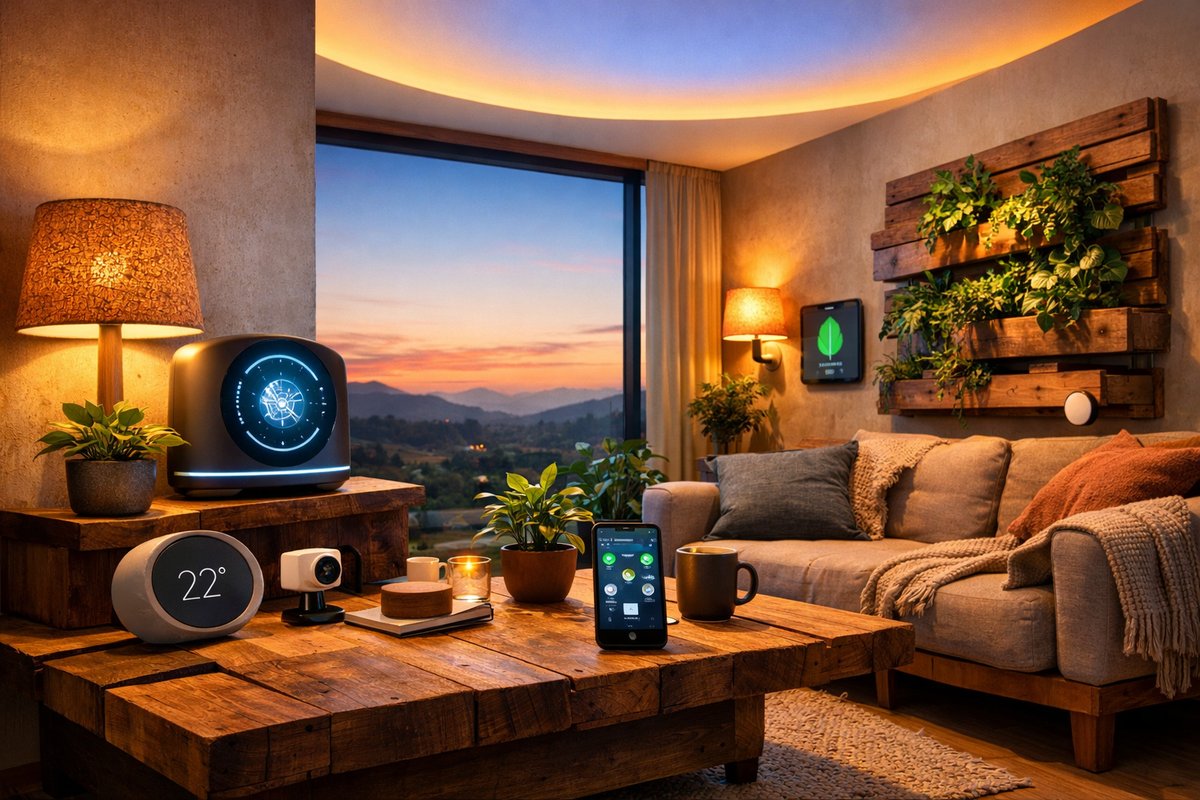
A new generation of smart home innovations is putting privacy, sustainability, and cozy comfort at the center of home design. By blending on-device AI hubs, circadian lighting, upcycled materials, and low-power sensors, homeowners can create living spaces that feel both cutting-edge and deeply personal.
A quiet revolution is reshaping the way people live at home. No longer satisfied with a handful of connected speakers or a single smart thermostat, today’s homeowners are demanding systems that feel truly intentional-offering seamless automation, energy efficiency, aesthetic harmony, and privacy all under one roof. At recent trade shows and in the latest industry surveys, a picture emerges of tomorrow’s homes: alive with on-device artificial intelligence, breathing with air quality sensors, warmed by materials reclaimed from local sources, and lit by bulbs that mimic the sun’s natural rhythm.
Last month at a major consumer electronics expo, a consortium of tech startups displayed a new type of smart home hub built around edge computing. Instead of sending data to cloud servers, these hubs analyze sensor inputs locally, triggering routines for lighting, HVAC, and audio without ever leaving the house. A demonstration unit showed how the system could detect rising indoor CO₂ levels, activate a whisper-quiet ventilation fan, dim lights for an afternoon reading session, and play a soft ambient soundtrack-all within a few hundred milliseconds. For privacy-conscious users, there’s no need to worry about voice commands or sensor data being stored off-site.
Behind these demonstrations is a shift in consumer priorities. In a survey by the Consumer Technology Association conducted late last year, nearly 60 percent of respondents said that data privacy and local control are just as important as a device’s feature set. Concerns about security breaches and unauthorized data sharing have pushed manufacturers to rethink their architectures. The result is a wave of new devices that run AI models on small, energy-efficient chips designed for the home environment.
At the same expo, another pavilion showcased products marrying sustainable materials with smart functionality. Coffee tables crafted from upcycled reclaimed wood were embedded with wireless charging pads and hidden cable channels. Bookshelves made from recycled aluminum featured integrated LED strips that adjust brightness automatically based on ambient light. Textiles spun from reclaimed cotton and PET bottles were woven into pillows and throws, each tagged with an RFID chip so smart washers and dryers could set the optimal cleaning cycle.
Interior designers are embracing these eco-friendly options, too. In urban centers from Portland to Copenhagen, small studios are offering turnkey packages that include green insulation panels made from recycled denim, bamboo veneer cabinets, and modular seating upholstered in certified low-VOC fabrics. These materials not only reduce environmental impact but also improve indoor air quality, thanks to surfacing treatments that inhibit mold and bacteria growth.
Energy efficiency remains a core selling point. Power-over-Ethernet LED lighting systems compliant with the latest IEEE 802.3bt standard drew admiration for delivering up to 90 watts per cable run. Homeowners can mount slim fixtures under cabinets or suspend them over kitchen islands without extra conduit-each fixture drawing power and network data from a single cable. Lighting schedules can be programmed to optimize evening downtime or gently ramp up brightness at dawn, and the system logs energy usage in a homeowner portal so users can see exactly where their power dollars go.
Wellness-focused features are also on the rise. Circadian rhythm LED bulbs capable of shifting color temperature from a warm 2,700 K in the evening to a crisp 6,500 K at midday are becoming de rigueur. Paired with smart diffusers that release essential oils based on biometric feedback-think lavender after detecting elevated heart rates or citrus notes when air quality sensors flag high VOC levels-these setups aim to support mental and physical health. In one New York apartment pilot, residents reported an average 15-minute decrease in time to fall asleep when using synchronized lighting and aromatherapy routines.
Customization lies at the heart of these experiences. Rather than preset scenes, a new wave of voice-enabled assistants uses generative AI models to craft personalized routines. A morning wake-up might combine a gentle light fade-in sequence, selection of a favorite news briefing, and brewing instructions for a single-serve coffee machine-all adjusted automatically if the system detects low humidity or an upcoming rain shower. Thanks to on-device processing, those voice prompts never leave home, and no subscription is required to maintain advanced functionality.
Still, integrating dozens of devices from different makers can be overwhelming. Open standards, such as Matter, are gaining traction, allowing lights, locks, sensors, and controllers to exchange information across ecosystems. At-home laboratories are popping up where early adopters wire together PoE lighting, Zigbee window sensors, Wi-Fi-enabled thermostats, and Bluetooth-controlled soundbars. These hobbyists share wiring diagrams and YAML-based configuration files, smoothing the path for newcomers to adopt a unified setup.
Not every homeowner will tackle a full-scale retrofit. For many, incremental upgrades offer an appealing middle ground. Plug-and-play air quality monitors that clip onto HVAC registers, magnetic smart light switches that snap into existing wall plates, and battery-powered occupancy sensors requiring no drilling are driving broader adoption. In a community project outside Portland, a group of residents organized a swap meet for surplus sensors and smart plugs, helping one another scale up room-by-room at minimal cost.
Financing models are also evolving. Energy-efficient mortgages now consider a home’s retrofit potential when determining interest rates, rewarding buyers who install high-efficiency heat pumps, solar panels, or smart water-heating systems. In some markets, local utilities offer rebates for networked thermostats and demand-response-enabled loads-allowing households to earn credits by temporarily reducing consumption during peak grid demand.
If you’re intrigued but unsure where to begin, start with a simple audit. Note which rooms you occupy most, identify pain points-like stale air, dim corners, or tangled cables-and look for one or two devices that address those issues. A bracketed path could be: begin with a circadian bulb in the bedroom, add an air quality monitor in the living room, and then layer in a smart hub supporting local AI. This phased approach keeps budgets in check while building toward a cohesive system.
Just beyond the horizon are deeper integrations. Researchers are exploring digital twin platforms for residential spaces, using 3D scans of apartments to simulate lighting, acoustics, and even airflow. Virtual reality tools will let homeowners “walk through” design changes before committing to new cabinetry or sensor placement. Smart floors embedded with pressure sensors could track activity patterns, adjusting room temperatures based on detected presence and posture.
As homeowners redefine what it means to live “intentionally,” the smart home sector is answering the call with design-forward hardware and software built for privacy, wellness, and sustainability. This isn’t just about adding more gadgets. It’s about curating a living environment that feels responsive and restorative-where technology and comfort are woven seamlessly into everyday life.