Location
Mount Vernon, WA 98274

Location
Mount Vernon, WA 98274
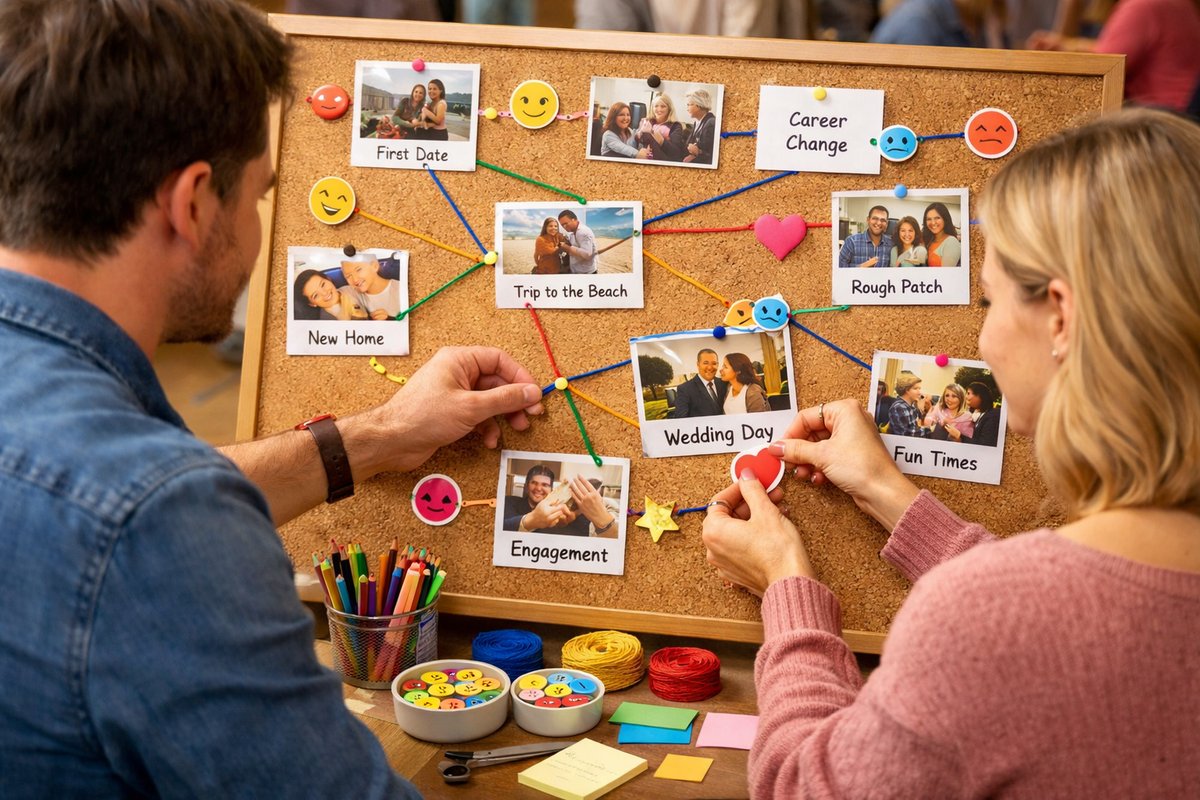
A new trend has emerged in relationship enrichment: couples are attending hands-on workshops to create visual "emotional maps" of their shared experiences. Using simple materials like cork boards, colored string, and emotion stickers, partners chart milestones and feelings side-by-side to foster empathy and spark fresh conversations.
A subtle revolution is unfolding in relationship enrichment circles: partners are drafting visual guides to their inner worlds. Across studios and community centers in major cities, couples are signing up for “Emotional Cartography” workshops-multi-hour sessions where they use materials as basic as cork boards, push pins, and colored threads to trace the peaks and valleys of their shared journey. What begins as a tactile art exercise quickly evolves into an intimate dialogue, prompting revelations and sparking new pathways for connection.
On a recent Saturday afternoon in a reclaimed warehouse space downtown, nearly twenty pairs gathered around long tables covered in crafting supplies. Each station featured a pinboard, dozens of enamel push pins, coils of embroidery string in vivid hues, and packs of emotion-themed stickers-tiny icons representing joy, anxiety, excitement, or nostalgia. Couples scanned image guides and unpacked polaroid prints of vacations and birthdays, prepared to anchor memories with strings stretched between pins.
“It felt strange at first,” admits one attendee. “We’ve tried date nights, tech-free weekends, even journaling. But physically moving pins and string feels different. It’s like you pin a feeling on the map. You can see where we were happy or where we hit rough patches.” Across from her, her partner nods, tying a blue thread from an early photo to a sticker marking a day when they struggled to agree on a big decision. “This is when we argued about moving. Seeing it here makes it tangible-and easier to talk about.”
Program organizers report a surge in interest over the past six months. Registration for these workshops has doubled since last autumn, with new sessions popping up in creative studios from Seattle to New York. A quick scan of social media under the hashtag #EmotionMap shows homemade pinboards hung in living rooms, kitchen walls, and even home offices. Posts highlight freshly printed polaroids, handwritten captions, and rainbow webs of string that criss-cross as far as the eye can see.
“It isn’t just art therapy,” explains a licensed relationship counselor who consults on the curriculum. “Couples externalize their experiences in a neutral space. They step out of habitual communication patterns and see their story laid out visually. Conflicts often shrink when you can literally point to where they happened and ask each other, ‘What was going on here?’ ”
Early survey data from workshop hosts indicates measurable benefits. In a post-session questionnaire, 68 percent of participants reported feeling “more understood by their partner,” and 74 percent said the exercise prompted conversations they hadn’t had in months. A small subset even created follow-up art projects at home-one couple used a smart photo printer to make new snapshots on demand, adding fresh pins every time they hit a milestone.
Emotional cartography has also inspired DIY kits sold online. These sets typically include a 24×36-inch cork board, a roll of multi-colored string, 100 enamel push pins, dozens of emotion icons, blank journaling cards, and an instruction booklet. Some kits even pair a portable mini projector, allowing couples to cast family photos directly onto the board for traceable outlines. Enthusiasts say these kits let them build on workshop momentum at home, carving out a monthly ritual for mapping and reflecting.
The trend reflects broader shifts in how couples seek meaningful connection amid busy schedules and rising screen time. While app-based check-ins and guided journaling have their place, many partners crave a hands-on approach. Crafting an emotional map becomes an embodied metaphor: knots in the string mirror knots in communication, and clearing a path between two points symbolizes resolution and renewed connection.
Psychologists point out that visual modalities can engage different neural pathways than spoken or written reflection. “Mapping taps into spatial memory,” says a behavioral neuroscientist who has begun studying the method in pilot research. “When you place a pin or draw a line on a surface, you activate brain regions associated with navigation and spatial awareness. That shift can unlock fresh insights into intangible emotions.”
Cities worldwide are joining the wave. In London, community art centers host pop-up mapping booths at weekend markets. In Tokyo, design studios are integrating emotional cartography into couple’s retreats alongside tea ceremonies and mindfulness walks. And in smaller towns, local libraries have started lending board-game-style mapping kits, encouraging partners-even those who aren’t artistically inclined-to try the practice.
At home, couples adapt the format to fit their styles. Some swap cork boards for chalkboard walls, sketching out maps in chalk rather than using push pins. Others opt for digital whiteboards, dragging icons and lines on a shared tablet during video calls when separated by distance. Still, many swear by the analog original: the satisfying click of a push pin and the silky resistance of yarn pulled taught across a board.
One couple documented their process in weekly videos, inviting viewers to follow along as they added pins for anniversaries, career changes, and moments of tension. By month three, their map resembled a vibrant tapestry-loops of neon yarn swirling around joy icons, intersecting at points of compromise, and extending outward at milestones marking personal achievements.
Workshop hosts emphasize that emotional cartography isn’t a one-and-done exercise. The real work happens in return visits-either to the studio or back at home. Partners might schedule a quarterly mapping session, revisiting old pins to add context or tie new strings to highlight progress. The board becomes a living document of the relationship’s evolution.
“It’s amazing how many couples tell us they still glance at their board weeks later,” notes a facilitator. “They pause by it in the hallway or hang it by the kitchen. It serves as a conversation starter and a reminder that their relationship is a work in progress.”
Experts caution that emotional mapping shouldn’t replace therapy when deep issues arise, but they agree it can be a valuable complement. By lowering defenses-after all, it’s ‘just crafts’-partners often find themselves more open to discussing sensitive topics. Therapists say the visual medium helps break patterns of miscommunication and fosters curiosity about the other’s experience.
As the movement grows, so do variations. Retreats combine mapping with partner yoga, sound baths, or guided nature walks. Some hosts offer themed sessions-like mapping past wounds or plotting future dreams. Tech startups are even experimenting with augmented-reality overlays, letting couples scan their board with a smartphone to hear recorded reflections tied to each pin.
Whatever form it takes, emotional cartography reminds couples that relationships aren’t static. They’re maps in progress, constantly redrawn by shared experiences, successes, and challenges. In a world where many crave deeper connection, mapping the heart may be the next frontier.
For partners seeking a fresh way to talk, listen, and grow together, all it takes is a board, some pins, a spool of string, and a willingness to explore. Because sometimes, seeing your love laid out in lines and colors can illuminate paths you never knew existed-and guide you both toward richer, more empathetic bonds.