Location
Mount Vernon, WA 98274

Location
Mount Vernon, WA 98274
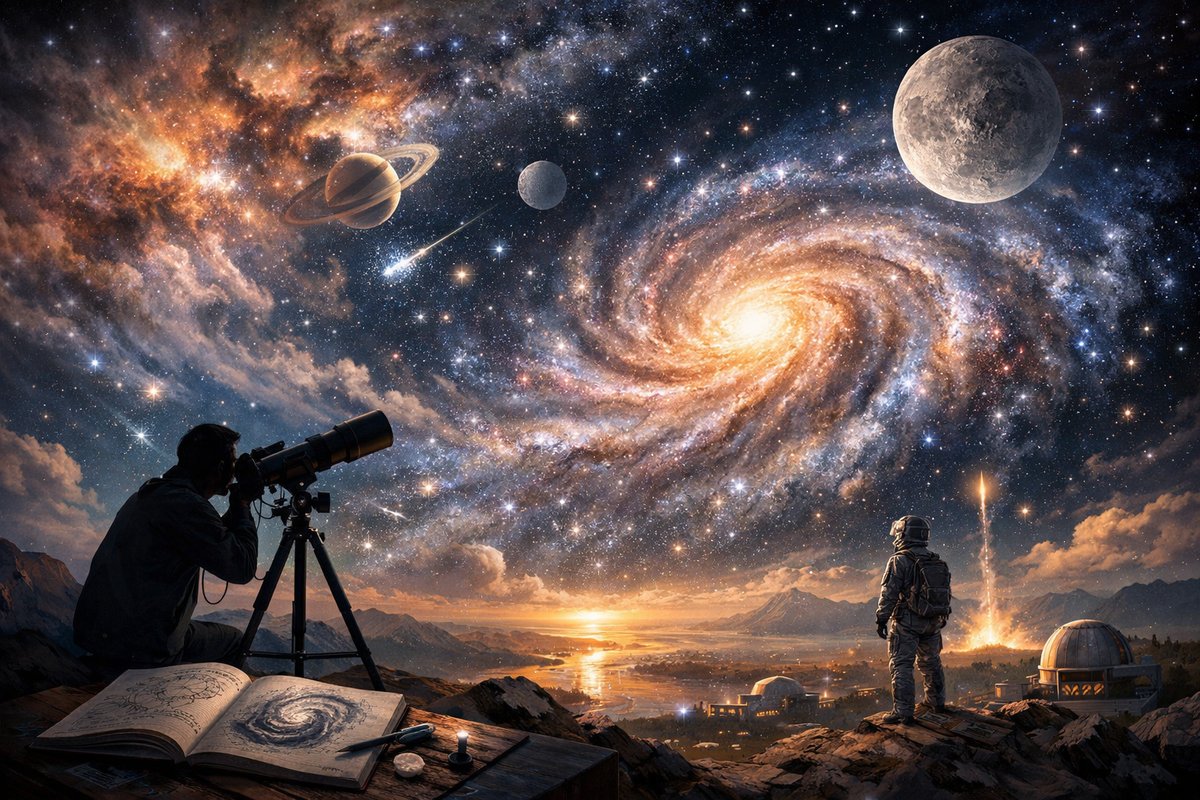
Cosmic curiosity propels humanity into realms both vast and intimate, blending scientific rigor with poetic wonder. This exploration delves into how our fascination with the cosmos nurtures creativity, fuels discovery, and invites us to rethink our place in the universe.
At the heart of humanity’s quest to understand the cosmos lies a uniquely playful curiosity-an impulse that is as much about wonder and imagination as it is about data and discovery. While telescopes and satellites capture photons from distant stars, it is the spirit of cosmic curiosity that transforms these signals into stories, questions, and dreams.
In recent years, the resurgence of interest in cosmic phenomena-from the enigmatic dance of black holes to the delicate whisper of cosmic microwave background radiation-has been accompanied by a new cultural embrace of space as a source of inspiration beyond the purely scientific. This blending of art, philosophy, and astrophysics invites us to consider the universe not just as a physical expanse but as a canvas for human meaning.
The playful nature of cosmic curiosity is evident in the creative ways people engage with the sky. Citizen science projects enable anyone with a smartphone or a backyard telescope to contribute to the cataloging of asteroids or the discovery of exoplanets. This democratization of exploration fosters a communal sense of participation in the grand cosmic narrative, reminding us that curiosity is a connective thread that transcends borders and disciplines.
At the same time, cosmic curiosity challenges our assumptions about scale and time. When we gaze at a star whose light began its journey millions of years ago, we are peering into a past that predates human civilization. This temporal bridge invites reflection on the fleeting nature of human existence and the enduring rhythms of the cosmos. It is a humbling yet inspiring perspective that encourages patience and long-term thinking-qualities increasingly valuable in a world of rapid change.
Beyond the intellectual, cosmic curiosity taps into emotional intelligence by evoking awe and wonder, emotions that have been linked to increased generosity, creativity, and well-being. The experience of stargazing, whether through a powerful telescope or simply under a clear night sky, can foster a sense of connectedness to something larger than oneself. This emotional resonance is a vital counterbalance to the often fragmented and fast-paced nature of modern life.
Moreover, the pursuit of cosmic knowledge is increasingly intertwined with values of sustainability and responsibility. As humanity contemplates ventures like lunar bases or Mars colonization, questions arise about our ethical relationship with extraterrestrial environments. Cosmic curiosity thus becomes a catalyst for conversations about stewardship, reminding us that exploration need not come at the expense of respect and care.
Technological advances continue to expand the horizons of what is observable and knowable. Instruments such as space-based interferometers and next-generation radio arrays promise to reveal phenomena previously hidden, from the faint signals of the universe’s infancy to the intricate magnetic fields shaping galaxy formation. These breakthroughs underscore how curiosity drives innovation, pushing the boundaries of engineering and computation.
In parallel, speculative ideas inspired by cosmic phenomena fuel imaginative disciplines like science fiction, which in turn inspire real-world scientific inquiry. Concepts such as wormholes, multiverses, and quantum entanglement, while sometimes speculative, provoke critical thinking about the nature of reality and the limits of human understanding. This interplay between imagination and empirical investigation exemplifies the richness of cosmic curiosity.
Education systems and informal learning spaces are also evolving to nurture this curiosity. Planetariums, immersive virtual reality experiences, and interactive exhibits invite learners of all ages to explore cosmic concepts in engaging ways. By integrating storytelling, hands-on experimentation, and interdisciplinary approaches, these environments cultivate not only knowledge but also a lifelong passion for exploration.
Ultimately, cosmic curiosity is a reflection of our deepest human impulses-to explore, to understand, and to find meaning in the vastness around us. It is a journey without a fixed destination, where each discovery opens new questions and possibilities. Embracing this playful, profound curiosity enriches our lives and connects us to the universe in ways both tangible and transcendent.
As we continue to look outward and inward, the cosmos invites us to celebrate the strange beauty of existence, reminding us that the act of wondering itself is a cosmic adventure.