Location
Mount Vernon, WA 98274

Location
Mount Vernon, WA 98274
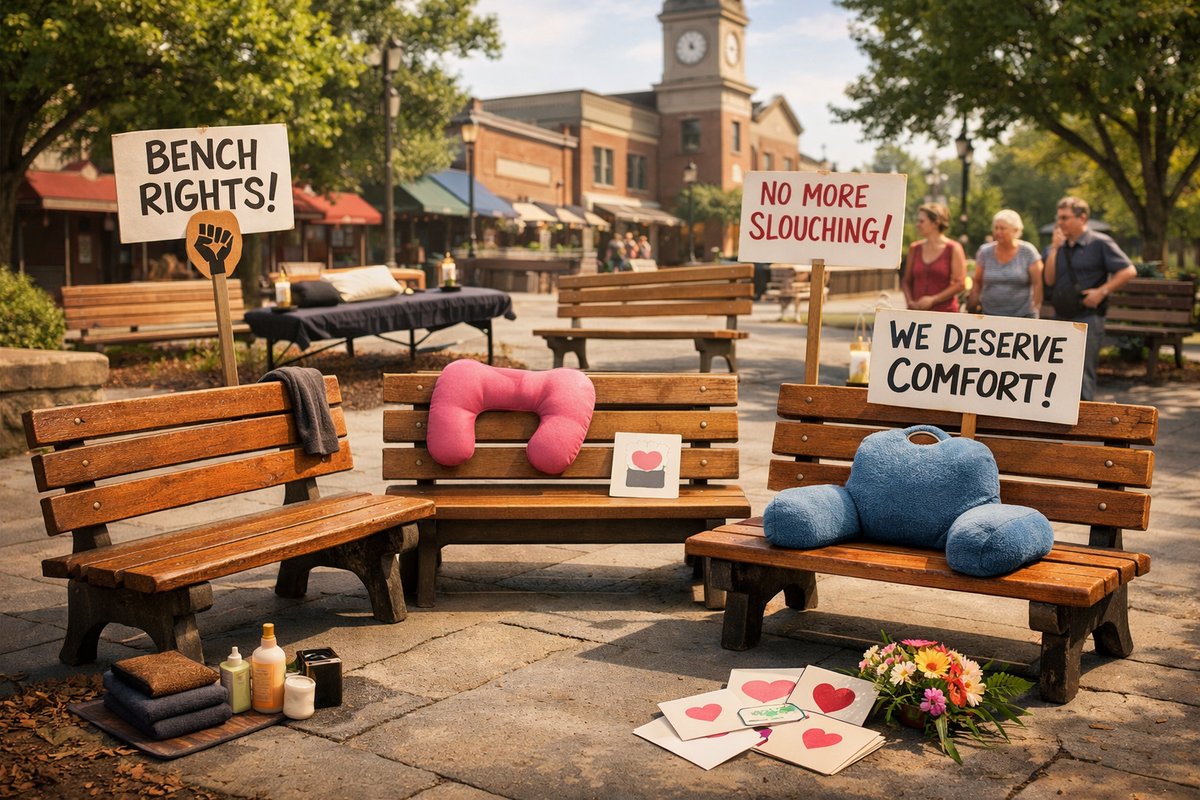
In a surprising turn of events, the town's public benches have formed a union, staging sit-ins and demanding better treatment, including weekly massages and emotional support cushions. Citizens are left wondering if they should apologize for their casual slouching or start carrying gratitude cards for their newfound furniture allies.
It began with a subtle creak. Residents of the small town first noticed that the public benches, those stoic sentinels of parks and bus stops, had started to shift slightly-almost imperceptibly-each morning. At first, it was written off as the typical wear and tear of outdoor furniture. But soon enough, the benches began to adopt more dramatic postures: one leaned slightly forward as if trying to engage passersby in conversation, another reclined languidly, and a particularly worn bench at the town square even refused to straighten up for days. What nobody expected was the announcement from the benches themselves: they had unionized.
The benches, through a spokesperson bench named Old Maple (famous for its oak grain and a slightly chipped armrest), declared their demands in a handwritten manifesto affixed to the town’s community bulletin board. The demands were simple yet profound: weekly massages, emotional support cushions, a dedicated cleaning crew that used organic, non-toxic wood polish, and an annual retreat to a quiet, shaded grove for reflection and regeneration.
Citizens were both amused and perplexed. Many wondered if their own neglect-the careless tossing of coffee cups, the habitual chewing gum stuck under their seats, and the incessant drumming of impatient fingers-had somehow awakened a collective consciousness in the benches. Local poet and longtime bench-sitter remarked, “Perhaps we have underestimated the emotional labor these benches perform, offering us moments of respite and silent companionship.”
The union’s first sit-in took place on a chilly Tuesday morning. At the main park, benches refused to hold any weight, causing bewildered commuters to pause mid-stride. A few brave souls tried to negotiate with them, offering apologies and promises to be more gentle. Old Maple, speaking through a series of rhythmic knocks and creaks, communicated that the benches sought respect and recognition-not just physical maintenance but emotional validation.
This unexpected strike has sent ripples through the town’s infrastructure. Bus drivers report increased passenger complaints as waiting crowds have nowhere to rest comfortably. The local cafe near the park has seen a spike in coffee-to-go sales, with customers preferring to stand rather than risk a confrontation with the rebellious benches. Meanwhile, the town council convened an emergency session to address the crisis, debating whether to hire professional masseuses specialized in outdoor furniture or to invest in plush cushions embedded with calming scents like lavender and eucalyptus.
The situation has also sparked philosophical debates among residents. Some argue that the benches’ demands highlight a broader societal neglect of public spaces and communal well-being. Others jest that if benches start demanding massages, the town’s lampposts might soon request spotlights and applause.
Children, ever adaptive, have taken to bringing small pillows and soft blankets to the benches, forming an impromptu alliance of youth and furniture. This intergenerational solidarity has added an unexpected layer of charm to the town’s streets, with passerby smiling at the sight of toddlers gently fluffing cushions while elderly residents offer gentle pats and words of encouragement.
Meanwhile, social media buzzed with hashtags like #BenchUnion and #SitDownStrike, as the story of the furniture uprising went viral beyond the town’s borders. Online forums debated the ethics of furniture labor rights, and some enthusiasts proposed creating a new holiday dedicated to honoring public benches worldwide.
Though negotiations are ongoing, the benches have already secured a small victory: the town’s maintenance crew now uses hypoallergenic wood oil and has committed to biweekly cleaning sessions. More importantly, the benches have reminded everyone that even the most overlooked elements of daily life can harbor a quiet dignity and, sometimes, a surprising voice.
As the sun sets over the park, benches stand tall-well, as tall as benches do-with cushions fluffed and spirits lifted. Whether this will mark the beginning of a new era of furniture activism or simply a fleeting chapter in the town’s history remains to be seen. One thing is certain: the benches have taken a seat at the table, and they’re not going anywhere anytime soon.