Location
Mount Vernon, WA 98274

Location
Mount Vernon, WA 98274
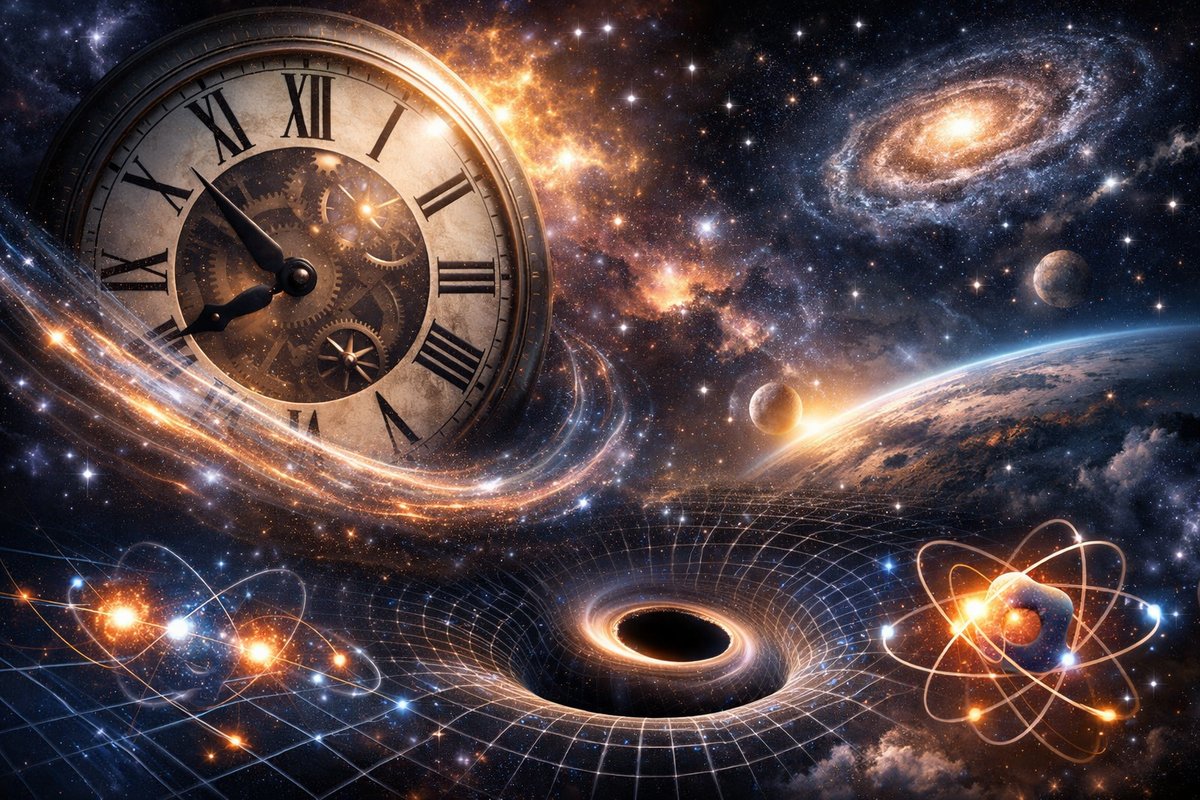
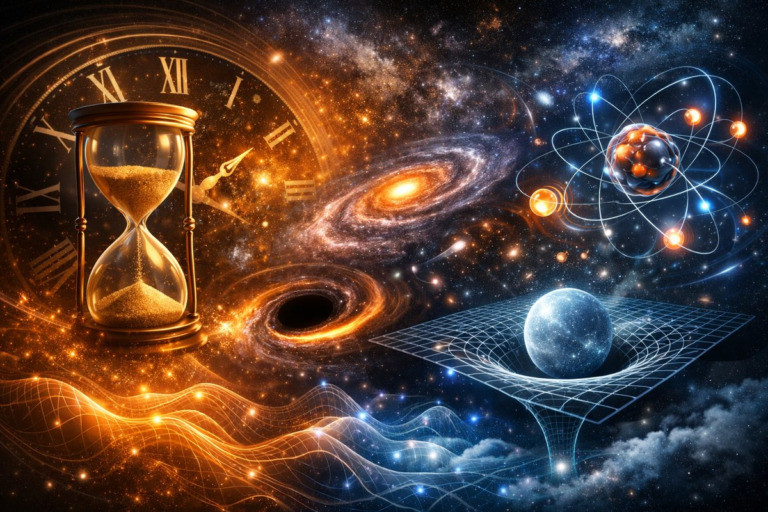
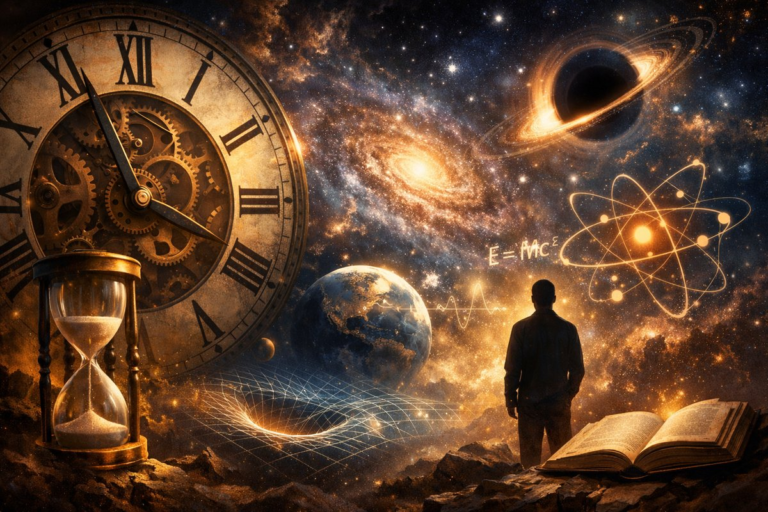
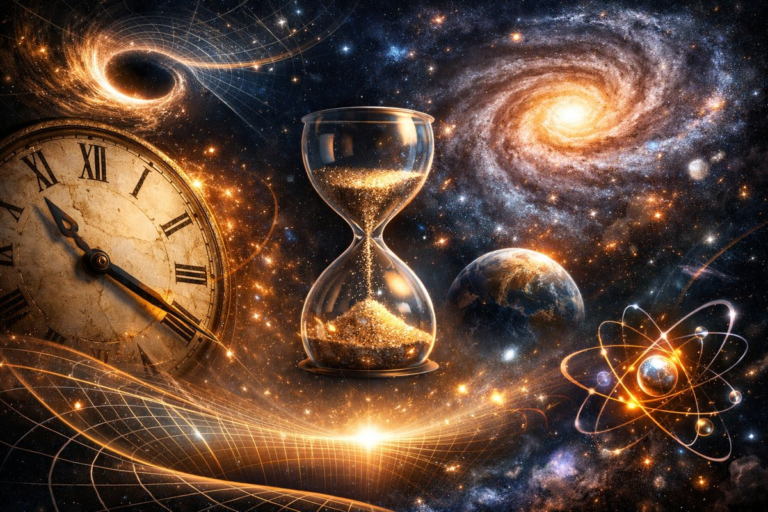
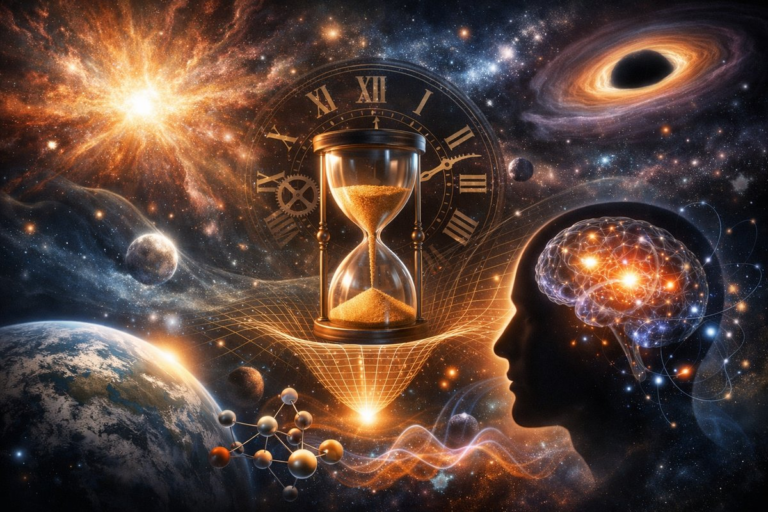
Exploring the intricate dance between time and matter reveals a universe steeped in mystery and wonder. From the quantum fabric of reality to the cosmic scales of existence, understanding these fundamental elements challenges and expands our perception of what it means to be.
In the vast expanse of the cosmos, time and matter weave together an intricate narrative that shapes everything from the smallest particles to the grandest galaxies. This interplay is not merely a scientific curiosity; it is a profound mystery that touches on the very essence of existence and our place within it. To explore this mystery is to embark on a journey through the fundamental threads that compose reality itself.
Time, often perceived as a linear progression from past to future, is far more complex than everyday experience suggests. Modern physics reveals that time is intertwined with space into a four-dimensional fabric known as spacetime, where the flow of time can bend and stretch depending on gravity and velocity. This insight, stemming from Einstein’s theory of relativity, challenges the classical notion of absolute time and invites us to reconsider how we experience change and causality.
Matter, the substance that constitutes the physical world, is equally enigmatic. At the atomic and subatomic levels, matter behaves in ways that defy classical intuition. Quantum mechanics introduces concepts such as superposition and entanglement, where particles exist in multiple states simultaneously or exhibit instantaneous connections across vast distances. These phenomena suggest that matter is not just solid and tangible but also deeply connected to probabilities and information.
The relationship between time and matter becomes even more intriguing when we consider the origin and evolution of the universe. The Big Bang theory posits a beginning point where space, time, and matter emerged together from an extremely hot, dense state. Yet, what preceded this event or what mechanisms underlie the birth of spacetime remain open questions. The mystery deepens as cosmologists investigate dark matter and dark energy-components that constitute most of the universe’s mass-energy content but remain invisible and poorly understood.
Entropy, a measure of disorder, links time and matter through the arrow of time. While the fundamental laws of physics are mostly time-symmetric, the increase of entropy gives time its directionality, distinguishing past from future. This thermodynamic perspective not only grounds our experience of time’s flow but also connects to the fate of matter and energy in the universe. Will the cosmos end in heat death, a state of maximum entropy, or is there a cyclical pattern yet to be discovered?
Beyond the scientific frameworks, time and matter evoke philosophical and existential reflections. Our consciousness perceives time as a continuous narrative, anchoring identity and memory. Matter, as the substrate of our bodies and environment, grounds us in a physical reality that is both familiar and mysterious. The interplay between these elements shapes human experience, creativity, and the quest for meaning.
Recent advances in technology and experimental physics continue to push the boundaries of our understanding. High-precision atomic clocks reveal subtle time dilation effects even at the scale of Earth’s surface variations. Particle accelerators probe the fundamental constituents of matter, searching for new particles and forces that could illuminate the underlying structure of reality. Space telescopes peer into the cosmic microwave background, the afterglow of the Big Bang, offering clues about the universe’s infancy and its large-scale structure.
The mystery of time and matter also inspires artistic and literary explorations. Writers and artists grapple with concepts like time loops, parallel realities, and the malleability of matter to express human emotions and existential questions. These creative endeavors enrich our cultural understanding and invite us to imagine realities beyond empirical observation.
In contemplating time, matter, and mystery, we confront the limits of knowledge and the vastness of the unknown. Each discovery opens new questions, reminding us that the universe is not a closed book but an ongoing story-one that we participate in through observation, inquiry, and imagination. Embracing this mystery encourages a humility and curiosity that drive scientific progress and philosophical insight alike.
Ultimately, the dance of time and matter is a testament to the profound complexity and beauty of the cosmos. It invites us to look beyond surface appearances and engage with the fundamental fabric of reality, fostering a deeper appreciation for the interconnectedness of all things and the enduring enigma at the heart of existence.