Location
Mount Vernon, WA 98274

Location
Mount Vernon, WA 98274
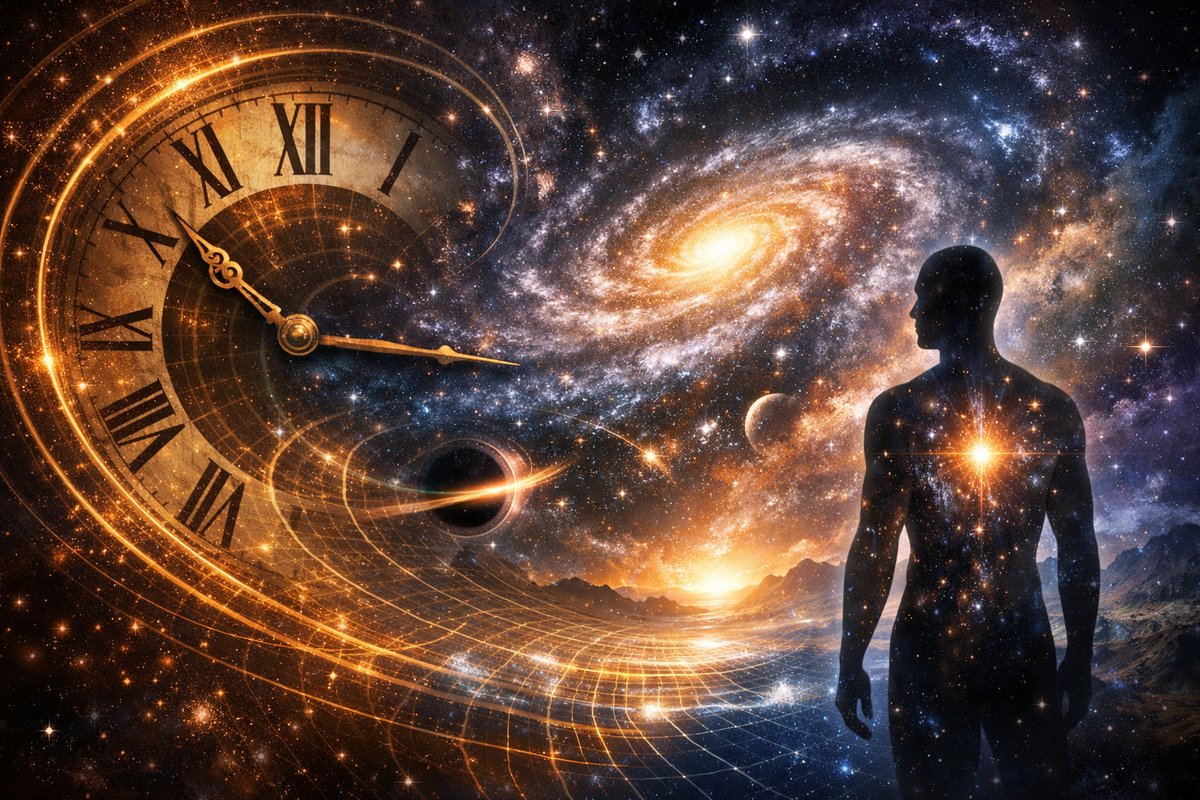
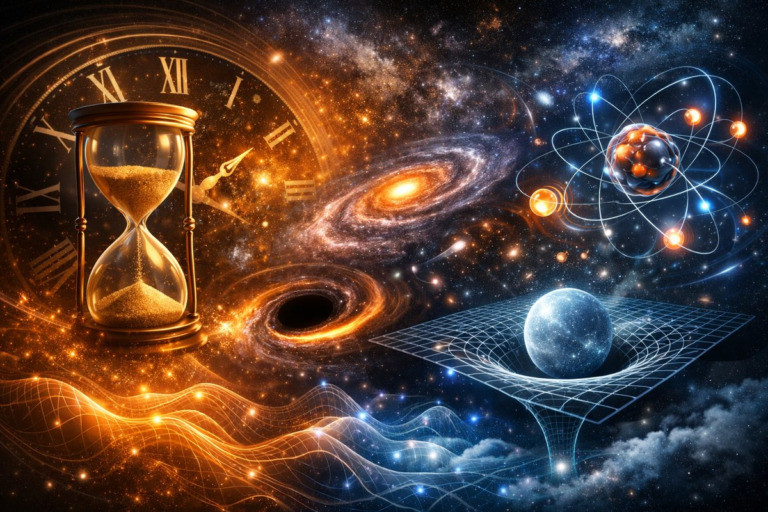
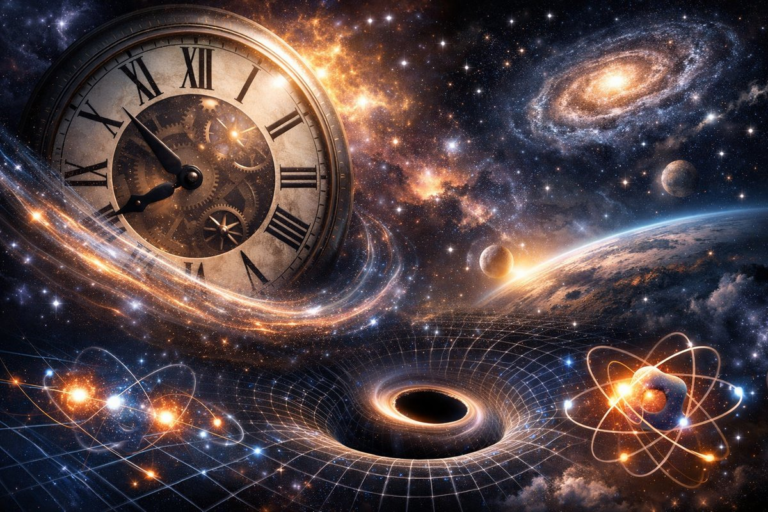
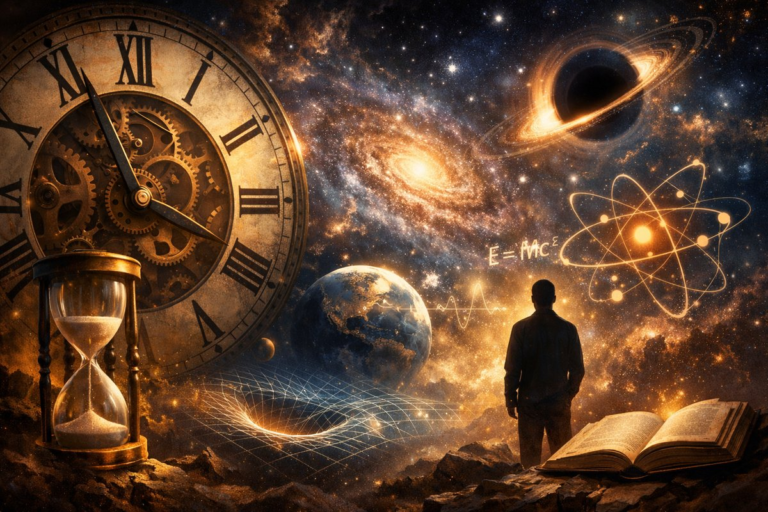
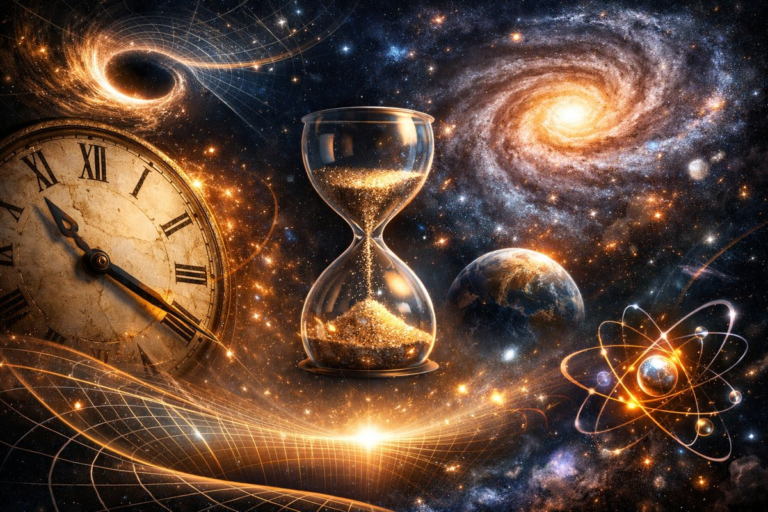
The intertwined nature of time and matter forms the foundation of our universe's grand mystery. By exploring how these fundamental elements interact, science reveals not only the fabric of the cosmos but also the profound human experience embedded within it.
At the heart of existence lies a profound enigma: the relationship between time, matter, and the mysteries that arise from their interplay. These concepts, seemingly abstract yet deeply tangible, underpin the very fabric of reality and influence everything from the birth of galaxies to the fleeting moments of human consciousness. As modern physics and cosmology advance, they continue to unravel layers of complexity, revealing a universe far more intricate and interconnected than previously imagined.
Time is often perceived as a linear progression-a relentless flow from past to future. Yet, contemporary physics challenges this notion, suggesting time may be far more malleable and intertwined with matter than our everyday experience indicates. Einstein’s theory of relativity, for instance, demonstrated that time is relative, stretching and contracting depending on the observer’s velocity and gravitational field. This revelation reshaped our understanding, showing that time is not an absolute backdrop but a dynamic dimension woven with space and matter.
Matter itself, once thought to be composed of indivisible atoms, is now understood as a complex assembly of subatomic particles, fields, and quantum states. The discovery of quantum mechanics introduced a probabilistic and often counterintuitive framework where particles can exist in multiple states simultaneously, only crystallizing into definite forms upon observation. This quantum reality blurs the boundary between the observer and the observed, hinting at a universe where consciousness and matter may be more deeply connected than classical physics could explain.
One of the most tantalizing mysteries emerging from this interplay is the nature of entropy and the arrow of time. Entropy, a measure of disorder, tends to increase in closed systems, giving time its apparent directionality-from order to chaos. Yet, why the universe started in such a low-entropy state remains an open question. This puzzle touches on the origins of the cosmos itself, suggesting that time and matter are part of a grander narrative that we are only beginning to comprehend.
Recent advances in cosmology and particle physics have provided new tools to probe these questions. The detection of gravitational waves, ripples in spacetime caused by cataclysmic cosmic events, offers a novel way to observe the universe’s structure and the behavior of matter under extreme conditions. Similarly, experiments with quantum entanglement and superposition challenge our classical intuitions, hinting at hidden dimensions and parallel realities that could redefine the limits of matter and time.
Beyond the scientific, these explorations resonate deeply with human curiosity and the search for meaning. The mysteries of time and matter evoke philosophical reflections on existence, causality, and the nature of consciousness. They invite us to reconsider our place in the cosmos-not as passive observers but as participants in a dynamic, evolving reality.
This convergence of science and wonder encourages a holistic approach to knowledge, one that embraces uncertainty and celebrates the unknown as a fertile ground for discovery. It challenges us to cultivate emotional intelligence alongside intellectual rigor, fostering a sense of humility and awe in the face of the universe’s vastness.
In practical terms, understanding the relationship between time and matter has profound implications for technology and society. Quantum computing, for example, leverages the peculiar properties of matter at the smallest scales to perform computations unimaginable by classical machines. Advances in materials science, informed by quantum principles, promise breakthroughs in energy efficiency and sustainability, addressing some of humanity’s most pressing challenges.
Moreover, the study of cosmic phenomena informs our approach to environmental stewardship. Recognizing the delicate balance and interconnectedness of matter and energy in the universe underscores the importance of sustainable practices on Earth. It reminds us that our planet is part of a larger cosmic system, where the flow of time and transformation of matter are constants that we must respect and harmonize with.
Ultimately, the journey to unravel the threads of time, matter, and mystery is ongoing. Each discovery opens new questions, inviting us to expand our horizons and deepen our understanding. It is a testament to the enduring human spirit of exploration-a dance between the known and the unknown, where science meets story and reality reveals its most profound secrets.