Location
Mount Vernon, WA 98274

Location
Mount Vernon, WA 98274
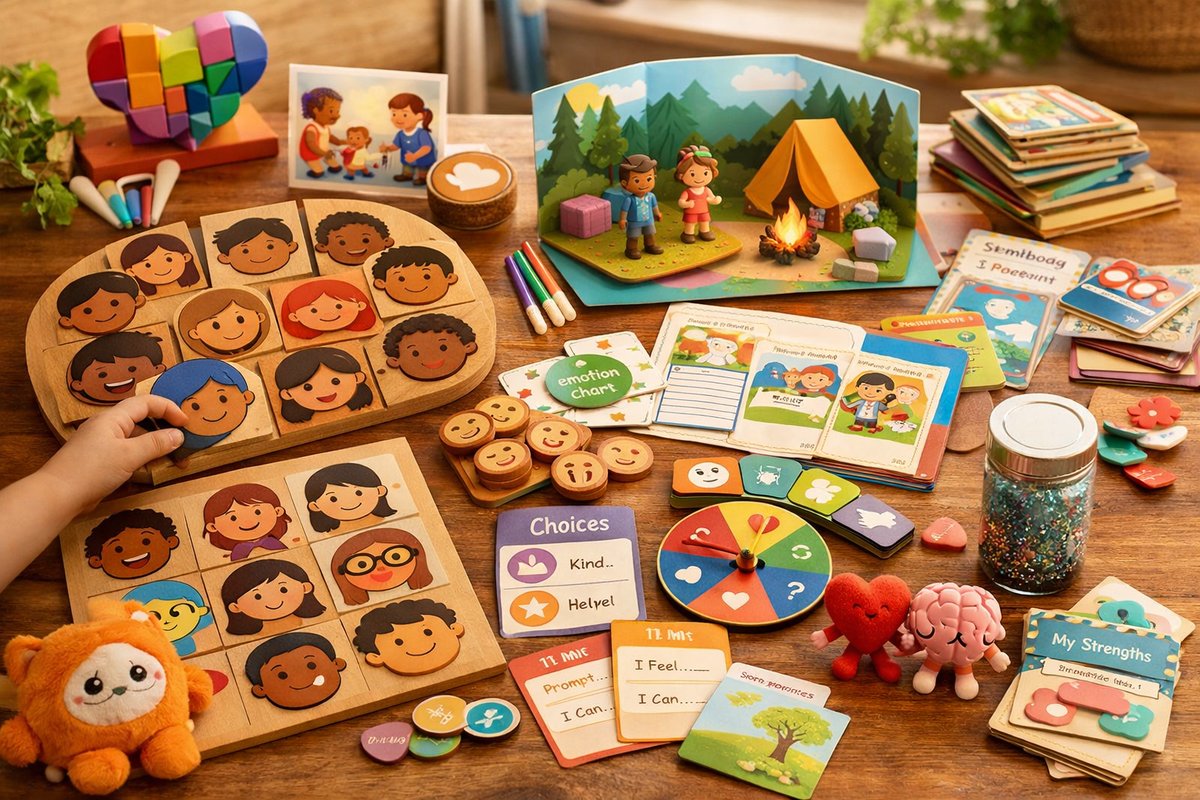
From wooden puzzles that encourage empathy to interactive story kits that spark self-awareness, a fresh wave of learning tools is blending emotional intelligence with hands-on play. Educators and parents are discovering how these products foster curiosity, agency, and the social skills tomorrow's thinkers need.
In living rooms and classrooms around the world, a subtle revolution is unfolding: playtime is becoming a lesson in emotional literacy. As research continues to affirm that children’s early emotional development shapes lifelong learning, parents and educators alike are seeking tools that do more than teach letters and numbers. They want toys and activities that nurture empathy, self-regulation, and a sense of agency.
The shift toward emotion-centered learning is underpinned by recent reports from leading child-development institutes. One study tracked 3,000 preschoolers in diverse settings and found that children who engaged regularly with emotion-focused play materials scored 20 percent higher on collaboration tasks than peers who used traditional educational toys alone. Observers noted that these children demonstrated greater patience and self-control, often offering help to classmates without prompting.
That data has inspired designers to rethink classic play objects. Take the wooden shape sorter, for example. While this toy has long been a staple for teaching fine motor skills and spatial reasoning, new iterations now include emotion-engraved shapes. Each block is etched with a simple face-happy, surprised, confused-prompting caregivers to discuss feelings as the child matches shapes to the board. What begins as a puzzle becomes a conversation starter about what it feels like to be joyful or puzzled.
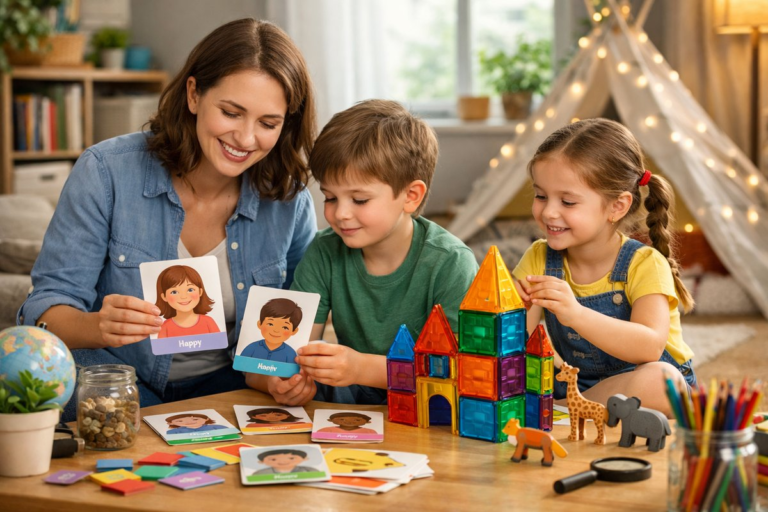
In one urban preschool, teachers set up a “feeling corner” stocked with soft cushions, emotion flashcards, and a collection of magnetic building blocks. Kids begin each day by choosing a card that represents how they feel. They then build a small structure that corresponds: a tall tower for excitement or a wobbly arch for uncertainty. Over time, this ritual has reduced tantrums and boosted self-expression. “We’ve seen children name their feelings instead of acting them out,” says a veteran early-learning coach who guided the pilot.
Another innovation is the interactive story kit. Rather than a static book, it pairs a simple projector with illustrated emotion cards. When a child shines the projector on a blank wall, images of different characters and scenarios come to life. The caregiver or educator prompts the child to explore what the character might be feeling in each scene. One parent observed that her shy kindergartner, who barely spoke at the dinner table, opened up easily when discussing a projected image of a lonely bear. “He told me how the bear’s day went,” she recalls, “and in doing so, he told me about his own challenges making friends.”
Behind these products is a broader movement toward child-led discovery. Rather than prescribing a single “correct” answer, many new learning kits invite open-ended exploration. Sensory play tubs, for instance, now come with emotion prompts printed on small cards. As children dig into sand or rice, they draw a card and then share a moment when they felt calm, excited, or worried. These tactile experiences reinforce the mind-body connection, demonstrating how physical sensations link to emotional states.
Parents who juggle remote work and child care have also embraced digital companions designed for emotional coaching. Simple mobile apps guide kids through breathing exercises with animated characters, turning a smartphone into a portable mindfulness coach. These tools exhibit real-time feedback-children follow on-screen prompts to draw circles or trace gentle waves, matching their breathing to the animation. Research indicates that when kids practice these exercises daily, cortisol levels decrease, helping them stay focused and less reactive.
Expert voices underline why this matters. A child-psychology researcher notes that traditional early-learning metrics tend to emphasize cognitive milestones-counting, alphabet fluency, shape recognition-while underemphasizing social-emotional skills. In contrast, emotionally rich play lays the groundwork for resilience. Children learn that frustration can be managed, surprise can be explored, and disappointment can be shared rather than endured alone.
Educators are adjusting their curricula to mirror this holistic vision. One charter school introduced weekly “emotion labs,” where students rotate between a calm-down nook, a collaborative construction zone, and a storytelling circle. Instructors report that students who might have struggled academically are now more engaged, thanks to the deeper trust and mutual respect that these activities foster.
The commercial market has responded in kind. Toy makers big and small are launching lines that blend color, texture, and narrative to teach feeling-recognition. Wooden puzzles now come with companion storybooks; magnetic tiles arrive with digital audio tracks featuring guided reflection; even simple stacking rings have begun to include soft music modules that prompt mindful listening. Retail shelves bristle with promise: here is play that builds thinkers who feel deeply and connect authentically.
Yet these trends aren’t confined to affluent communities. Nonprofits have started donating sensory kits and emotion-education materials to underresourced preschools. A recent partnership between a charitable foundation and local libraries mailed emotion-flashcard sets to 1,200 families last year. Early feedback shows that children in these families are more willing to talk about their day and show fewer behavioral outbursts, illustrating that emotional learning can be both scalable and equitable.
What lies ahead for this emerging field? Observers anticipate an even richer fusion of analog and digital experiences. Imagine a soft plush toy that tracks heart rate and suggests calming activities, or a puzzle that changes shape when children successfully label emotions in an accompanying narrative. Some developers are exploring voice-activated storybooks that adapt their plot based on a child’s mood, detected through simple speech analysis.
Critics caution against overreliance on screens or gadgets, but the consensus remains optimistic: thoughtful design and mindful curation can harness technology’s strengths while preserving the joy of tactile play. After all, at its core, this movement is about relationships-between caregivers and children, between peers, and between a child and their own inner world.
For parents navigating an ever-expanding market of educational toys, experts advise focusing on three guiding principles: simplicity, conversation, and authenticity. Choose toys that spark genuine dialogue rather than rote memorization. Look for materials that invite open questions-“How does this make you feel?”-and avoid gimmicks that offer only predetermined answers. And above all, follow the child’s lead. In play that values emotional exploration, curiosity and agency become the building blocks of a lifetime of learning.
As the sun sets on a busy playroom, a toddler lingers, tracing the edges of an emotion flashcard. Behind him, a magnetic block creation towers high-a testament not just to his growing fine-motor skills, but to his budding confidence in naming and sharing his feelings. In homes and schools everywhere, these small moments of recognition mark a profound shift: raising thinkers who feel with as much intention as they think.