Location
Mount Vernon, WA 98274

Location
Mount Vernon, WA 98274
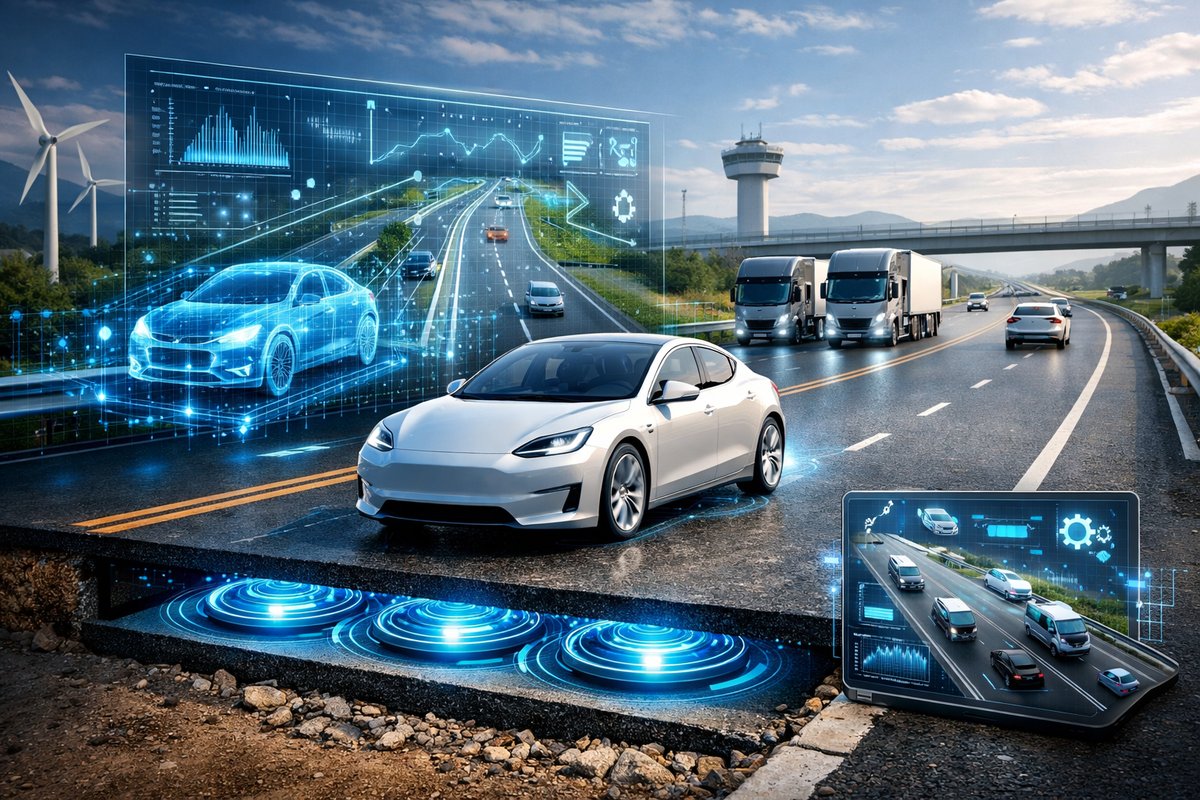
Across Europe and North America, pilot programs are embedding wireless charging coils beneath asphalt and pairing them with digital twin models to revolutionize electric vehicle usage. These innovations promise to shrink recharge times, lighten onboard battery packs, and usher in an era of predictive maintenance and autonomous platooning on the open road.
Long plagued by range anxiety and lengthy charging stops, electric vehicles may soon glide along highways that recharge them in motion. In a breakthrough collaboration, a consortium of transportation agencies and infrastructure firms has begun testing inductive charging coils embedded beneath select stretches of interstate pavement. Early data shows electric buses and delivery vans regaining up to 20 percent of their battery capacity over a 50-mile loop, effectively turning the highway itself into a moving charging station.
At the heart of these pilot corridors are coils forged from high-conductivity copper alloy, strategically spaced every few meters under the road surface. When an electric vehicle equipped with a compatible receiving pad cruises above at speeds up to 50 mph, electromagnetic fields transfer energy without any physical contact. Charging rates currently top out around 150 kW-enough to extend range by roughly 4 miles of travel per minute of driving. For commercial fleets, the prospect of shorter dwell times curtails the need for oversized battery packs and slashes downtime for recharges.
But laying charging coils beneath asphalt is only part of the story. Each pilot segment is paired with a real-time digital twin of both the road and the vehicles traveling on it. Sensors buried alongside the coils measure temperature, vibration, and energy throughput, while onboard telematics report battery state, pad alignment, and power transfer efficiency. This twin model mirrors every kilowatt delivered, enabling engineers to pinpoint hot spots, adjust coil spacing, and anticipate wear well before ground crews are dispatched.
The benefits of such a predictive maintenance loop are twofold: infrastructure uptime climbs as crews perform targeted interventions instead of broad-scale excavations, and operators avoid unplanned service interruptions. One agency reports that potential failures flagged by the twin model reduced service calls by nearly 30 percent in the first two months. By trending coil efficiency against traffic patterns and weather data, planners refine charging schedules and even tweak pavement mixes to ensure long-term performance under heavy loads.
Yet the upfront investment in embedding coils and deploying sensors can run into tens of millions per highway mile. Standardizing interchange protocols and coordinating among multiple original equipment manufacturers (OEMs) further complicate roll-out plans. To address these hurdles, pilot partners are adopting open communication standards for power transfer and data exchange. An independent certification body now validates that receiving pads and in-road coils from different suppliers work seamlessly, paving the way for wider vendor participation.
Alongside inductive charging, digital twins are reshaping how entire fleets move and maintain themselves. Transportation authorities in North America have begun modeling bus depots, charging hubs, and road segments in a unified virtual environment. By overlaying weather forecasts, route schedules, and grid capacity data, dispatchers can optimize charging windows, reroute vehicles around congestion, and orchestrate maintenance tasks during low-traffic periods. The result is a more resilient network-one that anticipates bottlenecks before they materialize.
Onboard sensors play a critical role in this ecosystem. Tire pressure monitoring units, temperature probes, and vibration sensors feed continuous streams of data into the twin platform. Machine learning algorithms then identify subtle correlations-such as a drop in coil efficiency after heavy rainfall or drivetrain vibrations that presage a failing bearing. Fleets that adopt these predictive alerts report up to 40 percent fewer roadside failures, translating directly into lower operational costs and improved passenger experience.
As autonomous vehicle technology matures, electrified corridors and digital twins will become even more intertwined. In one recent demonstration, a pair of driverless delivery trucks formed a platoon behind a wireless charging lane. By drafting one another, the trailing vehicle cut energy consumption by 15 percent, while both vehicles charged intermittently as they passed over inductive coils. Fleets see platooning as a route to higher highway throughput and lower per-unit energy costs, particularly for long-haul freight operations.
Logistics providers are already eyeing electrified routes for high-density corridors between major cities. With fewer unplanned stops and lighter batteries onboard, trucks can maintain a steady pace from depot to distribution center. This consistency not only lowers emissions but also boosts delivery reliability-an increasingly critical factor in a world of on-demand commerce.
Emergency response and roadside assistance services are exploring mobile versions of these charging innovations. Certain tow-truck fleets now carry portable battery packs that connect to stranded EVs via magnetic coupling cables. In-field diagnostics trigger the deployment of these chargers through the dispatch platform, ensuring electric vehicles never sit dead on the roadside for hours. Integration with the digital twin network allows rescue teams to plan routes that intersect with dynamic charging corridors, further cutting rescue times.
Retrofit solutions are also gaining traction for existing vehicle models. Modular battery swap stations-zero-emission versions of the old gas pump visit-are being trialed at highway rest areas. Drivers pilot their cars into a docking bay, and automated equipment lifts and replaces depleted battery modules in under five minutes. While the approach demands careful logistics for battery inventory management, it offers an alternative for drivers seeking range confidence without investing in a large home charging system.
Smartphone integration is playing a central role in tying these innovations together. EV drivers can now view live maps of inductive corridor availability, queue for battery swaps, and schedule depot charging slots-all within a single mobile application. Over-the-air updates keep both vehicle firmware and roadside controllers in sync with the latest standards, minimizing compatibility headaches.
Despite the high-tech veneer, the human element remains paramount. Training programs for road crews now include modules on handling high-voltage systems, coil repair techniques, and digital twin troubleshooting. For drivers, educational campaigns stress proper pad alignment and system maintenance. Early surveys suggest that adoption rates rise when drivers feel confident in using the new infrastructure-underscoring the need for clear instructions and hands-on workshops.
Environmental and social considerations are woven into each pilot’s design. Recycled steel and low-carbon concrete mixes are used for the roadway overlays housing the inductive coils. Battery modules destined for swapping stations come with end-of-life recycling plans, ensuring materials flow back into the supply chain. Community outreach teams hold open houses along electrified segments, giving local residents a chance to inspect the technology and share feedback.
Looking ahead, electrified highways and digital twins could expand beyond national borders. Urban planners are exploring wireless charging pads in parking garages, ride-hail zones, and curbside pickup areas. Vehicle-to-grid capabilities may allow parked EVs to support local power grids during peak demand. And as cell towers and roadside sensors densify, the data fabric underpinning the digital twins will only grow richer, enabling ever more precise predictions.
The electrification of roads and the rise of digital twin platforms mark a turning point in transportation history. By weaving charging infrastructure directly into the fabric of our highways and pairing it with real-time simulation models, the industry is steering toward a future where vehicles spend more time moving and less time tethered to the charger. With continued collaboration, open standards, and a focus on human-centered design, the roads of tomorrow will be cleaner, smarter, and more reliable than ever before.