Location
Mount Vernon, WA 98274

Location
Mount Vernon, WA 98274
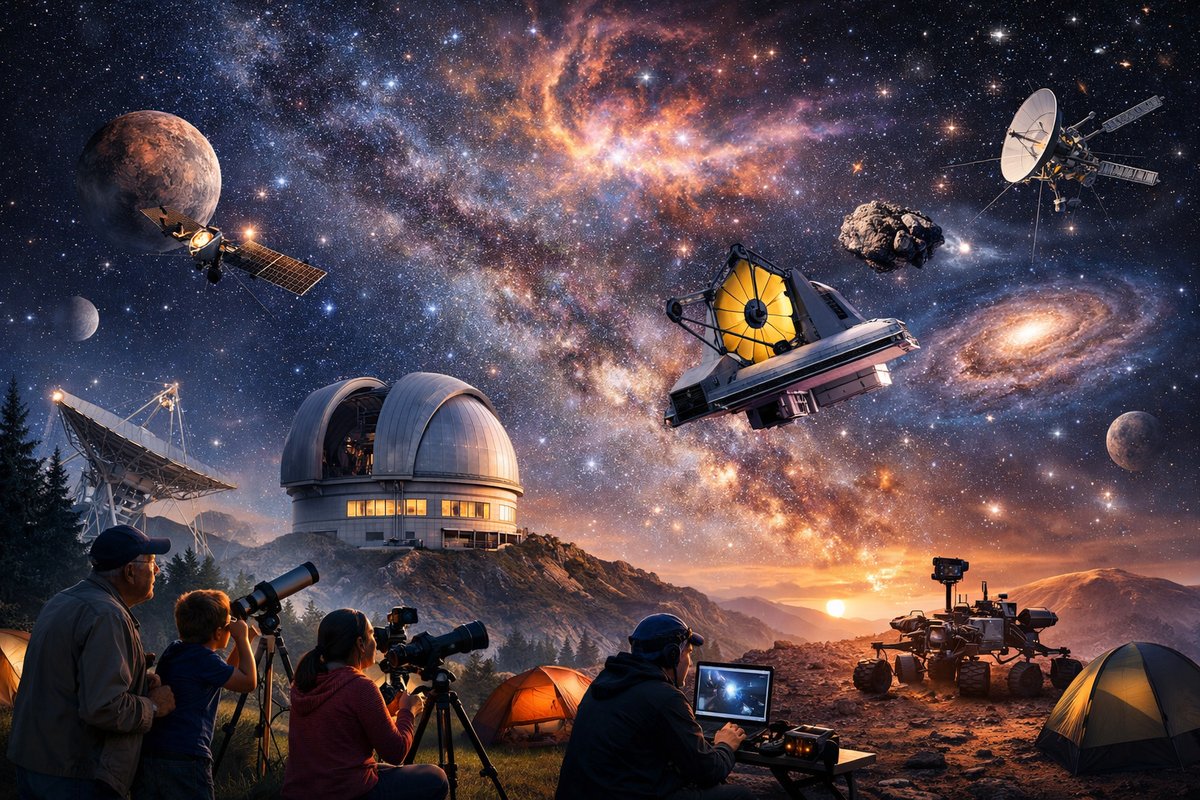
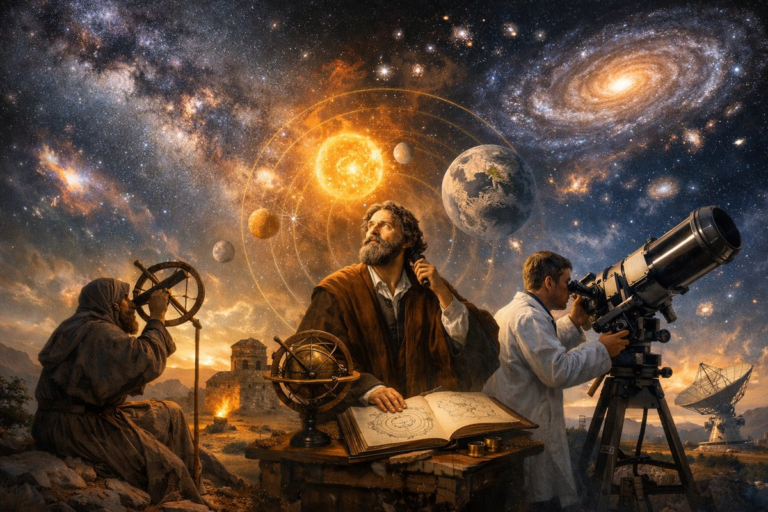
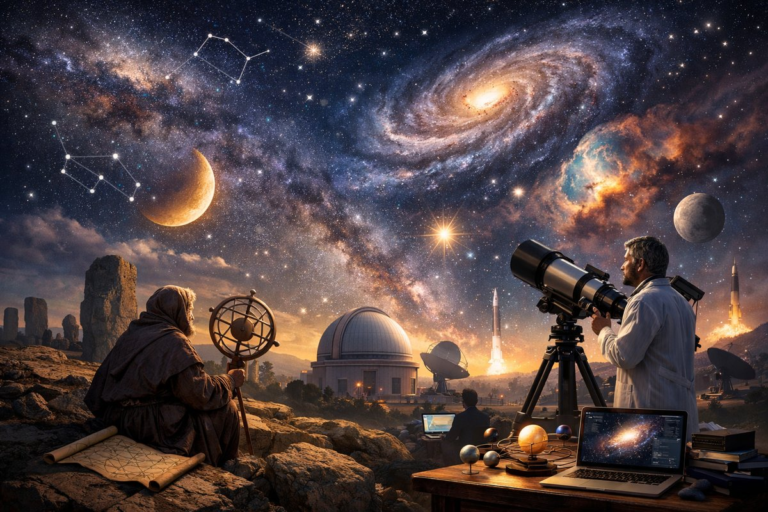
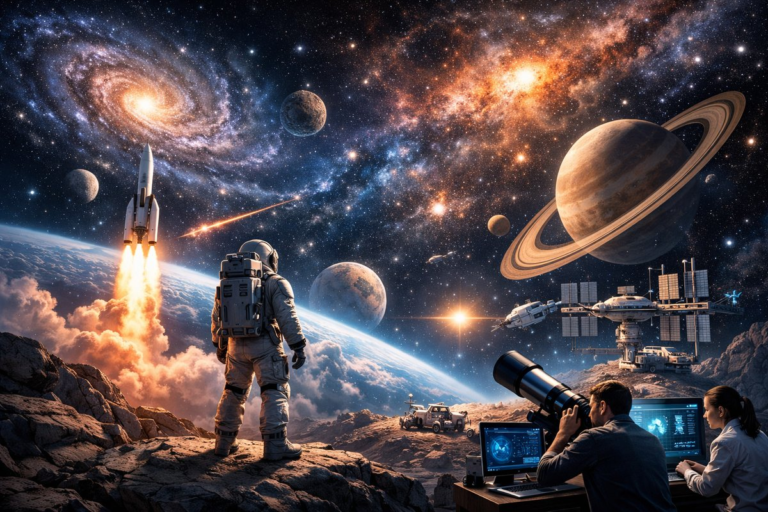
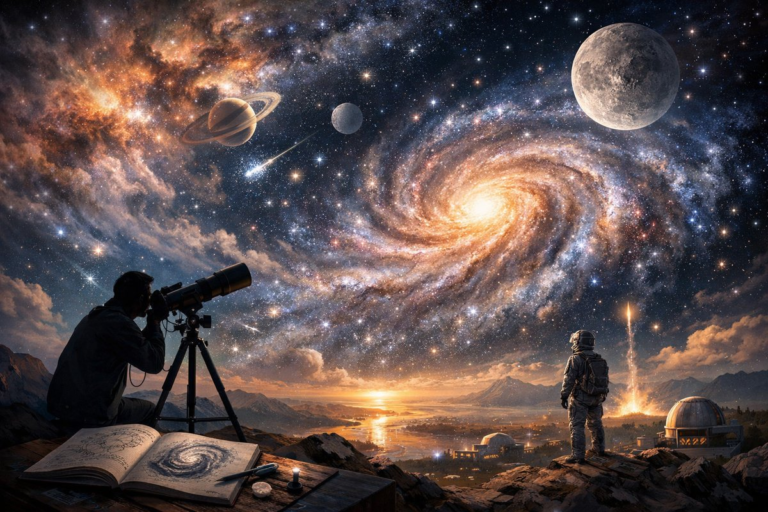
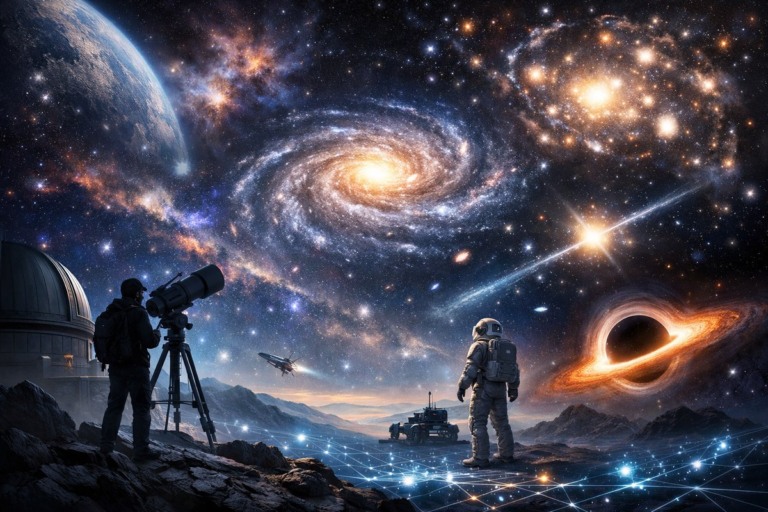
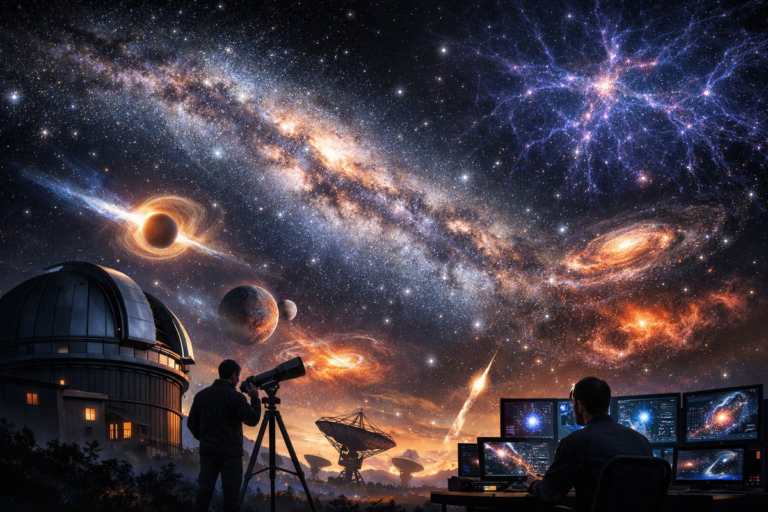
A renaissance of space science, driven by cutting-edge observatories and a surge of citizen-led projects, is fueling a new wave of wonder about our place in the universe. From backyard stargazers to deep-space probes, everyone is joining the quest to unravel the mysteries of cosmic origins and unseen realms.
The night sky has always been a canvas for human imagination, but recent advances in technology and data sharing are transforming our view of the cosmos into something more intimate than ever before. Ground-breaking observatories, next-generation telescopes, and citizen-science initiatives have converged to spark a fresh wave of cosmic curiosity. Across every continent, amateur astronomers and professional researchers are collaborating in real time to chart distant galaxies, trace the signature of invisible dark matter, and capture the fleeting echoes of gravitational waves.
At the heart of this revival lies a suite of powerful instruments that have come online in the past few years. One such marvel is a global network of gravitational-wave detectors, whose recent upgrades have increased sensitivity to ripples produced by colliding black holes and neutron stars. These detectors have already delivered a handful of signals that offer a new way to weigh extreme objects and test Einstein’s century-old theory of gravity under conditions that were once purely theoretical.
Meanwhile, spaceborne observatories are peering deeper into the infrared spectrum, revealing dust-enshrouded nurseries where stars ignite and galaxies collide. A telescope launched into orbit has captured the faint glow of primordial galaxies that existed when the universe was less than a few percent of its current age. By analyzing the chemical fingerprints in those ancient light curves, researchers are piecing together a narrative of cosmic evolution that bridges the gap between the Big Bang and the formation of our own Milky Way.
But cosmic curiosity isn’t confined to the halls of high-budget research centers. A growing cadre of citizen scientists is harnessing online platforms to sift through petabytes of data, tagging supernova candidates, classifying galaxy shapes, and even contributing to the discovery of previously unknown exoplanets. These platforms rely on the collective intuition of volunteers to train machine-learning algorithms, effectively turning every curious mind into a component of a virtual supercomputer.
On clear nights around the world, backyard stargazers are upgrading their equipment with motorized mounts and sensitive cameras, capturing faint nebulae and distant star clusters that were once the exclusive domain of professionals. Live-streamed observing sessions bring distant skies into living rooms, guided by experts who narrate the dance of Jupiter’s moons or reveal the wispy tendrils of a phantom galaxy hundreds of millions of light-years away.
Underneath these public efforts, theoretical advances are shifting the questions we dare to ask. Quantum models of gravity and hypotheses about dark energy are inviting new experiments, from tabletop quantum sensors that detect minute fluctuations in space-time to ambitious missions that will send swarms of micro-satellites across the solar system. As researchers push instrumentation to detect ever-fainter signals, the boundary between fundamental physics and observational astronomy grows increasingly porous.
The result is a feedback loop of inspiration: high-profile discoveries spark public fascination, which in turn expands the pool of volunteer data analysts and backyard observers. That surge in participation accelerates the pace of discovery, leading to announcements that energize the next generation of astrophiles. Social media feeds now overflow with breathtaking images of cosmic fireworks and data-visualization art, setting off conversations that span continents and time zones.
For educators and science communicators, this moment offers unprecedented teaching opportunities. Interactive online modules let students conduct live experiments with simulated observatory inputs, while open data archives allow undergraduates to probe real-time sky surveys. Collaborative hackathons and space-science summer schools foster a sense of shared purpose, revealing that the tools of discovery need not be limited to ivory-tower labs.
In parallel, public interest has encouraged funding agencies to support ambitious large-scale projects. On the horizon is a massive survey telescope designed to scan the entire visible sky every few nights, creating a time-lapse of cosmic activity that will capture transient events from supernovae to moving asteroids. Another mission plans to deploy a constellation of small satellites to map the distribution of dark matter through subtle gravitational lensing effects, potentially transforming our understanding of the hidden scaffolding of the universe.
Even as we celebrate these technological leaps, some of the most profound insights come from simple moments of wonder. The act of tracing constellations on a clear evening, reflecting on the origins of the elements within our own bodies, or pondering the possibility of life elsewhere-all of these experiences remind us that cosmic curiosity is as much about self-reflection as it is about instrumentation.
Moreover, the push to explore beyond Earth is reshaping societal values around sustainability and global cooperation. International partnerships on space telescopes and deep-space probes serve as templates for collaborative problem-solving on pressing issues like climate change. The same spirit of curiosity that drives us to uncover the secrets of the universe also motivates efforts to protect our fragile blue planet.
Looking forward, the next decade promises to be a golden age for both professional and amateur explorers. Upcoming missions will place telescopes in lunar orbit, use laser interferometry across the solar system, and aim detectors at the cosmic neutrino background, seeking echoes from the earliest moments of creation. On Earth, upgrades to particle-detector arrays and radio antenna networks will open windows into energetic phenomena that still defy explanation.
For anyone gazing skyward with a mix of awe and questions, the road ahead is dazzlingly rich. Whether you’re mapping the Milky Way’s hidden arms with binoculars, submitting your first classification on a galaxy-survey platform, or simply losing yourself in the Milky Way’s band on a moonless night, your curiosity is a vital part of the grand scientific tapestry.
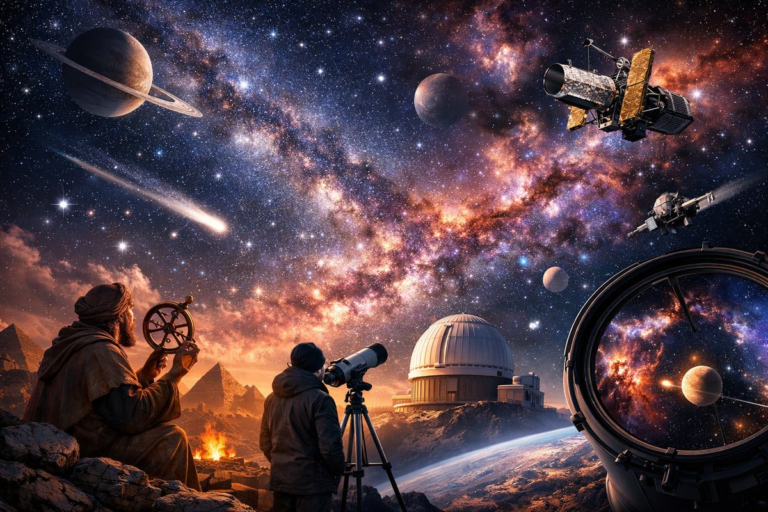
As cosmic curiosity radiates from giant observatories to living-room telescopes, it becomes clear that the dreams we nurture under the night sky can lead to real discoveries. Each photon captured, each data point tagged, and each idea shared brings us closer to answering age-old questions: How did the universe begin? What unseen forces shape its destiny? And are we, in our tiny corner, alone in this vast cosmic expanse?
In the coming years, as new discoveries arrive at the speed of data and the boundary between professional and public inquiry dissolves, this great experiment of human curiosity will continue to redefine our sense of wonder. Join the journey, lift your eyes to the heavens, and remember that every small question you ask could expand the horizons of all humankind.