Location
Mount Vernon, WA 98274

Location
Mount Vernon, WA 98274
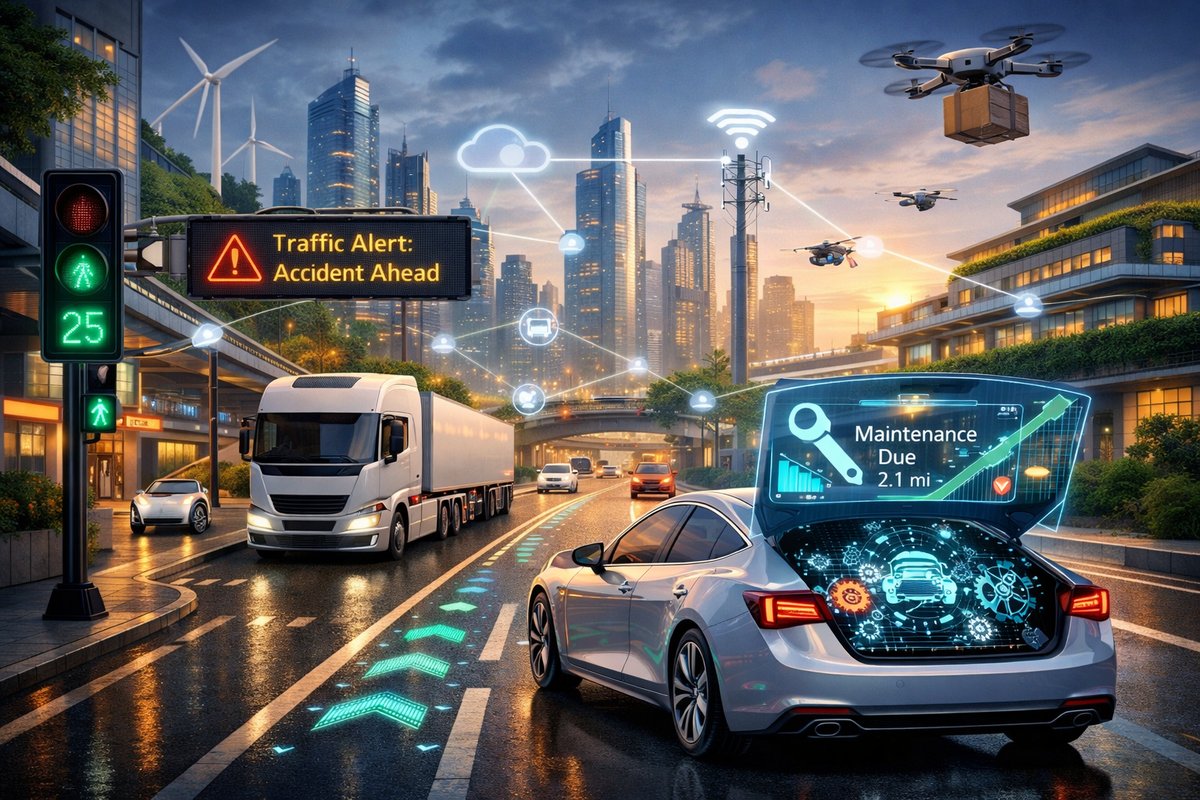
From streets that talk back to cars that predict their own maintenance needs, the latest wave of automotive innovations is reshaping how we move goods and people. By weaving together edge computing, vehicle-to-everything networking, and data-driven insights, cities and manufacturers are crafting a smarter, greener, and more anticipatory transportation ecosystem.
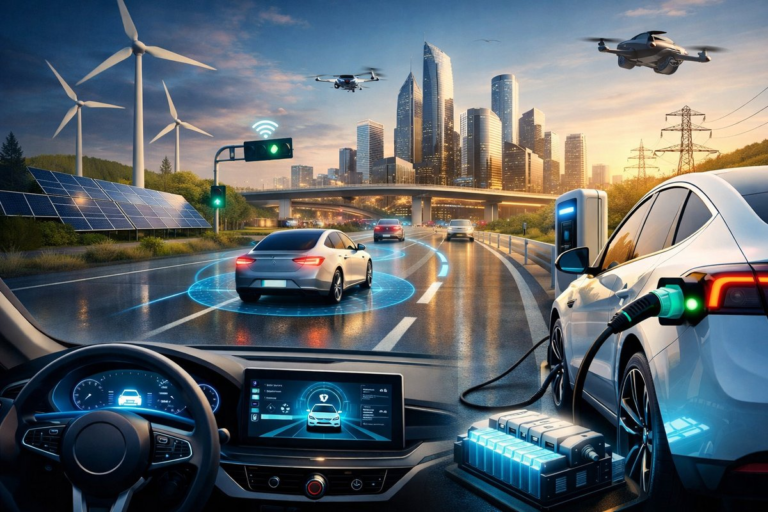
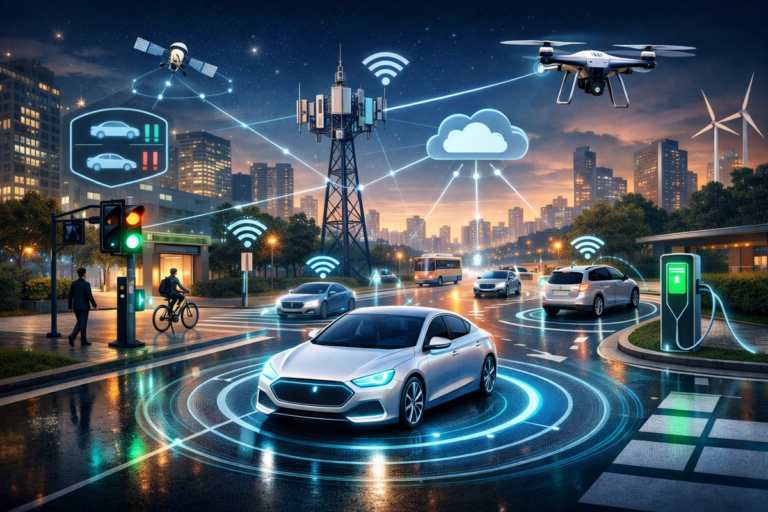
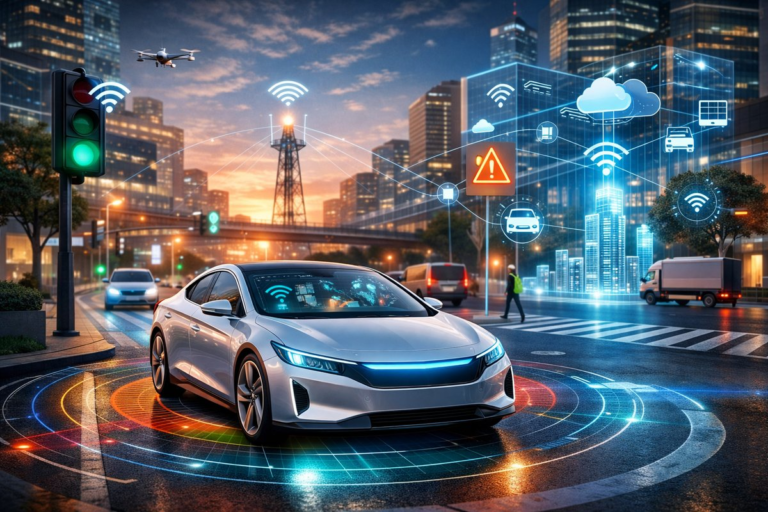
A driver eases into an intersection and sees the traffic light pulse with a subtle countdown. Instead of guessing when the signal will change, the vehicle’s display uses a low-latency feed from roadside edge servers to show exactly when to accelerate or stop. This simple interaction hints at a broad transformation unfolding on highways and city streets around the world. By blending artificial intelligence with edge computing and vehicle-to-everything (V2X) communication, transportation systems are learning to anticipate needs and respond in real time, smoothing flows and cutting emissions.
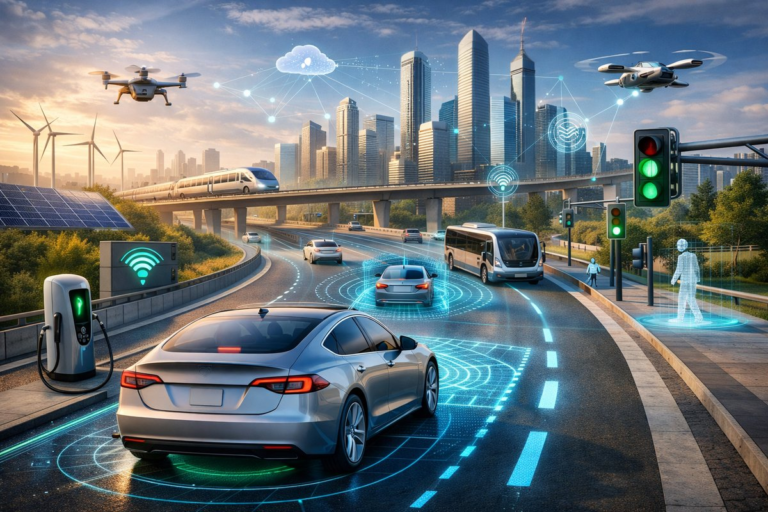
Underpinning this shift is a network of embedded sensors, micro-data centers at traffic signals, and asphalt-mounted detectors that feed live information into digital twins of roadways. Urban planners can model traffic scenarios on demand, swapping out signal timings to test a gridlock relief strategy or rerouting freight convoys around bottlenecks. The combination of real-world telemetry and high-resolution simulations makes predictive traffic management a reality rather than a lab experiment. As pilot corridors on both sides of the Atlantic prove out these tools, the results show up in shorter commute times and lower noise pollution for neighborhoods previously choked by rush-hour snarls.
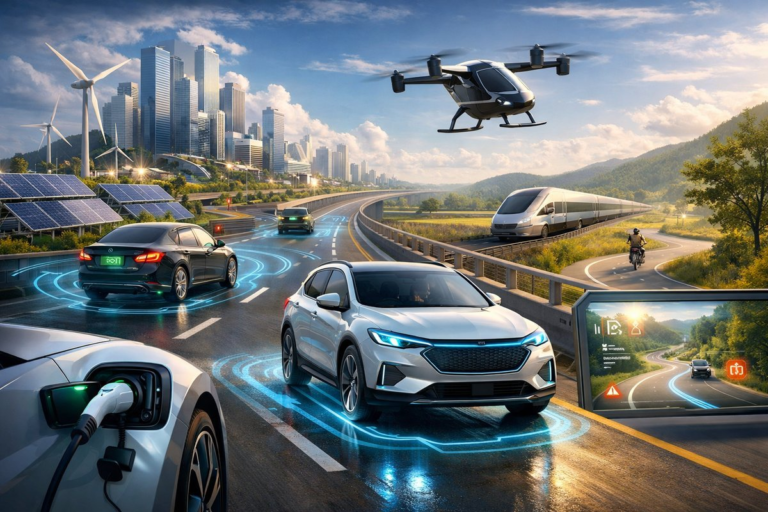
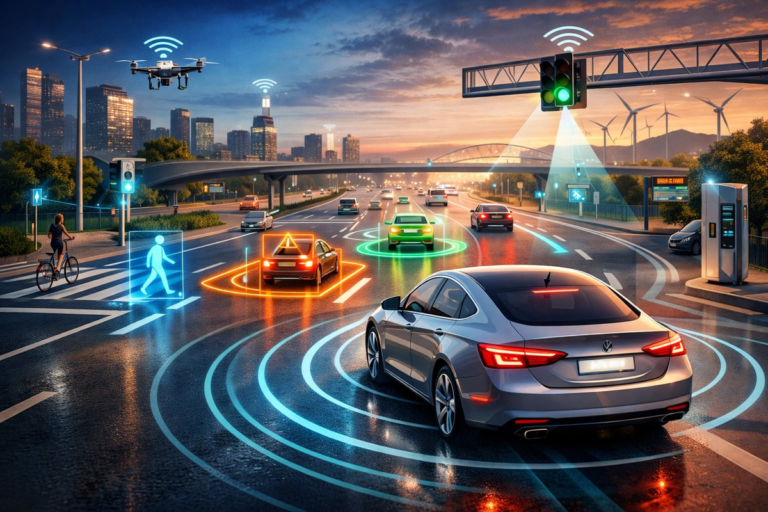
At the core of vehicle-to-everything networking lies a simple promise: cars, motorcycles, bicycles, buses, and traffic infrastructure will all share a common language. When an electric bus brakes suddenly, for instance, it broadcasts a warning packet that downstream vehicles can receive within milliseconds. Those packets travel over dedicated short-range communication (DSRC) channels or cellular-based automotive links, bypassing congested public networks. The effect is a mesh of mutual awareness among road users-a safety overlay that can detect roadway hazards from stalled vehicles to icy patches, helping drivers-and automated systems-respond proactively.
Connected cars are not just talking about safety, however. They’re monitoring thousands of mechanical parameters in real time, from coolant temperature to brake-pad thickness. By applying machine learning to these data streams, manufacturers and maintenance providers can flag anomalies long before a component reaches failure. In one recently completed pilot, a fleet of delivery vans equipped with onboard diagnostics and cloud analytics cut unscheduled downtime by nearly half. Rather than waiting for a dashboard warning, service alerts arrive days earlier on a technician’s tablet, complete with likely fault codes and recommended spare parts.
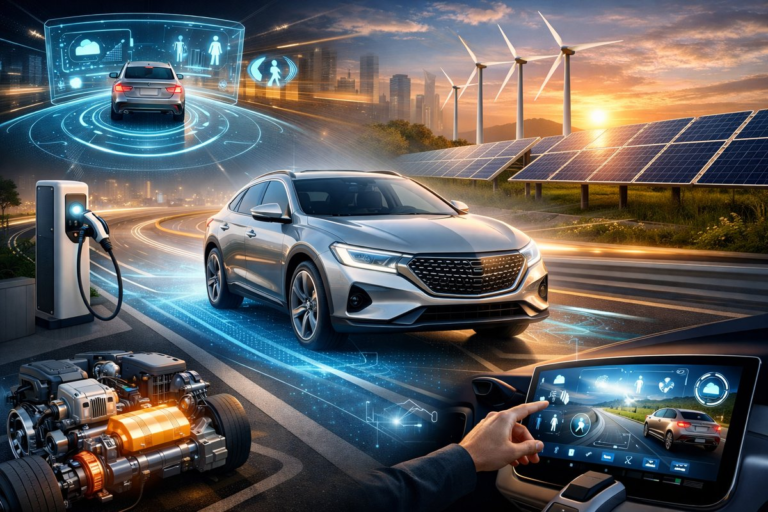
Inside the cabin, augmented reality heads-up displays are evolving from novelty features into everyday aids. Navigation arrows appear projected onto the windshield, aligned precisely with the road ahead. Parking guidance systems overlay ghostly outlines of adjacent spaces so a driver can center the vehicle in one smooth motion. As vehicle interiors adopt recycled fabrics and plant-based leathers, designers are also integrating touch-sensitive surfaces and in-cabin voice assistants that adapt to individual preferences while keeping private data processed locally rather than offloaded to the cloud.
One of the most eye-catching infrastructure innovations is dynamic wireless charging, where coils embedded beneath public road surfaces transfer energy to electric vehicles as they pass over. Though still in early trials, these installations have already powered thousands of miles of motion in pilot fleets, reducing the need for large battery packs and lengthy charging stops. Collected energy use is aggregated on smart grids that optimize power sources in real time, buying renewable energy at off-peak hours and self-balancing loads across neighborhoods.
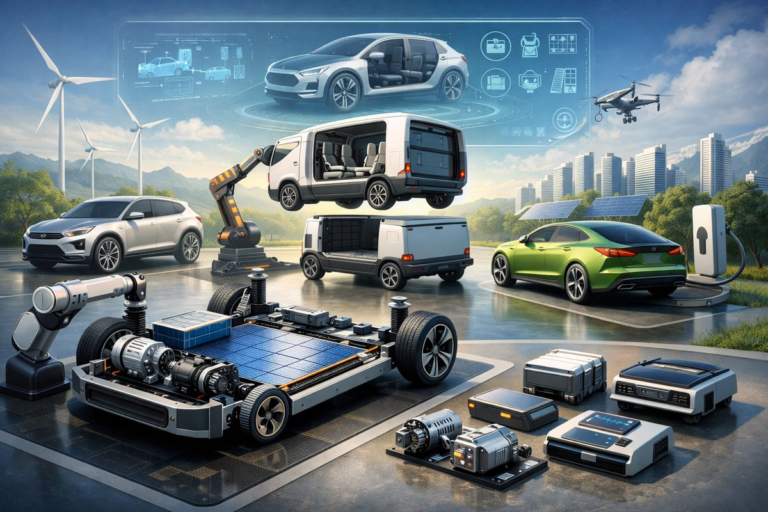
Sustainability extends beyond propulsion. Automakers are pioneering modular vehicle architectures where worn components can be swapped out for refurbishment or recycling. Battery packs enter a second life as stationary energy storage in homes, community centers, or microgrids. Even lightweight structural parts – molded from recycled polymers and natural fiber composites – are engineered to be ground up and remade into the next generation of body panels.
With all these data streams flowing between cars, roads, data centers, and personal devices, cybersecurity and privacy have become top priorities. Encryption protocols are tailored so that only the relevant nodes can decrypt situational packets-no central server holds every detail. Onboard artificial intelligence filters personally identifiable behavior patterns before any data leaves the vehicle, ensuring that mobility insights can inform city planning without revealing individual travel histories.
Commercial fleets are eager adopters of these connected systems. Truck platooning-where a lead vehicle dictates speed and steering inputs for closely following trucks-can boost fuel efficiency by reducing aerodynamic drag. When combined with predictive route optimization, drivers spend less time idling at weigh stations or congested ports. In one logistics partnership, a handful of autonomous-enabled rigs managed full deliveries with only occasional remote supervision, demonstrating how human and machine teams can blend strengths in heavy-duty transport.
Electronic tolling and curbside management also leverage this tech-driven wave. Drivers who subscribe to smart-parking programs seamlessly reserve and unlock dedicated spaces via a mobile app. Dynamic pricing models adjust rates based on demand, nudging traffic toward underutilized lots or encouraging off-peak travel. Similar approaches are guiding last-mile delivery robots and e-bikes, integrating them into a unified mobility-as-a-service framework that benefits riders, couriers, and residents.
Of course, rolling out these innovations across entire regions poses challenges. Standards bodies are racing to harmonize communication protocols so that a vehicle built for one market can seamlessly interact with infrastructure in another. Upfront infrastructure investment remains steep, especially for rural and underserved areas. Yet pilot projects demonstrate that payback arrives in the form of accident reduction, fuel savings, and improved public health from lower emissions.
Beyond current horizons lies an even more radical vision of transportation. Quantum-based sensors promise centimeter-level positioning without reliance on satellite signals. Hyperloop-inspired vacuum tubes aim to ferry pods at airline speeds on the ground. Bi-directional charge points could allow parked electric vehicles to feed energy back into the grid during peak demand, earning revenue for owners while stabilizing the power network. Each breakthrough builds on the common threads of data intelligence, connectivity, and sustainability.
Mapping the Road Ahead
In less than a decade, the relationships between vehicles, roads, and data platforms have shifted from simple telemetry to highly sophisticated collaborations. Drivers, fleet operators, city officials, and tech providers are all co-authors of this new story-one where the journey itself becomes adaptive, efficient, and responsive. As these systems scale, everyday transits will feel less like guessing games and more like co-piloted experiences. The challenge now is to ensure that innovation remains inclusive, secure, and aligned with our environmental goals. If successful, the next wave of transportation will not only carry us farther, but also guide us toward wiser choices about how, when, and why we move.