Location
Mount Vernon, WA 98274

Location
Mount Vernon, WA 98274
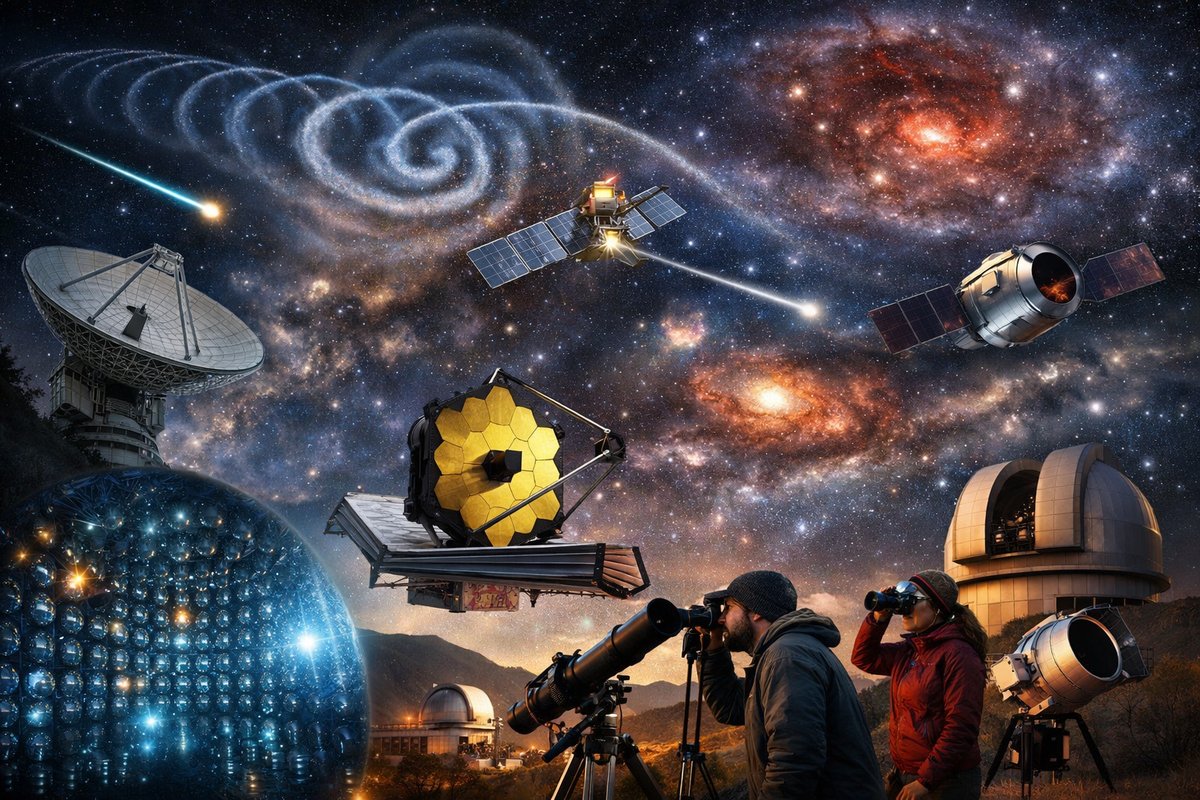
From neutrinos and gravitational waves to infrared glimmers of the earliest galaxies, a convergence of telescopes, detectors, and citizen scientists is deepening our cosmic curiosity. Discover how professional missions and homegrown stargazers are teaming up to chart the universe's hidden rhythms.
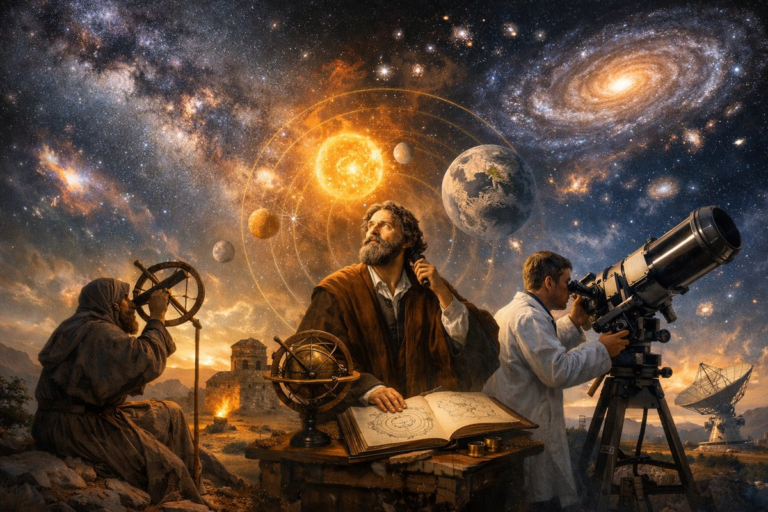
On a clear summer evening, a backyard telescope owner adjusts a simple red flashlight and peers through the eyepiece. Jupiter’s swirling bands give way to the faint pinpricks of its four largest moons, and for a moment, the sky feels like a living tapestry. That sensation-equal parts scientific thrill and childlike wonder-is at the heart of a cosmic revival: amateur stargazers, once content to track planets and meteor showers, are now drawn into the front lines of modern space science.
Behind this renaissance lies the explosion of multi-messenger astronomy. Instead of relying solely on visible light, researchers now listen for gravitational ripples, sniff out ghostly neutrinos, and capture X-rays and infrared signals. Each new channel of data unlocks hidden dynamics of black holes, neutron stars, and the web of matter that binds galaxies. Suddenly, the universe is more vivid than ever-and so is our collective curiosity.
In late spring, a consortium of telescopes and the IceCube Neutrino Observatory in Antarctica traced a burst of high-energy neutrinos back to a distant blazar siphoning plasma into its central black hole. This multi-messenger detection marked only the second time scientists have pinpointed a neutrino’s origin. While gigantic detectors under Antarctic ice recorded ghostly particles, space-based observatories scanned the same patch of sky in X-rays and visible light, confirming a dramatic flare from the galaxy’s heart. The result: an unprecedented real-time portrait of violent cosmic jets.
Meanwhile, the newest infrared telescope in orbit has been chipping away at the dark ages of the cosmos. Its cameras peer past veils of dust to reveal star-forming nurseries and infant galaxies that lit up just a few hundred million years after the big bang. Each week brings a surprise: a dwarf galaxy shedding fuel faster than expected, or a cluster of primordial stars that hints at a missing piece in our models. Researchers pore over these data feeds in search of clues about dark matter, the invisible scaffold holding the universe together.
On the horizon, two ambitious space missions will chart the sky like never before. A wide-field telescope equipped with a precision mirror will map billions of galaxies to trace the ebb and flow of dark matter and dark energy. Its wide-angle images promise to reveal subtle gravitational distortions in the cosmic web. A companion infrared observatory, scheduled for launch soon, will home in on exoplanet atmospheres and the first glimmers of population III stars. Together, they aim to deliver the next leap in our cosmic mapmaking.
At the same time, citizen science platforms are enlisting volunteers by the tens of thousands. Projects like Galaxy Zoo ask participants to classify galaxy shapes-spirals, ellipticals, and mergers-while others spot gravitational lenses or flag supernova candidates. Each click from a home computer can steer follow-up observations on giant ground-based telescopes. Enthusiastic amateurs have already helped discover rare gravitationally lensed quasars and newly active black holes, proving that you don’t need a Ph.D. to contribute.
Distributed computing initiatives have also unleashed pure curiosity. By donating spare processing power, volunteers join global searches for faint pulsar signals hidden in gravitational-wave data or hunt for uncharted near-Earth asteroids. This collaborative computing network, running quietly on personal laptops, magnifies the reach of research teams and accelerates the pace of discovery. It’s an open-ended cosmic treasure hunt driven by public engagement.
Even radio astronomy, once confined to huge dish antennas, is getting a backyard makeover. Low-cost radio antenna kits can be assembled in a home workshop, turning a garden shed into a listening post for solar bursts, pulsar beacons, and galactic hydrogen lines. Hobbyists share schematics online, compare signal spectra, and collaborate on mapping large regions of the radio sky. These grassroots receivers complement professional observatories, filling in temporal gaps and offering real-time monitoring of transient events.
Indoors, home planetarium projectors bring the heavens into living rooms. With a flick of a switch, plush sofas transform into command decks, projecting thousands of stars and constellations across ceilings. Adjustable focus and color filters recreate nebulae and supernova remnants in vibrant hues. Families host “mission nights,” exploring distant worlds and exoplanet systems with playful narration and interactive quizzes. It’s an immersive way to kindle a lifelong fascination with space.
Smartphone apps and digital star charts have also democratized skywatching. Real-time sky maps use onboard GPS and compass sensors to overlay constellation lines and deep-sky objects on a live camera view. Amateur astronomers can plan nighttime observing sessions down to the minute, track satellite flybys, or log meteor counts. A simple tap can fetch catalog data, historical imagery, and observing tips for nearly every region of the sky.
Beyond data and gadgets, this wave of cosmic curiosity is fueling emotional connections. When people glimpse the rings of Saturn or detect the signature of a merging neutron star, they often describe a profound shift in perspective-a fleeting but powerful reminder of humanity’s shared origins and fragile place in the cosmos. That sense of wonder often extends to care for our own planet, inspiring conversations about sustainability, stewardship, and global cooperation.
Art and science are weaving new collaborations, too. Immersive exhibits combine scientific visualizations with sound design and virtual-reality headsets, guiding visitors through colliding galaxies or the inside of a rotating neutron star. Light installations in public parks trace real-time solar wind data, turning invisible space weather into shifting color fields. The result is a fusion of aesthetic enchantment and rigorous data that resonates on both intellectual and emotional levels.
At its root, this renaissance taps into a profound philosophical impulse: to understand our origins and future by studying the farthest reaches of time and space. When we chart the cosmic microwave background or decode the elemental fingerprints in a dying star’s blast, we trace the same atoms that make up our bodies. That connection between the vast and the intimate kindles humility, curiosity, and a drive to explore beyond comfortable horizons.
Across schools, museums, and community centers, educators are building hands-on cosmic labs. Students assemble scale models of pulsars, conduct spectrum-analyzing experiments with light-emitting diodes, and simulate galaxy collisions in physics engines. Virtual field trips put learners aboard orbiting telescopes or on the deck of a simulated lunar lander. These experiential modules encourage critical thinking and spark questions that transcend traditional subject boundaries.
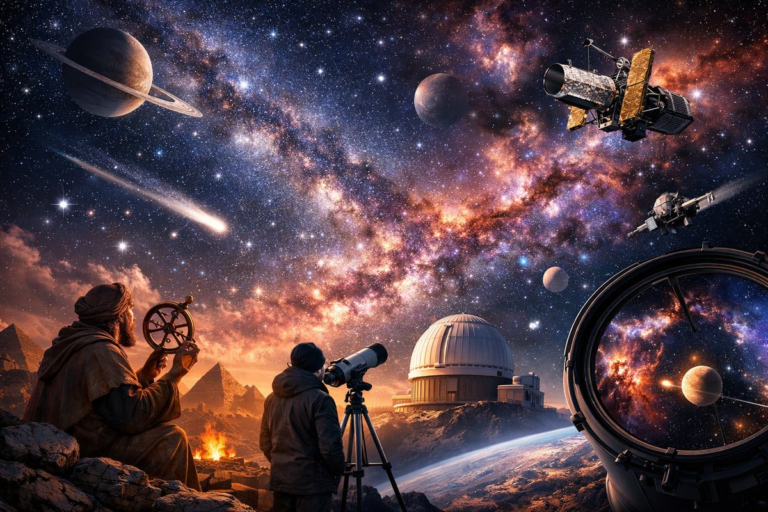
Looking ahead, the next frontier of discovery will come from spaceborne gravitational-wave observatories and expanded neutrino detector arrays buried beneath ocean floors. Plans for a space interferometer orbiting hundreds of thousands of kilometers apart promise to hear the calls of colliding supermassive black holes. At the same time, undersea observatories will listen for neutrinos from exploding stars. These technologies will bring us even stranger tales of cosmic genesis and collapse.
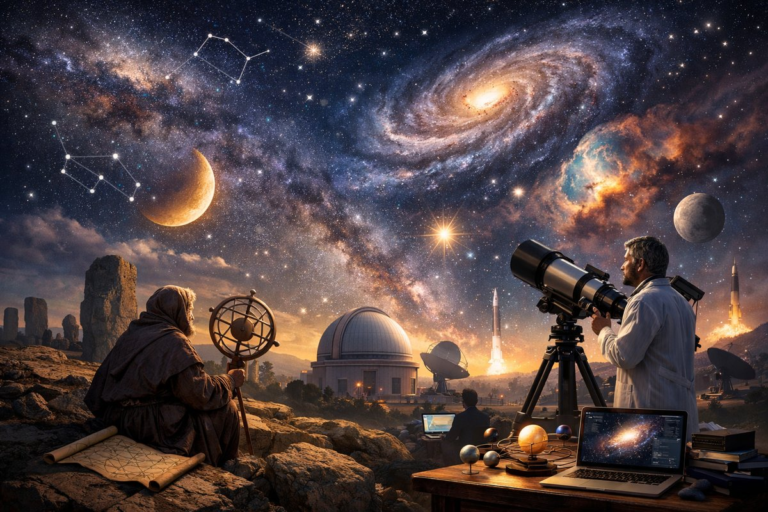
For stargazers, amateur astronomers, and science enthusiasts, the invitation is clear: point your telescopes, tune your antennas, or simply look up and wonder. Join local astronomy clubs, contribute to online citizen-science campaigns, or attend star parties hosted by public observatories. Every question you log, every classification you submit, and every fleeting glimpse of a meteor adds a thread to our shared tapestry of knowledge.
When the cosmos calls, it doesn’t ask for diplomas or vast resources-just curiosity, patience, and a willingness to learn. In those silent night-sky moments, flashlights dim, screens go dark, and we remember that we live on a pale blue dot spinning in a vast cosmic arena. And that realization, more than any data point, may be the greatest discovery of all.