Location
Mount Vernon, WA 98274

Location
Mount Vernon, WA 98274
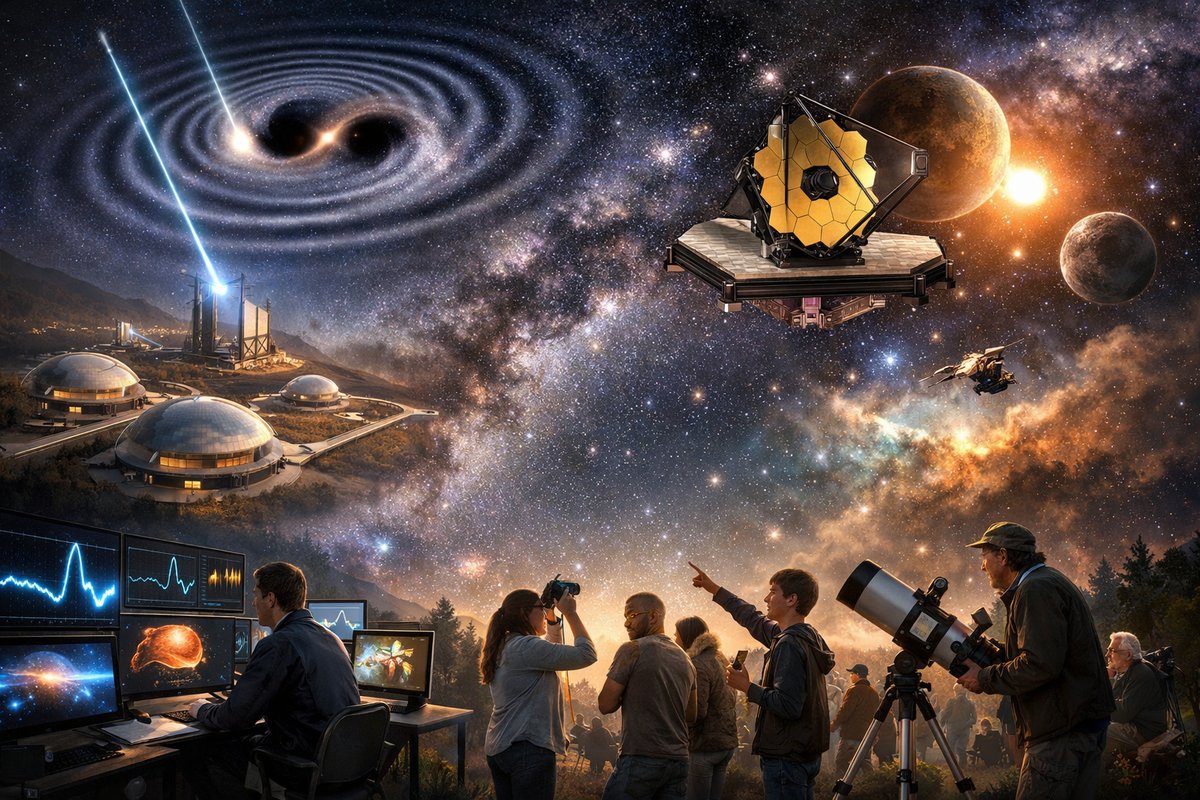
A wave of fresh discoveries-from ultra-sensitive detectors tracking ripples in spacetime to crowdsourced exoplanet hunts-has reignited public wonder in the cosmos. Blending cutting-edge missions with everyday stargazers, this shift is forging a new era of collaborative exploration and unlocking deeper questions about our place in the universe.
When a faint shimmer appears on a backyard telescope eyepiece or a cloud of data arrives at a research center halfway around the world, the spark of cosmic curiosity is alive and well. Over the last 18 months, a cluster of missions and grassroots initiatives has delivered a trove of intriguing signals: whispers of gravitational waves from merging neutron stars, infrared snapshots of the earliest galaxies, and citizen-scientist validations of mysterious flickers in distant star systems. Together, these efforts are weaving an unexpected tapestry of discoveries-one that blurs the line between professional observatories and kitchen-table researchers.
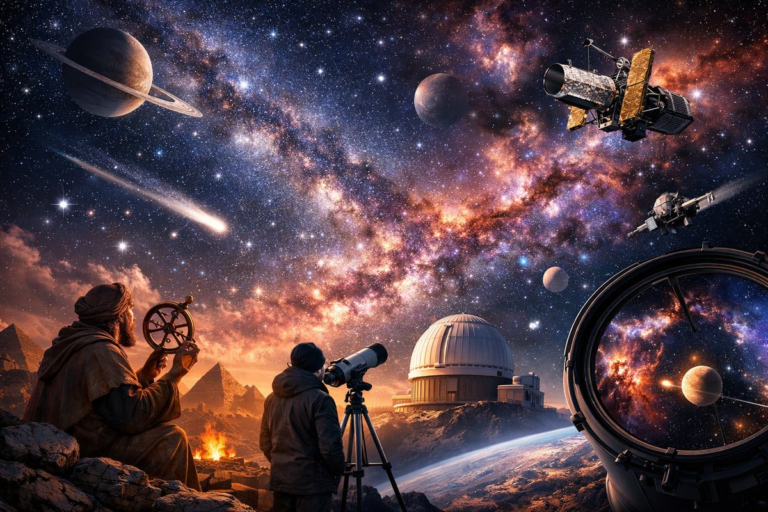
At the heart of this renaissance is a network of space telescopes and ground-based instruments poised to test the boundaries of what we thought possible. Ultra-sensitive microwave detectors stationed in Antarctica are watching for subtle echoes of the Big Bang. Interferometers scattered across continents are listening for spacetime tremors. And orbiting infrared observatories are peeling back the veil of dust that has hidden infant galaxies since the dawn of cosmic time.
While each mission brings its own set of objectives and specialized hardware, their combined output has a way of surprising even veteran scientists. One recent data release revealed a faint set of spectral lines in a star-forming region that could hint at complex organic molecules. Another mapped the temperature variations on Mars with unprecedented resolution, uncovering evidence that liquid water may occasionally flow on hidden slopes. These snapshots serve both as proof of concept for new technologies and as tantalizing invitations for follow-up studies.
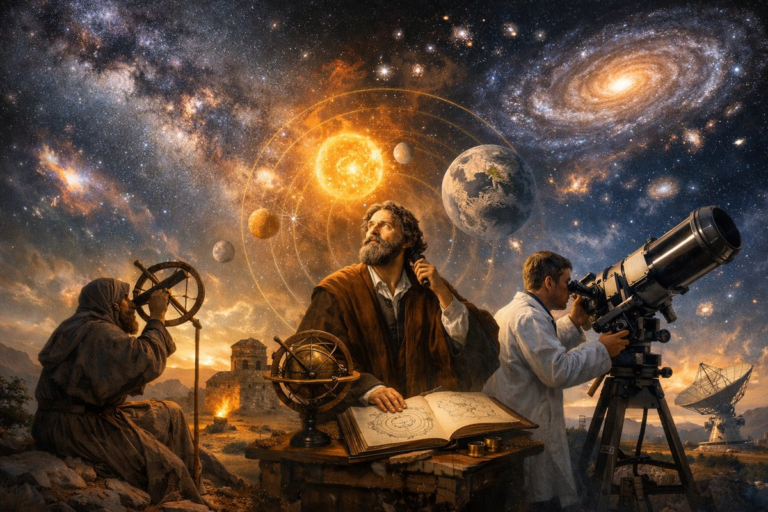
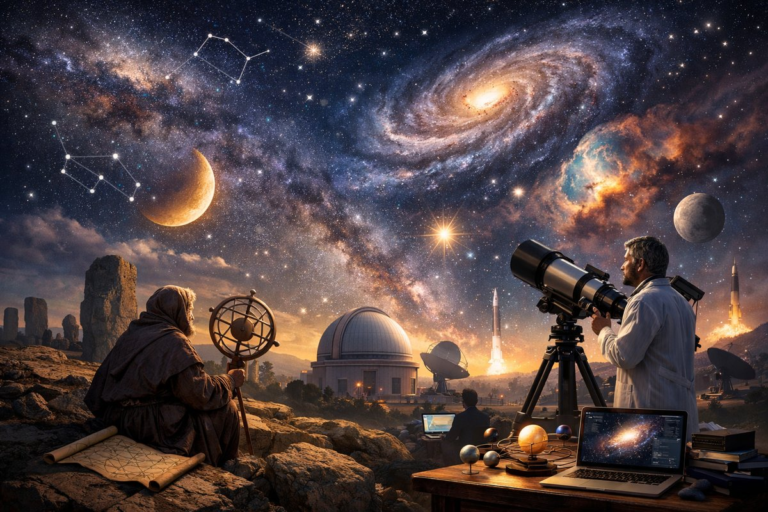
Yet the true marvel lies in how these professional campaigns have inspired-and been amplified by-armchair astronomers and backyard telescopes. Amateur networks using mid-range reflectors have successfully monitored stellar eclipses, spotted lunar impacts, and even contributed to the discovery of an exoplanet candidate. Volunteer platforms are now sifting through petabytes of archival images to flag anomalies. One project alone has amassed over a million citizen classifications, turning what once was an insurmountable data backlog into a collaborative treasure hunt.
This interplay between large-scale missions and community engagement has reshaped the traditional model of cosmic exploration. No longer confined to exclusive labs or university observatories, cutting-edge science extends into homes and public parks. Schools and local clubs are hosting live streaming events, where researchers guide viewers through real-time observations and explain data analysis techniques in plain language. Social media channels have become mini-classrooms, with brief tutorials on calibrating telescopes, performing spectral analysis, and simulating planetary orbits.
But the renaissance isn’t only about spotting new worlds and cosmic phenomena. It’s also about wrestling with the big questions that steer humanity’s collective imagination. What was the universe like in its first million years? How did the earliest black holes grow so massive so quickly? Can we detect the faint signature of life beyond our solar system? Each new dataset stokes these questions, breathing fresh urgency into fields like astrochemistry, gravitational astrophysics, and exobiology.
Funding agencies have taken note of this momentum. Grant portfolios are shifting to support projects that build bridges between professional observatories and citizen scientists. In some cases, smaller universities and community colleges are awarded resources to host mobile telescope units, bringing high-resolution imagery to underserved regions. Public-private partnerships are also emerging, underwriting coding hackathons where participants develop new algorithms to classify galaxies or predict solar flare activity.
This surge of interest has also navigated its share of challenges. Data privacy concerns have prompted platforms to create secure environments for volunteer contributors, ensuring that personal information remains protected. Environmental advocates have raised questions about the ecological footprint of remote operations in sensitive habitats, leading teams to adopt more sustainable field practices. And as the volume of data grows, so does the need for robust machine-learning tools to pre-filter noise and highlight promising leads.
To address the computational bottleneck, several initiatives are exploring decentralized processing models-essentially crowdsourcing not only classification tasks but also raw computing power. Enthusiasts can donate unused CPU cycles to help run simulations, train neural networks, or crunch statistical analyses. This cooperative approach echoes early peer-to-peer networks, but with a scientific payoff: faster turnarounds, more thorough vetting of anomalies, and the empowerment of global participants.
Across this constellation of efforts, one theme stands out: wonder is a powerful motivator. The thrill of spotting a supernova candidate or charting the motion of an asteroid creates an electric sense of possibility. It drives students to pursue STEM careers, nudges engineers to refine instrumentation, and encourages everyday citizens to gaze upward with fresh enthusiasm. In classrooms, teachers report that hands-on projects tied to live mission data spark deeper engagement than textbook exercises alone. Community centers have started “star parties” where observers of all backgrounds swap stories under the night sky, forging bonds that transcend age and expertise.
Beyond education and outreach, the collective endeavor has implications for how we frame the future of exploration. If the next generation of missions can harness both state-of-the-art sensors and networked crowdsourcing, the barriers to discovery shrink dramatically. Complex questions-like whether dark matter particles leave subtle imprints in galactic clusters-can be tackled through distributed efforts that leverage individual curiosity and institutional rigor in tandem.
In practical terms, this means that tomorrow’s breakthroughs might arrive from a remote lab refining a novel detector, a teenager running simulations at home, or a community observatory charting transits of far-flung planets. Rather than a single “hero” telescope or flagship mission, the narrative of cosmological discovery is transforming into a mosaic of contributions-each piece adding depth and texture to our portrait of the universe.
As we look ahead, a handful of upcoming initiatives promise to deepen this collaborative dynamic. A planned network of small satellites will beam real-time ultraviolet data to citizen-science portals. A next-generation gravitational wave observatory is expected to send alerts within seconds of detecting a stellar collision, allowing backyard communities to point their telescopes at the glow of a newborn black hole. And new open-source software packages will offer intuitive interfaces for modeling cosmic phenomena, lowering the barrier for first-time participants.
The result is a delicate alchemy: professional missions forging the path with cutting-edge hardware, and public engagement infusing that path with boundless curiosity and fresh perspectives. In the process, our understanding of space and time grows richer-not just through high-resolution imagery or complex simulations, but through the collective human urge to question, explore, and connect.
Whether you’re an expert calibrating a radio dish or an enthusiastic newcomer identifying constellations, there’s a place for you in this grand adventure. As the night sky rolls out its treasures, each observer-no matter how many lenses or screens separate them from distant galaxies-becomes a co-author in the unfolding story of cosmic exploration.
And so, under the silent glow of distant suns, the next chapter begins: one written by thousands of voices, united in awe and driven by the timeless impulse to know what lies beyond the horizon.