Location
Mount Vernon, WA 98274

Location
Mount Vernon, WA 98274
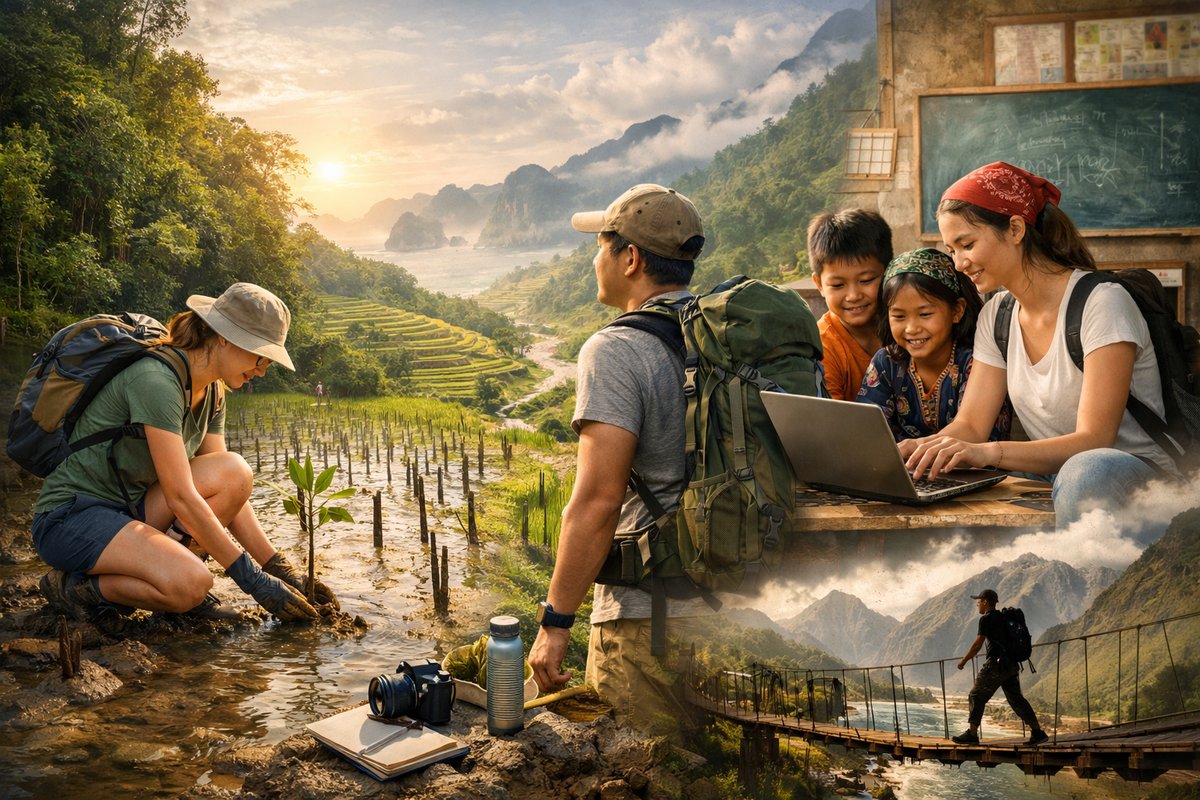
From restoring coastal forests in Southeast Asia to teaching digital skills in rural villages, a new wave of travelers is blending exploration with meaningful impact. As sustainable tourism rises, adventure seekers are packing light but dreaming big, turning every journey into a chance to leave a positive mark.
In the shadow of iconic landmarks and Instagram-ready vistas, a quiet revolution is reshaping the way people see the world. Once driven by bucket lists and photo ops, modern explorers are now seeking deeper connections-with communities, cultures and the natural environment. Across continents, travel companies and grassroots initiatives report record demand for itineraries that blend traditional sightseeing with volunteering, conservation or cultural exchange.
A recent report by a global travel research firm found that more than two-thirds of leisure travelers now prioritize experiences that support local economies or environmental goals. In coastal villages in Indonesia and the Philippines, international volunteers help restore mangrove forests. In the heart of the Andes, trekkers join reforestation projects at high altitude. In small towns across Europe, visitors learn heritage crafts in exchange for helping to renovate historic buildings.
“It’s not about accruing passport stamps anymore,” says an independent tour operator specializing in community-rooted expeditions. “People want stories that matter. They want to know their travel dollars are empowering local guides, funding social projects or protecting fragile ecosystems.”
In rural Costa Rica, a group of digital nomads set up a pop-up co-working space in a banana plantation, offering free workshops on remote productivity for local youth. “We call it tech for good,” explains one organizer. “Many students here lack reliable internet at home, so we bring solar-powered connectivity hubs and basic coding classes. It’s been amazing to see teenagers build websites that promote their own villages as eco-tourism destinations.”
A similar spirit fuels impact-driven itineraries in East Africa, where wildlife conservation meets community development. Guests start the day tracking elephants alongside park rangers, then spend afternoons in nearby villages installing energy-efficient cookstoves. “By reducing fuelwood demand, families breathe cleaner air, and fewer trees are cut down for firewood,” says a conservation manager. “It’s a win-win for people and wildlife.”
Part of this shift stems from growing environmental awareness. Climate anxiety is prompting travelers to question air travel’s carbon footprint and insist on meaningful offsets. Some airlines now partner with reforestation projects, allowing passengers to sponsor trees on long-haul flights. Others invest in biofuel research or carbon removal technology.
Sustainable lodging has also exploded in popularity. A network of eco-lodges in Central America uses locally quarried stone and reclaimed wood for construction, powered by solar panels and rainwater catchment systems. Guests can join permaculture workshops or fish alongside local artisans, then enjoy farm-to-table meals sourced from on-site gardens. In Scandinavia, remote wilderness lodges offer silent meditation cabins built into the forest canopy, where guests practice low-impact foraging and snow tracking with indigenous guides.
Meanwhile, volunteer travel companies are reimagining the concept of “voluntourism” to avoid harmful short-term interventions. Rigorous pre-departure training, clear project goals and local leadership ensure that volunteers are qualified and the community retains ownership. In one Tanzanian village, visiting nurses collaborate with local midwives to strengthen maternal health programs, providing follow-up evaluations months after volunteers have returned home.
Local entrepreneurs are seizing the moment, too. Small-batch cooperatives produce handcrafted goods-coffee, textiles, ceramics-sold through fair-trade channels. Tourists learn the weaving patterns or coffee-bean roasting techniques behind each product, then purchase items direct from producers, ensuring revenue flows back to families.
“Travel with purpose doesn’t dilute the thrill of discovery,” notes a cultural anthropologist at a travel symposium. “It enriches it. People absorb lessons about resilience, adaptation and shared humanity. They leave with humility, not just souvenirs.”
Adventure tour operators report that this trend spans demographics. Solo travelers in their twenties, retirees seeking a second act, families teaching children global citizenship-all are drawn to trips that combine adrenaline and altruism. Even honeymooners now opt for tree-planting ceremonies with local elders rather than candlelit dinners in high-rise hotels.
Technology plays a key role. Mobile apps match volunteers with vetted community projects, facilitating transparent impact tracking and peer reviews. Blockchain-based platforms allow travelers to verify carbon offsets, monitor conservation funding and communicate directly with project managers. Virtual reality previews let potential volunteers “test drive” marine-conservation dives or cultural-heritage restorations before booking.
Despite its promise, purpose-driven travel faces challenges. Some regions lack reliable infrastructure for independent operators, raising safety or environmental concerns. Others risk commodifying local cultures or overburdening small communities with guest turnover. Industry experts stress that success hinges on genuine collaboration, long-term partnerships and ongoing evaluation.
To that end, an emerging accreditation body is developing quality standards for impact tourism. Criteria include equitable revenue sharing, community consent, minimal resource consumption and measurable social or environmental outcomes. Early adopters report that certification boosts bookings by signifying responsible practices to an increasingly conscious traveler base.
As the trend gains momentum, cities and national parks are adapting. Urban tours emphasize social enterprise visits-like community cafés that employ at-risk youth or workshops teaching traditional music to refugees. National parks dedicate a portion of entrance fees to seed money for local sustainable businesses, from electric bike rentals to organic market stalls.
Critics caution that purpose-driven travel must avoid becoming a marketing gimmick. Authenticity matters more than buzzwords. Travelers must do their homework, vet organizations and seek transparency on how their contributions are used. Responsible travel advocates recommend starting with small, well-documented projects and gradually expanding commitments based on verified results.
Nevertheless, the cultural shift is undeniable. More travelers now view each trip as a micro-grant for social innovation or ecological restoration. Talented chefs, artists and educators are joining hands with grassroots leaders, creating cross-pollinated experiences that educate, empower and entertain.
For many, this evolution feels overdue. Travel has always been a tool for mutual understanding; now it’s also a force for tangible change. In a time of global challenges-from biodiversity loss to economic inequality-journeys that leave a positive trace are no longer a niche but a mainstream aspiration.
When travelers return home, they carry more than memories: they bring renewed purpose and a network of global friends, ready to advocate for causes they’ve witnessed firsthand. That ripple effect may prove to be the most lasting souvenir of all.