Location
Mount Vernon, WA 98274

Location
Mount Vernon, WA 98274
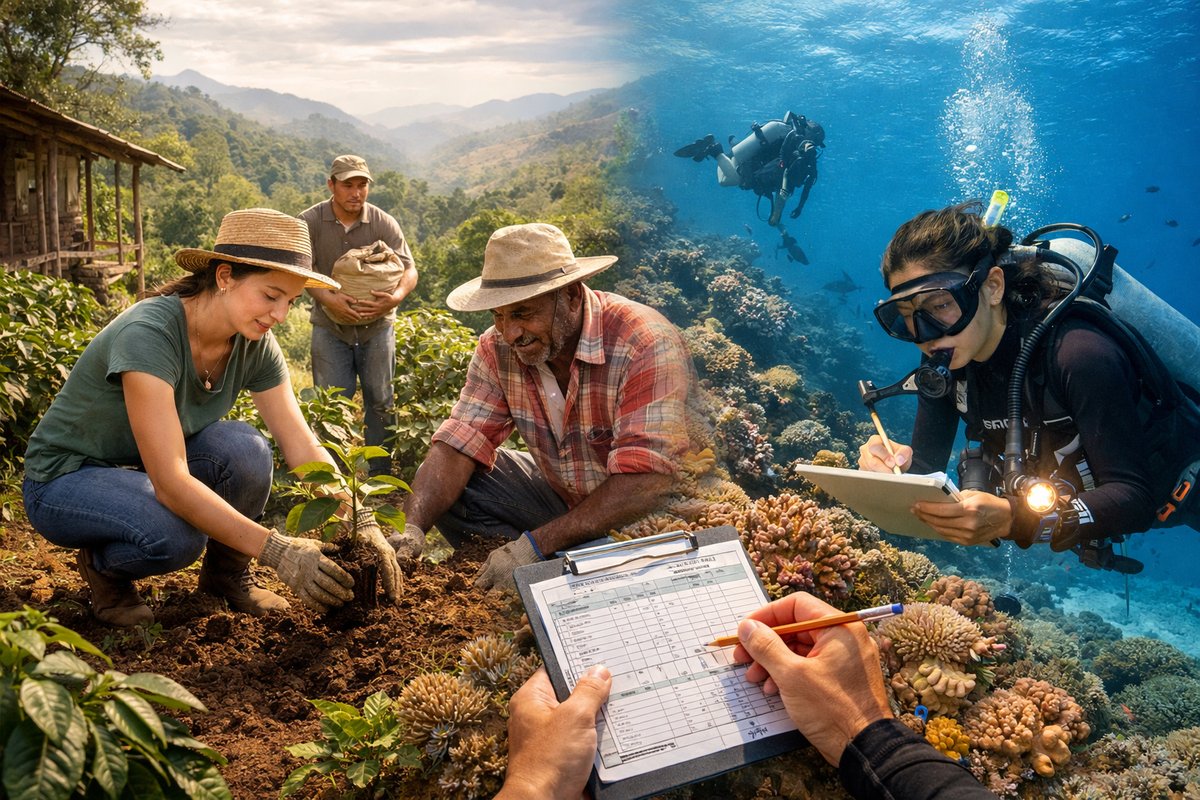
An emerging wave of explorers is trading sit-back sightseeing for hands-on, community-driven experiences that leave a positive imprint. From coffee-farm rehabilitation in Latin America to citizen science reef surveys in Southeast Asia, purpose-driven travel is reshaping tourism-and redefining adventure.
In a shift that travel analysts say has profound implications for communities and ecosystems, more adventurers are approaching each trip as a chance to contribute rather than merely consume. A recent report by the United Nations World Tourism Organization highlights that nearly half of global travelers now seek immersive experiences with measurable impact, and local organizations are responding by co-designing itineraries that blend service, culture and exploration.
In Colombia’s coffee-growing regions, a cooperative of smallholder farmers and guesthouse managers has developed a “coffee regeneration” program for visitors. Participants help clear invasive undergrowth, plant shade trees to improve soil health and learn roasting techniques alongside elders who have tended the same hillsides for decades. Guesthouse hosts say the program nearly doubled low-season bookings last year, bringing funds directly to farm families while deepening cultural exchange. Travelers on this route often leave with hands stained by beans and the realization that their morning cup carries far more story than flavor alone.
Thousands of miles away, volunteers in Indonesia are donning snorkels and paddleboards to document coral health amid bleaching events. A global citizen science platform offers real-time data sharing with marine biologists who lack funding for extended expeditions. Visitors receive training on reef survey protocols, digital mapping apps and species identification, then upload observations that feed regional restoration models. Local dive guides have crafted micro-businesses around this initiative, providing gear rentals, homestays and plant-based meals sourced from nearby co-ops. Conservationists note that this blend of tourism and research is boosting both reef regeneration budgets and community incomes.
Tech startups are racing to meet demand for transparent sustainability tools. One emerging app allows travelers to build customizable itineraries tied to carbon offsets, community service hours and ethical supply-chain certifications. It suggests local social-enterprise restaurants, zero-waste markets and open-air workshops teaching traditional crafts. Integration with mapping services guides users along “green corridors” that avoid overcrowded highlights. Early adopters report reduced planning overhead and a clearer sense of purpose at each stop, while nonprofits gain visibility and direct support through integrated tipping functions.
In an effort to curb overtourism, some operators are championing hyperlocal explorations. Instead of flocking to major monuments, guests are encouraged to stay in fringe neighborhoods and tiny hamlets where income leaks beyond a handful of hotels. Slow-travel advocates promote multi-day walking circuits through vineyards, olive groves or highland pastures, stopping at family-run inns. These itineraries extend the travel season and funnel revenue into economies that rarely see an overnight guest. For residents, the arrival of a handful of curious visitors can translate into new revenue streams for workshops, roadside stands and home-cooked dinners.
One standout example comes from Portugal’s southwest coast, where a surf camp doubles as a beach-cleanup initiative. Participants learn basic break techniques before heading out with reusable mesh bags and biodegradable gloves. After each session in the waves, they patrol shoreline stretches, picking up plastic fragments and processing them in a community recycling workshop. Organizers report that collected waste volumes have dropped by 30 percent year over year, as campers leave with a new sense of stewardship and local youth engage in up-cycling projects turning debris into art and functional home goods.
Elsewhere in Eastern Europe, homestays are being revived as intergenerational cultural exchanges. Young travelers are paired with seniors in rural villages where agriculture has been in decline. Guests assist with small-scale organic gardens, harvest heirloom vegetables and learn recipes handed down across generations. In return, they gain insights into local folklore, dialects and improvised crafts that lack formal apprenticeships. Hosts appreciate the extra hands, the supplemental income and the chance to share personal histories that might otherwise vanish in the face of urban migration.
Amid these purposeful pursuits, many travelers are rediscovering the power of pen and paper. Sustainable travel journals-crafted from leftover cotton rags or recycled fibers-are flying off shelves, inviting guests to document reflections, sketch landscapes and track impact milestones. Some hosts provide library-style shelves of these journals, encouraging incoming explorers to read past entries and continue dialogues that span continents. This analog pause is often paired with work on local art projects or language exchanges, reinforcing emotional connections that endure long after the final entry is penned.
Gear manufacturers have taken note that multi-functional, low-footprint tools are in high demand. Lightweight solar panels that affix to backpacks power cameras and translation devices. Collapsible water containers and UV-purifier pens ensure safe hydration without single-use bottles. Compact first-aid kits with modular compartments have become travel-basics for off-grid excursions. Noise-blocking earbuds help overnight bus rides blend rest with remote work sessions. Even pocket-sized sewing kits, once relegated to emergency mending, are now celebrated as sustainability tools-repairing gear rather than replacing it.
“I launched our volunteer-tour program to bridge cultural gaps and leave tangible benefits,” says the director of a nonprofit travel collective. “We track the number of trees planted, meals served to schoolchildren and student scholarships funded. Every guest gets a project dashboard that visualizes their contributions in real time.” Early analytics suggest that repeat bookings to these community-focused routes outpace those of traditional sightseeing tours by a factor of three, indicating that purposeful travelers are seeking deeper engagement rather than one-off adventures.
Economic data underscores this shift. In regions where community-designed travel projects have scaled beyond pilot stages, average household incomes tied to tourism have risen by double digits, according to a consortium of development agencies. Nonprofits report that when travelers arrive with the intent to learn and support, multiplier effects ripple through sectors-artisan crafts, local transport cooperatives and home-kitchen enterprises all see upticks. Small towns once bypassed by tour buses are investing in guest amenities, language workshops and co-working spaces to welcome a new breed of visitor.
Today’s purposeful journeyer isn’t just chasing the next horizon-they’re building it with the people they meet along the way. As sustainable tourism matures into a practice centered on co-creation rather than impact mitigation, travelers and hosts alike find renewed agency. In an era where authenticity can feel hard to come by, hands-on projects, homestays and community labs offer something more than an Instagram moment: they deliver lasting value for both visitors and the places they visit.