Location
Mount Vernon, WA 98274

Location
Mount Vernon, WA 98274
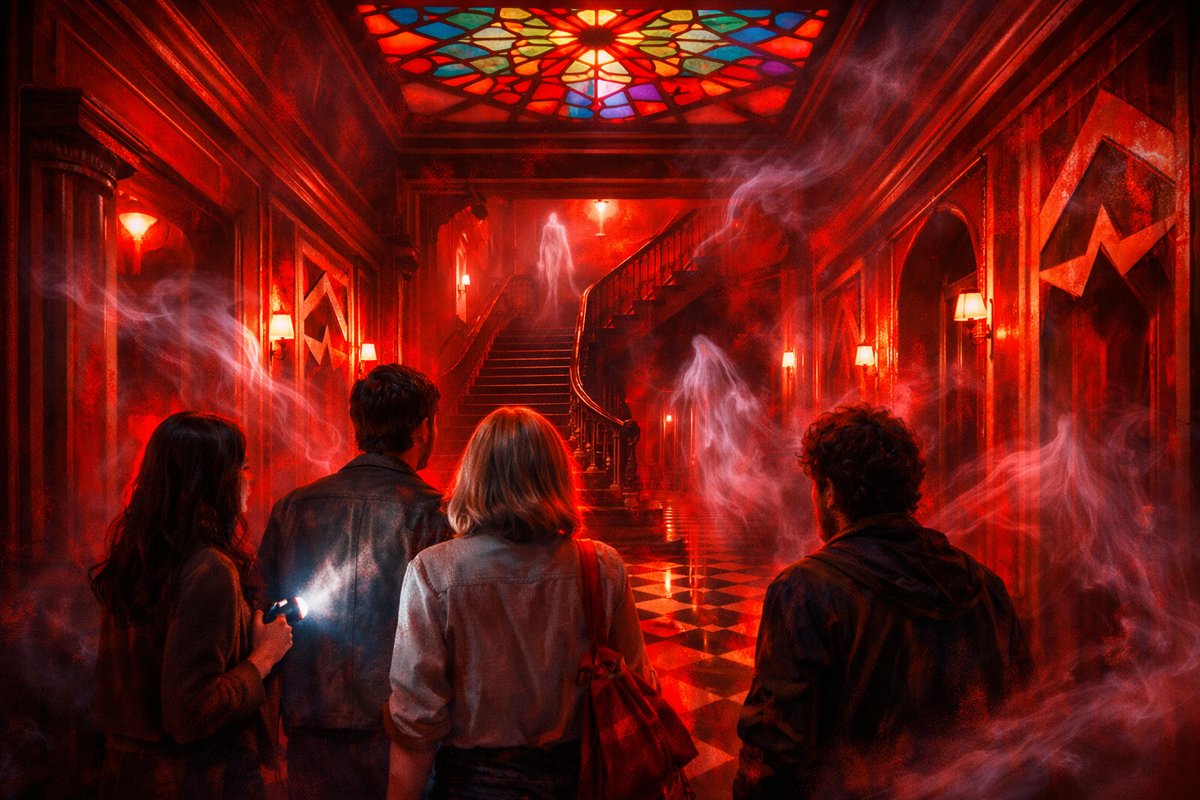
Sink into a kaleidoscope of crimson corridors and ghostly whispers as you guide your friends through the haunting beauty of Suspiria. This 1977 supernatural horror masterpiece pairs surreal visuals with a pulse-pounding soundtrack, making it an unforgettable group-watch experience.
You dim the lights and cue Goblin’s throbbing score, each note unfurling like a tendril through the chilly air. A haze of red and teal floods the room, and suddenly you’re in Freiburg’s mist-shrouded ballet academy, where every shadow seems to breathe and every footstep echoes with magic and menace. This is Suspiria’s world: a lavish dreamscape laced with dread, ready to envelop you and your friends in its vivid nightmare.
Synopsis (No Spoilers)
Suspiria follows a young American dancer arriving at a prestigious German ballet school, only to discover that the graceful walls hide sinister rituals and ancient witchcraft. Under director Dario Argento’s guidance, the film unfolds like a twisted fairy tale, where every pirouette and pointe is shot through with supernatural tension. Bright primary colors collide with deep shadows, creating a hallucinatory visual poem that demands to be seen on the biggest screen you can muster.
Why This Movie Is Perfect for a Movie Night
Gather your crew and prepare for a shared adrenaline rush. The electric synth-rock soundtrack by Goblin will have heads nodding in unison and palms brushing popcorn buckets in anticipation. Suspended between artistry and horror, the film invites collective reactions: gasps at candlelit rituals, surprised laughter at quirky dialogue, and goosebumps during the spectral ballet sequences. Its stylized violence is more about atmosphere than gore, so it’s intense without veering into unbearable territory. Every scene practically begs for commentary-quote the famous “blood waterfall,” marvel at the spiraling staircase, challenge each other to spot hidden symbols-and you’ll find yourself speaking in Argento’s dramatic cadence long after the credits roll.
Optional Extras
Snack Pairings
Play with a black-and-orange palette to match Suspiria’s striking color schemes. Charcoal popcorn tossed in cheese dust and paprika offers a smoky kick, while gummy eyeballs and orange citrus tarts bring a playful, eerie sweetness. For something boozy, whip up a blood-red punch with cranberry juice, sparkling water, and a splash of pomegranate syrup-serve it in mason jars with black paper straws.
What to Look For
Argento was a master of color theory and camera movement. Notice how reds bleed into flesh tones, how sharp angles heighten paranoia, and how the score syncs with every tracking shot. Study the choreography of horror: the way bodies twist under strobe lights, how mirrors fracture reality, and how sound design transforms a cough or a whispered incantation into pure dread.
Fun Facts
1. The iconic blood waterfall scene was achieved with nearly 50 gallons of fake blood pumped through tubes hidden above the set. No CGI here-just practical effects and gut-churning realism.
2. Argento originally cast several non-actors from his Italian crew to play the witches, giving the film an uncanny, cult-ritual authenticity.
3. Goblin recorded the score in a Roman villa, using unconventional instruments like electrified violin and ring modulators to craft a sound that’s at once eerie and danceable.
4. Suspiria’s color palette was so striking that it inspired fashion lines, album covers, and even video game designers decades later. Keep an eye on how costume choices shift from pastel innocence to blood-soaked menace.
Now that the atmosphere is set, the stage is yours. Fire up your projector or crank the surround sound, gather your bravest friends, and get ready to navigate the spectral labyrinth of Suspiria. Let it roll…