Location
Mount Vernon, WA 98274

Location
Mount Vernon, WA 98274
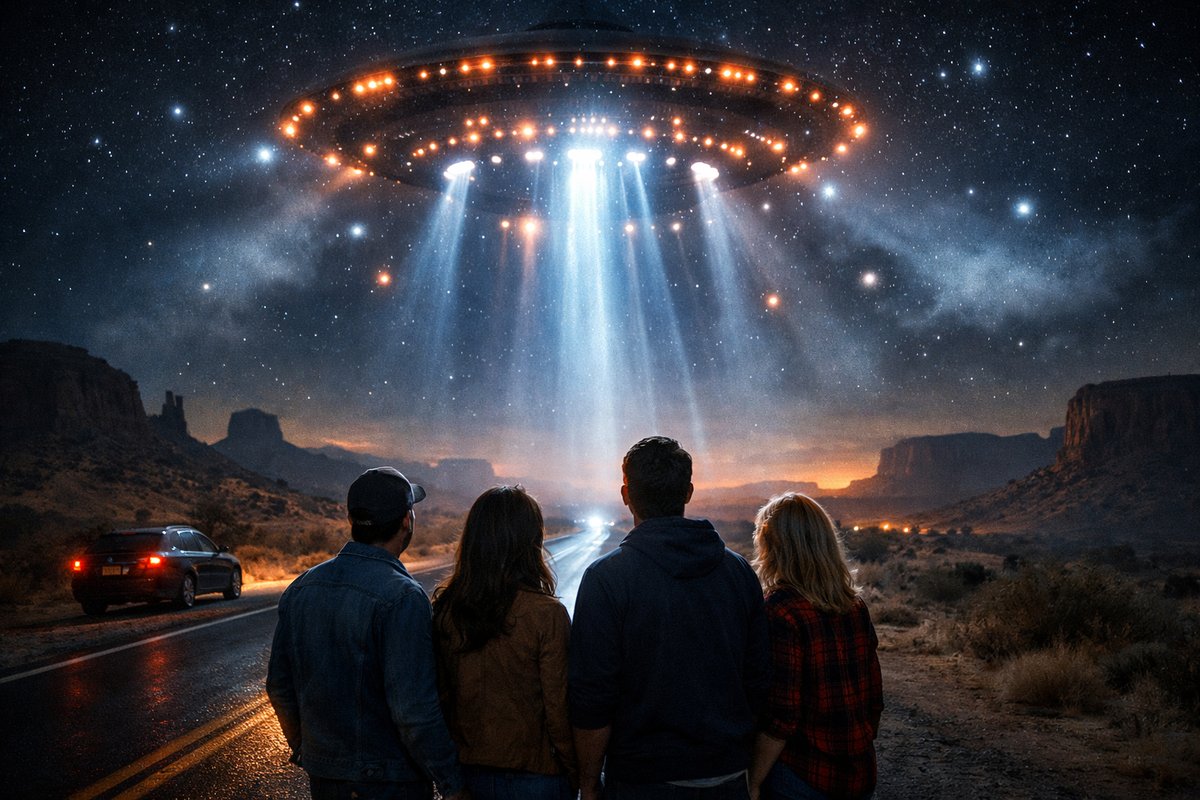
Step into a desert highway lit by inexplicable lights, where curiosity hums in every beam and orchestral whispers beckon you skyward. Gather your friends, dim the lights, and prepare for a journey through Spielberg's mesmerizing vision that transforms ordinary into otherworldly.
Opening Vibe-Setter: Close your eyes and picture a silent stretch of desert highway under a sky splashed with plateaus of stars. A lone trucker’s radio crackles with static before a mysterious transmission pulses through the speakers-an otherworldly whisper that sets your imagination alight. The air hums with anticipation, neon-tinged horizons beckon you toward towering monoliths, and every distant hum hints at a hidden intelligence. In this moment, you’re not just an audience member-you’re part of something vast, united in wonder. A gentle swell of orchestral tones ascends, each note like an invitation to dream beyond gravity’s pull. The future feels within reach, pulsing just beyond the curtain of the known. This is the world Steven Spielberg painted in Close Encounters of the Third Kind: a place where curiosity bridges the cosmic gulf, and every frame pulses with possibility.
Synopsis (No Spoilers): Close Encounters of the Third Kind offers an odyssey that’s part psychological drama, part cosmic wonder. At its core is Roy Neary, an everyday man whose life resets after a jaw-dropping brush with the unknown. We never dissect his every motive; instead, we ride the waves of his fascination alongside a colorful cast of dreamers and skeptics. The tone shifts from eerie midnight encounters to luminous candy-colored set pieces, as each beam of light and whisper of static draws you deeper. The pacing feels almost hypnotic-slow builds cascading into symphonies of light and sound. The film speaks in moods: the hush of a field beneath a thousand shimmering lights, the pulse of John Williams’s score guiding us toward a dance of discovery. You sense Spielberg’s reverence for mystery in every camera move, every shadowed silhouette, and each subtle human beat. It’s a journey that doesn’t just show you the stars-it makes you feel their gravity.
Why This Movie Is Perfect for a Movie Night:
Watching Close Encounters with friends turns a solo experience into a communal voyage through the unknown. The film’s mix of quiet tension and electrifying wonder invites you to lean in together as static on the screen evolves into pulsating lights. You’ll gasp in unison at each UFO apparition, trade theories at every cryptic clue, and maybe even start humming that five-note motif just to see if someone else joins in. That shared curiosity creates an atmosphere where laughter can bubble up-in reaction to a bemused cop peering through a telescope-or fall into hushed awe as the mothership’s silhouette expands above the horizon. It’s the kind of ride that bonds you through surprise, speculation, and a touch of goosebumps.
Spielberg’s direction and cinematographer Vilmos Zsigmond’s lens work shape each frame into a tapestry of color and shadow. From the grainy glow of radar screens to the hum of bright beams carving letters into the night sky, the visuals are a feast for retro-inspired eyeballs. You’ll find yourselves pausing the film just to admire the dusty textures of model ships, the subtle interplay of practical effects, and the enchanting glow that bathes the T-shaped runway. Those sleepy desert towns, crumpled maps, and forested clearings play out like memory fragments you can walk into-perfect for that group selfie in front of a homemade UFO backdrop.
Then there’s the score. John Williams choreographs sound and silence in equal measure, weaving a sonic landscape that’s practically a character of its own. Friends can bond over the unmistakable five-note jingle, attempt to whistle it, and debate whether it’s greeting or warning. At climactic moments, you’ll feel the bass tremble through your couch, your snacks rattling in their bowls. It’s a chance to crank up your home audio, test out those new speakers, and confirm that yes, the neighbor’s dog really does howl when an alien ship lands.
Dialogue in Close Encounters is sparse but potent. A line as simple as “We’re not alone” lands with the weight of a grand reveal. You’ll hear giggles at the radio operator’s technical jargon and maybe a whoop when Roy Neary finally trusts his instincts. That space between cinematic beats becomes a playground for banter, pop culture references, and half-serious predictions about who among you would get abducted first. These moments transform a movie night into a mini film festival, where every reaction is part of the show.
Lastly, there’s something truly nostalgic about dimming the lights, streaming a classic film, and switching off the day’s distractions. It’s not just a viewing-it’s a portal back to vinyl records spun in cramped living rooms, to the scratchy warmth of analog projectors, and to the thrill of discovering something that felt impossibly beyond reach. Sharing Close Encounters with friends revives that analog magic, reminding everyone why we fell in love with cinema in the first place: to dream together.
Optional Extras:
Let the hum of possibility ripple through your group as the credits fade. Hit play, lean back, and let Spielberg’s cosmic vision transport you and your friends into the unknown. Let it roll…