Location
Mount Vernon, WA 98274

Location
Mount Vernon, WA 98274
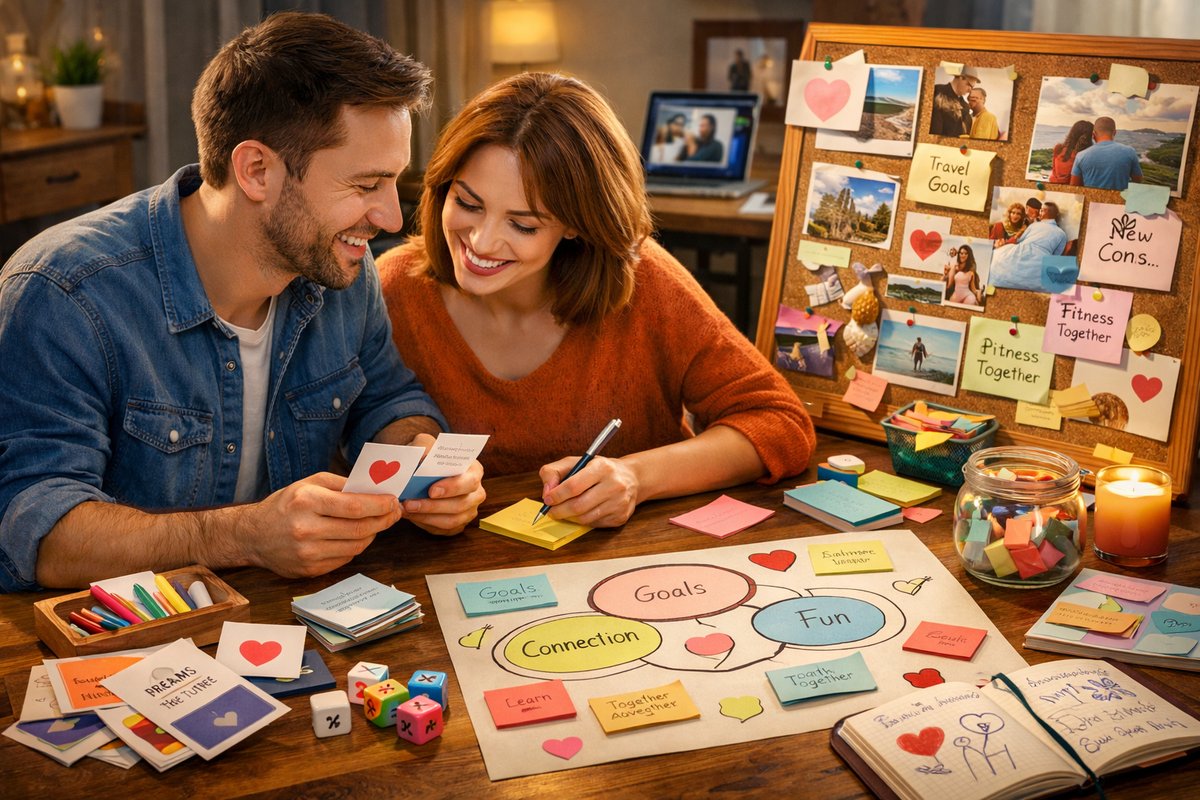
As routines blur and screen time surges, modern couples are transforming conversations into creative projects. From DIY conversation card decks to shared vision boards, partners are treating relationship communication as a co-design challenge that blends emotional intelligence, behavioral science, and a dash of playful experimentation.
In living rooms and cafés around the world, couples are treating communication as more than just talk. They’re framing it as a design challenge: a project to be prototyped, iterated and refined using tools borrowed from product development, art practice and urban planning. From homemade “emotion exchange” boxes to curated soundscapes, these practices aim to make intangible feelings tangible, forging new pathways toward clarity and care.
Last autumn, software engineer Lena and graphic designer Harish launched their first “Communication Sprint” weekend. They spent Saturday sketching a modular board labeled with conversation prompts, color-coded by theme-gratitude, ambition, tension, intimacy-and Sunday prototyping a physical deck using index cards, stickers and a ring binder. Each card contained a trigger (“Share a recent moment of pride”) and a follow-up exercise (“Write it down, then read aloud”). Rather than letting difficult topics surface sporadically, they scaffolded it into a repeatable process.
This trend echoes the rise of behavioral design in other realms-wealth apps use gamification to encourage saving, urban planners host “charettes” to solicit resident feedback, and classrooms experiment with peer-review games. Relationship enthusiasts now borrow these methods, testing them in their own homes. The goal: to build systems that accelerate understanding, reduce reactivity and keep connection active long after the initial novelty fades.
Across social platforms, you’ll find couples sharing polished photos of handcrafted conversation jars, emotion maps taped to walls, and shared digital calendars reserved for “micro-rituals.” One pair set up a biweekly silent reading date, each partner piling books, headphones and a hot beverage on opposite ends of the sofa. Another couple built a small communal altar on a shelf, arranging tokens-photographs, pressed flowers, handwritten notes-to frame a monthly reflection session.
These rituals serve multiple functions: they carve out dedicated time, they shift context (from screen to analog), and they bring an element of novelty. Routine alone can breed complacency, but novel experiences activate the brain’s reward centers, making partners more present to each other. Behavioral scientists call this the “signal-to-noise ratio”: meaningful interactions stand out against the white noise of daily life.
“We often assume that communication skills are inherent or learned in childhood,” says a relationship counselor specializing in communication patterns. “But we can rewire our interaction habits at any age by creating new scaffolds. The active element-making something together-reinforces collaboration and shared ownership.”
Research from a behavioral lab at a major university shows that couples who build tangible artifacts together-be it a scrapbook, a board game or a digital photo montage-report a 20 percent increase in perceived emotional support after four weeks. The act of co-creation taps into dopamine pathways linked to both novelty and mastery, enhancing both fun and mutual respect.
Similarly, neuroscientists note that storytelling-even micro-stories-boosts oxytocin release. When partners alternate narrating a significant moment while the other listens and records it in writing or audio, they reinforce empathy. Couples who practiced this for ten minutes a day over two months demonstrated measurable improvements in conflict-resolution skills during lab simulations.
Laura and Miguel had hit a communication slump. Late nights at the office and a recent move left them in a perpetual state of catch-up: rehearsing email drafts, juggling errands, missing each other’s emotional cues. Their counselor suggested building an “emotion map” across a large sheet of paper. Over three evenings, they plotted daily moods-happy, anxious, tired-using colored markers. Then they added annotations about triggers: a hectic commute, a surprise dinner out, a difficult call.
Seeing the ups and downs side by side sparked several discoveries. Laura realized that Miguel’s irritability after work consistently coincided with an unstructured evening routine. Miguel noticed that his energy peaked when they shared a morning coffee ritual. Armed with those insights, they agreed on two micro-adjustments: a ten-minute debrief at 6 p.m. and a shared sunrise playlist before logging on for the day. Six weeks later, they described their relationship as feeling “more synchronized” and “less reactive.”
Not every couple builds a full-blown workshop in their apartment. For many, simple toolkits suffice. Popular options include print-and-go conversation card PDFs, pocket journals designed for duet entries, and smartphone apps that prompt daily check-ins. Some handcraft “emotion stones”-smooth pebbles painted with icons representing mood states-for tactile, nonverbal sharing. Others rely on a shared digital vision board, adding images and notes as they navigate big decisions like relocating or career changes.
Whatever the format, key design principles remain constant:
Importantly, these practices aren’t about perfection. Couples report that when a session “fails”-a prompt falls flat or boredom sets in-it often sparks playful improvisation or meta-discussion about the method itself. That candid moment deepens trust by proving that vulnerability around process can be just as meaningful as vulnerability around content.
As relationship design gains traction, experts foresee a wave of hybrid offerings-workshops that blend couples therapy with design thinking, subscription boxes delivering quarterly ritual kits, and online communities where partners co-develop new prompts and activities. For now, the low-tech, homegrown approach resonates most: it leverages creativity, reduces pressure and emphasizes shared agency over prescribed solutions.
At its heart, this movement reframes communication not as a set of skills to be managed or optimized, but as an evolving co-creative process. When partners collaborate on their own relationship infrastructure, they cultivate curiosity, resilience and a sense of play. The result isn’t a perfect conversation but a space where curiosity and care continually renew connection.
The next time you and your partner find yourselves stuck in small talk or defensive loops, consider grabbing a stack of index cards, sketching a simple prompt, and seeing what happens. You might just discover that the most meaningful dialogue is the one you design together.