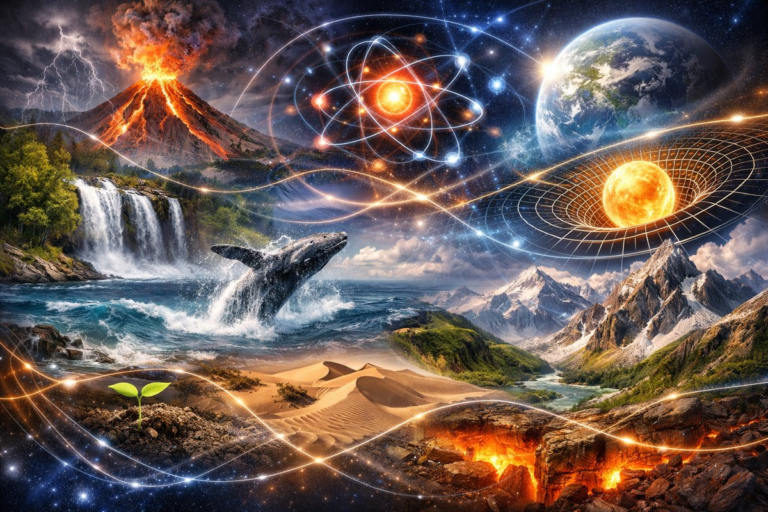
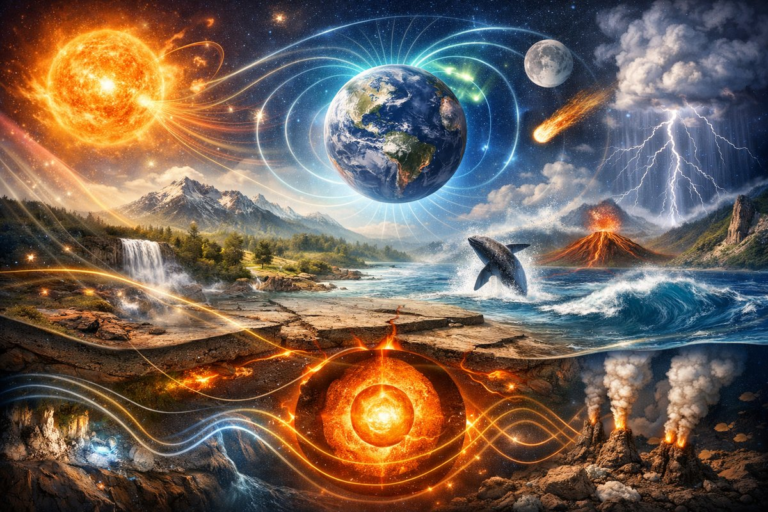
Location
Mount Vernon, WA 98274

Location
Mount Vernon, WA 98274
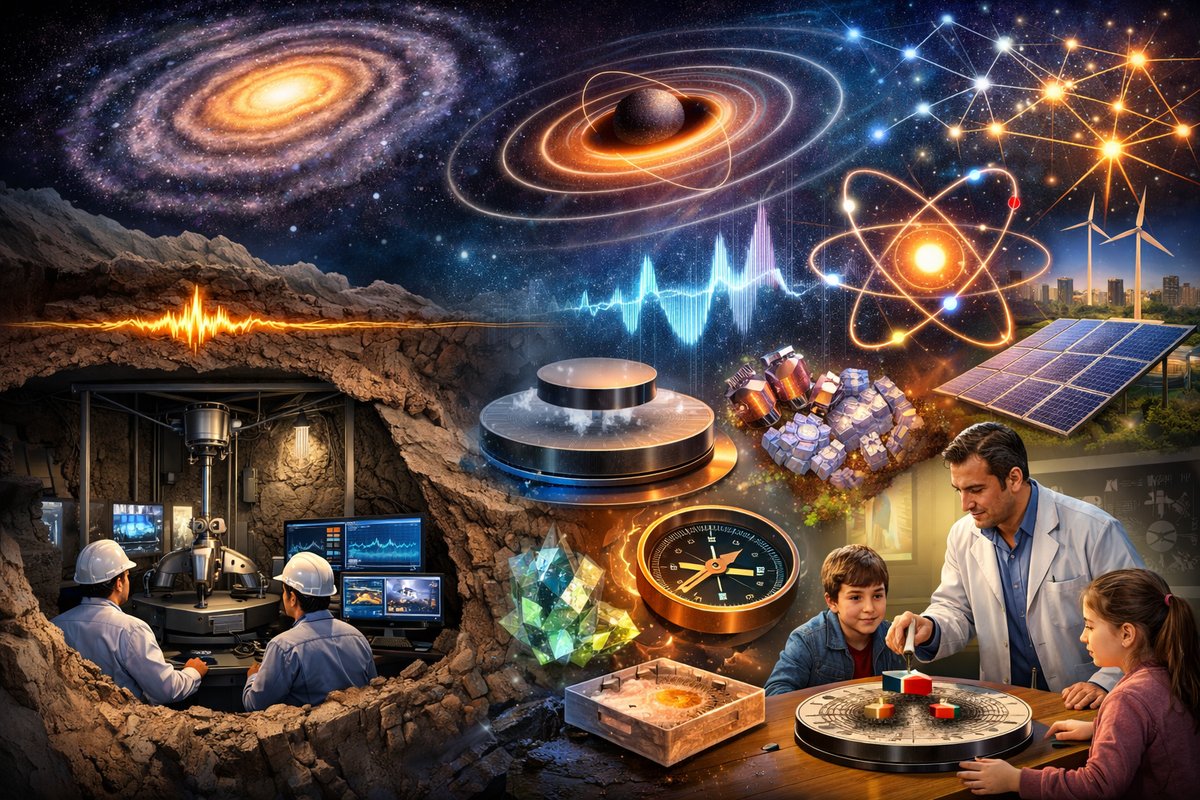
From subterranean observatories detecting minute tremors to tabletop demonstrations of magnetism in a classroom, researchers are decoding gravity, magnetism, emergent behavior, and quantum phenomena with unprecedented precision. This exploration reveals not only the architecture of the cosmos but also offers new tools for energy, navigation, and materials science.
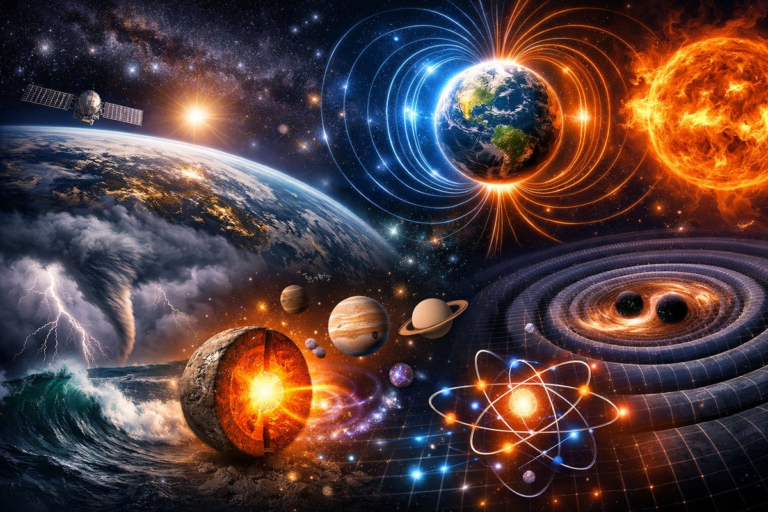
In laboratories carved into mountainsides, underground tunnels shielded from seismic noise, and university workshops bathed in neon glow, scientists are mapping forces that cannot be seen but shape every aspect of our world. Gravity tugs at our ankles, magnetism steers compasses, emergent systems guide flocks of birds, and quantum quirks redefine what we think of as reality. Recent advances in instrumentation, computation, and global collaboration are turning invisible patterns into charts, graphs, and predictive models-opening new frontiers in both pure research and practical applications.
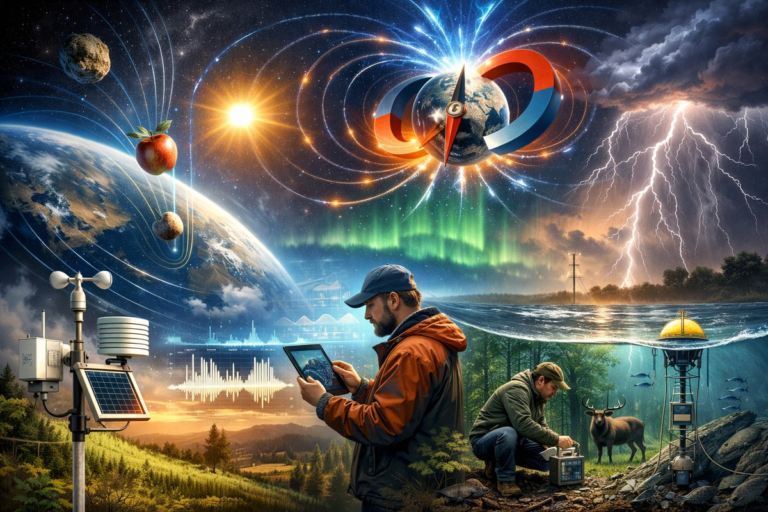
Gravity was once described by Newton as an apple falling to earth; today, it is tracked in space by satellites measuring minute variations in earth’s gravitational field. Gradiometer data from the latest Earth-observing missions have revealed subterranean structures, freshwater reserves, and even shifting tectonic plates in finer detail than ever before. Around the globe, networks of superconducting gravimeters detect sub-micrometer changes in gravitational acceleration, picking up signals from passing ocean tides, volcanic magma movements, and atmospheric pressure fluctuations. By decoding these patterns, seismologists can improve earthquake forecasts, hydrologists can monitor groundwater depletion, and climate scientists can refine models of polar ice mass loss.
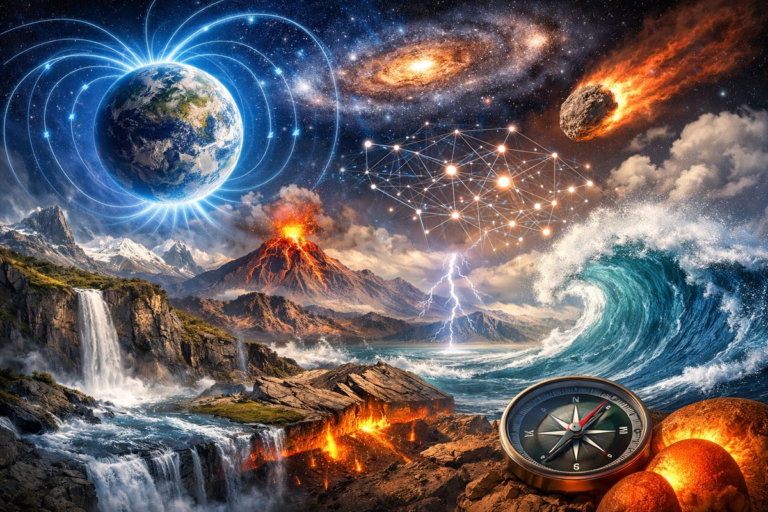
Magnetism, too, is being charted with fresh eyes. A constellation of magnetometer satellites has created a high-resolution map of Earth’s magnetosphere, revealing drifting magnetic north poles and pockets of anomalous intensity. Closer to home, university teams are deploying arrays of low-cost magnetoresistive sensors in urban settings to track electromagnetic noise from transit systems, power lines, and even electric vehicles. Meanwhile, lab experiments with ferrofluids and high-strength permanent magnets allow students and hobbyists to visualize field lines as dynamic shapes-spinning spirals, dancing “spikes,” and self-organizing patterns that illustrate how charged particles respond to invisible forces.
Myriad natural systems exhibit emergent behavior, where simple units following basic rules generate complex collective patterns. Flocks of starlings wheel across twilight skies, ant colonies build sprawling networks of tunnels, and traffic flow can shift from smooth cruising to stop-and-go congestion in an instant. Computer scientists and physicists use cellular automata, agent-based models, and neural networks to reproduce these phenomena in silico, revealing universal principles of self-organization. Recent papers have shown how emergent patterns can be harnessed to design metamaterials-engineered solids whose properties arise from repeating microstructures rather than chemical composition, opening possibilities in cloaking, vibration damping, and thermal regulation.
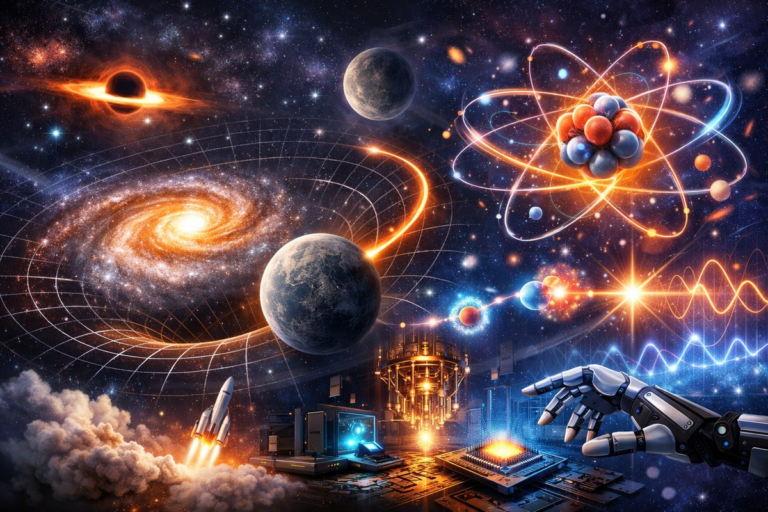
At the quantum scale, reality becomes even more counterintuitive. Experiments with entangled photons and ultracold atoms are testing the boundaries of quantum superposition, coherence, and information transfer. Tabletop quantum optics setups now fit on an optical bench, where beam splitters, wave plates, and single-photon detectors probe the nature of measurement itself. These efforts feed into nascent quantum computing platforms, where trapped ions or superconducting circuits process information in qubits that can hold multiple states at once. The same quantum effects that confound our everyday intuition are being leveraged for secure communications, ultraprecise clocks, and sensors capable of detecting minute changes in gravity or magnetic fields far beyond classical limits.
Although these realms-cosmic gravity waves, planetary magnetospheres, emergent collective behavior, and quantum mechanics-may seem disconnected, they share a common foundation: complex patterns often emerge from simple interactions. By understanding the rules governing individual components-masses attracting one another, magnetic dipoles aligning, agents following local cues, or quantum states interfering-researchers can predict, manipulate, and even harness large-scale phenomena. This synthesis of theory, simulation, and experiment is driving a renaissance in materials science, geophysics, and information technology alike.
Practical applications are emerging across diverse fields. Navigation systems now integrate inertial measurement units-accelerometers and gyroscopes-with magnetometers to deliver accurate positioning even underground or between tall buildings. Wearable sensors utilizing MEMS accelerometers detect tiny shifts in gait, offering new approaches to fall prevention and physical therapy. In manufacturing, smart materials that change shape under magnetic or thermal stimuli enable soft robotics and adaptive structures. Renewable energy technologies borrow from these insights as well: wave power converters exploit resonance to capture ocean energy, while induction generators use rotating magnetic fields to turn wind and hydro flows into electricity.
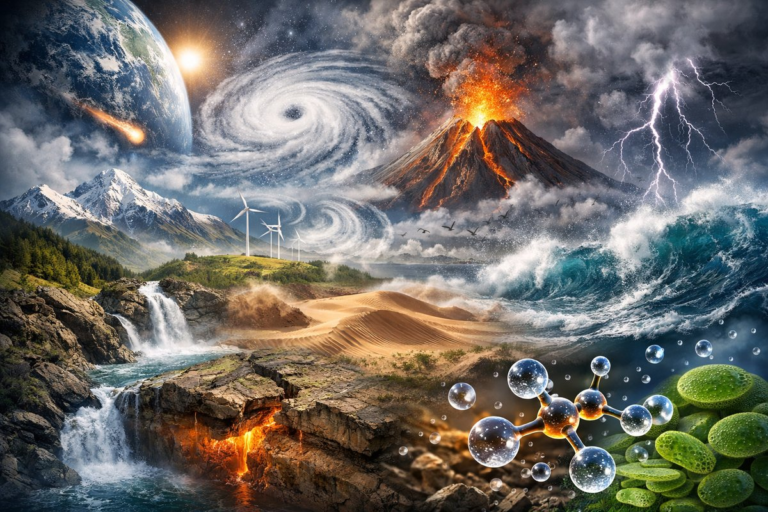
Interdisciplinary teams are also exploring opportunities in environmental monitoring. Low-cost sensor networks measure local magnetic anomalies that may precede volcanic eruptions or landslides. Distributed accelerometers embedded in smartphones are being enlisted in citizen-science projects to map seismic waves generated by earthquakes. Emergent software platforms fuse these streams of data in real time, alerting communities to potential hazards minutes before ground shaking or magnetic disturbances escalate.
Yet challenges remain. Modeling coupled systems from quantum to planetary scales demands massive computational power. Research centers rely on supercomputing clusters capable of petaflops of performance to simulate gravitational interactions in galaxy collisions or the formation of emergent traffic jams. Data assimilation methods must reconcile measurements from satellites, ground stations, and lab sensors-each operating at different scales and resolutions. Ensuring data privacy, sustainability of sensor networks, and equitable access to computing resources are concerns that echo across disciplines.
Investment in infrastructure is growing. New underground caverns shield gravitational wave detectors from seismic noise; high-altitude balloons and cubesats carry magnetometers above ionospheric interference; remote Arctic research stations deploy automated weather and magnetism observatories atop permafrost. On campus, outreach labs offer students affordable circuit boards, laser modules, and sensor kits to explore magnetism, resonance, and quantum optics firsthand-seeding the next generation of explorers.
As we map the invisible forces around us, science becomes a lens for wonder rather than just a tool for measurement. Gravity, magnetism, emergent behavior, and quantum phenomena are threads in a tapestry that spans scales from subatomic particles to cosmic filaments. By decoding these patterns, we deepen our understanding of the world and gain novel capabilities to protect the planet, power our societies, and fuel human curiosity. The next time a compass needle twitches, a pendulum swings, or a beam splits into interference fringes, remember that you’re witnessing the elegant interplay of forces that scientists are only beginning to fully chart-and the discoveries ahead promise to reshape both technology and our sense of place in the universe.