Location
Mount Vernon, WA 98274

Location
Mount Vernon, WA 98274
In living rooms and co-working spaces around the world, couples are turning to AI-powered storytelling workshops to explore emotions, rehearse conversations and spark empathy. These "narrative labs" blend human facilitation with machine learning to help partners co-author shared stories-illuminating hidden patterns in their communication and strengthening bonds in new, unexpected ways.
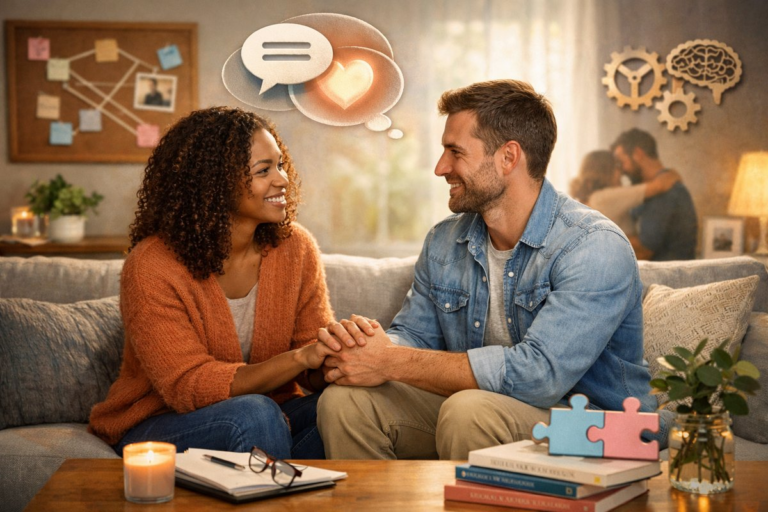
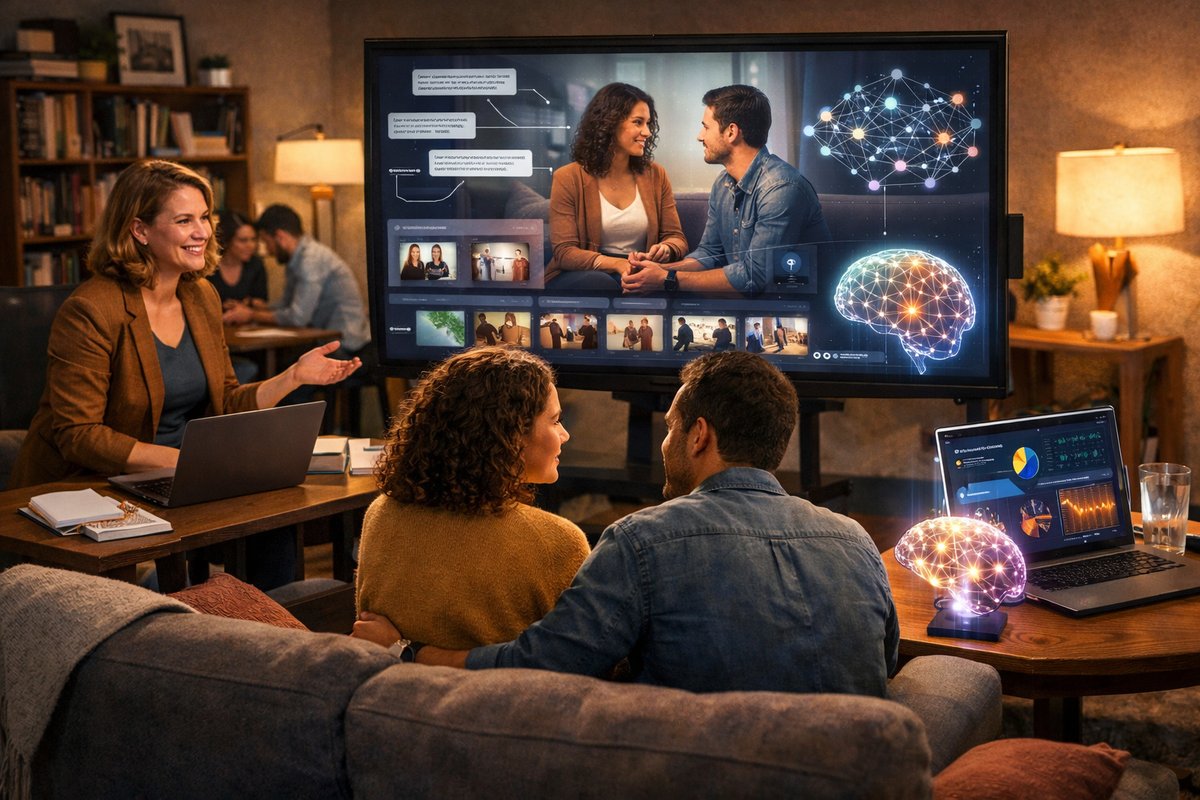
When Mia and Rafael stepped into the softly lit studio for their first AI Narrative Lab session, they expected little more than a guided journaling exercise. Instead, they found themselves immersed in a collaborative story-building platform. Side by side, they fed a simple prompt into an AI interface: “Describe the moment you felt most supported by your partner.” As the machine generated metaphors, sensory details and reflective questions, the couple responded in real time-tweaking characters, deepening emotional beats and even rewriting scenes to mirror their own journey. By the end of the hour, they had co-written a short narrative that distilled both tender memories and unspoken needs.
Over the past year, AI Narrative Labs have sprouted in urban centers, wellness retreats and even corporate campuses. Facilitators trained in couples therapy join software designers to create interactive workshops where machine learning algorithms and natural language models guide partners through storytelling exercises. These sessions are not about outsourcing emotional labor to computers; rather, they harness the generative power of AI to surface new metaphors, craft dialogue prompts and offer gentle reflections-turning private memories into shared narratives.
The core idea is deceptively simple: stories help humans make sense of experiences. By co-writing a tale that personifies feelings-maybe as wandering travelers or garden blossoms-couples can explore conflict scenarios and emotional turning points in a less confrontational frame. The AI, trained on thousands of fictional dialogues and therapeutic writing prompts, acts as a sparring partner. It suggests plot twists, inserts sensory details and asks probing questions like “How might this character express love without words?” or “What color best captures this moment of frustration?” These narrative cues often spark insights that neither partner had voiced before.
Beyond the warm glow of hundreds of incandescent bulbs in boutique labs, digital tools are showing up in everyday life. A handful of journaling apps now offer AI-driven prompts for partner reflection. Users can record voice memos, then let the software analyze tone and sentiment, generating follow-up questions. Meanwhile, dedicated VR experiences invite couples to navigate symbolic landscapes-walking across a bridge to symbolize trust, or rearranging blocks in a virtual room to represent roles and boundaries. Though each modality differs, the unifying goal is to leverage technology as a prompt for curiosity, empathy and clearer communication.
Psychologists note that reframing personal issues through storytelling can reduce defensiveness. When partners read a jointly authored narrative aloud, they often find themselves less reactive, more inquisitive. One study published in a peer-reviewed journal on couple therapy found that participants who engaged in three AI-supported narrative sessions reported a 20 percent increase in perceived empathy and a 15 percent drop in conflict frequency over six weeks. While the sample size was modest, the results suggest that the interplay of human facilitation and machine suggestions can unlock emotional breakthroughs.
Some couples use these tools to rehearse difficult conversations-money talks, family boundaries or unmet needs. Instead of diving directly into negotiation, they enter a “sandbox” world created by the algorithm. The AI proposes dialogue options, varying from gentle affirmations to more direct language. As partners select and refine these exchanges, they build confidence. By the time they tackle the real-world issue, they’ve already tested phrasing, tone and pacing. This approach reframes miscommunication as co-creative play.
Yet privacy advocates caution against the risks of entrusting intimate narratives to cloud-based services. Who owns the text generated in an AI lab? How long is voice data stored? Are partners at risk if their chat logs are subpoenaed? Reputable platforms now offer end-to-end encryption, on-device processing and clear data-deletion policies. Ethical designers emphasize transparency: couples should see exactly which prompts are algorithmically generated, and retain full control over deleting or exporting their stories.
Human facilitators remain crucial. AI can suggest metaphors, but only a trained coach can sense the emotional temperature in the room and intervene if discussions trigger trauma responses. Many labs combine conversational AI with licensed therapists or certified relationship coaches, striking a balance between automated creativity and human emotional intelligence. Facilitators also customize prompts to reflect each couple’s cultural background, making the experience feel personalized rather than generic.
Compared to recent trends-like weekend micro-retreats, multi-sensory workshops or indirect feedback tools-AI Narrative Labs offer a fresh angle by integrating generative models directly into the creative process. Instead of retreating for a ritual or sending subtle signals, partners build something together in the moment. The act of storytelling becomes both the ritual and the feedback mechanism, collapsing reflection and connection into a single, dynamic exercise.
Experts in digital sociology see this as part of a broader shift: relationships are no longer just face-to-face but augmented by ambient technology. Smart home devices that schedule date nights, chatbots that suggest conversation starters, and apps that nudge partners to share gratitude are all parallel developments. Narrative Labs represent the next stage-moving from nudges to immersive co-creation. As artificial intelligence becomes more adept at modeling human language, these workshops may grow more sophisticated, offering audio-visual narratives, adaptive world-building and even haptic feedback.
What lies ahead? Researchers are exploring how mixed-reality story spaces could let partners jointly sculpt digital sculptures that shift color or texture based on their shared emotional state. Others imagine AI-driven relational music: algorithms that compose ambient soundscapes in response to partners’ heart-rate variability or breathing patterns. And while these tools hold promise, experts stress the importance of grounding experiences in real-world understanding. Technology should catalyze curiosity and care, not replace the human work of listening and attunement.
For couples curious about trying a Narrative Lab, facilitators recommend two guiding principles: come with openness, not solutions, and be willing to explore surprises. The AI will reflect back fragments of buried hopes, frustrations or dreams-and some revelations may feel unsettling. Yet by crafting a story together, partners learn to witness each other’s inner worlds with fresh eyes.
If you’re looking to bring elements of this approach into your home, start with accessible tools: a digital journaling app that offers AI prompts, a voice recorder to capture reflections, or a VR headset loaded with collaborative storytelling experiences. Above all, remember that the technology is a prompt, not a prescription. The real work remains human: showing up, listening deeply and weaving a story that honors both voices.
As Mia and Rafael closed their session, they read aloud the final lines of their co-authored tale: two travelers naming each other’s strengths, forging a map toward shared growth. In that moment, they realized the story was more than a game-it was a mirror, refracting new angles of their bond. And thanks to an algorithm’s gentle nudges, they’d found words they hadn’t known they held.