Location
Mount Vernon, WA 98274

Location
Mount Vernon, WA 98274
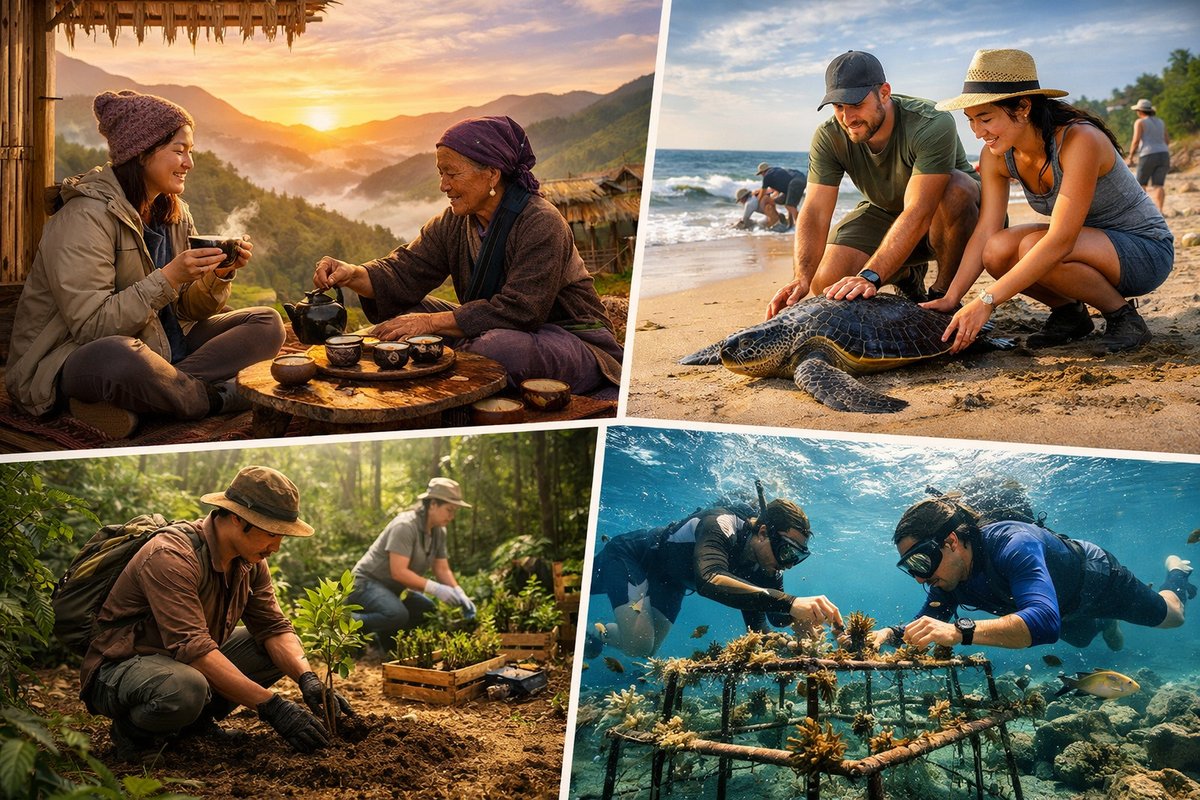
Adventurers today are seeking more than scenic snapshots. From sunrise tea ceremonies in mountain villages to hands-on wildlife restoration projects by the coast, travelers are choosing journeys that leave a positive mark on both themselves and the places they visit.
In the foothills of a remote mountain community, a small group of international travelers assembles at dawn. Their guides, local residents whose families have lived on these slopes for generations, lead them through terraced fields lush with heirloom crops. Instead of simply trekking past, visitors don rubber gloves and roll up their sleeves to harvest tea leaves alongside elderly farmers, learning ancient processing techniques in the process.
This scene, once rare, now repeats itself in destinations around the globe. A growing number of people are reshaping what it means to travel. They aren’t satisfied with flights and photo-ops; they want hands-on engagement with the cultures, ecosystems, and communities they visit. Whether it’s restoring coral reefs, hosting cultural workshops, or reviving local craftsmanship, purposeful travel is transforming ordinary getaways into meaningful exchanges.
Recent data from an international tourism council shows a significant uptick in inquiries for community-centered experiences. An annual survey found that more than 60 percent of travelers aged twenty-five to forty-five now prioritize itineraries that incorporate social impact or environmental stewardship alongside typical sightseeing. Tour operators are responding by forging partnerships with grassroots organizations in rural and coastal regions, creating programs that direct a portion of every booking back into preservation, education, and infrastructure efforts.
In Costa Rica’s northern highlands, for example, an eco-lodge has teamed up with a local reforestation initiative to plant native rainforest species across degraded farmland. Guests join early-morning planting sessions, then return to enjoy farm-to-table breakfasts made with freshly picked fruits and honey produced by on-site apiaries. By the end of their stay, travelers walk away not only with photographs but with seeds of saplings they helped nurture.
Meanwhile, along the shores of Southeast Asia, a marine conservation nonprofit invites visitors to dive or snorkel with biologists working on coral nurseries. Armed with underwater notebooks and buoyancy-controlled cameras, guests document growth rates of newly planted coral fragments. These records feed into a shared database that guides restoration efforts and measures project success over time.
“Travelers bring skills, energy, and curiosity,” explains a program coordinator who spent years in urban tourism management before shifting focus to eco-restoration. “When you give people an opportunity to contribute directly-whether it’s planting a tree, tagging a turtle, or learning an indigenous art form-they leave with a sense of ownership and deeper respect for the place.”
In parts of North Africa, cultural exchanges are redefining desert treks. Bedouin guides now host small groups in traditional camps, teaching participants to prepare flatbread in sand ovens, navigate by the stars, and weave wool rugs with local artisans. Campfire stories take on new dimensions as travelers learn verses of ancient poetry and listen to recordings of endangered dialects. A percentage of each tour fee supports language preservation programs in rural schools.
Technology plays a surprising role in these initiatives. Offline-first travel apps allow participants to log observations, upload photos, and annotate field notes, even where cell service is limited. Solar-charged power banks enable charging of cameras and GPS devices deep in the wilderness. Some programs supply portable water filters so visitors can assess and improve local water quality while minimizing plastic waste.
These journeys challenge certain assumptions about tourism’s footprint. Many community-based experiences emphasize small group sizes-often fewer than ten people-to limit environmental disturbance and maximize personal connection. Homestays replace large resorts, reinvesting tourism dollars into local households rather than corporate chains. Lodging structures, from bamboo huts to eco-friendly cabins, are built with locally sourced materials and employ traditional construction methods, often taught by master craftsmen who train younger generations in return.
Some travelers find these immersive trips life-altering. After joining a rewilding initiative in the Mediterranean, one participant quit a corporate job to start a nonprofit focused on sustainable viticulture, applying soil-regeneration practices observed in abandoned olive groves. Others return with stories of friendships forged over communal meals in mountain homes, or of lessons learned while mapping wildlife habitats in national parks.
Travel experts note that these purpose-driven journeys are not a passing fad but part of a broader shift toward conscious consumption. A global survey of travel professionals indicates that two-thirds of industry insiders believe this movement will define the next decade of tourism. As travelers seek authenticity and impact, operators are adapting by training staff in cultural sensitivity, obtaining green certifications, and auditing supply chains to ensure fair wages and ethical sourcing.
Not every program is flawless, of course. Critics warn of unintended consequences when well-meaning travelers disrupt local rhythms or when projects lack adequate oversight. Community leaders stress the importance of collaboration in every step-from planning itineraries to setting goals for revenue-sharing. The most successful models emphasize transparency: detailed budgets, regular progress reports, and clear channels for feedback from both hosts and guests.
In one village perched on volcanic slopes in Central America, a monthly town hall meeting includes community members and visiting travelers. Attendees discuss crop rotation strategies, tourism revenue allocation, and training needs for local guides. Visitors are invited to propose small grants for projects-such as building a rooftop greenhouse or restoring a historic granary-and they vote on priorities alongside residents.
Stories like these are encouraging an entirely new type of guidebook: interactive digital platforms that combine mapping tools, video interviews with local experts, and dynamic itineraries driven by traveler preferences. Features include climate-smart route suggestions, carbon offset calculators, and lists of vetted community partners. This approach empowers travelers to co-design their own adventures while minimizing negative impacts.
For anyone planning a weekend escape or an epic, roaming expedition, the message is clear. Travel no longer begins and ends with sightseeing. It’s about forging genuine connections with people and places, rolling up your sleeves, and leaving a positive trace behind. Whether you’re harvesting tea leaves in the mountains, cataloging coral growth on a reef, or joining a rooftop farm workshop in an urban neighborhood, purposeful journeys are guiding travelers toward deeper understanding-and perhaps a new path in life.
As the skies clear over a terraced field at sunrise, that small dawn assembly stands as proof that when travel transforms, it can transform us all.