Location
Mount Vernon, WA 98274

Location
Mount Vernon, WA 98274
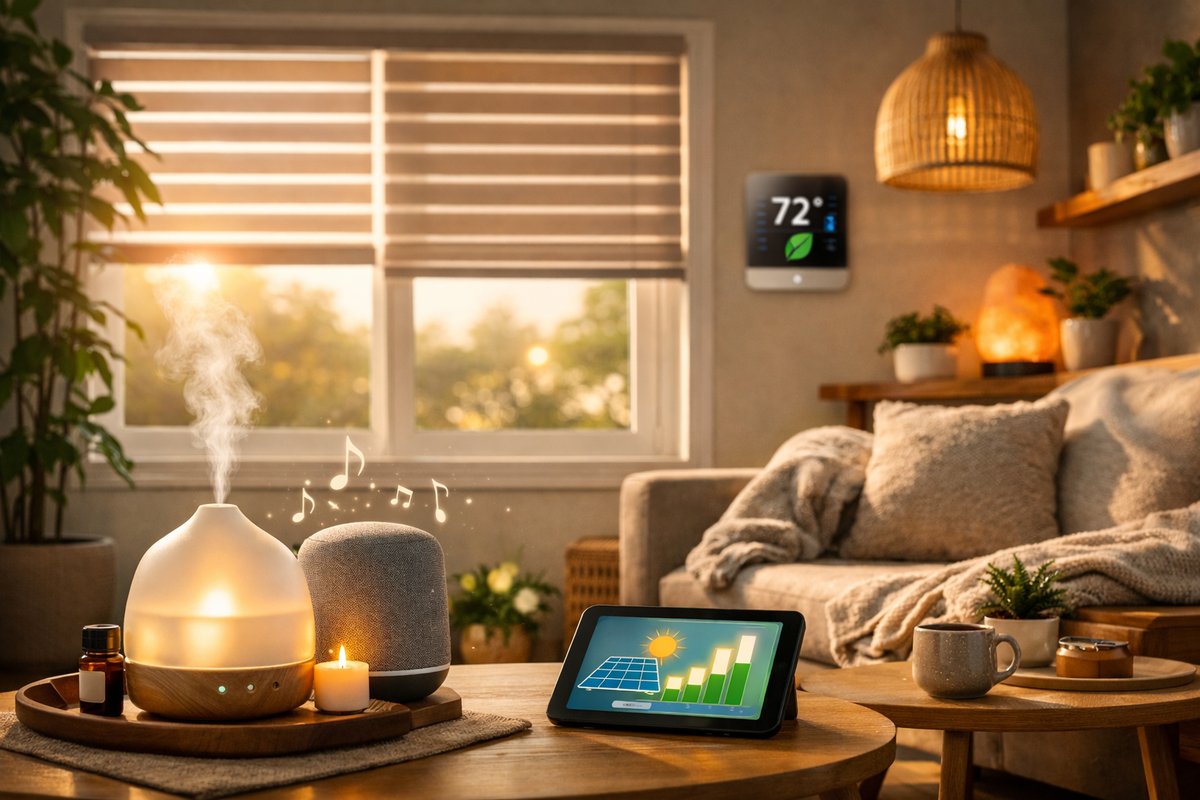
Homeowners are combining automation and tactile comforts to craft spaces that respond to needs, moods and sustainability goals. From motorized blinds tuned to circadian rhythms to aroma diffusers synchronized with smart speakers, the latest wave of intentional home upgrades balances efficiency with emotional well-being.
In living rooms, home offices and dens across the country, a new wave of products and design strategies is reshaping how we inhabit our spaces. Far beyond gimmicky gadgets, the latest smart-home offerings are prioritizing intention: ergonomic comfort, energy efficiency and sensory harmony. At design expos and in recent product announcements, companies are pitching innovations meant to deliver measurable savings alongside emotional uplift. Whether it’s a set of motorized window coverings that track daylight patterns or a modular shelving system made from recycled materials, the emphasis is on purposeful choices that align technology with human needs.
At a recent sustainable design fair in the Pacific Northwest, a startup unveiled a line of motorized smart blinds equipped with light sensors that calibrate shade levels throughout the day. The system adapts automatically to sunrise and sunset angles, reducing glare on screens during peak work hours and opening wider in early morning to support natural wake-up cues. A spokesperson for the company explained that preliminary tests show homeowners can cut cooling costs by up to 15 percent in summer months simply by dynamically managing solar heat gain.
What sets this wave of window treatments apart from earlier motorized models is the focus on user privacy and energy-use transparency. Instead of storing data in remote servers, the new blinds run algorithms locally on a small hub installed discreetly behind a nightstand. Users can review daily reports on energy savings through a companion app, but no personal schedules or location data are uploaded externally. For households wary of cloud-based tracking, this local-only design reflects growing demand for privacy-centric smart-home gear.
Experts say this emphasis on intention is part of a broader shift in interior design. “We’re seeing clients who want smart solutions, but they also want tangible proofs of impact-both on their comfort and their carbon footprint,” notes an interior designer at a sustainable architecture firm. “The golden thread is transparency. When people see how much energy they save or how a sensor-driven diffuser can improve concentration, it builds trust. They feel in control of their environment rather than passive recipients of preset schedules.”
A recent report by an international energy agency backs up the design industry’s optimism. Its findings suggest that integrating adaptive lighting, automated shading and smart thermostats can reduce residential energy use by up to 25 percent over conventional setups. While individual savings vary by climate zone, the combination of measures yields consistent reductions across urban and rural settings alike. In response, major lighting manufacturers are debuting tunable-white LED bulbs that adjust color temperature throughout the day to support circadian rhythms, all controllable via voice command or smartphone.
Complementing the focus on light and temperature, another trend centers on multisensory well-being. App-connected aroma diffusers and sound projects are integrating with home-assistant platforms to orchestrate timed scent releases and ambient playlists. One diffuser uses motion sensors to detect when someone enters a room, releasing subtle botanical notes that shift from citrus in the morning to lavender in the evening. Early adopters report a noticeable boost in mood and focus, especially in work-from-home setups where mental boundaries between “on” and “off” time blur easily.
Take the case of a remote-working graphic designer who recently installed a sensor-driven diffuser above her desk. “I used to light candles or use a plug-in oil warmer,” she explains, “but I’d often forget to turn them off or risk setting off my smoke alarm. With motion activation and app scheduling, the scent comes on only when I’m working. Then at 6 p.m. it switches to a calming lavender mode that cues me to wind down. It’s become part of my daily ritual without requiring manual control.”
Furniture and storage solutions are also catching up to the intentional mindset. Modular shelving systems made from reclaimed wood and recycled plastics are gaining traction among apartment dwellers who crave both eco-credentials and flexibility. These kits often include adjustable dividers and plug-and-play LED strips that attach without drilling. Designers say the ability to reconfigure layouts easily encourages users to adapt their space for different activities-hosting friends one week, crafting projects the next.
One sustainable design collective has introduced panels crafted from agricultural waste fibers bound with natural resins. The result is a lightweight, semi-rigid shelving unit that can be snapped together by hand, no tools required. When residents move or seek a new layout, the components can be packed flat and reused or even composted at end of life. This cradle-to-cradle philosophy echoes a growing demand for products that blend utility with minimal environmental impact.
Bringing green life indoors is another key element. Sensor-based plant monitors that measure soil moisture, light intensity and temperature help users keep houseplants healthy without guesswork. In addition to smartphone alerts, some monitors come with companion guides recommending ideal watering schedules for specific plant species. For apartment dwellers short on time, these digital helpers translate botanical care into clear data points, removing guesswork from tending leafy companions.
Sound management is likewise part of the conversation. Noise-absorbing acoustic panels featuring decorative prints and fabric coverings are being pitched as dual-purpose design accents. When strategically placed near windows or open-plan living areas, they dampen traffic and appliance noise while adding texture and color. Paired with smart speaker integration, they can even host embedded microphones for adaptive noise-control algorithms that temper sudden spikes in ambient volume.
Despite the excitement around these intelligent systems, designers caution against overloading a home with incompatible tech. “Intentional automation should feel seamless,” advises an eco-design consultant. “If you have seven different apps to control seven devices, the convenience evaporates. It’s better to choose products that speak the same language-a common protocol or centralized hub-so you’re building an ecosystem rather than a cluttered shelf of gadgets.”
Cost is another consideration. While some smart upgrades carry premium price tags, entry-level versions of key devices have become more affordable. Tunable-white bulbs, for instance, now start at prices comparable to high-end dimmable LEDs from just a few years ago. Plug-and-play blinds kits-once a luxury reserved for custom installers-can now be installed by enthusiastic DIYers with minimal tools. As competition heats up, prices are expected to trend downward, making intentional upgrades accessible to a wider audience.
Looking ahead, industry insiders predict that artificial intelligence will play a larger role in home personalization. Machine-learning algorithms could analyze usage patterns across seasons, adjusting climate controls and lighting schemes with minimal human input. Biometric feedback-from wearable devices or passive sensors-might fine-tune environments in real time, responding to stress indicators or sleep quality metrics. For now, though, the emphasis remains on putting choice and purpose back in the homeowner’s hands.
In a market flooded with options, the winners will likely be those products and systems that demonstrate clear, measurable benefits-whether in energy savings, comfort gains or emotional well-being. As the balance between automation and cozy tactile elements continues to evolve, one principle endures: a truly modern home is one crafted with intention, sustainability and human experience at its core.