Location
Mount Vernon, WA 98274

Location
Mount Vernon, WA 98274
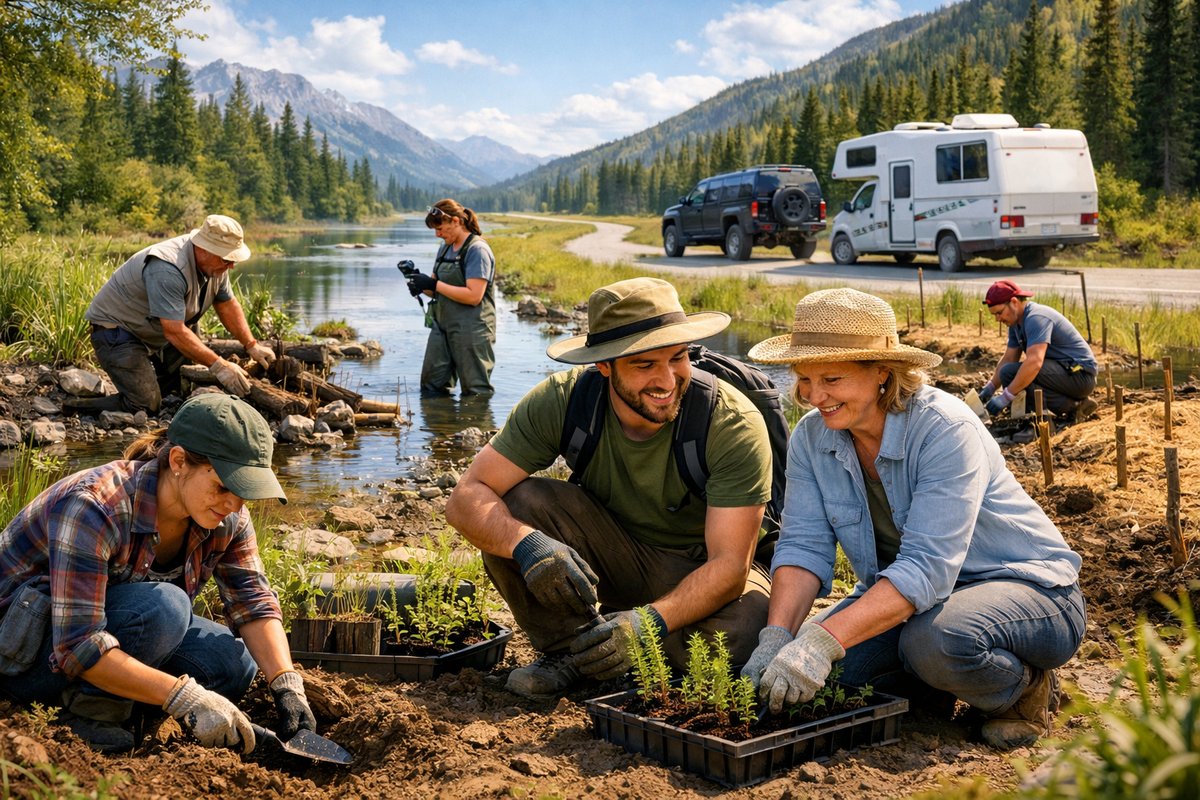
A new wave of travelers is transforming cross-country journeys into hands-on restoration efforts, planting tens of thousands of seedlings, rebuilding wetlands, and monitoring water quality along their routes. Blending adventure with action, these regenerative road trips are drawing students, retirees, and professionals eager to leave landscapes better than they found them.
In late spring, a convoy of more than a hundred travelers rolled out from the foothills of Appalachian North Carolina with shovels, seed packets, and saplings in tow. The group-made up of students, retirees, engineers, and artists-set off on what organizers are calling a regenerative road trip, aiming to weave restoration work into a classic cross-country adventure. Instead of ticking off landmarks, they paused to plant native trees, rebuild riverbanks, and monitor water quality at stops across six states. Their route defied the typical tourist roadmap, replacing famous vistas with restoration sites that had suffered last season’s wildfires, floods, or storms.
The itinerary began near Asheville, where volunteers helped reseed eroded slopes along hiking trails facing steep runoff from recent storms. From there they headed into Tennessee’s Cumberland Plateau to work on trail-crossing bridges that had been washed out in intense winter rain. Down in Mississippi’s delta, the travelers waded into wetlands, replanting native grasses that trap sediment and cleanse water before it flows into the Gulf of Mexico. By the time the convoy reached the Florida Keys, participants were knee-deep in brackish water, tying young mangroves to protective cages. Later they continued west, leaving saplings and stories as they seeded desert wildflowers outside Tucson.
Industry data confirms that this blend of service and discovery is on the rise. A recent report from the Volunteering in Conservation Council shows a nearly 30 percent increase in travelers booking eco-volunteer experiences over the past year. Meanwhile, consumer research indicates more than 65 percent of respondents now consider a trip’s community or environmental impact as a key factor in their destination choices. Social feeds have been flooded with drone footage of new growth, time-lapse shots of desert bloom, and before-and-after photos of creekside rewilding. Travel search queries like “volunteer vacations” and “reward-based road trips” have surged in parallel.
Among the convoy was a mechanical engineer from Detroit who found the repetitive hum of heavy machinery insufficient after decades on the factory floor. “There’s a rhythm in planting trees that’s grounding,” they said, kneeling in a cleared riverbank bed. Nearby, a retired schoolteacher from Phoenix laughed as she dunked her boots into a newly dug beaver pond, marveling at how a simple blockage could reshape water flow to benefit fish and amphibians. College friends from New York City shared campfire guitar riffs after an evening of counting and tagging seedlings. Each participant brought a set of skills, but they all shared the same driver: to travel with intention rather than passively consume sights.
The movement is powered in part by emerging platforms that match travelers with vetted conservation projects. Users can filter opportunities by habitat type-forest, wetland, desert-or by the skill level required, from data collection to heavy-lift planting shifts. Many platforms incorporate carbon calculators that estimate a traveler’s footprint and suggest offset options or low-impact transport routes. Digital badges and certificates track individual contributions, gamifying the effort without trivializing the stakes. As the technology matures, some apps are experimenting with decentralized registries that allow communities to post urgent restoration needs directly, bypassing traditional non-profit intermediaries.
Early results are quantifiable. In just two months this spring, the group planted over 52,000 tree seedlings, restored nearly 15 miles of creek bank, and seeded more than 200 acres of wetland habitat. Local conservation officials report that water samples downstream of rewilded sites show measurable declines in nitrates and sediment load. Bird surveys detect the return of species that had abandoned overgrown or choked waterways. In arid stretches of trail, desert wildflower coverage jumped by an average of 40 percent compared with control plots. While volunteers rarely anticipate instant results, the data underscores how distributed action can add up when travelers align their journeys around specific ecological goals.
Logistical hurdles remain. Securing permits for restoration work can involve multiple agencies, from state wildlife departments to federal land managers. Volunteers must undergo training to handle power equipment, identify invasive species, and navigate safety protocols in remote areas. Transportation costs can skyrocket when wearing gear for heavy-duty planting instead of packing light, and insurance requirements sometimes mandate specialized coverage. Organizers say that coordinating lodging-often in primitive campgrounds or shared bunkhouses-demands more lead time than a standard road trip. Still, most participants agree that the challenges pale compared with the satisfaction of contributing tangible benefits to the landscapes they visit.
Seasonal timing is another critical consideration. Spring and fall offer ideal windows for planting in temperate zones, while coastal restoration often depends on tidal cycles. Water-threatened regions may impose strict watering bans during droughts, so volunteers working on irrigation-dependent projects have to adapt quickly to local regulations. Packing gear calls for a balance: volunteers need durable gloves, sturdy boots, and weather-resistant clothing, but also space for camping essentials and personal kits. Practical items like waterproof field journals, water-purification tools, and solar chargers can turn a challenging project into a seamless adventure. Seasoned regenerative drivers advise newcomers to build flexibility into their routes to avoid canceled shifts or closed access roads.
This hands-on approach reflects the principles of regenerative tourism, which aim not only to minimize harm but to leave places better than they were found. The concept echoes international frameworks such as the UN’s Decade on Ecosystem Restoration and grassroots initiatives like community seed banks. By anchoring travel itineraries in actionable projects, participants say they gain a deeper appreciation for local ecosystems and cultural traditions tied to the land. Family-run farms, tribal conservation groups, and rural municipalities often host volunteers, providing authentic insight into regional challenges and solutions. The result is an exchange that transcends typical tourist-host dynamics, with travelers returning home enriched and communities gaining long-term support.
Travel companies are taking note. Boutique agencies now offer curated regenerative road-trip packages that include meals prepared from farm-to-table producers, locally guided restoration workshops, and lodging in eco-friendly tiny-homes or straw-bale retreats. Universities are incorporating similar programs into service-learning curricula, allowing students to earn credit while working side by side with restoration specialists. Corporate retreats have even begun to replace conference rooms with seedling nurseries, inviting teams to bond over collective action rather than PowerPoint slides. These models suggest a future in which transformative work and personal discovery become inseparable components of adventure.
For many participants, the impact extends far beyond the trip’s end. “I came looking for sunshine and open roads,” shared a software developer who planted mangrove propagules in the Keys. “What I found was connection-to nature, to others, and to a purpose that lingers long after I unplug my GPS.” Back home, they’ve organized local tree-planting meetups, sharing photos and stories to inspire friends who once saw travel as mere escapism. In community centers and online forums, trip reports double as how-to guides for anyone eager to transform their next getaway into a force for renewal.
As interest continues to swell, conservationists and travel experts urge prospective regenerative road trippers to start planning early. Identifying reputable organizations, understanding local regulations, and aligning timing with restoration seasons can turn good intentions into lasting impact. With more people seeking meaningful alternatives to traditional tourism, the regenerative road trip stands out as a blueprint for the future-one where every mile, shift, and sapling seedlings becomes part of a collective story of renewal. For readers ready to chart their own course, resources are available through national and international conservation platforms, community garden networks, and online volunteer marketplaces.