Location
Mount Vernon, WA 98274

Location
Mount Vernon, WA 98274
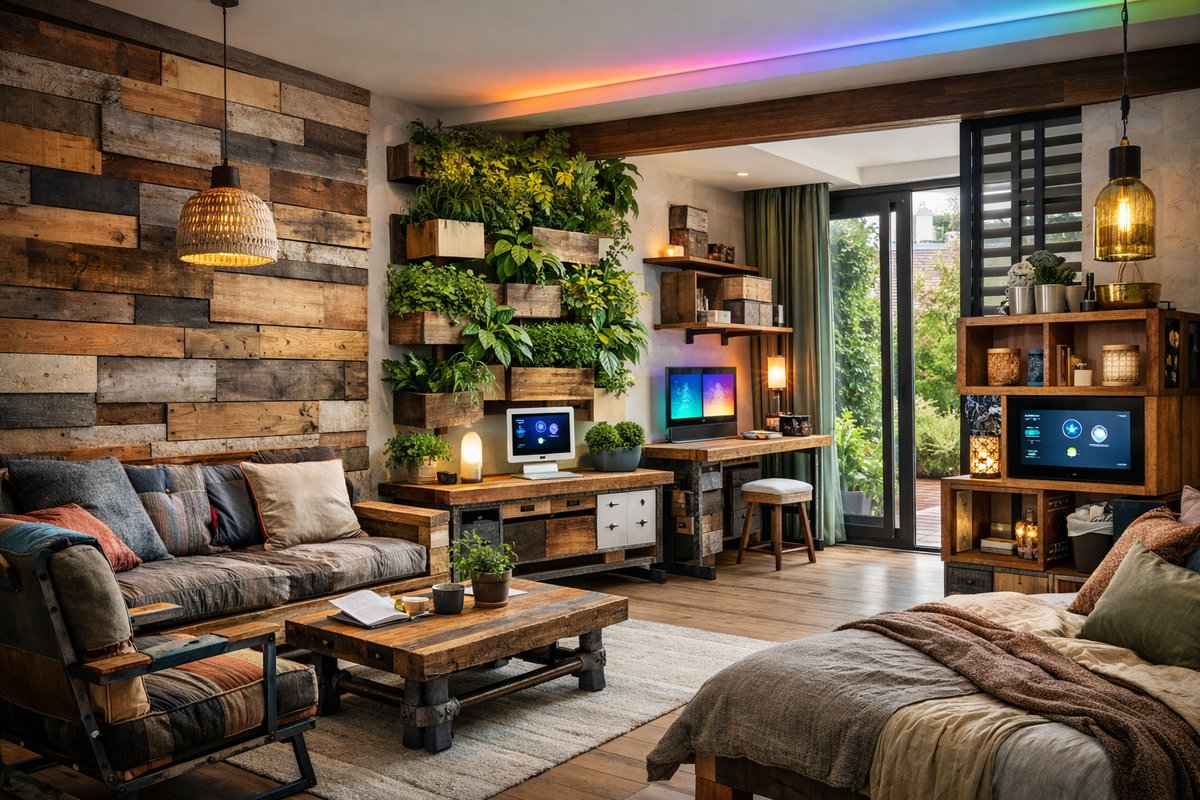
A surge in eco-conscious innovation is transforming living spaces with adaptive upcycling-blending reclaimed materials, sensor-driven comfort, and modular tech. Homeowners and designers are pioneering playful, sustainable interiors that respond to mood and function without sacrificing style.
In a landscape where environmental responsibility and smart technology increasingly intersect, a new wave of home design is gaining momentum: adaptive upcycling. This approach fuses reclaimed materials, modular electronics, and sensor-based comfort to create living environments that evolve with daily rhythms while reducing waste.
According to a recent survey by the Green Interiors Institute, more than 58 percent of homeowners now prioritize environmentally friendly upgrades alongside connectivity. That marks a 15 percent jump from just two years ago. What’s fueling this shift is a collective desire to breathe fresh life into existing elements-whether that’s repurposing barn-board planks into shelving or transforming vintage glass bottles into motion-activated pendant lights.
At a bustling design fair in Chicago last month, exhibitors showcased a range of adaptive upcycling concepts. One installation featured a lounge space lined with modular shelving units crafted from salvaged shipping pallets. Embedded within the shelves were wireless ambient speakers and motion-activated LED strips that softly illuminate when someone approaches. The setup claimed to reduce energy use by up to 40 percent compared with conventional fixtures, while offering infinitely reconfigurable storage and display options.
“We’re witnessing a perfect storm of sustainability and personalization,” said an interior engineer who has worked on several community-driven renovation projects. “People want their homes to tell a story, but they also want seamless comfort. By integrating smart sensors into reclaimed wood furniture or upcycled ceramics, you get a living space that’s as responsive as it is responsible.”
One standout example at the fair was a workspace outfitted entirely from rescued materials. Desks made from industrial scrap metal sat beneath adjustable solar-powered desk lamps. Along the perimeter, window panels treated with eco-friendly UV-blocking film kept interiors cool without drawing on the grid. A pair of noise-canceling headphones provided private focus zones, and a digital art frame displayed a rotating gallery of community-sourced images.
Beyond trade shows, grassroots workshops in urban neighborhoods are helping everyday residents learn how to breathe new life into old fixtures. Participants practice refinishing vintage picture frames with low-VOC paint, wiring up motion sensors to fire up soft-glow corner lights, and crafting planters from biodegradable composites. Many projects feature open-source tutorials and downloadable 3D-printing files for custom brackets or cable guides, ensuring that knowledge-and inspiration-circulate freely.
Design studios that specialize in upcycled interiors emphasize flexibility. In one flagship studio, clients choose from a rotating library of reclaimed tiles salvaged from decommissioned warehouses. Each tile carries its own patina and history, yet interior designers pair them with wireless thermostat modules that learn daily patterns and adjust heating or cooling accordingly. The result is a kitchen backsplash that retains its gritty charm while quietly ensuring energy-efficient climate control.
For those less inclined toward full-scale renovation, manufacturers now offer “upcycling kits” that retrofit existing furniture. A typical kit might include motion-activated LED tape strips, a compact wireless hub, humidity and temperature sensors, and decorative veneer plates made from recycled cork. Users can affix the veneer to tabletops, mount LED strips underneath shelves, and connect the hub to a smartphone app that customizes light schedules or climate thresholds.
The rise of adaptive upcycling also reflects a broader focus on wellbeing. A recent report from the Home Health Alliance found that homes integrating nature-inspired materials, combined with circadian-friendly lighting, saw a measurable uptick in occupants’ mood and sleep quality. In practice, this could mean swapping out mass-produced blinds for woven grass shades, then installing smart light strips that shift color temperature as daylight wanes.
Even city apartments are getting in on the trend. Vertical gardens built from reclaimed wooden crates now host trailing ivies, ferns, and microgreens. Integrated moisture sensors trigger a drip irrigation system only when needed, cutting water use by half compared to manual watering. Above, a cluster of modular speakers streams ambient soundscapes-like gentle rain or forest whispers-helping city dwellers wind down in a concrete jungle.
Eco-conscious hospitality venues are embracing adaptive upcycling too. Boutique hotels in several major cities now feature lobbies lined with benches crafted from salvaged demolition wood. On check-in, guests receive a small wearable device that syncs with in-room sensors, adjusting lighting, temperature, and even blind position based on individual preferences logged in real time. When a guest leaves, the room resets itself for the next occupant, conserving energy without sacrificing comfort.
Online marketplaces for pre-owned building materials are also booming. Homeowners can browse listings for reclaimed flooring planks, discarded industrial piping perfect for DIY shelving, or vintage doors ready for a fresh finish. Many sellers now offer curated bundles of hardware-screws, hinges, mounting plates-alongside weathered boards or metal panels. These bundles streamline projects and reduce the guesswork around compatibility.
As adaptive upcycling gains traction, some challenges remain. Salvaged materials often require extra prep-cleaning, sanding, sealing-before they’re truly ready for indoor use. Integrating electronics into porous or uneven surfaces can be tricky, and users must take care to follow safety standards when adding wiring or sensors. Nevertheless, the payoff in character and sustainability often outweighs the extra effort.
To meet demand, a growing number of designers and manufacturers are offering hybrid solutions. Imagine a reclaimed timber coffee table that arrives with pre-installed wireless charging modules, a built-in ambient light panel, and a patch of cork inlay for pinning photos. End-users simply plug in a concealed hub and download an app to control brightness levels, charging preferences, or color themes.
Looking ahead, experts predict that adaptive upcycling will continue to expand its footprint. Advances in biodegradable composite materials promise to bring new textures and forms to reclaimed interiors, while machine-learning algorithms will refine energy management based on ever more precise patterns of occupancy. Community makerspaces equipped with CNC routers and 3D printers will democratize access to bespoke fittings, ensuring that no two upcycled projects ever look quite the same.
Ultimately, adaptive upcycling points to a future where our living spaces are as dynamic as our lives-where heritage surfaces and cutting-edge sensors coexist, where functionality emerges organically from materials that might otherwise have been discarded. As momentum builds, this movement may well redefine what it means to celebrate both innovation and sustainability under one roof.