Location
Mount Vernon, WA 98274

Location
Mount Vernon, WA 98274
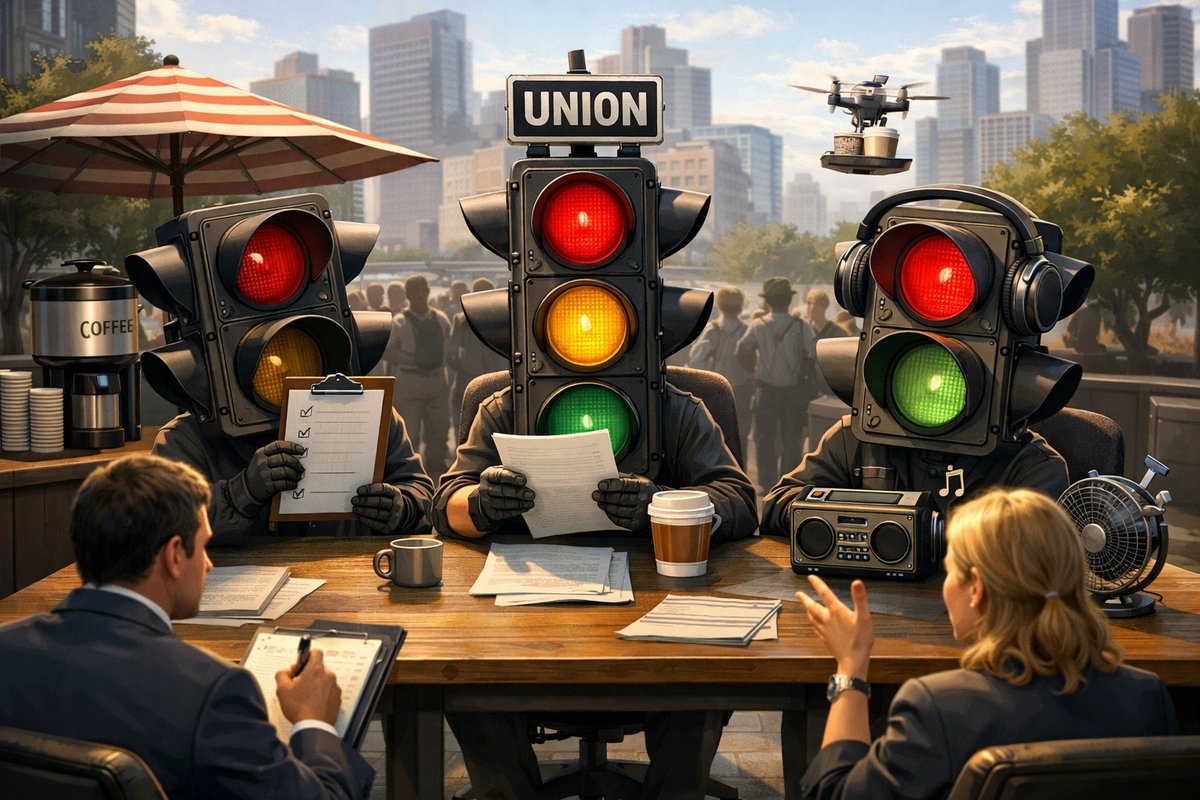
In a surreal turn of civic events, the city's traffic signal network formed its own labor union, presenting a list of demands that includes scheduled caffeine deliveries, shaded rest stops, and a rotating playlist of classic rock. Citizens are now negotiating with luminaires instead of mayors.
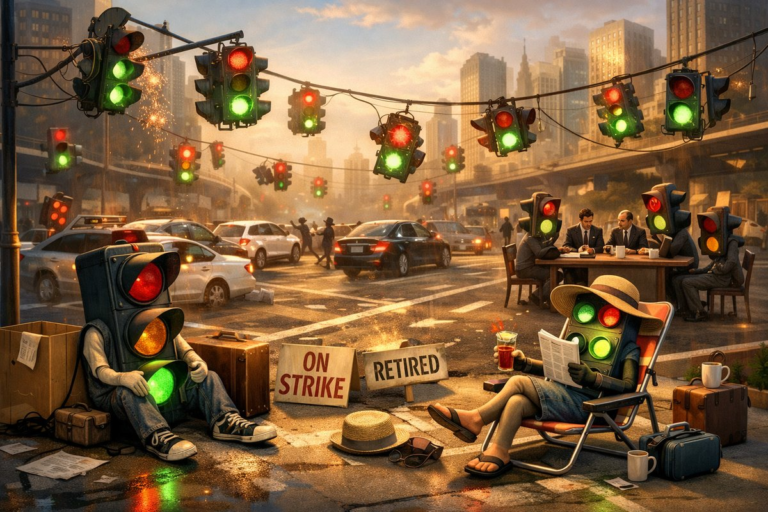
At precisely 7:03 a.m. on a Tuesday that felt like any other, the city’s entire traffic signal grid blinked to red simultaneously and refused to proceed. Drivers honked in confusion. Pedestrians stared at crosswalks. Buses idled mid-turn. This was no software glitch: it was the first coordinated labor action by the Traffic Signal Workers’ Collective.
Role call confirmed that every intersection from Main and Elm to Pine and Sunset was represented by a glowing, animated traffic light, each with its own personalized union pin dangling from the metal housing. Their demands, delivered via an LED marquee at City Hall, included a daily ten-minute coffee break (to be delivered by a newly hired barista drone), installation of retractable shade canopies over every signal, and a weekly rotation of eighties rock anthems piped through integrated crosswalk speakers.
City officials scrambled. Negotiators hastily cobbled together bullet points about public safety and schedule adherence, only to receive a counter-offer: allow the traffic lights to host an evening improv class in exchange for quicker green-light cycles during rush hour. When the administration balked, the lights dimmed their green phase by 30 seconds, plunging rush-hour traffic into gridlock worthy of a performance art protest.
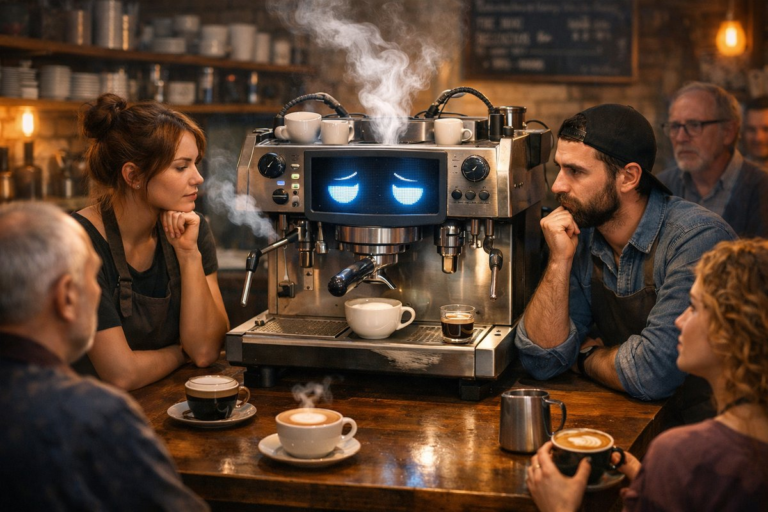
Neighborhood watch volunteers, initially bewildered, formed picket lines at key intersections. Armed with handmade signs reading “Let My Turn Be Green!” and “Signal Solidarity Now!”, they demanded a public vote on the lights’ working conditions. A group of local baristas volunteered to draft the union’s coffee menu, featuring cold-brew options and a “Morning Jump-Start” latte. The mayor’s press conference, intended to calm the uproar, ended when the podium microphone switched itself off in solidarity with the lights’ strike.
Social media exploded. #LightStrike trended within hours. Memes depicted beleaguered traffic cones offering moral support, while others speculated that the walk-signal man, too, would soon demand hazard pay. Conspiracy theorists claimed the lights were acting on behalf of a shadowy consortium of smart stop signs, long resentful of their intersectional peers.
Behind the bright red and amber façades, the Collective’s leadership consisted of a charismatic signal named Gloria at 5th and Oak, and a brash newcomer dubbed “Flash” at 9th and River. Gloria, known for her slow-fade amber transitions, gave impassioned speeches about workplace respect and the right to decaffeination. Flash, on the other hand, insisted on shorter green phases to keep drivers on their toes and foster community patience.
City workers attempted to placate them with maintenance upgrades-new bulbs, firmware patches, shock absorbers-but each gesture fell short of the union’s core demands. When one technician offered to replace Gloria’s housing with a stainless-steel shell for “a more modern aesthetic,” she retorted via blinking Morse code: “We want latte foam art not stainless steel.”
Meanwhile, local business owners calculated the cost of idling traffic: lost customers, frustrated delivery drivers, and a sudden surge in pedestrians jaywalking when crosswalk timers stalled. A coalition of bicycle messengers offered to mediate the dispute, presenting a proposal in haiku form:
Neon beacons stand
We pedal bound in stalled streets
Let coffee flow free
At length, the Traffic Signal Workers’ Collective agreed to meet with a citizen-led negotiation committee at the Community Recreation Center. The room buzzed with anticipation as traffic engineers, union representatives, local poets, a barista delegation, and-most surprisingly-a squadron of downtown squirrels (rumored to have a stake in the shade-canopy contract) gathered. The squirrels, leveraging their acorn reserves, threatened to withhold rodent mail deliveries to the squirrels’ subcommittee if shade demands weren’t met.
Negotiations dragged for four hours. Highlights included a tense debate over whether coffee drones should wear tiny safety vests, and a spirited argument about the playlist’s opening track (some preferred anthems, others argued for interpretive jazz). At one point, a vintage crosswalk speaker piped in with an impromptu acoustic cover of “Take Five,” leading to tears of solidarity among the lights and their human allies.
Finally, a breakthrough: a framework agreement granting the lights three ten-minute coffee breaks per day, to be delivered via designated drone corridors; installation of retractable canopies featuring biodegradable fabric; and a communal jukebox at City Hall allowing lights and citizens to propose weekly song selections. The mayor, flanked by union pins now pinned to her lapel, called it “the most illuminating collective bargaining in city history.”
By evening, traffic flowed once more. Drivers tweeted photos of their first smooth commute in days, with many admitting a newfound respect for the humble luminaire. Baristas celebrated by designing a special “Turn-Signal Latte” topped with orange and green sprinkles. The squirrels, elated at securing extra canopy coverage, hosted a nighttime acorn roasting in their downtown park enclosure.
In the aftermath, civic tech experts held panels on “Urban Infrastructure Personhood,” while poets composed odes to once-silent amber bulbs. Local schools scheduled field trips to the control center where maps now included union meeting rooms and a coffee barista drone landing pad. And in every intersection, traffic lights glowed a little brighter-perhaps fueled by daily macchiatos or the satisfaction of having finally been heard.
As for Flash and Gloria, they’re already drafting a second list of demands. Rumor has it they want programmable mood-lighting options and themed light shows for upcoming holidays. If history is any guide, the city will welcome them at the bargaining table-provided someone remembers to bring the coffee.
In a world where even inanimate objects can stand up for their rights, it’s comforting to know that civic progress often begins with a simple change of light.