Location
Mount Vernon, WA 98274

Location
Mount Vernon, WA 98274
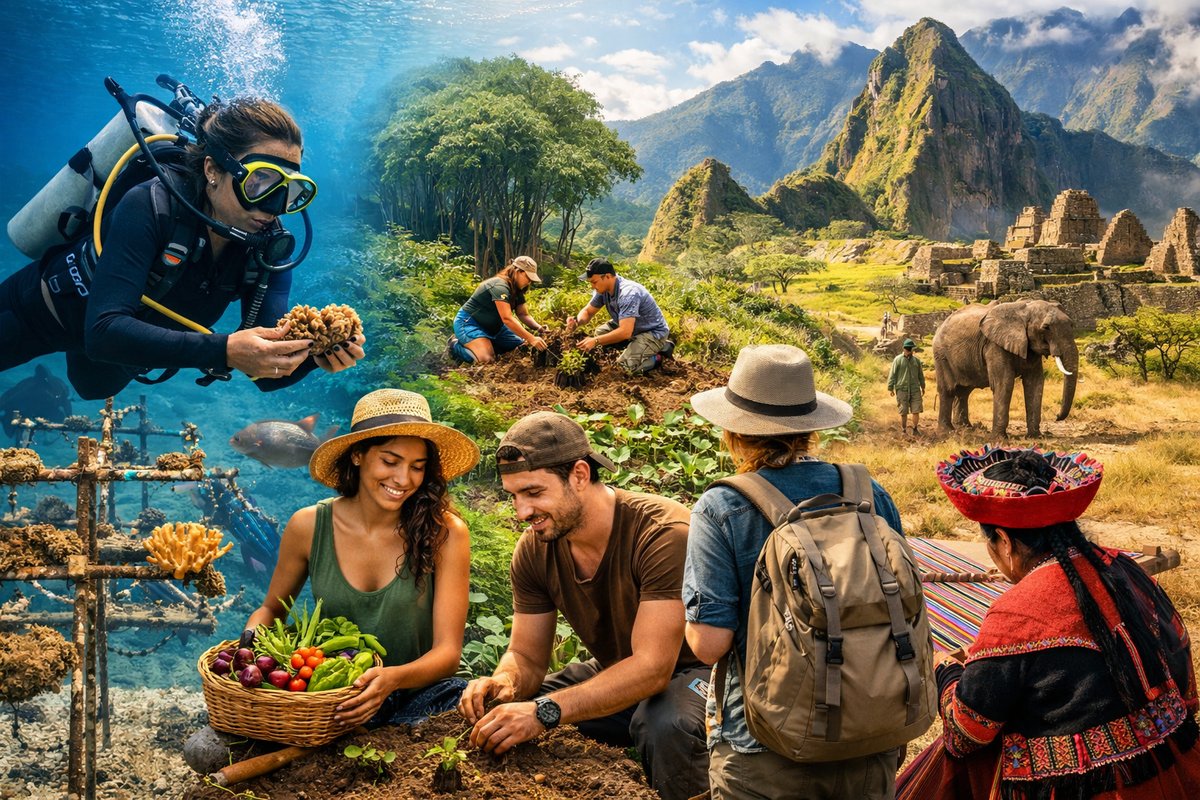
A new wave of explorers is redefining vacations by weaving community support, ecological stewardship, and cultural preservation into every itinerary. From marine conservation dives to agro-tourism cooperatives, travelers are seeking experiences that leave a positive footprint on people and places.
Travel has long been seen as a chance to escape routine, but a growing number of adventurers are turning their itineraries into missions of discovery and solidarity. Across continents, journeys now double as opportunities to plant trees, revive coral reefs, support female-led enterprises and preserve disappearing languages. Industry data suggests this shift isn’t a niche phenomenon but a developing norm for curious explorers.
According to a recent global survey of over 20,000 travelers, nearly 68 percent reported actively seeking community-centered or eco-friendly experiences when planning their next trip. International bodies echo the trend: UNESCO noted that cultural heritage tours supporting local artisans saw a 45 percent rise in participation over the past two years. From Southeast Asia’s rice-planting projects to the Caribbean’s shoreline cleanup expeditions, purposeful voyages are reshaping the face of tourism.
In Costa Rica’s highland coffee farms, smallholder cooperatives are opening their doors to visitors eager to learn sustainable agriculture. Guests harvest beans alongside local families, sample freshly roasted brews, and return home with an appreciation for the intricate process behind every cup. Farmers reinvest tour fees into reforestation efforts, enabling them to expand shade-grown coffee plantations that protect biodiversity and regulate watershed health.
One volunteer recalled spending dawn hours beneath mist-laden canopy, where the air smelled of rich earth and wild orchids. He described feeling intimately connected to the landscape – an urgency to safeguard it for future generations. These immersive moments, beyond snapshot-driven tourism, have cultivated a community of ambassadors who share stories, photographs and offline conservation efforts long after they return.
In parts of the Mediterranean, marine conservation initiatives now welcome travelers with scuba certifications. Participants join scientists and local divers to monitor fish populations, plant coral fragments onto damaged reefs, and catalog marine species. This hands-on research feeds into databases used by environmental agencies across the region, informing policies to protect endangered habitats.
Recent analyses estimate that active diver-based restoration has boosted local coral cover by nearly 30 percent in targeted sites over the last three seasons. These gains matter: reefs safeguard coastal communities, promote fisheries and attract recreational tourism that sustains seaside economies. By participating, visitors witness first-hand how a single transplant of coral can spark a recovery that ripples through an entire ecosystem.
Not all purpose-driven travel revolves around ecology. In the foothills of the Himalayas, cultural preservation tours support endangered dialects and traditional crafts. Travelers attend storytelling circles with village elders, learn handweaving techniques passed down through generations and contribute to community literacy funds. This blend of education and exchange strengthens local identity while empowering youth to keep ancestral practices alive.
A participant in one such program reflected on the generational bridges built during a week of language workshops, where children practiced old folk tales with visiting guests. The shared laughter over mispronounced words and the pride in seeing elders’ eyes shine with recognition became more valuable than any souvenir. These intangible connections continue to reverberate online and offline, enriching both hosts and visitors.
In East Africa, volunteer architecture teams collaborate with villagers to design and build low-carbon community centers using locally sourced earth bricks. Participants acquire traditional masonry skills, learn passive cooling design and help raise funds for materials and tools. Once completed, these centers serve as classrooms, meeting halls and medical outposts, reinforcing the very social fabric the projects aim to strengthen.
Alongside external benefits for host communities, purpose-driven travelers often report deep personal growth. Longer stays, shared meals and collaborative work demystify stereotypes and foster emotional intelligence. Many return home with a renewed sense of empathy, problem-solving skills applicable in professional settings and a network of global friends.
Yet this boom in “voluntourism” has drawn criticisms. Some projects have been accused of undercutting local labor or operating without adequate oversight. Experts warn against one-off visits that prioritize the visitor’s experience over genuine community needs. The key lies in vetting organizations that emphasize transparency, reinvestment strategies and long-term partnerships rather than quick photo opportunities.
Best practices suggest travelers look for local leadership, clear impact reports and culturally sensitive programming. Pre-trip briefings on customs, ethical engagement guidelines and exit plans ensure that communities aren’t left with half-finished infrastructure or unmet expectations. When travelers share power-co-designing projects and deferring to local knowledge-the benefits compound and trust endures.
Gear plays a surprisingly important role in these journeys. A durable backpack with modular compartments helps volunteers carry supplies and personal items across rugged terrain. Water purification tools keep everyone safe in remote regions while minimizing plastic waste. Portable solar chargers ensure devices can document progress in off-grid locations. Thoughtful gear reduces logistical barriers so travelers can focus on human connections and conservation outcomes.
Packing cubes and compression sacks streamline organization for those hopping between farms, reefs and mountain lodges. A weather-resistant travel journal encourages reflection and serves as a record of interviews, sketches and data entries. For light downtime, a portable hammock strung between trees offers a comfortable spot to read field reports or exchange stories with hosts.
As this wave of impact tourism grows, traditional tour operators are adapting, offering hybrid packages that blend guided expeditions with volunteer stints. Regional tourism boards now collaborate with environmental NGOs and cultural trusts to design itineraries balancing leisure and service. The goal is to create travel memories that matter, benefiting travelers and the communities they visit.
The evolution of travel from mere sightseeing to purposeful engagement represents a profound shift in values. Explorers today want more than postcards; they seek transformation, both for themselves and the world. When journeys are guided by empathy, sustainability and mutual respect, every step becomes an opportunity to forge lasting connections and nurture the planet.