Location
Mount Vernon, WA 98274

Location
Mount Vernon, WA 98274
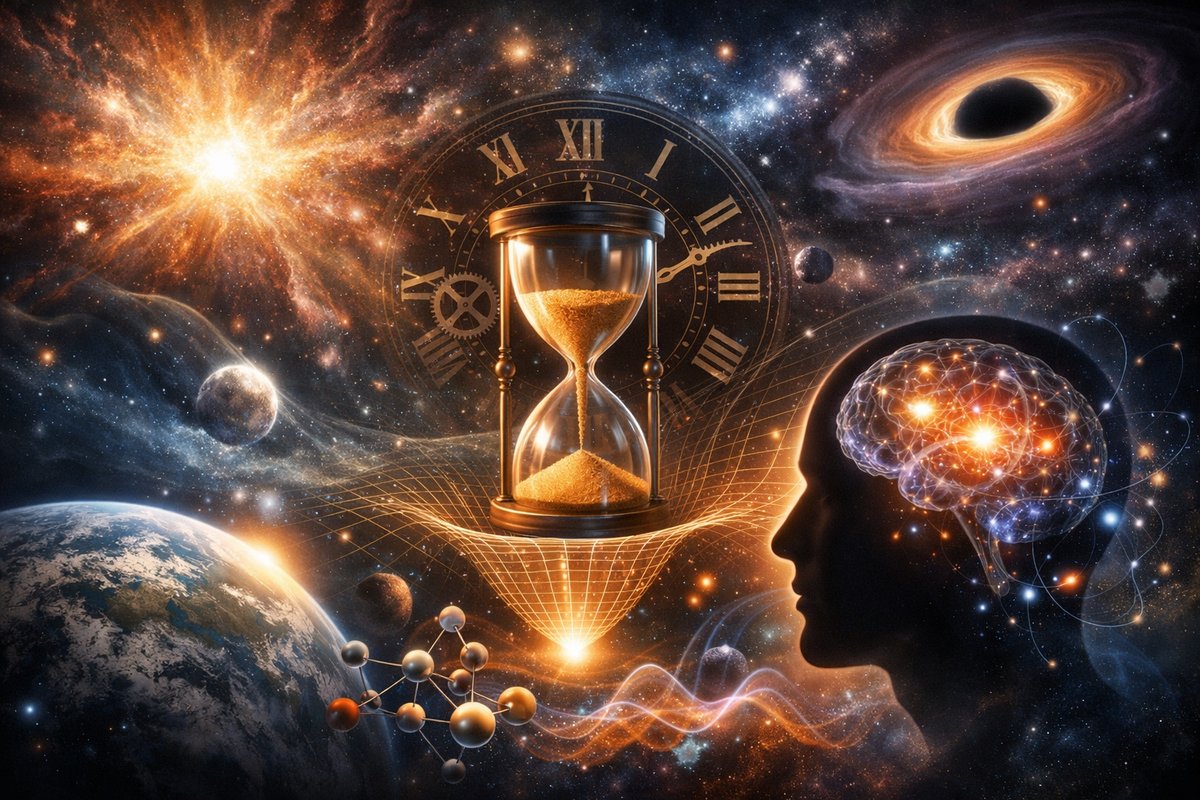
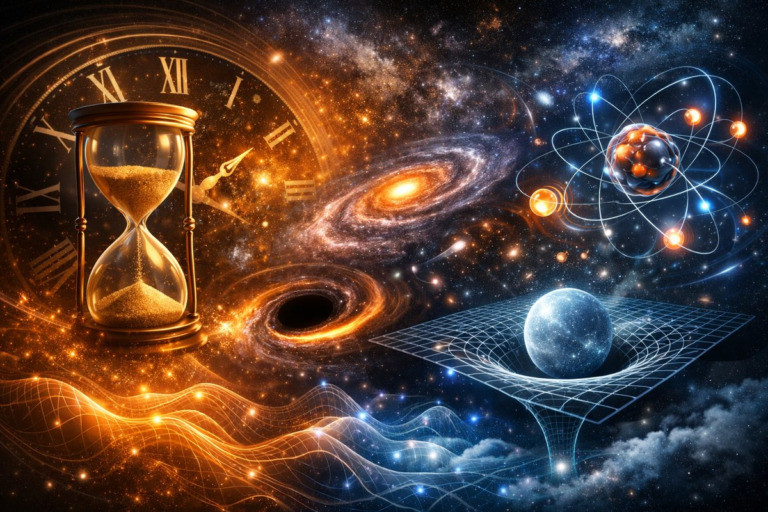
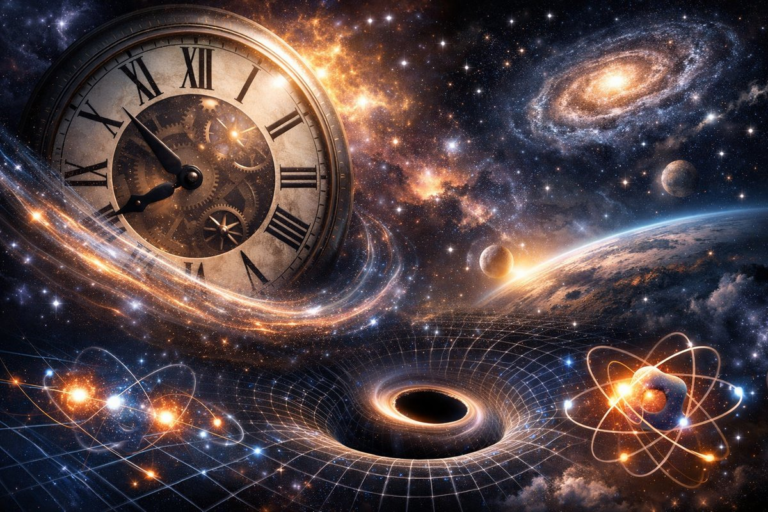
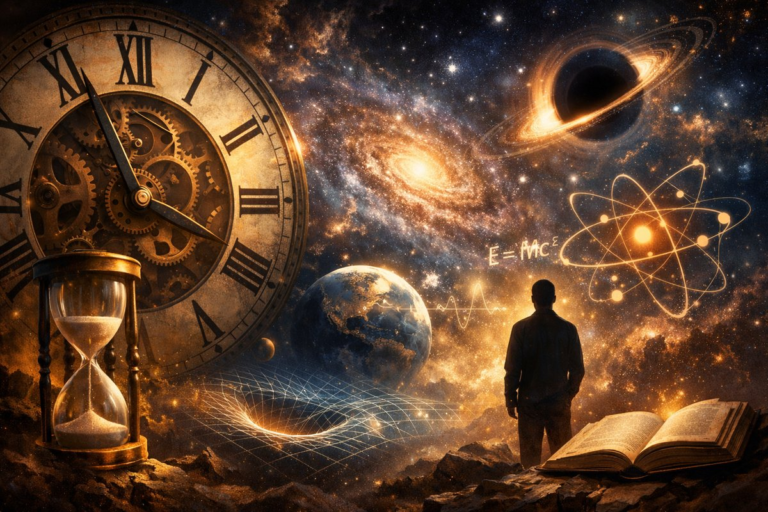
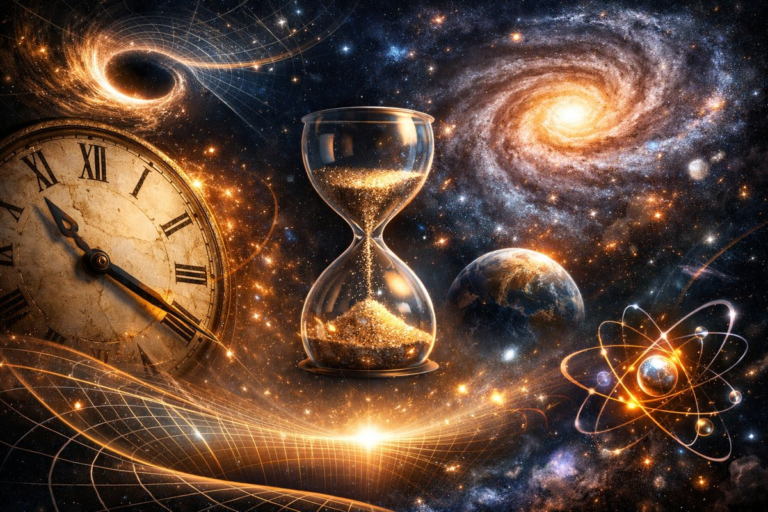
From the birth of the universe to the fleeting moments of human consciousness, the interplay of time and matter weaves a profound mystery that challenges our understanding of reality. Exploring the latest scientific insights and philosophical reflections, this article delves into how these fundamental elements shape both the cosmos and our experience within it.
Time and matter are the twin pillars upon which the universe is built, yet their true nature remains one of the most profound enigmas in science and philosophy. These elements, seemingly simple in concept, underpin everything from the formation of galaxies to the fleeting thoughts that pass through our minds. As our scientific instruments grow ever more precise and our theories more sophisticated, the mystery deepens rather than dissipates, inviting us to reconsider what we know about reality itself.
At its core, matter is the substance that constitutes the physical world. Composed of atoms and subatomic particles, matter arranges itself into stars, planets, living organisms, and the very fabric of our bodies. Yet, matter is not static; it is dynamic, constantly interacting and evolving. The discovery of quantum mechanics in the 20th century revealed that matter behaves in ways that defy classical intuition-particles can exist in multiple states simultaneously, and their properties only crystallize upon observation. This challenges the straightforward notion of matter as mere ‘stuff’ and hints at a deeper, probabilistic reality.
Time, meanwhile, is often perceived as a linear progression-a relentless arrow moving from past to future. However, modern physics complicates this picture. Einstein’s theory of relativity showed that time is not absolute but relative, varying with speed and gravitational fields. This revelation means that time can dilate, contract, and even intertwine with space to form the four-dimensional fabric known as spacetime. More recent theoretical work in quantum gravity and cosmology suggests that time might be emergent rather than fundamental, possibly arising from more basic, timeless building blocks of the universe.
The intersection of time and matter is where much of the mystery intensifies. Consider black holes, regions where matter is compressed to extremes and time itself slows dramatically relative to an outside observer. These cosmic phenomena challenge our understanding of physics, as the known laws break down at their singularities. Similarly, the early universe presents a puzzle: how did matter and time emerge from the Big Bang, and what governed their initial conditions? These questions are at the frontier of cosmology and particle physics, driving experiments and observations that probe deeper into the origins of existence.
On the human scale, time and matter shape our experience of reality in intimate ways. Our bodies, composed of matter, exist within time’s flow, aging and changing as moments pass. Yet consciousness adds another layer of complexity. How does subjective experience arise from matter arranged in neural networks? How do we perceive the passage of time, and why does it sometimes seem to stretch or compress depending on our emotional state? Neuroscience and psychology explore these questions, revealing that time perception is malleable and intertwined with memory and attention.
Philosophers have long grappled with the implications of time and matter for understanding existence. The debate between presentism-the idea that only the present moment is real-and eternalism, which holds that past, present, and future coexist equally, remains unresolved. These perspectives influence how we conceive of free will, causality, and the meaning of life. Moreover, the mysterious qualities of matter at the quantum level provoke questions about determinism and the role of the observer in shaping reality.
Recent advances in technology offer new tools to explore these mysteries. Particle accelerators recreate conditions close to the Big Bang, allowing scientists to glimpse the behavior of matter at its most fundamental. Space telescopes and gravitational wave detectors provide unprecedented views of cosmic events where time and matter interact in extreme ways. Meanwhile, quantum computing and simulations open pathways to model complex systems where time and matter intertwine in novel fashions.
Despite these advances, the enigma of time and matter persists, reminding us of the limits of human understanding and the vastness of the unknown. This mystery fuels scientific inquiry and philosophical reflection alike, inspiring curiosity and humility. It invites us to embrace uncertainty as an integral part of the quest for knowledge, recognizing that each discovery often leads to deeper questions.
Ultimately, the dance of time and matter is not only a cosmic phenomenon but also a deeply human story. It shapes our memories, our hopes, and our very sense of being. As we continue to unravel these threads, we participate in a timeless journey-one that connects us to the universe and to each other in profound and enduring ways.
In embracing the mystery, we find a bridge between science and story, fact and wonder, the measurable and the ineffable. Time and matter are not merely scientific concepts but portals to understanding the nature of existence and our place within the cosmic tapestry.