Location
Mount Vernon, WA 98274

Location
Mount Vernon, WA 98274
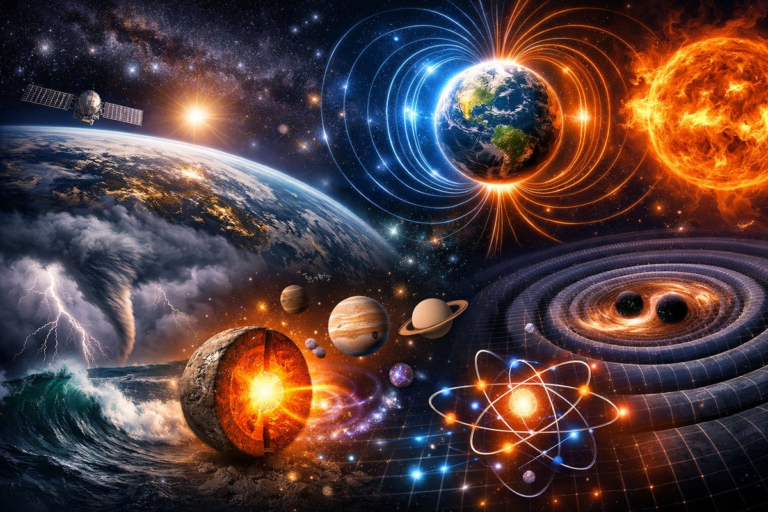
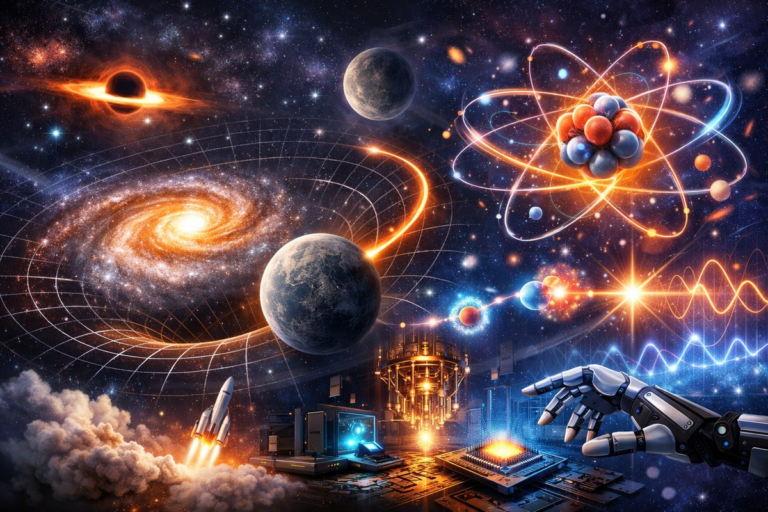
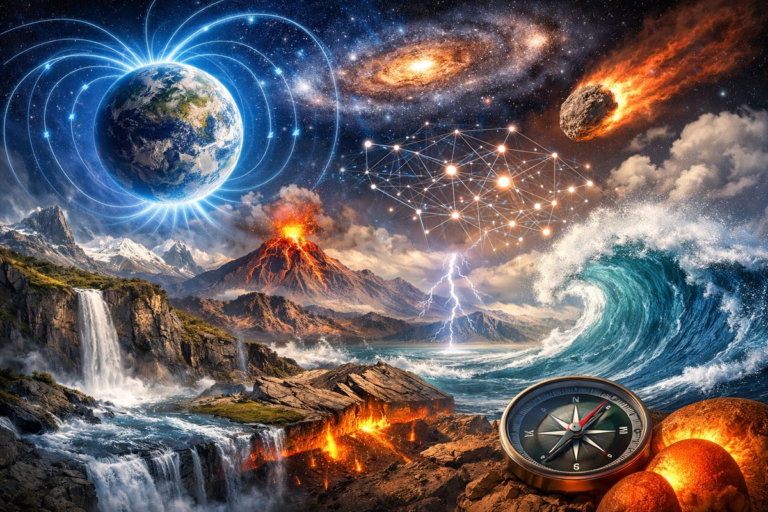
From subtle shifts in Earth's magnetic field to emergent patterns in flocks and quantum sensors detecting gravitational ripples, scientists are developing innovative tools to chart nature's hidden architecture. Advances in satellite arrays, ground-based sensor networks, and DIY detection kits are turning esoteric phenomena into everyday data streams.
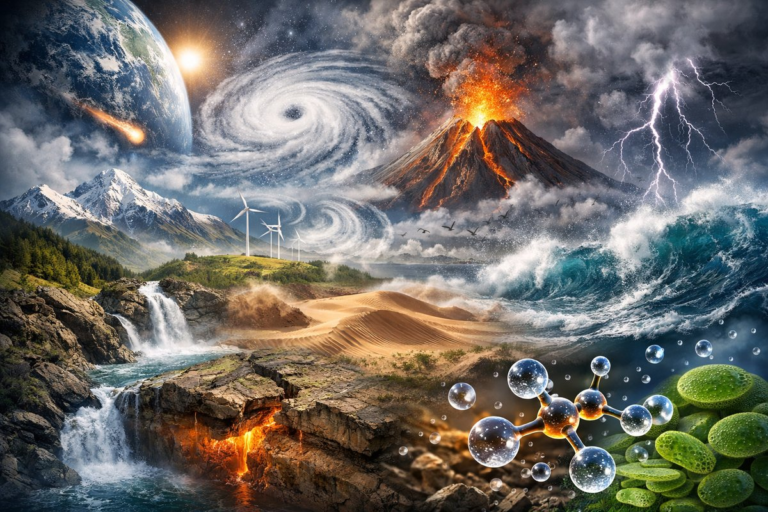
In recent field campaigns and lab experiments across multiple continents, researchers are embracing a radical shift: treating invisible natural forces not as abstract concepts but as tangible data streams that can be visualized, predicted, and even interacted with in real time. Gone are the days when gravity, magnetism, and emergent behaviors were confined to textbooks. Today, engineers, citizen scientists, and AI-driven analysis are converging to decode Earth’s dynamic web of forces, unveiling patterns that could reshape everything from climate modeling to wildlife conservation.
It began with a constellation of nanosatellites deployed by a consortium of universities. Each cube-sat carries magnetometers precise to fractions of a nanotesla, feeding a global database of the geomagnetic field. By combining those readings with ground-based magnetotelluric stations in remote deserts and polar regions, geophysicists have identified transient magnetic anomalies linked to subterranean fluid flow. In one recent study, researchers tracked how magma movements deep beneath a volcanic arc modulated surface magnetism by as much as 20 nanoteslas over weeks-signatures that could one day complement seismic networks for early eruption warnings.
At the same time, ecologists are harnessing emergent-system modeling to understand how flocks of birds, schools of fish, and even swarms of insects respond collectively to environmental cues. Using drone-mounted cameras paired with machine-vision algorithms, teams have reconstructed three-dimensional trajectories of thousands of starlings during dusk murmurations. They discovered that local interactions-each bird adjusting its velocity based on the nearest six neighbors-produce coherent wave-like patterns that propagate through the flock almost instantaneously. This insight echoes principles in quantum systems where local entanglement yields global correlations, hinting at universal rules governing self-organization across scales.
Meanwhile, advances in quantum sensing are turning tabletop experiments into portals for gravitational wave detection. Small optical cavities stabilized by ultracold atoms now serve as displacement sensors so precise they can register minute spacetime ripples passing through the lab. Though current setups remain less sensitive than kilometer-scale laser interferometers, they open a new avenue for distributed gravitational monitoring. Imagine citizen-scientists setting up portable quantum sensors in urban centers, collectively forming a dense gravitational-wave observatory network capable of triangulating transient events.
Back on Earth’s surface, the marriage of remote sensing and AI is demystifying the magnetotelluric method, which uses natural electromagnetic noise to probe subsurface conductivity. Traditional surveys require extensive wiring and manual data processing. Now, autonomous rovers equipped with compact EM field detectors can traverse rugged terrain, streaming raw signals to cloud-based neural networks. Within hours, these models generate three-dimensional conductivity maps that reveal aquifers, mineral deposits, and even hidden fault zones. In Australia’s outback, such systems have already accelerated resource exploration, cutting survey times by half and reducing environmental footprints.
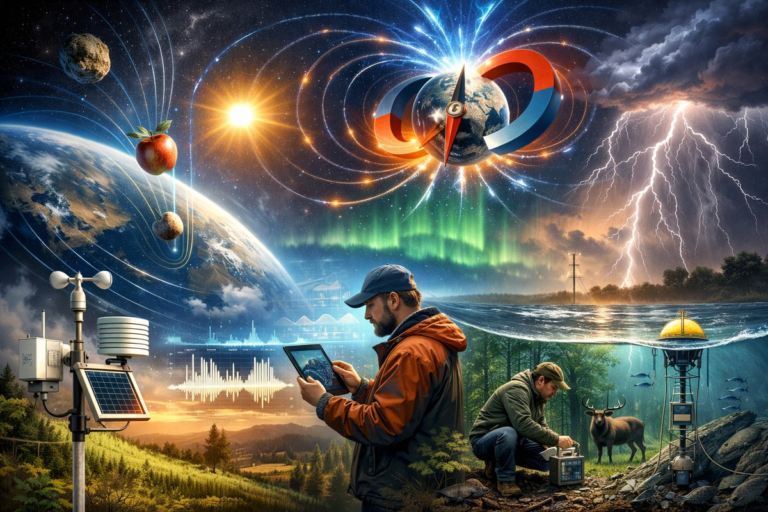
One of the most exciting developments lies in open-source hardware and community science. Enthusiasts are building desktop cloud chambers to visualize cosmic rays, while hobbyist seismograph kits capture microtremors from passing trains and distant quakes. Coupled with smartphone-based magnetometer apps, backyard explorers can contribute data to global citizen-science platforms. During a recent solar storm, thousands of contributors across Europe and North America logged sudden magnetic field fluctuations, generating high-resolution maps of the storm’s progression-data that professional observatories can now incorporate into space-weather models.
These innovations are not only scientific curiosities but have practical impacts. Precision mapping of gravitational anomalies aids groundwater management, as subtle density variations often correlate with aquifer boundaries. Improved magnetic field forecasts enhance the reliability of power grids and satellite communications. And insights into emergent animal behaviors inform the design of autonomous drone swarms for search-and-rescue, agricultural monitoring, and environmental remediations.
Challenges remain. Data interoperability across platforms can be hampered by proprietary formats. In remote sensing, sensor calibration drift poses persistent hurdles for long-term monitoring. The quantum sensor prototypes must overcome environmental noise and thermal fluctuations to rival large interferometers. But the collaborative spirit driving open-source and citizen involvement promises to accelerate problem-solving. Hackathons are emerging where multidisciplinary teams tackle calibration issues, open-format data schemas, and low-cost sensor fabrication.
Looking ahead, the next frontier may lie in consciously shaping natural force fields. Scientists are experimenting with electromagnetic modulation to influence cloud formation and precipitation patterns. Pilot projects in arid regions have used ground-based ionizers to encourage water vapor condensation. Although far from weather control fantasies, these studies suggest that a deeper understanding of invisible forces could enable gentle nudges toward ecological balance.
In labs worldwide, gravitational-wave kits based on quantum optics are becoming standardized modules, intended for deployment in university teaching labs. One can imagine an undergraduate course where students assemble an optical interferometer, cool atoms to microkelvin temperatures, and record miniature spacetime tremors from far-off colliding black holes. Such hands-on experiences demystify arcane physics and inspire the next generation of explorers who will map the unseen sinews of our planet and beyond.
As technology converges with curiosity and cloud connectivity, the tapestry of nature’s hidden forces is becoming more accessible. From backyard cloud chambers to orbital sensor swarms, the tools exist to transform the intangible into the visible, the unpredictable into the charted. In doing so, humanity gains not only practical benefits-more resilient infrastructure, better resource stewardship-but also a renewed sense of wonder at the dynamic forces that cradle life on Earth and ripple across the cosmos.
This is not a distant vision. It’s unfolding now, in labs, deserts, and living rooms. The invisible currents that once eluded our senses are emerging as data streams, ripe for discovery and stewardship. By decoding nature’s hidden forces, we unlock new ways to live in harmony with the planet’s subtle rhythms and unlock mysteries that have long sparked human imagination.