Location
Mount Vernon, WA 98274

Location
Mount Vernon, WA 98274
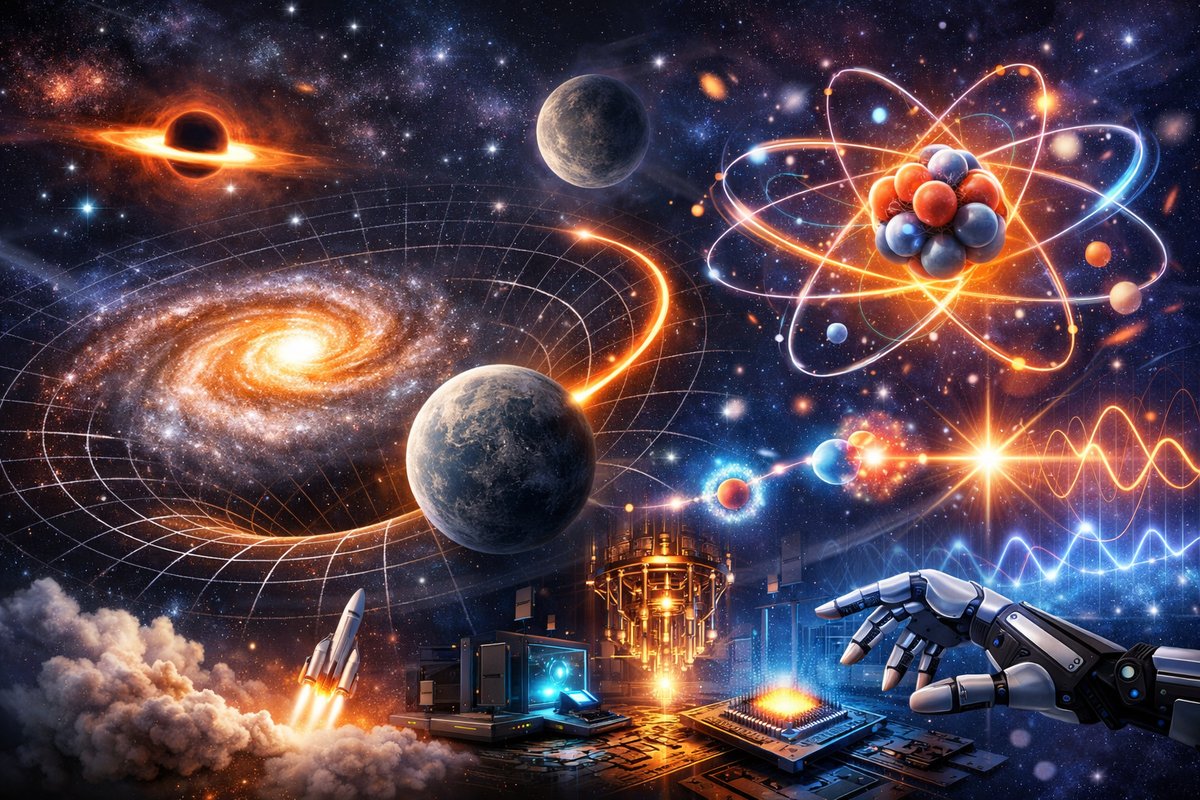
Natural forces shape our universe in profound and often unseen ways, from the gentle pull of gravity to the enigmatic dance of quantum particles. Understanding these phenomena not only satisfies human curiosity but also unlocks technologies that transform our daily lives.
The universe is a vast tapestry woven from fundamental forces and intricate phenomena that govern everything from the orbit of planets to the behavior of subatomic particles. While some natural forces like gravity and magnetism are familiar to us through everyday experience, others such as emergent systems and quantum effects challenge our intuition and invite deeper inquiry. This exploration offers a window into the invisible threads that connect the cosmos, revealing how science serves as a lens for wonder and discovery.
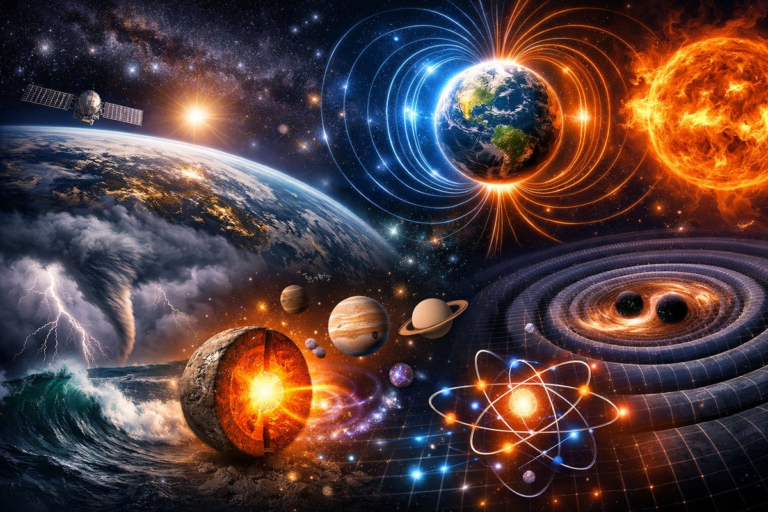
Gravity, the force that anchors us to Earth and orchestrates the celestial ballet of planets and stars, is perhaps the most palpable natural force. Its influence extends across vast distances, shaping galaxies and even bending light in phenomena known as gravitational lensing. Recent advances in astrophysics have deepened our understanding of gravity’s role in cosmic evolution, especially with the detection of gravitational waves-ripples in spacetime caused by massive cosmic events like black hole mergers. These detections not only confirm predictions from Einstein’s general relativity but also open new avenues for observing the universe.
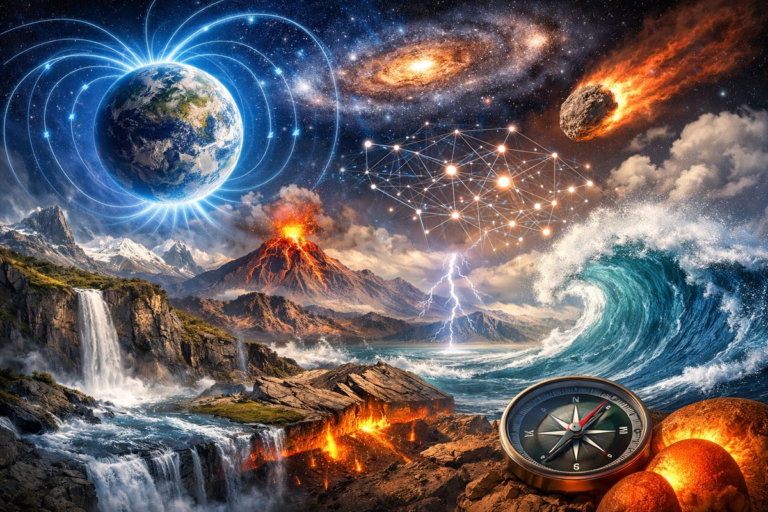
Magnetism, closely linked with electricity, governs many natural and technological processes. From the Earth’s protective magnetic field that shields us from solar radiation to the magnetic properties exploited in data storage and electric motors, magnetism is both a natural guardian and a technological enabler. The dynamic nature of Earth’s magnetic field, which occasionally reverses polarity, continues to be a subject of scientific investigation, with implications for navigation systems and animal migration patterns.
Beyond these classical forces, emergent systems demonstrate how complex behaviors arise from simple interactions. Examples abound in nature, such as the synchronized flashing of fireflies, flocking of birds, or the self-organizing patterns of chemical reactions. These phenomena underscore the idea that the whole can be more than the sum of its parts. Researchers study emergent behavior not only to understand nature but also to design resilient networks and algorithms in computing and robotics.
At the frontier of natural forces lies the quantum realm, where particles behave in ways that defy classical logic. Quantum entanglement, superposition, and tunneling reveal a world where certainty gives way to probabilities and connections transcend space. These quantum quirks underpin emerging technologies like quantum computing and secure quantum communication, promising revolutionary advances but also posing profound philosophical questions about the nature of reality.
The interplay of natural forces is also evident in phenomena such as ocean tides, driven by the gravitational pull of the Moon and Sun, and weather patterns shaped by the Earth’s rotation and solar energy. Understanding these forces is critical for addressing challenges like climate change and natural disaster prediction. For instance, improved models of atmospheric dynamics and ocean currents enable better forecasting, helping communities prepare and adapt.
Exploring natural forces also nurtures a sense of humility and curiosity. It reminds us that our everyday experiences are part of a grand cosmic dance governed by laws that are elegant yet complex. The pursuit of knowledge in this domain is a testament to human creativity and perseverance, bridging the gap between the known and the unknown.
In practical terms, insights into natural forces have led to transformative technologies: GPS systems rely on precise gravitational models and relativistic corrections; magnetic resonance imaging (MRI) exploits magnetic fields to visualize the human body; and quantum sensors promise unprecedented sensitivity in measurement. These applications illustrate how abstract scientific principles translate into tools that enhance health, safety, and connectivity.
As we continue to decode the patterns of nature, interdisciplinary collaboration becomes essential. Physicists, chemists, biologists, and engineers work together to unravel complexities and harness natural forces responsibly. Ethical considerations, especially regarding emerging quantum technologies and environmental impact, guide this journey to ensure sustainability and respect for privacy.
Ultimately, the study of natural forces and phenomena is a celebration of wonder. It invites us to marvel at the invisible architecture of reality and inspires a lifelong quest for understanding. Whether gazing at the stars, watching the ebb and flow of tides, or contemplating the mysteries of the quantum world, we participate in an ongoing story of discovery that connects us to the cosmos and to each other.