Location
Mount Vernon, WA 98274

Location
Mount Vernon, WA 98274
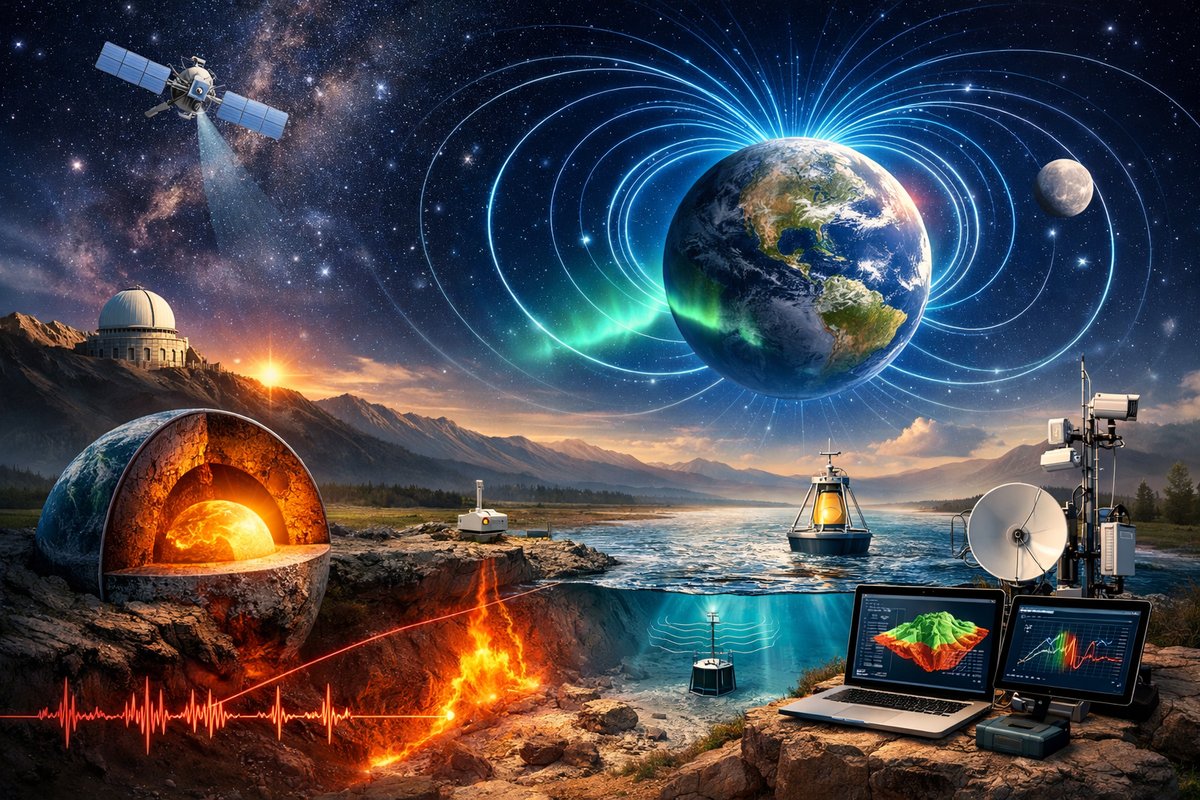
From the subtle pull of gravity to the enigmatic flow of Earth's magnetic field, natural forces orchestrate a complex and ever-changing symphony beneath our feet and above our heads. Recent advances in sensor technology and global monitoring networks are unveiling these hidden dynamics, deepening our understanding of planetary processes and their impact on life.
Nature’s forces-gravity, magnetism, seismic waves, and atmospheric dynamics-are the unseen architects of our environment, quietly shaping the Earth’s surface, climate, and even biological rhythms. Though invisible to the naked eye, these forces interact in intricate ways that scientists are only beginning to decode with the aid of cutting-edge instrumentation and collaborative research networks.
Gravity, often taken for granted as a constant pull, reveals subtle variations across the globe that reflect the distribution of mass within the Earth’s crust and mantle. These variations, detectable through highly sensitive gravimeters and satellite missions, provide clues about tectonic movements, volcanic activity, and the flow of subterranean fluids. For example, localized gravitational anomalies can signal magma chamber inflation beneath a volcano, offering potential early warnings of eruptions.
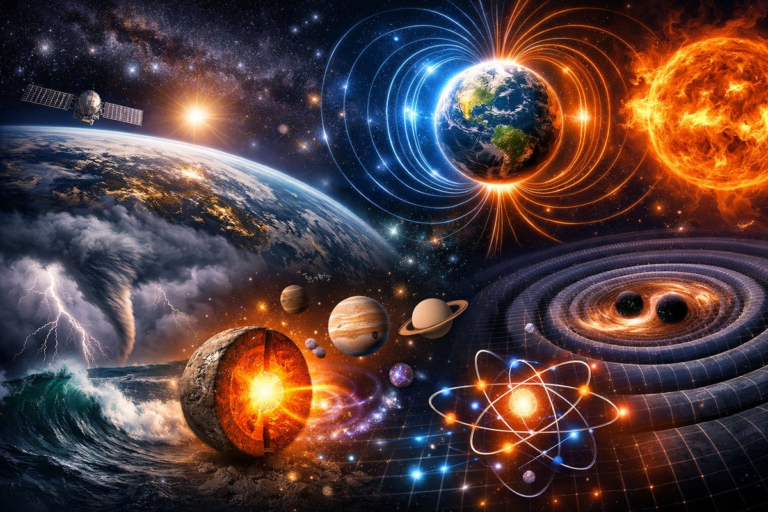
Magnetism, generated by the churning of molten iron in Earth’s outer core, extends far beyond the planet’s surface, creating a protective magnetic shield known as the magnetosphere. This shield deflects harmful solar and cosmic radiation, safeguarding life. However, the magnetic field is not static; it fluctuates in strength and orientation, with phenomena such as geomagnetic storms disrupting communication systems and power grids. Recent studies employing dense arrays of magnetometers have uncovered complex magnetic whirlpools and localized anomalies that hint at dynamic processes within the crust and upper mantle.
Seismic activity, from imperceptible microseisms to powerful earthquakes, provides a direct window into the mechanical behavior of Earth’s interior. The global deployment of sensitive seismometers has enabled researchers to detect and analyze the planet’s subtle vibrations, often linked to ocean wave interactions, atmospheric pressure changes, and human activities. These microseismic signals form a continuous background hum that reveals the elastic properties of rocks and the presence of fluids, offering insights into fault zone mechanics and earthquake precursors.
Emerging research is also focusing on the coupling between these natural forces. For instance, variations in Earth’s magnetic field can influence ionospheric currents, which in turn affect atmospheric dynamics and weather patterns. Similarly, gravitational tides induced by the Moon and Sun modulate seismicity and volcanic activity, illustrating the interconnectedness of celestial and terrestrial phenomena.
Technological advances have been pivotal in bringing these hidden forces into sharper focus. Distributed sensor networks, combining gravimeters, magnetometers, seismometers, and atmospheric sensors, are now being deployed worldwide to provide real-time, high-resolution data streams. These networks leverage crowdsourced data from citizen scientists and autonomous platforms such as drones and underwater vehicles, democratizing data collection and expanding spatial coverage.
One particularly promising development is the integration of machine learning algorithms with sensor data, enabling the detection of subtle patterns and anomalies that might elude traditional analysis. For example, AI-driven models can identify precursory signals of volcanic eruptions or geomagnetic disturbances, improving early warning capabilities and disaster preparedness.
Beyond scientific curiosity, understanding natural forces has practical implications for infrastructure resilience, resource management, and environmental conservation. Accurate gravity and magnetic maps assist in mineral and groundwater exploration, while seismic monitoring informs building codes and urban planning in earthquake-prone regions. Moreover, insights into the magnetosphere’s behavior are critical for safeguarding satellites and communication networks vital to modern society.
The study of natural forces also invites a profound sense of wonder and humility. These invisible threads weave a dynamic tapestry that connects the Earth to the cosmos, reminding us that our planet is a living, breathing system in constant flux. By embracing interdisciplinary approaches and fostering global collaboration, humanity is better equipped to appreciate and protect this delicate balance.
As research progresses, the challenge lies not only in technological innovation but also in cultivating an ethical framework that respects privacy, promotes sustainability, and encourages open sharing of knowledge. The collective endeavor to decode nature’s subtle rhythms exemplifies how science can inspire curiosity and deepen our emotional connection to the world we inhabit.
In this unfolding story of discovery, every new insight into gravity’s whisper, magnetic murmurs, and seismic hum enriches our understanding of Earth’s hidden currents. It is a reminder that beneath the apparent stillness of the natural world lies a vibrant, interconnected dance of forces shaping the destiny of our planet and all who call it home.